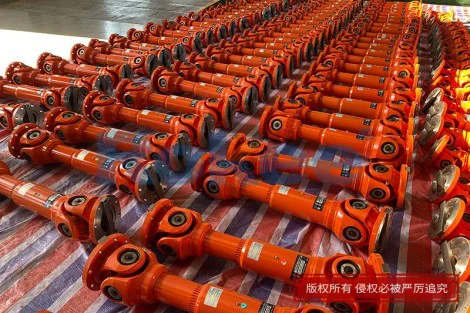
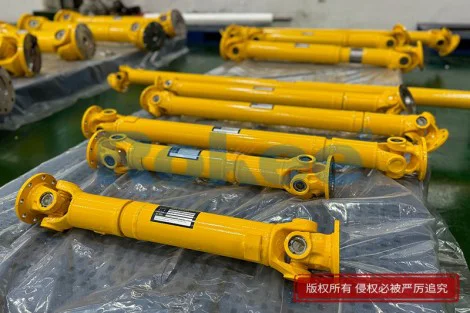
Universal Shafts Manufacturer
As an indispensable flexible transmission component in modern mechanical systems, universal shafts have redefined the feasibility of power transmission in complex operating environments, breaking through the inherent limitations of traditional rigid coupling structures. Unlike rigid shaft connection parts that require strict coaxial alignment between driving and driven shafts, universal shafts are engineered to stably transmit rotational torque and continuous motion between two shafts with angular deviation, axial displacement, and radial offset, making them a core connecting unit for diverse mechanical power transmission systems. Their unique spatial motion adaptation capability enables mechanical equipment to maintain efficient and stable operation even under dynamic working conditions with frequent structural displacement and angle changes, laying a solid foundation for the flexible and intelligent development of industrial mechanical structures.
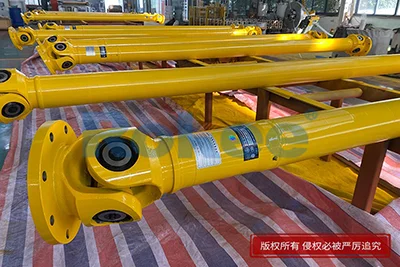
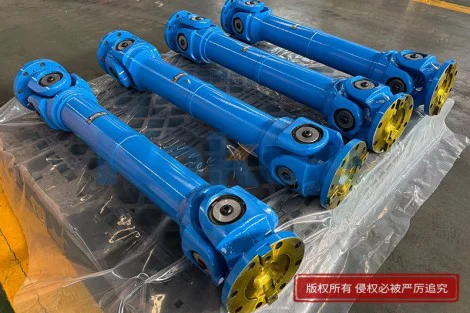
The core operating logic of universal shafts stems from the spatial hinge transmission mechanism, a sophisticated mechanical principle that realizes decoupling of coaxiality constraints in power transmission. The basic structural composition of a standard universal shaft system includes articulated universal joints, intermediate shaft bodies, and telescopic spline components, each part cooperating closely to complete multi-dimensional displacement compensation and torque transmission. The universal joint, as the key functional unit, adopts a flexible hinge structure that allows free rotation within a certain angular range in multiple spatial directions. When the driving end rotates, the cross-shaped core component inside the joint converts and transmits rotational motion, realizing synchronous rotation of the driven shaft even when the two shaft axes form a deflection angle. The telescopic spline structure integrated in the shaft body can adapt to axial distance changes between connected equipment, effectively eliminating transmission jitter and structural stress caused by linear displacement during equipment operation.
In practical mechanical operation, single-section universal joints exhibit inherent non-constant velocity transmission characteristics under angular deflection conditions. When a single universal joint works with a fixed axis angle, the instantaneous angular velocity of the driven shaft fluctuates periodically with the rotation cycle, which may cause vibration, noise, and unstable torque output in high-speed and high-precision mechanical systems. To compensate for this transmission defect, most practical universal shaft configurations adopt a double-joint or multi-joint combined structure. By arranging two universal joints symmetrically at both ends of the intermediate shaft and matching the spatial deflection angles reasonably, the velocity fluctuation generated by the front joint can be completely offset by the rear joint, realizing constant-speed and smooth torque transmission between the driving and driven ends. This structural optimization design greatly improves the operational stability of universal shafts and expands their application scope from low-speed heavy-duty scenarios to high-precision and high-speed mechanical transmission fields.
The structural diversity of universal shafts enables them to adapt to differentiated working condition requirements across industries. Cross-shaft universal shafts are the most widely used type, featuring a simple and robust structure, strong impact resistance, and large torque bearing capacity, which are suitable for heavy-load and frequent start-stop operating environments. Ball-cage universal shafts rely on the rolling friction of steel balls in precision raceways to transmit torque, with smaller transmission clearance, higher motion accuracy, and more stable high-speed operation performance, making them ideal for precision mechanical equipment that requires low vibration and high synchronization. Ball-fork universal shafts adopt a simplified spherical hinge structure, with good angular compensation ability and compact overall size, suitable for small and medium-sized mechanical systems with limited installation space and moderate load demand. Different structural forms are tailored to diverse operating parameters such as load magnitude, rotation speed, deflection angle, and displacement frequency, achieving highly matched transmission performance for various mechanical equipment.
The excellent performance of universal shafts is inseparable from rigorous and refined manufacturing processes throughout the production cycle. The production process starts with the selection of high-strength and wear-resistant metal materials, which possess excellent torsional rigidity, fatigue resistance, and impact toughness to cope with long-term cyclic load and complex stress changes in operation. All blank components are processed through precision forging to optimize internal metal fiber distribution, eliminate structural pores and defects, and enhance the overall structural strength and durability of parts. Subsequent CNC precision machining ensures that key functional dimensions such as joint hinge clearance, spline matching accuracy, and shaft body straightness reach high precision levels, avoiding transmission jitter and abnormal wear caused by dimensional errors.
Surface treatment and finishing processes are critical links to improve the service life and operational stability of universal shafts. Key load-bearing surfaces and friction parts undergo fine grinding and honing treatment to form ultra-smooth surface textures, reduce operating friction coefficients, and lower mechanical wear and energy consumption. Professional surface strengthening and anti-corrosion treatments are carried out on component surfaces to enhance resistance to oxidation, rust, and chemical erosion, enabling the shafts to adapt to harsh working environments such as high humidity, dust pollution, and variable temperature conditions. The final assembly process follows standardized precision matching procedures, with strict detection of hinge flexibility, spline telescopic smoothness, and overall rotational balance to ensure that every finished product has consistent transmission performance and structural reliability.
Universal shafts serve a wide range of industrial scenarios, covering heavy industrial equipment, commercial machinery, and special mechanical systems. In metallurgical and mining industries, large universal shafts bear heavy impact loads and continuous cyclic operation tasks, connecting driving motors and rolling equipment, crushing machinery, and conveying systems, realizing stable power output of heavy-duty equipment and ensuring the continuity of industrial production lines. In engineering and agricultural machinery, equipment often faces complex working conditions such as uneven ground vibration, structural jitter, and frequent angle changes during operation, and universal shafts can adapt to dynamic displacement changes of equipment components, ensuring reliable power transmission of walking systems and operating mechanisms.
In precision manufacturing and automated mechanical systems, high-precision universal shafts are applied to automated production equipment, precision processing machines, and intelligent transmission devices. Their low-clearance and smooth transmission characteristics effectively avoid motion deviation and vibration interference, ensuring the processing accuracy and operational stability of precision equipment. In addition, universal shafts also play an important role in transportation machinery, packaging equipment, and environmental protection machinery, becoming an essential connecting component for realizing flexible power transmission in various mechanical systems. With the continuous upgrading of industrial mechanical equipment towards high efficiency, intelligence, and high precision, the market demand for universal shafts with higher stability, longer service life, and stronger environmental adaptability is constantly increasing.
Compared with other traditional transmission connection components, universal shafts have prominent comprehensive performance advantages. Firstly, they have superior multi-dimensional compensation capability, which can simultaneously adapt to angular deviation, axial displacement, and radial misalignment, solving the transmission failure problems caused by installation errors, equipment vibration, and structural deformation that rigid couplings cannot avoid. Secondly, they feature high transmission efficiency and low energy loss, with flexible hinge structure reducing mechanical friction resistance and motion blocking, realizing efficient conversion and transmission of mechanical energy. Thirdly, the overall structure is compact and flexible, with strong adaptability to installation space, and can be flexibly configured according to different equipment structural layouts without occupying excessive mechanical installation space.
In terms of operational reliability, qualified universal shaft products have excellent fatigue resistance and structural stability, capable of long-term continuous operation under cyclic load and variable working conditions without easy deformation or damage. The modular structural design also brings great convenience for equipment maintenance and replacement. When local parts are worn or aged, targeted replacement and maintenance can be carried out without disassembling the entire transmission system, effectively reducing equipment downtime and maintenance costs. These advantages make universal shafts occupy an irreplaceable position in the field of mechanical transmission and become the preferred flexible transmission component for most mechanical equipment design and transformation.
Daily maintenance and scientific application are key factors to ensure the long-term stable operation of universal shafts and extend their service life. In the equipment operation process, excessive overload operation should be avoided, as long-term overload torque will cause irreversible deformation of the shaft body and fatigue damage of hinge parts, affecting transmission accuracy and service life. Regular lubrication maintenance is essential; filling professional high-temperature and wear-resistant lubricating grease into the universal joint hinge and spline matching parts can effectively reduce friction and wear, avoid dry friction damage caused by insufficient lubrication, and reduce operating noise and vibration.
It is also necessary to regularly check the structural tightness and operating state of universal shafts during daily use. Loose connecting fasteners will cause transmission clearance increase and operational jitter, while abnormal vibration and noise in operation often indicate excessive wear of internal parts or structural deviation. Timely inspection, adjustment, and replacement of damaged parts can effectively avoid further damage to the transmission system and ensure the safe and stable operation of mechanical equipment. In addition, targeted selection of structural types and material specifications according to actual working conditions such as load size, rotation speed, and operating environment can maximize the service performance and service life of universal shafts.
With the continuous progress of mechanical manufacturing technology and the continuous upgrading of industrial equipment, the technical iteration of universal shafts is also accelerating. The current development trend of universal shafts focuses on high precision, high durability, lightweight, and intelligent adaptation. Through the optimization of structural design and the application of new high-performance materials, the product load-bearing capacity and fatigue resistance are further improved, while the overall weight and volume are reduced to meet the lightweight and high-efficiency development needs of modern mechanical equipment. The application of precision manufacturing technology further reduces transmission clearance and improves motion synchronization accuracy, meeting the higher precision transmission requirements of intelligent and automated equipment.
At the same time, customized universal shaft solutions have become an important development direction in the industry. For special working conditions such as ultra-high speed, ultra-heavy load, high temperature resistance, and corrosion resistance, targeted structural optimization, material selection, and process improvement are carried out to develop differentiated products that adapt to special mechanical operating environments. This customized development mode enables universal shafts to break through the limitations of traditional standardized products and better meet the personalized and diversified transmission needs of various industrial equipment. As a basic core component of mechanical transmission systems, universal shafts will continue to innovate and develop with the progress of industrial technology, providing more reliable and efficient basic support for the upgrading and iteration of modern mechanical equipment.
Tags: Telescopic Universal Joint , Universal Coupling Joint , Universal Coupling Shaft , Universal Couplings , Universal Joints , Universal Shafts , Universal Shaft Couplings , Universal Shaft Joint , Universal Drive Shafts , Flange Universal Joint Couplings , Industrial Universal Joint , Small Universal Joint Couplings , Universal Cross Joint Couplings , Universal Joint Shaft Coupling , Universal Joint Shaft Coupler , Universal Joint Shafts , sandwich panel machine , pu sandwich panel line
« Universal Shafts Manufacturer » Update Date: 2026/7/17
URL: https://www.rokee.com/en/blog/universal-shafts-manufacturer.html
Contact
If you require custom machined couplings, please contact Rokee via the contact information below for inquiries.
Email: Rokee@Rokee.com
 WeChat