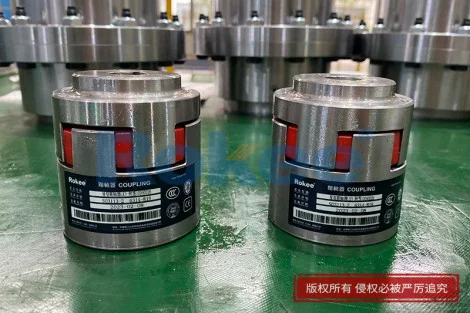
Industrial Universal Joint
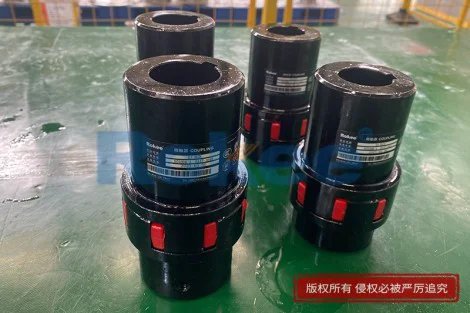
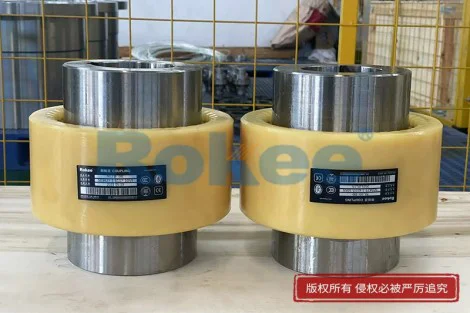
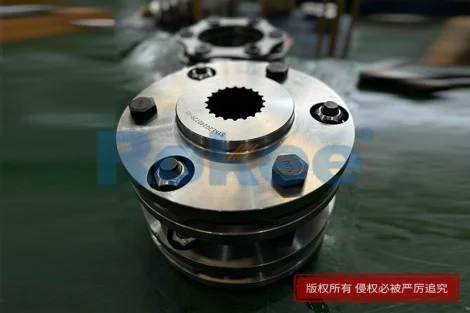
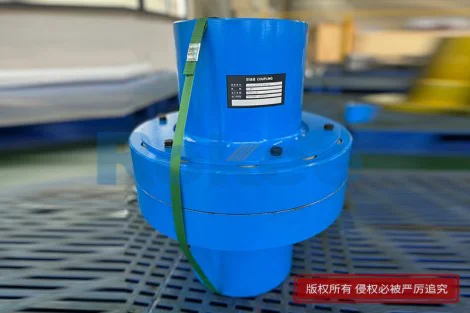
Rokee is a manufacturer of industrial universal joint from china, we can provide non-standard custom industrial universal joint based on parameters or drawings supplied by customers, with export support available.

The industrial universal joint stands as a foundational and versatile mechanical component designed primarily for flexible torque and rotational power transmission between misaligned rotating shafts in industrial mechanical systems. As one of the oldest and most widely adopted flexible coupling structures in mechanical engineering, it addresses the core industrial challenge of power transmission where driving and driven shafts cannot maintain perfect collinearity due to structural layout, mechanical movement, or equipment installation deviations. Its ingenious spatial linkage structure enables stable power delivery under angular, parallel, and axial misalignment conditions, making it indispensable in various mechanical transmission scenarios. Beyond basic power transmission, it effectively buffers mechanical vibration, reduces transmission system wear, and compensates for minor shaft position deviations during equipment operation. With excellent adaptability to complex working conditions, simple structural composition, and reliable operating performance, industrial universal joints have become core transmission parts for general machinery, automated equipment, and mobile industrial devices, supporting the stable and efficient operation of diverse industrial production systems.

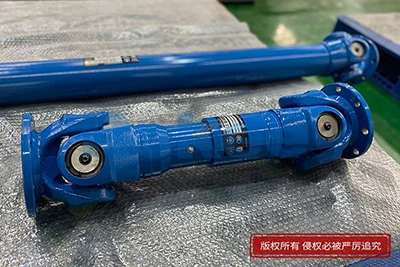
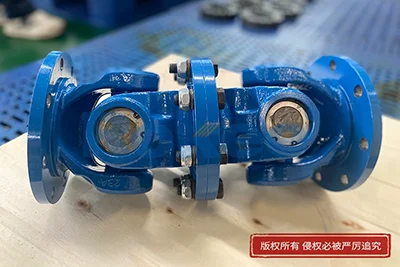
The basic structural composition of industrial universal joints is concise and scientifically designed, laying a solid foundation for their flexible transmission performance and mechanical durability. The core structure mainly includes two symmetrical shaft yokes and a cross-shaped spider, which serves as the central connecting and pivoting component. The two yokes are installed perpendicular to each other, with their open ends buckling the four end shafts of the cross spider respectively, forming a mutually constrained and flexibly movable connecting structure. Each matching position between the cross spider and the yoke is equipped with precision bearing assemblies, which isolate direct friction between metal components and enable smooth rotational pivoting in multiple spatial directions. Auxiliary structures such as bearing caps and fixed locking components are configured to lock the bearings and cross spider in place, preventing component displacement or loosening under high-speed rotation and heavy load operation. This integrated structural design abandons rigid connection limitations, allowing the joint to generate flexible angular displacement while maintaining integral structural stability. Every component is precisely matched to ensure synchronous coordination during operation, avoiding transmission stagnation or mechanical jitter, and the compact layout adapts to the limited installation space of most industrial mechanical equipment, achieving a perfect balance between structural simplicity and functional comprehensiveness.
The working principle of industrial universal joints relies on spatial mechanical linkage and multi-dimensional pivoting motion to realize uninterrupted power transmission between misaligned shafts. When the driving shaft starts to rotate, it drives the connected yoke to perform circular rotational motion, and the rotational torque is transmitted to the cross spider through the bearing assembly. The cross spider, as the intermediate force-bearing and transmission core, converts the single-plane rotation of the driving yoke into multi-dimensional pivoting motion, and further transmits the torque to the driven yoke and the connected driven shaft. Even when a fixed or dynamic angle deviation exists between the two shafts, the flexible pivoting of the cross spider in two mutually perpendicular planes can always adapt to the misalignment state, ensuring continuous output of rotational power. In the rotation process, the bearing assemblies at all positions continuously roll and pivot, reducing friction resistance and ensuring smooth power transmission. Although the single universal joint structure will produce slight periodic speed fluctuation during angular transmission, this minor deviation has negligible impact on most conventional industrial transmission systems. For industrial scenarios requiring ultra-stable constant-speed transmission, multiple universal joints can be used in combination to offset speed errors, realizing highly consistent synchronous rotation of the front and rear shafts and meeting high-precision transmission operation requirements.
Industrial universal joints exhibit remarkable functional advantages that distinguish them from rigid couplings and other flexible transmission components in industrial applications. The most prominent advantage is their excellent misalignment compensation capability, which can adapt to a certain range of angular deviation between connected shafts, effectively solving the transmission failure problem caused by installation errors, equipment operation vibration, and structural thermal deformation. Compared with rigid couplings that are prone to component damage under misalignment conditions, universal joints can buffer and absorb partial mechanical vibration and impact load during equipment operation, protecting shafts, bearings, and other core transmission components from excessive wear and fatigue damage. In addition, this type of joint features extremely low backlash and radial clearance during operation, ensuring high transmission accuracy and stable power output, which is crucial for equipment that requires precise power transmission. Its strong environmental adaptability allows it to operate normally in complex working environments with variable temperature, dust, and minor humidity changes. Moreover, the simple and modular structure brings convenient maintenance and replacement, without complex debugging procedures, effectively reducing equipment downtime and daily operation and maintenance costs for industrial production.
The application scenarios of industrial universal joints cover almost all fields that require flexible mechanical power transmission, showing strong industrial versatility. In general mechanical manufacturing, they are widely installed in transmission systems of processing equipment, conveyor devices, and assembly machinery to adapt to the dynamic position changes of mechanical components during operation. In mobile industrial equipment such as engineering machinery and agricultural machinery, universal joints serve as key connecting parts of power transmission systems, stably transmitting engine power to walking and working components when equipment generates attitude changes and angle deviations during operation. In automated industrial production lines, they are applied to the transmission structures of robotic arms, rotating platforms, and automated conveying equipment, ensuring flexible and accurate power output during multi-angle movement. In addition, they also play an important role in light industrial equipment, packaging machinery, and hydraulic transmission systems. Whether it is continuous high-speed operation or intermittent heavy-load operation, industrial universal joints can maintain stable working performance, adapting to diversified industrial production demands from low-speed heavy-load to high-speed light-load working conditions.
Material selection and manufacturing craftsmanship directly determine the service life, load-bearing capacity, and operational stability of industrial universal joints. High-strength alloy materials are commonly used for core components such as cross spiders and yokes, which have excellent mechanical properties including high tensile strength, good toughness, and strong fatigue resistance, able to withstand long-term alternating load and impact load in industrial operation. Bearing components adopt high-precision wear-resistant materials and special surface treatment processes, which reduce friction and wear while improving corrosion resistance and high-temperature resistance, adapting to long-term continuous industrial operation. In the manufacturing process, precision machining technologies such as fine turning and grinding are adopted to ensure the dimensional accuracy and matching precision of each component. Strict heat treatment processes are carried out on key force-bearing parts to optimize internal material structure, eliminate machining stress, and improve overall structural rigidity and deformation resistance. Each finished universal joint will undergo strict dynamic balance testing and load performance testing to eliminate products with unbalanced rotation and insufficient load-bearing capacity. Standardized and refined manufacturing processes ensure that each product has consistent performance quality, stable transmission effect, and long service life in complex industrial working conditions.
Reasonable installation, commissioning, and daily maintenance are essential to maintain the long-term stable operation of industrial universal joints and extend their service life. During installation, workers need to ensure that the shaft alignment and installation angle meet the mechanical operation requirements, avoiding excessive misalignment beyond the adaptable range, which may cause increased component wear and transmission vibration. The locking components must be installed firmly to prevent loosening and displacement caused by long-term vibration during equipment operation. After installation, low-speed trial operation is required to check for abnormal noise, jitter, and transmission stagnation, and adjust the installation state in time to ensure smooth operation. In daily maintenance, regular inspection of component wear, bearing lubrication status, and structural tightness is necessary. Timely supplement and replace high-quality lubricating grease to reduce friction loss of rotating and pivoting parts, and clean surface dust and sundries to avoid abrasive wear of components. For worn or aging parts, timely replacement is required to prevent minor faults from evolving into transmission system failures. Scientific and standardized maintenance can effectively reduce equipment failure rates, ensure the continuous and efficient operation of industrial transmission systems, and create stable production benefits for industrial operations.
With the continuous upgrading of modern industrial manufacturing technology, industrial universal joints are also evolving towards high precision, high load resistance, and intelligent adaptability to meet the increasingly stringent industrial production requirements. Traditional universal joint structures are continuously optimized in structural design, with improved spatial pivoting flexibility and larger misalignment compensation range, adapting to more complex mechanical motion trajectories and equipment layout forms. The application of new high-performance materials further enhances the product’s high-temperature resistance, corrosion resistance, and fatigue resistance, enabling stable operation in extreme industrial environments such as high temperature, high humidity, and strong dust. In terms of processing technology, intelligent precision manufacturing equipment improves component matching accuracy and product consistency, effectively reducing transmission errors and mechanical vibration. Meanwhile, combined with modern mechanical monitoring technology, some optimized universal joint structures can cooperate with sensing components to realize real-time monitoring of operating status, providing early warning of abnormal wear and load overload. As a basic industrial transmission component, the continuous technological iteration of industrial universal joints will further expand their application scope and improve transmission performance, providing more reliable basic support for the high-efficiency and intelligent development of modern industrial machinery.
« Industrial Universal Joint » Update Date: 2026/8/5
URL: https://www.rokee.com/en/tags/industrial-universal-joint.html
Contact
If you require custom machined couplings, please contact Rokee via the contact information below for inquiries.
Email: Rokee@Rokee.com
 WeChat