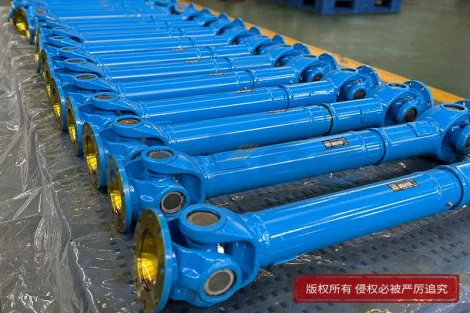
Cardan Shaft Couplings
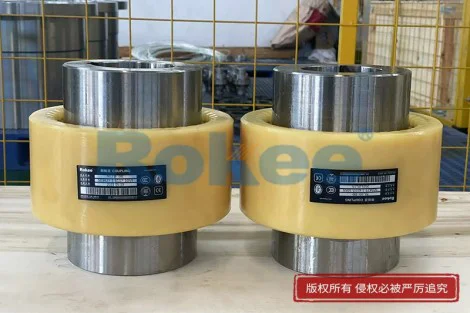
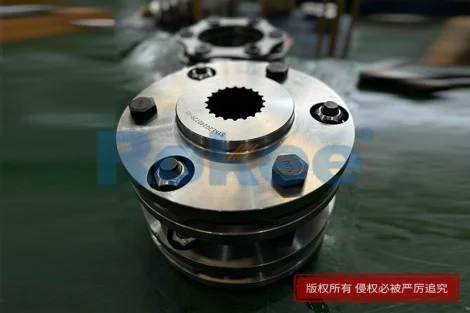
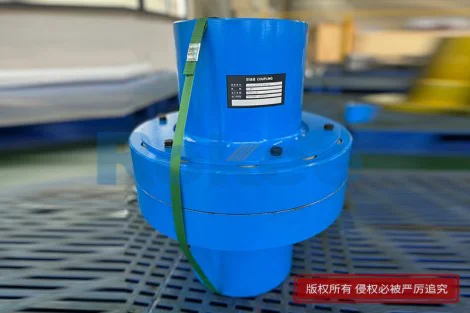
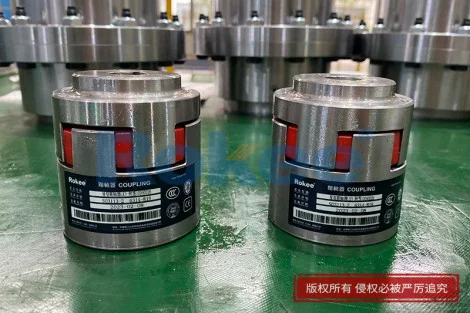
Rokee is a manufacturer of cardan shaft couplings from china, we can provide non-standard custom cardan shaft couplings based on parameters or drawings supplied by customers, with export support available.

As a core component of mechanical transmission systems, cardan shaft couplings occupy an irreplaceable position in modern industrial equipment and power transmission machinery. They are specially designed to transmit rotational torque and motion between two misaligned shafts, effectively solving the transmission obstacles caused by angular deviation, axial displacement and radial offset between driving and driven shafts. In complex mechanical operating environments, shaft misalignment is almost inevitable due to manufacturing tolerances, installation errors, equipment operation vibration, thermal expansion and cold contraction of components, and structural deformation under load. Traditional rigid transmission structures are difficult to adapt to such variable working conditions, while cardan shaft couplings rely on their unique flexible hinge structure to achieve stable and efficient power transmission under non-coaxial conditions, ensuring the continuous and reliable operation of mechanical equipment. With the continuous upgrading of industrial manufacturing and the gradual diversification of mechanical working scenarios, the performance requirements for cardan shaft couplings in terms of load capacity, transmission stability, durability and environmental adaptability are constantly improving, making them a key research and application object in the field of mechanical transmission.
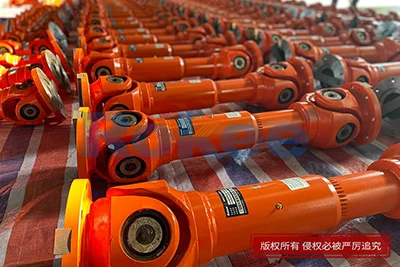

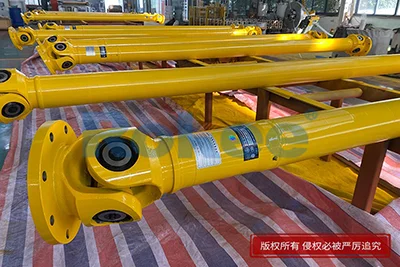
The basic structure and working principle of cardan shaft couplings constitute the foundation of their excellent transmission performance. The core of the coupling is a universal joint structure composed of cross shafts, yokes and precision bearings, forming a flexible connecting mechanism with spatial motion capability. A complete cardan shaft coupling usually adopts a double universal joint structure, which is composed of two single universal joints and an intermediate connecting shaft. Each single universal joint is equipped with a cross shaft in the middle, and the four ends of the cross shaft are connected with the bearings installed on the driving and driven yokes respectively. This structural design enables the coupling to realize multi-directional flexible rotation and angle compensation in the spatial range. The working operation follows the geometric motion law of spatial hinge movement. When the driving shaft rotates at a constant speed, the driving yoke drives the cross shaft to perform synchronous rotational motion, and the cross shaft further transmits power to the driven yoke and the driven shaft. A single universal joint has the characteristic of periodic angular velocity fluctuation during operation. When there is an included angle between the two shafts, the angular velocity of the driven shaft will change periodically with the rotation of the driving shaft, which may cause vibration and impact in the transmission process. The double universal joint structure perfectly compensates for this defect. By setting two universal joints with a symmetrical installation angle, the periodic velocity fluctuation generated by the first joint can be offset by the second joint, realizing constant-speed and stable torque transmission between the driving and driven shafts.
In terms of structural design details, the matching form of components directly affects the overall performance of the cardan shaft coupling. The cross shaft, as the core force-bearing component, needs to bear alternating torque and shear force during long-term operation, so it is usually made of high-strength alloy steel through forging, heat treatment and precision machining to ensure high rigidity, wear resistance and fatigue resistance. The bearings matched with the cross shaft are mostly needle roller bearings, which have the advantages of compact structure, small radial size and large load-bearing capacity, and can adapt to high-strength friction and impact working conditions for a long time. The intermediate connecting shaft is designed with an adjustable telescopic structure in most cases. Through the spline matching structure, it can effectively compensate for the axial displacement between the two shafts caused by equipment operation, thermal deformation and installation gaps, avoiding additional stress and transmission resistance in the transmission system. The flange structures at both ends of the coupling adopt high-precision processing technology, which can ensure the fitting accuracy with the connecting shaft end, improve the stability of power transmission, and prevent vibration and loosening caused by poor fitting during high-speed operation. The overall structural design integrates angle compensation, axial compensation and radial compensation functions, enabling the coupling to adapt to various complex misalignment working conditions that cannot be handled by ordinary rigid couplings.
Cardan shaft couplings have outstanding comprehensive performance advantages compared with other types of transmission couplings, which are the key reasons for their wide application in the industrial field. First of all, they have excellent multi-dimensional misalignment compensation capability. Different from elastic couplings that only allow small displacement deviation, cardan shaft couplings can realize large-angle angular compensation, and can stably transmit power under the condition of large included angle between driving and driven shafts. At the same time, they can adapt to axial and radial comprehensive displacement changes, with strong tolerance to equipment installation errors and operating deformation. Secondly, they have high torque transmission capacity and transmission efficiency. The rigid force-bearing structure of alloy steel materials enables the coupling to bear large instantaneous impact torque and long-term stable load torque, which is suitable for heavy-duty transmission working conditions. The precise hinge movement and low-friction bearing matching ensure low energy loss in the transmission process, and the power transmission efficiency can be maintained at a high level for a long time, effectively reducing the energy consumption of mechanical equipment operation.
In addition, the structural adaptability of cardan shaft couplings is extremely strong. The overall structure is simple and compact, without complex auxiliary transmission components, which is convenient for equipment assembly and later maintenance. The length of the intermediate shaft and the specification of the universal joint can be adjusted according to different transmission distances and load requirements, which can meet the transmission needs of short-distance rigid connection and long-distance cross-space power transmission. Meanwhile, the coupling has good dynamic stability. After the double universal joint corrects the velocity fluctuation, the vibration and noise generated during high-speed operation are extremely low, which can ensure the smooth operation of high-precision mechanical equipment. In terms of service life, through reasonable material selection and heat treatment process, the components have excellent wear resistance and fatigue resistance, and can maintain stable transmission performance in long-term continuous operation, harsh environmental conditions and frequent start-stop working states, reducing the frequency of equipment failure and shutdown maintenance.
The application scenarios of cardan shaft couplings cover almost all fields involving mechanical power transmission, with strong industrial universality. In the field of industrial manufacturing equipment, they are widely used in heavy-duty machine tools, metallurgical machinery, mining machinery and conveying equipment. For large-scale rolling mills, crushers and belt conveyors, the equipment will produce large vibration and structural deformation during operation, and the driving and driven shafts are prone to misalignment. Cardan shaft couplings can stably transmit power under such working conditions, ensuring the continuous operation of production equipment and improving production efficiency. In the field of engineering machinery, engineering vehicles such as excavators, loaders and cranes have complex and changeable working environments, and the power transmission system needs to adapt to frequent attitude changes and bumpy working conditions. The flexible compensation performance of cardan shaft couplings can effectively buffer the impact load generated during equipment operation and protect the engine and transmission system from damage.
In the automotive industry, cardan shaft couplings are important components of vehicle power transmission systems, especially for commercial vehicles and off-road vehicles. The uneven road surface will cause the chassis and transmission structure to shift dynamically during vehicle driving. The cardan shaft coupling can adapt to the real-time attitude change of the transmission shaft, realize stable power output, and ensure the power response sensitivity and driving stability of the vehicle. In the field of aerospace and precision mechanical equipment, high-precision customized cardan shaft couplings are used in some light-duty and high-speed transmission mechanisms. Through optimized structural design and precision processing technology, they can meet the requirements of high-precision, low-vibration and high-stability power transmission, and adapt to the strict working standards of precision equipment. In addition, in the fields of agricultural machinery, marine machinery and wind power equipment, cardan shaft couplings also play an important role, adapting to the harsh working environments such as field operation, marine humidity and wind load fluctuation, and providing reliable power transmission guarantee for various mechanical equipment.
Although cardan shaft couplings have excellent performance, their long-term stable operation is inseparable from standardized daily maintenance and scientific fault management. In the daily operation process, the most common problem is the wear of cross shafts and bearings. Long-term high-load operation will cause friction and wear of bearing rollers and cross shaft contact surfaces, resulting in increased transmission gap, vibration and noise, and even reduced transmission accuracy. Therefore, regular lubrication maintenance is essential. It is necessary to select high-quality lubricating grease suitable for working temperature and load conditions, and regularly supplement and replace lubricating oil to reduce component friction and wear. For the telescopic spline structure, it is also necessary to keep the surface lubricated and clean to prevent rust, dust accumulation and clamping stagnation, ensuring the flexibility of axial displacement compensation.
Regular inspection of equipment operating status is also an important part of maintenance. During the operation of the coupling, the running sound, vibration amplitude and temperature change should be monitored regularly. If abnormal noise, obvious vibration or excessive local temperature rise are found, the equipment should be shut down for inspection in time to eliminate hidden dangers such as component wear, loose connection and structural deformation. At the same time, check the fastening state of the connecting flange bolts regularly to prevent bolt loosening caused by long-term vibration, which will lead to transmission deviation and equipment failure. For the couplings that have been used for a long time, the fatigue degree of cross shafts, yokes and other key components should be checked regularly, and the aging and worn components should be replaced in time to avoid sudden failure during equipment operation.
In terms of fault handling, aiming at the common problems of cardan shaft couplings, targeted solutions can be adopted. The problem of large vibration and noise during operation is mostly caused by excessive component wear, unbalanced assembly or excessive misalignment angle. It is necessary to check the component matching gap, recalibrate the shaft alignment accuracy, and replace the severely worn bearings and cross shafts. The problem of inflexible telescopic movement of the coupling is usually caused by spline rust, dirt accumulation or insufficient lubrication. It is necessary to clean the spline surface thoroughly, remove rust and dirt, and re-apply lubricating grease to ensure flexible telescopic movement. For the phenomenon of torque transmission attenuation, it is mostly due to serious component wear or loose connection, which needs to be inspected and maintained item by item to restore the transmission performance of the coupling. Scientific maintenance and fault handling can effectively extend the service life of cardan shaft couplings, reduce equipment operation failure rate, and save equipment maintenance costs and production loss costs for industrial production.
With the continuous progress of industrial technology and the rapid development of intelligent manufacturing, the upgrading and optimization of cardan shaft coupling technology is also constantly promoted. At present, the development trend of cardan shaft couplings is mainly reflected in high performance, lightweight, high precision and intelligent maintenance. In terms of material optimization, with the application of new high-strength, wear-resistant and corrosion-resistant alloy materials and surface treatment processes, the comprehensive mechanical properties of couplings are continuously improved, which can adapt to higher load, higher speed and harsher working environments. In terms of structural optimization, through finite element analysis and dynamic simulation technology, the structural parameters of the coupling are optimized, the stress concentration of key components is reduced, the structural stability and fatigue resistance are improved, and the overall transmission efficiency and service life are further enhanced.
Lightweight design has become an important development direction of cardan shaft couplings applied in high-speed operation equipment and precision machinery. On the premise of ensuring structural strength and load capacity, through structural optimization and new material replacement, the self-weight of the coupling is reduced, the inertial resistance in the transmission process is reduced, and the dynamic response performance of the transmission system is improved. High-precision customization is gradually popularized. For high-precision mechanical transmission scenarios, customized processing is carried out according to actual working conditions such as transmission torque, misalignment angle and operating speed, so as to realize the perfect matching between coupling performance and equipment working conditions and meet the high-precision transmission needs of modern intelligent equipment.
In terms of intelligent operation and maintenance, with the development of sensor monitoring technology and industrial Internet technology, some high-end cardan shaft couplings have begun to be equipped with real-time monitoring modules. By installing vibration, temperature and torque sensors on the coupling, the operating state data of the equipment can be collected in real time, and the remote monitoring and fault early warning of the coupling operation can be realized. This intelligent maintenance mode changes the traditional passive maintenance mode of regular inspection and post-fault maintenance, realizes active early warning and predictive maintenance, effectively improves the safety and stability of equipment operation, and reduces unplanned shutdown losses of equipment.
In conclusion, cardan shaft couplings, as classic and efficient flexible transmission components, rely on their unique structural design, excellent misalignment compensation performance and stable torque transmission capacity, and have become indispensable core components in various mechanical transmission systems. They solve many bottleneck problems in traditional rigid transmission, adapt to complex and changeable industrial working conditions, and provide a reliable guarantee for the stable operation of various mechanical equipment. With the continuous innovation of material technology, processing technology and intelligent monitoring technology, the performance of cardan shaft couplings will be further improved, and their application fields will be more extensive. In the future industrial development process, cardan shaft couplings will continue to play an important role in promoting the efficient, stable and intelligent development of mechanical transmission systems, and provide solid technical support for the upgrading and progress of modern manufacturing industry.
« Cardan Shaft Couplings » Update Date: 2026/7/15
URL: https://www.rokee.com/en/tags/cardan-shaft-couplings.html
Contact
If you require custom machined couplings, please contact Rokee via the contact information below for inquiries.
Email: Rokee@Rokee.com
 WeChat