Types of Flexible Membrane Couplings
Rokee® is a well-known high-quality flexible membrane coupling supplier from china, learn more about types of flexible membrane couplings, pls contact Rokee technology. Rokee has been established in China since 1999, over the years, with excellent quality, we have been continuously providing many flexible membrane coupling products of various categories and uses complying with multiple standards and a full range of services, from the flexible membrane coupling selection to final installation and operation, for the industry fields of ferrous metallurgy, nuclear power, gas turbine, wind power, ropeway construction, lifting transportation, general equipment, etc.
There are many types of flexible couplings available on the market. Each has its own features and benefits, but all are required to perform a few primary functions: connect two shafts, transmit rotary power and compensate for some shaft misalignment. Elastic couplings are integrally formed metal elastomers, usually cut from metal round rods. Commonly used materials include aluminum alloy, stainless steel, and engineering plastics, which are suitable for various deviations and precise torque transmission.
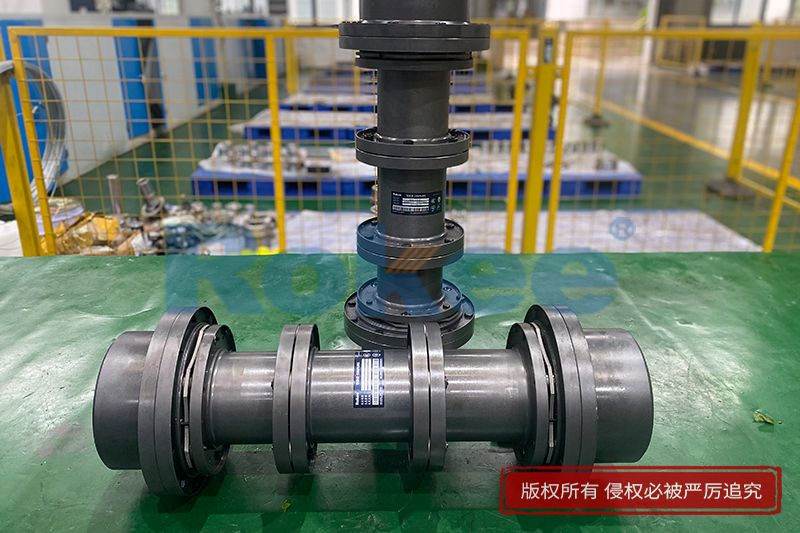
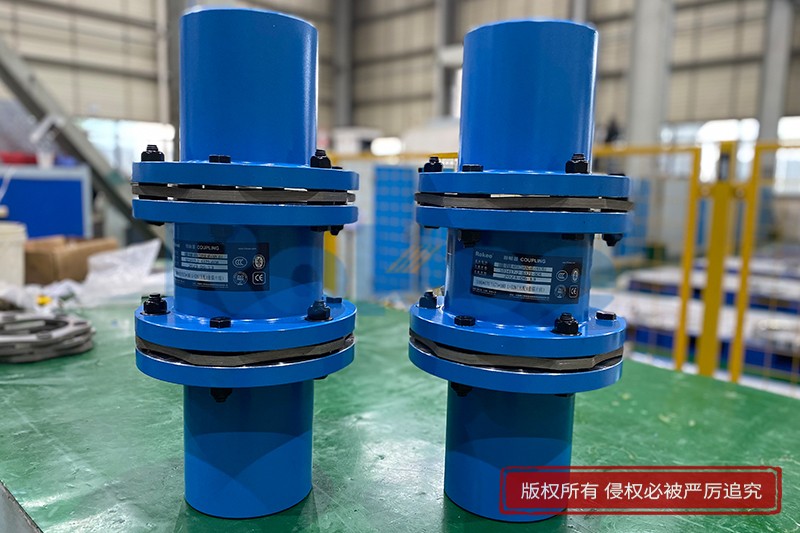
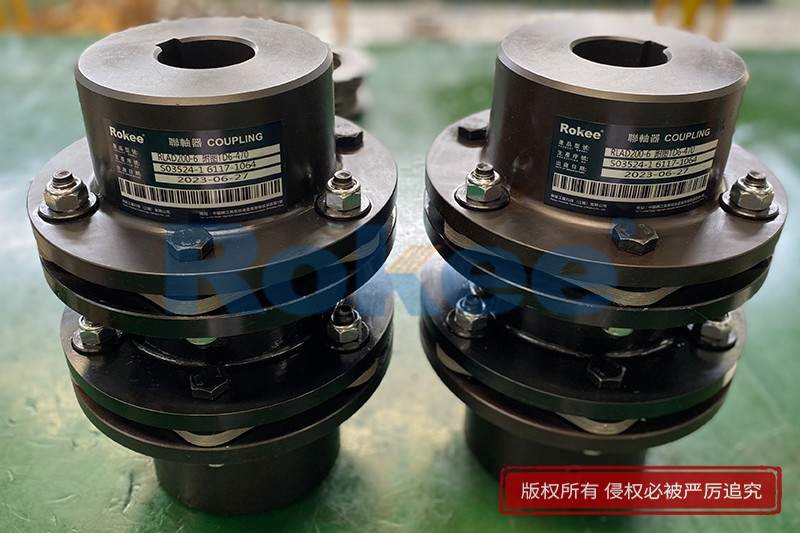
The flexible membrane coupling is a kind of high-performance metal flexible coupling, which compensates axial and angular displacements by the deformation of elastic diaphragm while transferring torque, flexible membrane coupling features with compact structure, large transmission torque, long service life, maintenance-free, high temperature resistance, acid and alkali resistance, and corrosion resistance, suitable for shafting transmission in high temperature, high speed and corrosive environment.
The flexible membrane coupling utilize a single or a series of plates or diaphragms for the flexible members, flexible membrane coupling transmits torque from the outside diameter of a flexible plate to the inside diameter, across the spool or spacer piece, and then from inside to outside diameter. The deflection of the outer diameter relative to the inner diameter is what occurs when the diaphragm is subject to misalignment.
Flexible Membrane Coupling Products
-
![RLM Diaphragm Coupling,Types of Flexible Membrane Couplings]()
RLM Diaphragm Coupling
Standard, Single Section, Small-scale
The RLM standard single section small metal diaphragm coupling is suitable for various industrial process pumps and small torque working situations with a working speed not exceeding 5000rpm, and cannot compensate for radial errors.View More -
![RLMD Diaphragm Coupling,Types of Flexible Membrane Couplings]()
RLMD Diaphragm Coupling
Standard, Bimodal, Small-scale
The RLMD standard double section small metal diaphragm coupling is suitable for various industrial process pumps and small torque working occasions with a working speed not exceeding 5000rpm.View More -
![RLA Diaphragm Coupling,Types of Flexible Membrane Couplings]()
RLA Diaphragm Coupling
Standard, Single Section
The classic design of metal flexible diaphragm couplings is a reliable choice for medium to low speed applications, but cannot compensate for radial deviation.View More -
![RLAD Diaphragm Coupling,Types of Flexible Membrane Couplings]()
RLAD Diaphragm Coupling
Standard, Bimodal
The classic design of metal flexible diaphragm couplings is a reliable choice for medium to low speed applications.View More -
![RLAR Diaphragm Coupling,Types of Flexible Membrane Couplings]()
RLAR Diaphragm Coupling
Single Shaft Sleeve, Reverse Installation
Single side shaft sleeve reverse installation design, suitable for occasions with limited shaft head distance.View More -
![RLARD Diaphragm Coupling,Types of Flexible Membrane Couplings]()
RLARD Diaphragm Coupling
Double Shaft Sleeve, Reverse Installation
The double-sided shaft sleeve reverse installation design is also applicable in situations where the distance from the shaft head is limited or the additional bending moment is smaller.View More -
![RLAF Diaphragm Coupling,Types of Flexible Membrane Couplings]()
RLAF Diaphragm Coupling
Large and Small Axis Installation
The size difference design of the bilateral shaft sleeve is suitable for situations where the diameter difference between the two ends of the shaft is significant.View More -
![RLAT Diaphragm Coupling,Types of Flexible Membrane Couplings]()
RLAT Diaphragm Coupling
Extra-long Wheelbase
Adopting an intermediate shaft design, suitable for ultra long shaft spacing power transmission applications.View More -
![RLQA Diaphragm Coupling,Types of Flexible Membrane Couplings]()
RLQA Diaphragm Coupling
No Flange, Quick Installation
Suitable for various industrial process pumps, fans, and other medium to low speed applications, with a maximum speed generally not exceeding 25000 rpm. It meets the requirements of API610/ISO14691 and is one of the first products for API applications.View More -
![RLQF Diaphragm Coupling,Types of Flexible Membrane Couplings]()
RLQF Diaphragm Coupling
Flange Type, Quick Installation
Suitable for drum pressure fans, turbine compressors, and other high speed applications, with a maximum speed of up to 35000rpm.View More -
![RLQU Diaphragm Coupling,Types of Flexible Membrane Couplings]()
RLQU Diaphragm Coupling
Improved Flange, Quick Installation
The improved RLQF has smaller additional bending moments and better performance. Suitable for drum pressure fans, turbine compressors, and other high speed applications.View More -
![RLHD Diaphragm Coupling,Types of Flexible Membrane Couplings]()
RLHD Diaphragm Coupling
High Speed
Suitable for higher speed applications, it also adopts a flexible component integrated assembly design, with a maximum speed of up to 42000rpm.View More -
![JMI Diaphragm Coupling,Types of Flexible Membrane Couplings]()
JMI Diaphragm Coupling
Basic Type, Counterbore
JMI metal diaphragm coupling adopts the single-piece design, suitable for short distance transmission. Besides, the semi-coupling sleeve at one end has a counterbore, facilitating the fixing of the shaft end.View More -
![JMIJ Diaphragm Coupling,Types of Flexible Membrane Couplings]()
JMIJ Diaphragm Coupling
Counterbore, Intermediate Shaft
JMIJ metal diaphragm coupling is designed with intermediate shaft, suitable for long distance transmission. Besides, the semi-coupling sleeve at one end has a counterbore, facilitating the fixing of the shaft end.View More -
![JMII Diaphragm Coupling,Types of Flexible Membrane Couplings]()
JMII Diaphragm Coupling
Single Section, No Counterbore
JMII metal diaphragm coupling also adopts the single-piece design but has no counterbore, suitable for short distance transmission, with more compact structure.View More -
![JMIIJ Diaphragm Coupling,Types of Flexible Membrane Couplings]()
JMIIJ Diaphragm Coupling
No Counterbore, Intermediate Shaft
JMIIJ metal diaphragm coupling is designed with intermediate shaft, suitable for long distance transmission. Besides, the semi-coupling sleeve at both ends have no counterbore.View More
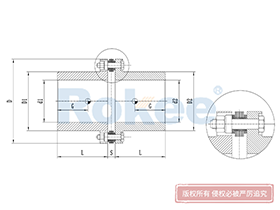
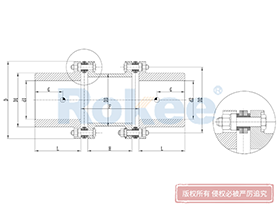
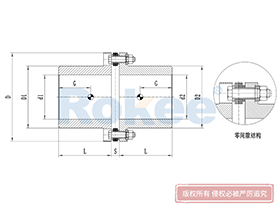
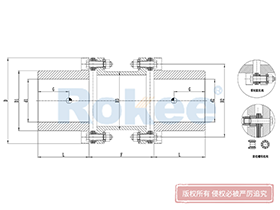
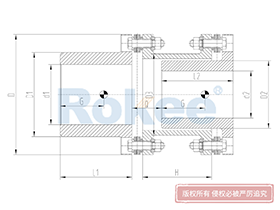
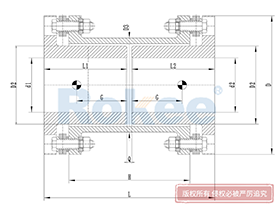
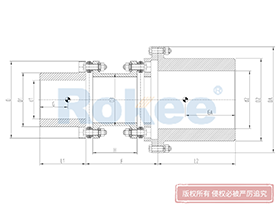
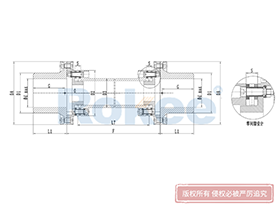
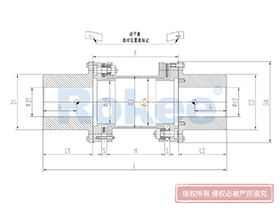
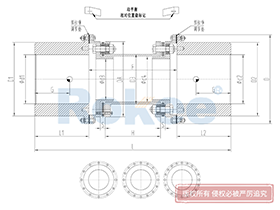
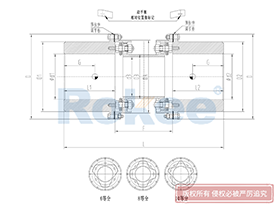
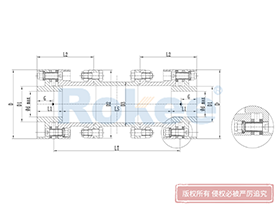
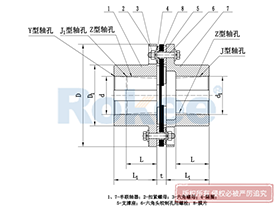
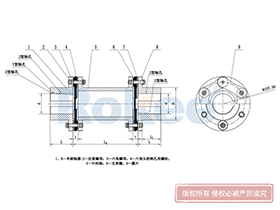
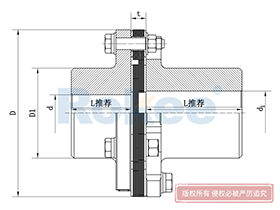
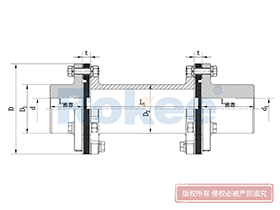
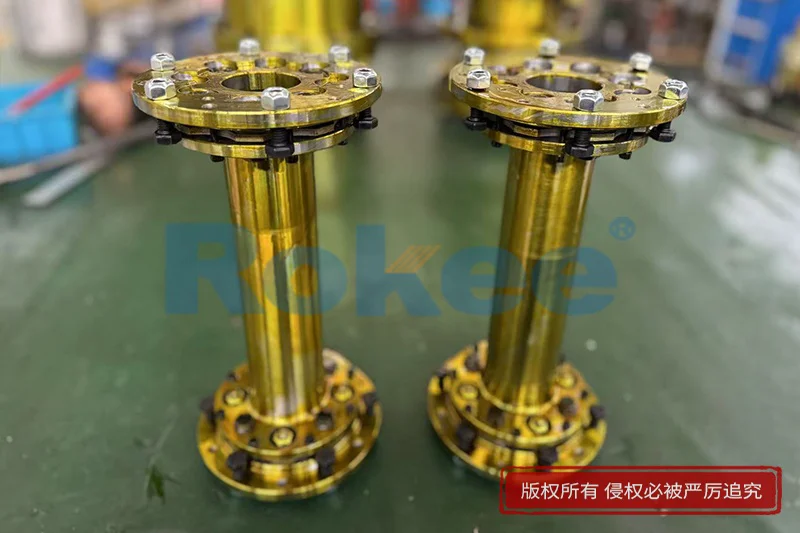
Flexible membrane couplings stand as indispensable components in modern mechanical power transmission systems, bridging the gap between driving and driven shafts while accommodating various forms of misalignment and dampening operational vibrations. Unlike rigid couplings that demand perfect shaft alignment and offer no tolerance for positional deviations, these flexible variants leverage the elastic deformation of thin, high-strength membrane elements to transmit torque efficiently, making them a staple in industries ranging from heavy machinery manufacturing and petrochemical processing to aerospace engineering and precision instrumentation. Their design versatility has spurred the development of multiple distinct types, each engineered to address specific operational challenges, load conditions, and alignment constraints, with classifications typically rooted in structural configuration, membrane geometry, and functional performance traits. Understanding the nuanced differences between these types is critical for engineers, maintenance professionals, and design teams tasked with selecting the optimal coupling for a given application, as mismatched choices can lead to premature component failure, increased energy consumption, and compromised system reliability over extended service life.
At the core of flexible membrane coupling design lies the membrane assembly, a precision-engineered component crafted from durable metallic alloys that balance tensile strength, fatigue resistance, and elastic flexibility. The fundamental purpose of this membrane is to transfer rotational torque from the input shaft to the output shaft while absorbing axial, radial, and angular misalignments that arise from manufacturing tolerances, thermal expansion, operational wear, or foundation settling. Each type of flexible membrane coupling modifies the structure, number, and arrangement of these membranes to tailor performance characteristics, such as torque capacity, misalignment tolerance, torsional stiffness, and vibration damping. One of the most prevalent classifications is based on the number of membrane sets integrated into the coupling body, distinguishing between single-membrane and double-membrane configurations, each with unique operational advantages and application suitability.
Single-membrane flexible couplings represent a streamlined, compact design centered around a single set of thin, circular or contoured membrane discs. This configuration features a central hub connected to the driving shaft, a single membrane element, and an outer hub linked to the driven shaft, with the membrane serving as the sole flexible medium for torque transmission and misalignment compensation. The simplicity of this design translates to several key benefits, including reduced axial space requirements, lower manufacturing complexity, and ease of installation and maintenance. Single-membrane models excel in applications with moderate misalignment demands, particularly angular misalignment, as the single membrane can flex and distort to accommodate small to medium angular offsets between shafts without sustaining structural damage. They are also favored in systems where weight reduction is a priority, such as light-duty industrial machinery, small-scale pump drives, and precision rotary equipment, where excessive mass could disrupt rotational balance or increase inertial loads. However, this design has inherent limitations; the single membrane bears the full brunt of misalignment stresses and torque loads, resulting in lower axial misalignment tolerance compared to more complex configurations. Additionally, single-membrane couplings offer minimal damping for torsional vibrations, making them less suitable for high-load, high-speed applications with frequent torque fluctuations or significant shaft displacement. Despite these constraints, their cost-effectiveness and compact footprint ensure they remain a practical choice for a wide range of general-purpose power transmission setups where operational demands are relatively mild and consistent.
In contrast, double-membrane flexible couplings address the shortcomings of single-membrane designs by incorporating two separate membrane sets positioned on either side of a central spacer or intermediate hub. This dual-membrane architecture creates a balanced flexing system, where each membrane set handles a portion of the misalignment and torque loads, significantly enhancing the coupling’s overall performance and durability. The central spacer acts as a rigid connector between the two membranes, isolating the flexing elements and distributing stresses evenly across both membrane assemblies. This design drastically improves axial misalignment tolerance, allowing the coupling to accommodate substantial axial shaft movement caused by thermal expansion or mechanical shifting without placing excessive strain on either membrane. Double-membrane couplings also deliver superior angular and radial misalignment capabilities, making them ideal for heavy-duty industrial applications where shaft alignment is difficult to maintain or where operational conditions induce frequent positional changes. Common use cases include large industrial pumps, compressors, gearboxes, turbine drives, and conveyor systems, where high torque transmission, reliable misalignment compensation, and extended service life are non-negotiable requirements. The dual-membrane structure also enhances torsional stability and provides modest vibration damping, reducing the transmission of harmful resonant frequencies between driving and driven components. While double-membrane couplings are larger and more structurally complex than their single-membrane counterparts, requiring slightly more axial installation space, their enhanced performance and resilience justify the incremental design complexity for demanding operational environments. The balanced load distribution also boosts fatigue resistance, allowing these couplings to operate reliably at higher speeds and under heavier cyclic loads without premature cracking or failure of the membrane elements.
Beyond the single and double-membrane classification, flexible membrane couplings can be further categorized by the geometric profile and construction of the membrane elements themselves, with two primary profiles dominating the market: flat disc membranes and contoured or curved membranes. Flat disc membrane couplings feature thin, uniform circular membranes with a flat, planar surface, typically secured to the coupling hubs via precision bolted connections around the outer perimeter. This flat design offers consistent elastic deformation characteristics across the membrane surface, ensuring uniform torque distribution and predictable flexing under misalignment conditions. Flat disc membranes are manufactured with precise thickness tolerances to optimize flexibility and strength, making them suitable for both low-speed, high-torque applications and high-speed, moderate-torque setups. Their uniform structure also simplifies replacement and maintenance, as worn or damaged flat membranes can be easily swapped out without specialized tooling, minimizing downtime in industrial operations. Contoured membrane couplings, on the other hand, feature membranes with a curved, domed, or profiled geometry engineered to enhance flexural capabilities and stress distribution. The contoured shape allows the membrane to deform more freely under misalignment loads, reducing stress concentrations at critical attachment points and improving overall fatigue life. This design is particularly advantageous for applications with extreme angular misalignment or high cyclic loading, as the curved profile distributes flexing stresses across a larger surface area, preventing localized wear and tear. Contoured membranes are often utilized in specialized industrial machinery, marine propulsion systems, and high-performance rotary equipment where operational stresses are elevated and reliability is paramount. While both flat and contoured membrane designs deliver exceptional torque transmission efficiency, the choice between them hinges on the specific misalignment profile, load magnitude, and operational speed of the target system, with contoured designs offering enhanced flexibility and flat designs providing greater structural simplicity.
Another key classification of flexible membrane couplings is based on their torsional stiffness and damping properties, separating them into rigid-flex and soft-flex variants tailored to distinct operational dynamics. Rigid-flex membrane couplings prioritize high torsional stiffness, minimizing wind-up and ensuring precise torque transmission between shafts. This makes them ideal for precision-driven applications, such as machine tool spindles, robotic actuators, and indexing equipment, where positional accuracy and responsive power transfer are critical. The high stiffness of these couplings prevents torsional deflection under load, maintaining synchronous rotation between driving and driven components and eliminating lag that could compromise operational precision. While rigid-flex models offer limited vibration damping due to their stiff membrane design, their precision performance makes them indispensable in industries where even minor rotational deviations can lead to product defects or equipment malfunction. Soft-flex membrane couplings, by contrast, feature thinner, more flexible membranes designed to prioritize vibration damping and shock absorption over maximum torsional stiffness. These couplings excel in applications with high torsional vibrations, intermittent shock loads, or non-uniform torque output, such as reciprocating compressors, internal combustion engine drives, and material handling equipment. The enhanced flexibility of the membranes absorbs sudden torque spikes and dampens resonant vibrations, reducing wear on bearings, gears, and other downstream components and extending the overall service life of the power transmission system. Soft-flex couplings also offer greater misalignment tolerance than rigid-flex variants, making them a versatile choice for systems with imperfect shaft alignment or variable operational conditions. The distinction between rigid-flex and soft-flex designs underscores the adaptability of flexible membrane couplings, allowing engineers to fine-tune performance to match the unique dynamic requirements of each application, rather than relying on a one-size-fits-all solution.
When evaluating and selecting among the various types of flexible membrane couplings, several core factors must be considered to ensure optimal performance and longevity, extending beyond basic structural classification. Torque capacity stands as a primary consideration, requiring the coupling to handle both steady-state operating torque and peak transient loads without exceeding the elastic limits of the membrane elements. Underestimating torque requirements can lead to membrane rupture or permanent deformation, while over-specifying torque capacity can result in unnecessary design complexity and increased component size. Misalignment characteristics are equally critical, with engineers needing to assess the magnitude and type of misalignment—axial, radial, angular, or combined—that the system will encounter. Double-membrane and contoured membrane designs are better suited for high misalignment scenarios, while single-membrane and flat disc models suffice for mild positional deviations. Operational speed is another vital parameter, as high-speed applications demand couplings with excellent balance characteristics and minimal radial runout to prevent vibration and premature bearing failure. Membrane material selection, typically high-grade alloy steels or stainless steels chosen for corrosion resistance and fatigue strength, also influences coupling performance, particularly in harsh operating environments such as corrosive chemical plants or high-temperature industrial settings. Environmental factors, including temperature extremes, moisture, and chemical exposure, further narrow the selection range, with certain membrane and hub materials better equipped to withstand harsh conditions without degradation.
Installation and maintenance practices also play a pivotal role in maximizing the performance of flexible membrane couplings across all types, regardless of structural design. Proper shaft alignment during installation, even for flexible models, reduces unnecessary stress on the membrane elements and extends service life, as excessive misalignment beyond the coupling’s rated capacity will accelerate wear and lead to early failure. Regular inspection protocols, including visual checks for membrane cracking, bolt loosening, or corrosion, and periodic torque verification of fasteners, help identify potential issues before they escalate into catastrophic failures. Lubrication is generally minimal for membrane couplings, as the flexing action relies on elastic deformation rather than sliding contact, reducing maintenance requirements compared to gear or grid couplings. However, ensuring that the coupling is protected from abrasive contaminants and corrosive substances remains essential, as foreign particles can cause abrasive wear on the membrane surface, compromising flexibility and strength over time. Replacement of worn membranes is a straightforward process for most standard designs, with modular construction allowing for quick component replacement without full disassembly of the power transmission system, minimizing operational downtime and maintenance costs.
The ongoing evolution of flexible membrane coupling designs continues to expand their versatility and application range, with advancements in material science and precision manufacturing techniques refining the performance of existing types and enabling the development of specialized variants for niche industrial needs. Modern manufacturing processes, such as precision laser cutting and CNC machining, allow for ultra-precise membrane profiling and tight tolerances, enhancing the consistency and reliability of both flat and contoured membrane designs. Advanced alloy materials with improved fatigue resistance and high-temperature stability further boost the operational limits of membrane couplings, allowing them to perform in extreme environments that were once unsuitable for flexible coupling technology. Despite the emergence of new power transmission components, flexible membrane couplings remain a preferred choice due to their unique combination of torque transmission efficiency, misalignment compensation, and low maintenance requirements. The diverse array of types—from compact single-membrane models for light-duty applications to robust double-membrane, contoured designs for heavy industrial use—ensures that there is a flexible membrane coupling solution for nearly every mechanical power transmission scenario.
In summary, flexible membrane couplings encompass a diverse family of designs, each engineered to deliver targeted performance benefits for specific operational conditions. Single-membrane configurations offer simplicity and compactness for general-purpose use, while double-membrane designs provide enhanced misalignment tolerance and load capacity for heavy-duty applications. Flat and contoured membrane profiles cater to varying flexibility and stress distribution needs, and rigid-flex versus soft-flex variants address precision and vibration damping requirements respectively. By understanding the structural differences, performance traits, and ideal application spaces of each type, engineering professionals can make informed selection decisions that optimize system efficiency, reliability, and service life. As industrial machinery continues to evolve toward higher speeds, heavier loads, and more demanding operating environments, the role of flexible membrane couplings will only grow in importance, with ongoing design innovations ensuring they remain a cornerstone of modern mechanical power transmission systems for years to come.
« Types of Flexible Membrane Couplings » Update Date: 2026/3/7
URL: http://www.rokee.com/en/blog/types-of-flexible-membrane-couplings.html