Universal Coupling Joint Uses
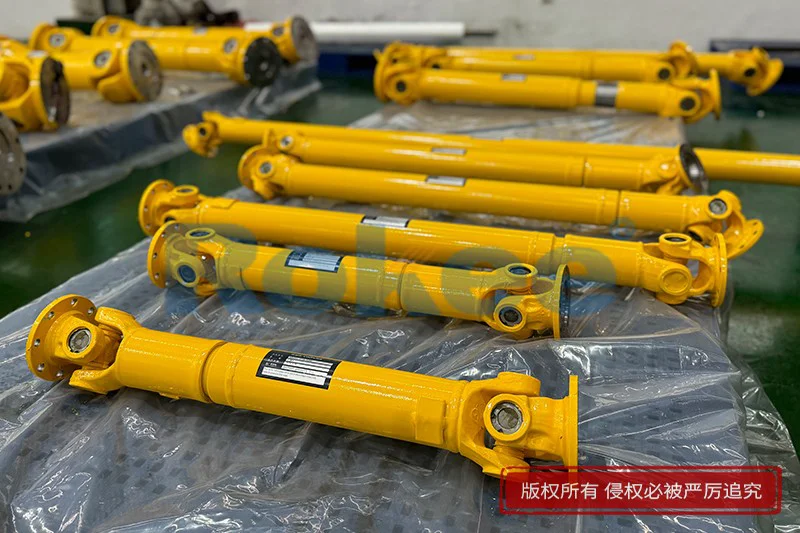
A universal coupling joint, often referred to simply as a universal joint or U-joint, is a fundamental mechanical component that has reshaped the design and functionality of countless mechanical systems across global industries. At its core, this device serves the critical purpose of connecting two rotating shafts that are not aligned in a straight line, enabling the efficient transmission of torque and rotational motion even when the shafts are positioned at varying angles to one another. Unlike rigid couplings that demand perfect shaft alignment, universal coupling joints offer unparalleled flexibility, compensating for angular misalignment, minor axial shifts, and even parallel displacement in certain configurations, making them indispensable in systems where shaft movement is inevitable due to operational dynamics, environmental factors, or structural design constraints. This inherent adaptability has cemented the universal coupling joint as a cornerstone of power transmission engineering, with applications spanning from everyday consumer machinery to heavy-duty industrial equipment, precision aerospace systems, and rugged marine vessels. The versatility of these joints stems from their simple yet robust construction—typically featuring a cross-shaped trunnion, paired yokes, and bearing components that facilitate smooth articulation—allowing them to operate reliably under diverse load conditions, speed ranges, and environmental stresses without compromising power transfer efficiency.
One of the most prevalent and impactful applications of universal coupling joints lies within the automotive industry, where they play a non-negotiable role in ensuring smooth vehicle operation and drivetrain performance. In rear-wheel-drive and four-wheel-drive vehicles, universal joints are integrated into the driveshaft assembly, bridging the gap between the transmission output shaft and the differential input shaft. As vehicles traverse uneven road surfaces, navigate turns, or encounter bumps, the suspension system compresses and rebounds, causing constant shifts in the relative position of the transmission and rear axle. Without universal joints to accommodate these angular changes, the driveshaft would bind, leading to catastrophic mechanical failure, excessive vibration, and premature wear of drivetrain components. Beyond the primary driveshaft, universal joints are also widely used in automotive steering systems, transmitting rotational motion from the steering wheel to the steering rack or gearbox. The steering column is rarely a straight, rigid assembly, and the joint allows for the necessary angular flexibility to maintain precise steering control while accounting for minor movements in the vehicle’s chassis and dashboard structure. Additionally, these joints find use in auxiliary automotive systems such as power take-off units for commercial vehicles, connecting the engine to hydraulic pumps, winches, or other external equipment, ensuring reliable power delivery even when the auxiliary components are mounted at an angle to the main drivetrain. In passenger vehicles, they also support the operation of windshield wiper linkages, seat adjustment mechanisms, and HVAC blower motors, showcasing their versatility across both primary and secondary automotive systems.
The industrial sector relies heavily on universal coupling joints to keep manufacturing, processing, and material handling operations running seamlessly, with applications spanning nearly every subsector of heavy industry and light manufacturing. In conveyor systems, which form the backbone of logistics, packaging, and production facilities worldwide, universal joints connect drive motors to conveyor rollers and shafts across long distances or non-linear paths. Many conveyor setups are not perfectly straight due to facility layout constraints, thermal expansion of metal components, or the need to navigate around machinery and structural pillars; universal joints compensate for these misalignments, ensuring consistent rotational power reaches every section of the conveyor and preventing jams or uneven material flow. In heavy machinery such as rolling mills, crushers, mixers, and extruders, these joints handle high-torque loads, transmitting power from large electric motors or hydraulic drives to the operational components that process raw materials. Industrial environments are often characterized by heavy vibration, shock loads, and exposure to dust, debris, and moisture, and universal joints are engineered to withstand these harsh conditions, maintaining consistent performance and reducing downtime associated with shaft alignment issues. They are also integral to pump and compressor systems, connecting motor shafts to pump impellers or compressor pistons in scenarios where perfect shaft alignment is impractical—such as in portable pumping units, industrial cooling systems, and compressed air networks. Furthermore, universal coupling joints are used in machine tools, printing presses, and textile manufacturing equipment, enabling precise power transmission for intricate production processes where even minor shaft misalignment could compromise product quality or operational accuracy.
Aerospace and defense systems demand the highest levels of precision, reliability, and durability, and universal coupling joints meet these stringent requirements by delivering consistent performance in extreme operating conditions. In aircraft, these joints are critical components of flight control systems, transmitting mechanical input from cockpit controls to ailerons, rudders, elevators, and other flight surfaces. The complex structure of an aircraft means that control linkages must navigate through multiple angles and compartments, and universal joints provide the necessary flexibility to maintain smooth, responsive control without mechanical slack or binding. They are also used in aircraft landing gear systems, connecting hydraulic actuators to gear retraction mechanisms and accommodating the angular movements that occur during takeoff, landing, and gear deployment. In addition to flight systems, universal joints support auxiliary aerospace equipment such as cargo loading mechanisms, engine starter systems, and environmental control units, where reliable power transmission is essential for safe and efficient flight operations. For defense applications, including military vehicles, naval vessels, and tactical machinery, universal joints are engineered to withstand extreme temperatures, high impact loads, and harsh battlefield conditions, ensuring consistent performance in mission-critical scenarios where equipment failure is not an option. Their compact design and high torque capacity also make them ideal for use in unmanned aerial vehicles (UAVs) and satellite deployment systems, where space is limited and operational reliability is paramount.
Marine and offshore engineering present unique challenges for mechanical components, including exposure to saltwater, corrosion, constant vibration, and dynamic shaft movement, and universal coupling joints are specially adapted to thrive in these demanding environments. In boats, ships, and offshore rigs, these joints are primarily used in propeller shaft assemblies, connecting the engine or gearbox to the propeller shaft that extends through the hull. The hull of a marine vessel flexes and shifts under wave action, and the engine and propeller shaft rarely maintain perfect alignment; universal joints compensate for these angular and positional changes, ensuring efficient power transfer to the propeller without causing damage to the drivetrain. They also reduce vibration transfer from the engine to the hull, improving passenger comfort, reducing noise levels, and extending the lifespan of marine structural components. Beyond propulsion systems, universal joints are used in marine steering mechanisms, winch and hoist drives, and auxiliary equipment such as water pumps, bilge systems, and deck machinery. For offshore drilling and production platforms, they support the operation of cranes, pumping systems, and material handling equipment, where resistance to saltwater corrosion and consistent performance under heavy loads are essential. Marine-grade universal joints are often constructed from corrosion-resistant alloys and feature sealed bearing designs to prevent water intrusion and lubricant loss, ensuring long-term durability in the harsh marine environment.
Agricultural machinery relies on universal coupling joints to deliver reliable performance in rugged, outdoor conditions, where equipment must handle uneven terrain, heavy loads, and constant movement. Tractors, combines, harvesters, and other farm equipment use universal joints extensively in power take-off (PTO) systems, which transfer power from the tractor’s engine to attached implements such as plows, mowers, balers, and seeders. These implements are often mounted at varying angles to the tractor, and the terrain in fields is rarely flat, creating constant shifts in shaft alignment; universal joints ensure uninterrupted power delivery, allowing farmers to operate equipment efficiently across diverse landscapes. They are also used in the drivetrains of agricultural vehicles, accommodating the suspension movement and wheel articulation that occurs when traversing rough farmland. The robust design of agricultural universal joints enables them to handle the high torque loads associated with heavy farming tasks, as well as exposure to dirt, mud, plant debris, and varying weather conditions. Without these joints, agricultural machinery would be limited to flat, even terrain, and the efficiency of modern farming operations— which rely heavily on mechanized equipment—would be severely compromised. They also support smaller agricultural equipment such as irrigation pumps, portable grinders, and feed mixers, making them a vital component of both large-scale commercial farming and small-scale agricultural operations.
Beyond these major industries, universal coupling joints find countless niche and specialized applications across a wide range of sectors, highlighting their unparalleled versatility. In medical equipment, they are used in precision devices such as surgical robots, diagnostic imaging machines, and patient mobility aids, where smooth, precise power transmission and compact design are critical. In construction machinery, including excavators, bulldozers, and cranes, universal joints support hydraulic system controls, drivetrain operations, and boom articulation, handling heavy loads and constant movement on job sites. They are integrated into residential and commercial HVAC systems, connecting fan motors to ductwork components and accommodating minor misalignments caused by installation or thermal expansion. In material processing equipment for food and beverage production, pharmaceutical manufacturing, and chemical processing, stainless steel universal joints are used to meet hygiene and corrosion resistance requirements, ensuring safe and reliable operation in sterile or corrosive environments. Even in consumer goods such as washing machines, dryers, and power tools, universal joints play a small but essential role, enabling smooth operation and reducing noise and vibration by compensating for minor shaft misalignment. This widespread use across diverse applications underscores the universal coupling joint’s status as a foundational mechanical component, one that enables the functionality of nearly every rotating mechanical system in modern life.
The effectiveness of universal coupling joints in any application depends heavily on proper selection, installation, and maintenance, all of which are tailored to the specific operational requirements of the system. When selecting a universal joint, engineers must consider factors such as torque load, rotational speed, operating angle range, environmental conditions, and space constraints. Different joint designs—including single universal joints for moderate angular misalignment, double universal joints for greater flexibility and parallel misalignment compensation, and sealed joints for harsh environments—are chosen to match the unique demands of each application. Proper installation ensures that the joint is aligned within its recommended operating angle range, preventing excessive wear and reducing the risk of premature failure. Regular maintenance, including lubrication of bearing components, inspection for wear or damage, and alignment checks, extends the lifespan of the joint and ensures consistent performance over time. Even in applications with minimal maintenance access, heavy-duty universal joints with self-lubricating bearings and rugged construction are available to deliver reliable operation with minimal upkeep. By matching the right universal joint design to the application’s needs, engineers and technicians can maximize system efficiency, reduce maintenance costs, and minimize downtime across all types of mechanical systems.
In summary, the universal coupling joint is a remarkably simple yet transformative mechanical component whose uses extend far beyond basic power transmission. Its ability to accommodate shaft misalignment and transmit rotational motion across varying angles has revolutionized mechanical engineering, enabling the design of more flexible, durable, and efficient systems across every industry. From the vehicles we drive and the machinery that produces our goods to the aircraft that connect the world and the equipment that feeds global populations, universal coupling joints are integral to the functionality of modern technology and infrastructure. Their adaptability to diverse operating conditions, load capacities, and spatial constraints ensures that they will remain a vital component of mechanical design for years to come, continuing to support innovation and efficiency across countless applications. As industrial, automotive, aerospace, and marine technologies continue to evolve, the universal coupling joint will adapt alongside them, maintaining its position as an essential building block of reliable, high-performance mechanical systems worldwide.
Tags: Universal Coupling Joint , Universal Coupling Shaft , Universal Couplings , sandwich panel machine , pu sandwich panel line
« Universal Coupling Joint Uses » Update Date: 2026/7/15
URL: https://www.rokee.com/en/blog/universal-coupling-joint-uses.html
Contact
If you require custom machined couplings, please contact Rokee via the contact information below for inquiries.
Email: Rokee@Rokee.com
 WeChat
Industrial Couplings
You may also like
- Universal Joint Shaft Coupling Schematic Diagram
- Working Principle of Bush Pin Type Flexible Coupling
- Cross Cardan Shafts 3D Model
- Universal Couplings Size Chart
- Types of Spline Gear Couplings
- Universal Cross Joint Coupling Size Chart
- Diaphragm Coupling Types
- Types of Barrel Gear Couplings
- Jaw Coupling Size Chart
- Plate Couplings Engineering Drawing