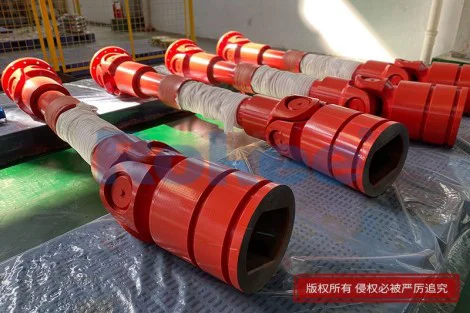
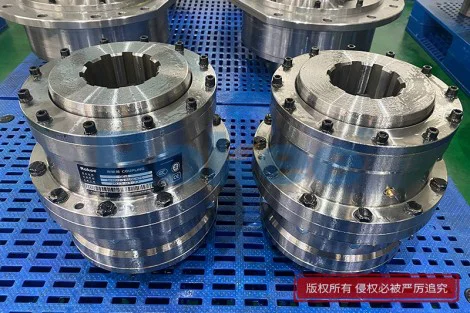
Industrial Cardan Shafts
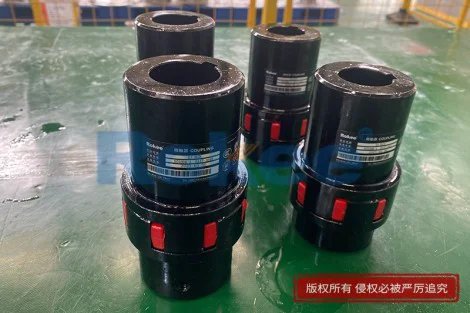
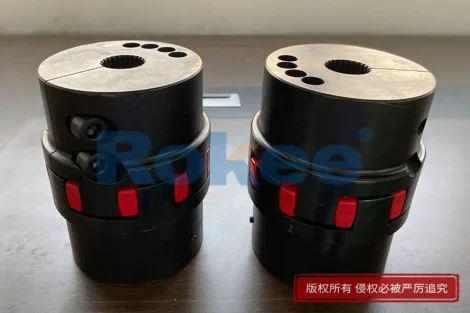
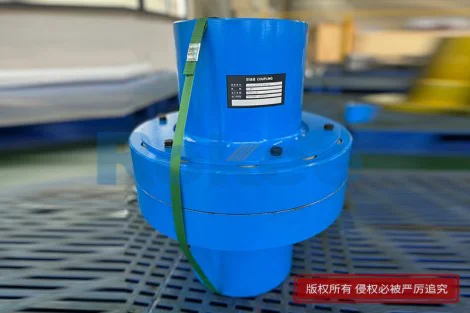
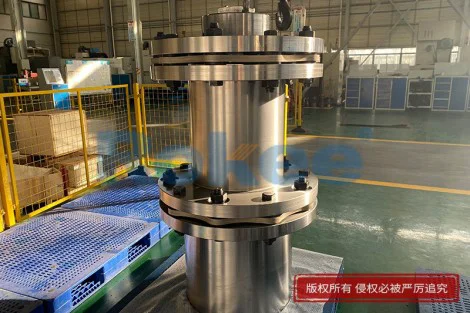
Rokee is a manufacturer of industrial cardan shafts from china, we can provide non-standard custom industrial cardan shafts based on parameters or drawings supplied by customers, with export support available.
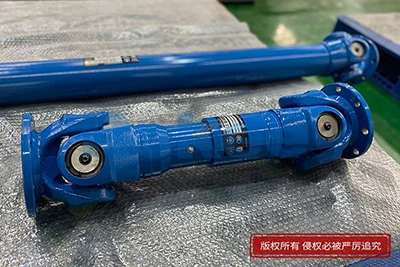
As a core flexible transmission component in modern industrial mechanical systems, the industrial cardan shaft has become an indispensable connecting medium for power transmission between mechanical equipment. Rooted in the spatial linkage mechanism theory of mechanical kinematics, this specialized transmission device breaks through the limitations of rigid coupling structures, enabling stable and efficient torque and rotational power transmission between two shafts that are not strictly coaxial, have angular deflection, or produce dynamic displacement during operation. With the continuous upgrading of industrial manufacturing towards high precision, high load, and high dynamic operation, the performance stability and service reliability of industrial cardan shafts directly affect the overall operating efficiency, safety and service life of complete mechanical equipment, covering almost all heavy industry, precision manufacturing and mobile mechanical scenarios that require flexible power transmission.
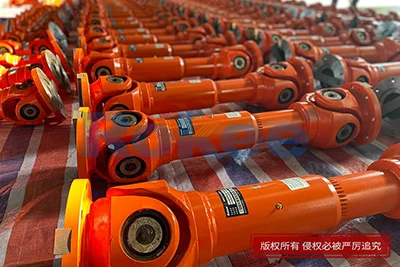
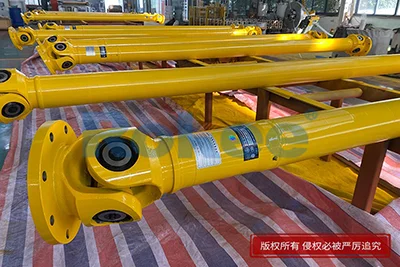

The basic operating logic of the industrial cardan shaft originates from the flexible coordination movement of universal joint structures and intermediate transmission shafts. Different from rigid transmission parts that rely on fixed coaxial connection to transmit power, the cardan shaft adopts a multi-dimensional flexible connection design with cross shaft assemblies and bearing components as the core. When the driving end mechanical component outputs rotational torque, the power is first transmitted to the joint yoke of the universal joint, and then transferred to the cross shaft through the precision bearing assembly. The cross shaft, with its multi-directional rotational freedom, can adapt to the angular deviation between the driving shaft and the driven shaft, converting the irregular rotational displacement of the driving end into stable and continuous rotational motion of the driven end. This unique mechanical motion principle allows the cardan shaft to maintain effective power transmission within a certain angular deflection range, and can automatically compensate for tiny axial and radial displacements generated by equipment vibration, thermal expansion and mechanical wear during long-term operation, solving the core problem of difficult power transmission of offset shafts in industrial mechanical operation.
The structural design of industrial cardan shafts follows the dual design concepts of mechanical stability and industrial adaptability, and the overall composition is precise and rigorous without redundant structures. The main body consists of universal joints at both ends, a middle transmission shaft tube, telescopic adjusting components and high-precision bearing systems. The universal joint is the core functional unit of the entire device, and its internal cross shaft and needle roller bearings are processed with high-strength alloy materials through precision forging and heat treatment processes, which can withstand high torque impact and frequent alternating load operation. The middle shaft tube adopts integrated seamless pipe processing or welded high-strength structural design, which balances lightweight performance and structural rigidity, avoiding bending deformation and torsional vibration under high-speed and heavy-load working conditions. The built-in telescopic mechanism can adapt to the axial distance change between equipment parts caused by mechanical movement, installation deviation and equipment operation deformation, ensuring that the transmission connection state is always stable. All matching sealing and lubricating components are designed for industrial harsh working conditions, which can effectively isolate dust, moisture and corrosive media in the external environment and protect the internal precision moving parts.
In terms of mechanical performance characteristics, industrial cardan shafts have outstanding comprehensive advantages that other transmission couplings cannot replace. First of all, they have excellent misalignment compensation capability, which can simultaneously adapt to angular offset, axial displacement and radial deviation between transmission shafts, and has a far higher tolerance range for installation errors and dynamic operation displacement than flange couplings, gear couplings and other rigid connection parts. Secondly, the torque transmission efficiency is extremely high. The flexible hinge structure reduces mechanical friction loss and rigid impact in the power transmission process, realizing efficient and stable transmission of rotational power, and the power loss rate is kept at a very low level during long-term continuous operation. In addition, the cardan shaft has strong load adaptability, which can stably cope with various complex working conditions such as static load, alternating load, instantaneous impact load and high-speed rotating load, and will not produce jitter, stuck or power interruption due to sudden load changes. At the same time, the overall structural flexibility enables it to buffer and absorb part of the mechanical vibration and impact generated by equipment operation, reducing the vibration conduction between connected equipment components and optimizing the overall operating stability of the mechanical system.
The application scenarios of industrial cardan shafts cover the entire industrial mechanical field, showing extremely high industrial versatility and scenario adaptability. In the field of engineering machinery and heavy equipment, cardan shafts are widely used in power transmission systems of excavators, loaders, cranes, road rollers and other mobile heavy machinery. The working environment of such equipment is complex and changeable, with frequent body jitter, angle adjustment and displacement changes during operation. The flexible transmission performance of cardan shafts can perfectly adapt to the dynamic offset of the power system, ensuring continuous power output of the hydraulic system and walking mechanism. In the field of industrial manufacturing equipment, they serve as key connecting parts of transmission systems for metallurgical rolling mills, mining machinery, cement production lines, paper-making equipment and chemical processing equipment. These industrial production lines require long-term uninterrupted continuous operation, and the high stability and fatigue resistance of cardan shafts can meet the long-cycle and high-intensity operation requirements of production equipment, avoiding production interruption caused by transmission component failure.
In the transportation and special machinery industry, the application value of industrial cardan shafts is also prominent. In commercial vehicle manufacturing, they are used for power connection between vehicle engines, gearboxes and drive axles, adapting to the body jitter and axle displacement changes during vehicle driving, and ensuring stable power output during vehicle acceleration, deceleration and bumpy road driving. In marine and port machinery equipment, cardan shafts with enhanced corrosion resistance and sealing performance are applied to ship power transmission systems and port handling machinery, adapting to humid and salt-spray corrosive working environments and frequent mechanical displacement operations. In addition, in the fields of aerospace auxiliary equipment, agricultural machinery and precision testing equipment, customized cardan shaft products are also used to complete flexible power transmission in special working conditions, providing reliable mechanical connection guarantees for different types of professional equipment.
To maintain the long-term stable operation of industrial cardan shafts and extend their service life, standardized daily operation and scientific maintenance management are essential. In the daily operation process, equipment operators need to avoid long-term overload operation and instantaneous extreme torque impact, because excessive load will cause irreversible fatigue deformation of the cross shaft, bearings and shaft tube structures, and even lead to component fracture in severe cases. At the same time, it is necessary to avoid long-term high-speed operation beyond the design range, so as to prevent excessive friction and temperature rise of internal moving parts, which will accelerate the aging and wear of accessories. For equipment operating in high dust, high humidity and corrosive environments, regular inspection of the sealing structure integrity is required to prevent external impurities from entering the universal joint interior and causing bearing wear, jitter or stuck failure.
Regular lubrication maintenance is the core link of cardan shaft maintenance. The internal needle roller bearings and hinge friction pairs need to be filled with special high-temperature and wear-resistant lubricating grease regularly to reduce mechanical friction and heat generation. The lubrication cycle needs to be adjusted according to the actual working intensity and environment of the equipment. High-intensity continuous operating equipment requires shortened lubrication intervals to ensure the lubricating state of moving parts. In the regular maintenance process, it is also necessary to check the tightness of each connecting fastener, the deformation degree of the shaft tube, and the wear state of the universal joint hinge gap. Once abnormal vibration, abnormal noise, transmission jitter and other faults are found during equipment operation, the machine should be shut down for inspection in a timely manner to eliminate hidden dangers, avoiding small faults expanding into overall transmission system failure and affecting the normal operation of the entire production line.
With the iterative upgrading of industrial intelligent manufacturing technology, the industrial cardan shaft industry is also constantly carrying out technological innovation and performance optimization. Traditional cardan shaft products are gradually optimized in terms of material technology, structural design and processing technology. High-strength wear-resistant alloy materials and surface anti-corrosion and wear-resistant coating processes are widely used, which significantly improve the product's load resistance, wear resistance and environmental adaptability. The optimized structural design reduces the weight of the product on the premise of ensuring structural rigidity, reduces the overall load of the equipment, and further improves the power transmission efficiency. At the same time, with the development of intelligent monitoring technology, more cardan shaft products are equipped with built-in sensing modules, which can realize real-time monitoring of operating torque, vibration frequency, operating temperature and wear state, providing data support for predictive maintenance of equipment and realizing the transformation from passive maintenance to active early warning.
In the future development trend of industrial machinery towards high efficiency, intelligence and energy conservation, the importance of industrial cardan shafts in mechanical transmission systems will be further highlighted. As the core flexible transmission component connecting various mechanical power units, its performance improvement will directly drive the overall operating efficiency and reliability of industrial equipment. The continuous innovation of material technology, processing technology and intelligent monitoring technology will promote the continuous upgrading of cardan shaft products towards higher precision, stronger durability and smarter operation. In complex industrial working conditions and emerging intelligent equipment scenarios, industrial cardan shafts will continue to exert their irreplaceable flexible transmission advantages, provide stable and reliable basic guarantees for the safe and efficient operation of modern industrial mechanical systems, and become an important basic support for the high-quality development of industrial manufacturing industry.
« Industrial Cardan Shafts » Update Date: 2026/7/15
URL: https://www.rokee.com/en/tags/industrial-cardan-shafts.html
Contact
If you require custom machined couplings, please contact Rokee via the contact information below for inquiries.
Email: Rokee@Rokee.com
 WeChat