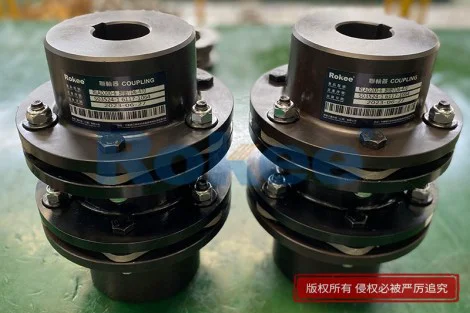
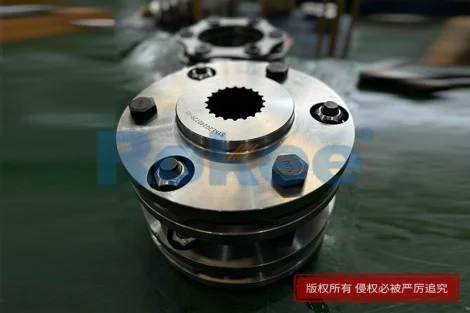
Cardan Couplings
Rokee is a manufacturer of cardan couplings from china, we can provide non-standard custom cardan couplings based on parameters or drawings supplied by customers, with export support available.
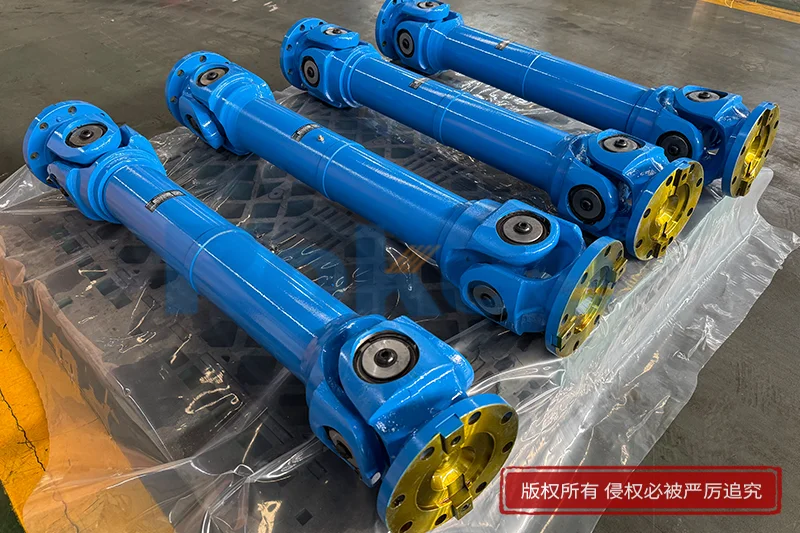
As one of the most classic and indispensable mechanical transmission components in the history of mechanical engineering, the Cardan coupling, also widely known as the universal joint coupling, has supported the operation of various mechanical systems for centuries. First conceptualized and optimized by the renowned sixteenth-century Italian mathematician and engineer Geronimo Cardano, this ingenious mechanical structure has transcended the limitations of era-specific manufacturing technologies and remained a core component of modern power transmission systems. Its unique value lies in its ability to stably transmit rotational torque and motion between two shafts that are not strictly collinear, effectively coping with angular misalignment, axial displacement and radial offset generated during mechanical operation. From traditional industrial machinery and transportation equipment to modern intelligent manufacturing and precision transmission systems, the Cardan coupling demonstrates irreplaceable application advantages with its simple structure, reliable performance and strong environmental adaptability, becoming a fundamental guarantee for the stable operation of complex shaft transmission systems.
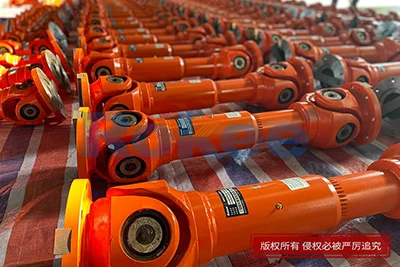

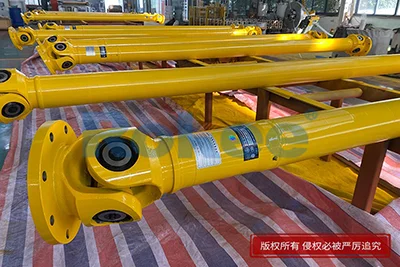
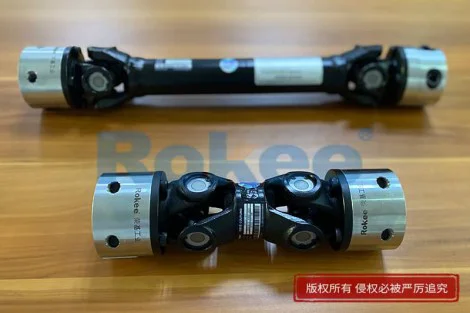
The structural design of the Cardan coupling follows the most rigorous mechanical logic, with a compact and coordinated component combination that lays the foundation for its flexible transmission performance. The basic assembly of a standard single Cardan coupling relies on three core functional parts and a set of auxiliary supporting structures, all of which cooperate precisely to complete torque transmission and misalignment compensation. The core connecting component is a cross-shaped spider, a symmetrical forged part with four mutually perpendicular connecting ends, which serves as the central hinge and force-bearing core of the entire coupling. Two symmetrical yokes, also called fork joints, are respectively fixed to the driving shaft and driven shaft of the transmission system, with the groove structure at the end of the yoke perfectly matching the four ends of the cross spider. Between the cross spider and the yoke grooves, high-precision needle roller bearings are installed as rotating auxiliary components. Different from ordinary bearings, needle roller bearings feature a compact volume, high load-bearing density and low friction coefficient, which can effectively reduce rotational resistance and wear during relative motion while ensuring flexible angular rotation between the cross spider and yokes. In addition, complete Cardan coupling structures are equipped with sealing, dust-proof and anti-loosening auxiliary parts, which isolate internal moving components from external dust, moisture and corrosive substances, and avoid structural loosening caused by long-term vibration and load impact, greatly improving the overall operational stability and service life.
The working principle of the Cardan coupling is derived from the spatial hinge motion mechanism, realizing continuous and stable power transmission under multi-dimensional shaft misalignment conditions. In conventional rigid transmission systems, collinear shafts are required to ensure normal torque transmission, and any slight misalignment will cause transmission jitter, component wear and power loss. The Cardan coupling completely breaks through this limitation through the spatial rotational freedom of the cross spider structure. When the driving shaft rotates, the fixed yoke drives the cross spider to perform synchronous rotational motion. Relying on the flexible rotation of the bearing assembly, the cross spider can drive the driven yoke and the connected driven shaft to rotate stably even when there is a certain angular deflection between the two shafts. This unique hinge structure allows the coupling to adapt to angular misalignment of a certain range, and the spline matching structure commonly used in the combined Cardan coupling can also compensate for axial displacement generated by mechanical vibration, thermal expansion and contraction, or installation errors. In actual operation, each rotating unit of the cross spider independently bears and transmits torque, realizing multi-directional flexible adaptation, which ensures the continuity and uniformity of power output even in complex motion states.
In-depth analysis of the dynamic transmission characteristics of the single Cardan coupling reveals both its core advantages and inherent structural limitations, which are key bases for its targeted application in engineering scenarios. The most prominent feature of the single universal joint structure is its simple processing and assembly process, strong overload resistance and excellent structural durability. It can work stably in high-load, high-vibration and harsh working environments such as dust, high temperature and humidity, and has extremely low failure rate in long-term continuous operation. However, the single Cardan coupling has an unavoidable periodic speed fluctuation characteristic during operation. When the driving shaft rotates at a constant speed and there is an included angle between the two connected shafts, the rotational speed of the driven shaft will produce regular periodic changes within a single rotation cycle. This speed fluctuation will generate certain alternating torque and vibration, which may affect the transmission accuracy of precision mechanical equipment. To solve this problem, engineering practices usually adopt a double Cardan coupling combination structure. By connecting two single universal joints in series and matching the spatial angle and phase position reasonably, the speed fluctuation generated by the first coupling can be completely offset by the second one, realizing constant-speed and stable torque transmission between misaligned shafts. This optimized combined structure retains all the advantages of the single coupling while eliminating the defect of periodic vibration, greatly expanding its application scope in high-precision transmission fields.
Thanks to its excellent misalignment compensation capability and reliable transmission performance, Cardan couplings have become widely used core components in multiple industrial and mechanical fields, covering almost all scenarios that require flexible shaft power transmission. In the transportation industry, Cardan couplings are key transmission parts for various vehicle power systems, responsible for transmitting engine power to the drive axle. In the driving process of vehicles, the relative position of the engine and drive axle will change in real time due to road bumps, suspension vibration and body deformation, and the flexible compensation performance of Cardan couplings can perfectly adapt to this dynamic displacement change, ensuring stable power output of the vehicle. In engineering machinery and agricultural equipment, such as excavators, loaders, tractors and harvesters, the working environment is complex and changeable, with frequent load changes and severe mechanical vibration. The high load-bearing and anti-vibration performance of Cardan couplings can fully adapt to the harsh working conditions, providing stable power support for the walking and operating systems of engineering and agricultural machinery.
In the field of industrial manufacturing and mechanical processing, Cardan couplings are widely applied in various automated production equipment, transmission shafts of machine tools, conveyor systems and power transmission devices of industrial pumps and fans. In automated production lines, mechanical equipment will produce tiny axial and angular deviations due to long-term operation vibration and thermal expansion of components. The misalignment compensation function of Cardan couplings can eliminate the transmission friction and component wear caused by these deviations, maintain the long-term operational accuracy of the equipment, and reduce the frequency of equipment maintenance and failure shutdown. In addition, in aerospace, ship power systems and special precision mechanical equipment, optimized high-precision and high-strength Cardan couplings are also used for auxiliary power transmission. Through precision processing and structural optimization, they meet the strict requirements of high stability, high precision and high durability in high-end equipment operation, showing strong scene adaptability.
Compared with other types of flexible couplings in the mechanical market, Cardan couplings have unique comprehensive performance advantages, forming a clear differentiated competitive edge in engineering applications. Different from elastic couplings that rely on elastic deformation of rubber or spring components to compensate for misalignment, Cardan couplings realize rigid flexible transmission through mechanical hinge motion. They will not produce elastic fatigue, aging failure or stiffness attenuation after long-term operation, and have far better durability and stability than elastic couplings in high-load and long-term continuous working scenarios. Compared with gear couplings and diaphragm couplings with complex structures, Cardan couplings have simpler overall structures, lower processing and assembly difficulty, and more convenient daily disassembly, inspection and maintenance. Meanwhile, their maximum angular compensation angle can reach more than 25 degrees, which is significantly higher than that of most conventional flexible couplings, enabling them to adapt to larger shaft misalignment errors and more complex mechanical motion states. Although their transmission accuracy in ultra-precision scenarios is slightly inferior to that of high-end diaphragm couplings, their excellent comprehensive performance of high load-bearing, high stability and low maintenance cost makes them the preferred transmission component for most conventional industrial and mechanical scenarios.
Like all mechanical components, Cardan couplings also have certain applicable limitations, and standardized use and scientific maintenance are essential to give full play to their performance advantages. In terms of application limitations, although double Cardan couplings can realize constant-speed transmission, excessive deflection angles will still increase internal friction torque and component wear, and reduce transmission efficiency. Therefore, in actual installation and use, the shaft deflection angle needs to be controlled within the optimal design range to balance transmission efficiency and compensation performance. In addition, the rotating hinge structure will produce slight mechanical noise during high-speed operation, so it is not suitable for ultra-quiet precision equipment scenarios with extremely strict noise requirements. In terms of daily maintenance, the needle roller bearings and hinge friction parts inside the coupling need regular lubrication maintenance. Good lubrication can effectively reduce friction and wear, reduce operating noise, and extend the service life of components. At the same time, it is necessary to regularly check the sealing performance and structural fastening state of the coupling to prevent dust and impurities from entering the internal moving gap or structural loosening caused by long-term vibration, so as to avoid transmission jitter and component failure.
With the continuous progress of modern mechanical manufacturing technology and the upgrading of industrial equipment, the design and manufacturing technology of Cardan couplings are also constantly optimized and innovated, moving towards high precision, high strength, lightweight and long-life development directions. In terms of material optimization, traditional ordinary carbon steel is gradually replaced by high-strength alloy steel and wear-resistant alloy materials. Through forging, heat treatment and surface strengthening processes, the overall structural strength, wear resistance and fatigue resistance of the coupling are significantly improved, enabling it to adapt to higher load and more severe working environments. In terms of structural optimization, the integrated design of cross spiders and yokes, as well as the optimized matching of bearing structures, further reduce internal friction and dynamic unbalance, improve transmission stability and accuracy, and expand the application scope to medium and high-speed precision transmission scenarios. In terms of processing technology, the application of CNC precision machining and fine grinding technology effectively improves the dimensional accuracy and assembly matching degree of components, reduces assembly gaps, and minimizes periodic vibration and noise during operation.
In the context of the rapid development of modern intelligent manufacturing and industrial automation, the status of Cardan couplings in mechanical transmission systems is becoming increasingly prominent. As a basic universal mechanical component, it does not rely on complex electronic control systems or precision sensor devices, but relies on pure mechanical structural logic to realize efficient and stable flexible transmission, with extremely high operational reliability and environmental adaptability. Whether it is traditional heavy industrial machinery, civil transportation equipment, or emerging intelligent automated production lines and special mechanical equipment, Cardan couplings can provide reliable power transmission guarantee. Its structural simplicity, functional practicability and performance durability make it a timeless classic in mechanical design. Looking ahead, with the continuous innovation of new materials, new processes and structural design concepts, Cardan couplings will further break through performance limitations, adapt to more diversified and high-end mechanical transmission scenarios, and continue to provide basic support for the stable operation of global mechanical engineering systems.
« Cardan Couplings » Update Date: 2026/7/15
Contact
If you require custom machined couplings, please contact Rokee via the contact information below for inquiries.
Email: Rokee@Rokee.com
 WeChat