Star Couplings
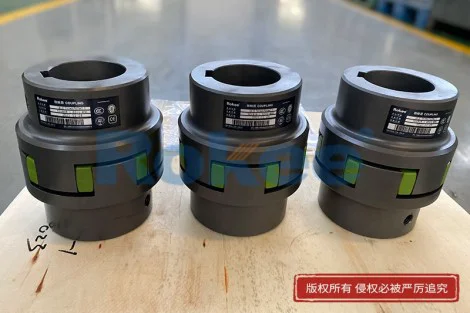
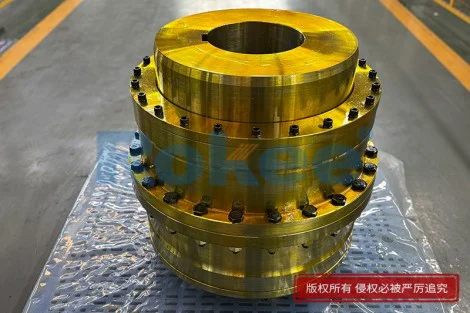
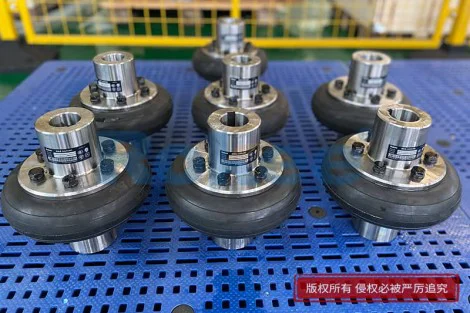
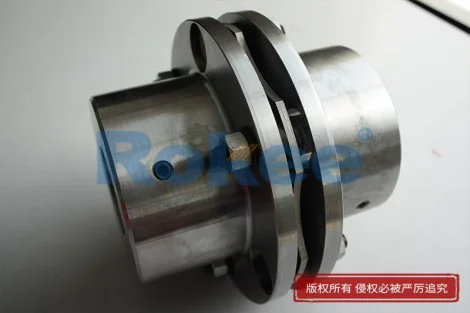
Rokee is a manufacturer of star couplings from china, we can provide non-standard custom star couplings based on parameters or drawings supplied by customers, with export support available.

In the complex and interconnected operating system of modern industrial machinery, the stability of power transmission directly determines the overall operational efficiency, service life and operational safety of equipment. As a key flexible transmission component, star coupling has become an indispensable core part of medium and high-speed, frequent-start and impact-load mechanical systems by virtue of its unique star-shaped elastic structure, excellent vibration damping performance and compact mechanical design. Unlike rigid transmission components that pursue absolute transmission accuracy and hard connection, star coupling focuses on balancing efficient power transmission and flexible buffer compensation, solving many common pain points in industrial transmission such as shaft misalignment, mechanical vibration, impact load and running noise, and is widely applied in various general machinery and industrial supporting scenarios.


The basic structural design of star coupling follows the core concept of flexible mechanical transmission, consisting of two symmetrical shaft hubs and an integrated star-shaped elastic elastomer clamped between the hubs. The star-shaped elastomer is the core functional component of the coupling, and its special geometric structure forms multiple uniform elastic support units in the circumferential direction. This structural design abandons the split connection mode of traditional elastic couplings, realizing an integrated flexible connection with simpler assembly and more uniform stress distribution. In the working state, the power is transmitted from the driving shaft hub to the driven shaft hub through the elastic deformation of the star elastomer. The elastic body can produce mild compression and shear deformation during rotation, which not only ensures continuous and stable torque transmission, but also reserves a reasonable buffer space for the relative displacement of the two shafts.
The excellent comprehensive performance of star coupling stems from the superior characteristics of its matching materials and structural optimization design. The star-shaped elastic body is mostly made of high-elasticity polymer materials with good wear resistance, aging resistance and toughness. These materials can maintain stable elastic performance in a wide temperature range, adapting to the complex ambient temperature changes in industrial production. In low-temperature environments, the material will not become brittle and lose elasticity, while in high-temperature working conditions, it can effectively avoid softening and deformation failure, ensuring long-term reliable operation within the conventional industrial temperature range. Meanwhile, the material has excellent shock absorption and noise reduction characteristics, which can effectively absorb the instantaneous impact force generated by equipment start-stop, forward and reverse rotation and load fluctuation, and convert the mechanical vibration energy into tiny elastic deformation energy for dissipation, thereby reducing the vibration amplitude of the transmission system and suppressing mechanical operating noise.
One of the most prominent functional advantages of star coupling is its excellent compensation ability for shaft misalignment. In the actual installation and operation of mechanical equipment, it is difficult to achieve absolute coaxiality of the driving shaft and the driven shaft due to installation errors, equipment vibration, thermal deformation of parts and long-term operating wear. Tiny radial, axial and angular deviations between shafts will cause additional load on the transmission system, accelerate the wear of bearings and transmission parts, and even lead to equipment vibration and failure in severe cases. The star elastic structure can effectively compensate for these three-dimensional minor misalignments through its own elastic deformation. The uniform distributed elastic units can adapt to the slight offset and deflection of the shaft during rotation, eliminate the additional mechanical stress caused by misalignment, and protect the shaft, bearing and other core components from abnormal wear and impact damage.
In terms of transmission performance, star coupling achieves a perfect balance between transmission efficiency and flexibility. Its compact structural design reduces the axial and radial occupied space, making it suitable for mechanical equipment with compact installation space and strict structural layout requirements. The integrated elastic connection mode avoids the transmission clearance existing in traditional couplings, realizing precise and synchronous torque transmission without idle stroke. Even in the working scenarios of frequent start-stop and rapid forward and reverse switching, it can respond quickly without transmission delay, ensuring the high sensitivity and stability of the equipment power system. At the same time, the moderate elastic stiffness enables the coupling to bear medium and high torque load transmission, which can meet the power transmission needs of most general industrial machinery, and has strong load adaptability.
The operational stability of star coupling in complex working conditions further highlights its industrial application value. In industrial production, many mechanical equipment need to run continuously for a long time, and often face complex working conditions such as variable load, intermittent impact and continuous rotation. The star coupling has good fatigue resistance and dynamic load resistance, and can maintain stable elastic performance and transmission state after long-term repeated deformation and load impact, without fatigue failure or performance attenuation. Different from metal rigid couplings which are prone to rigid collision and metal fatigue damage under impact load, the flexible buffer mechanism of star coupling can effectively isolate instantaneous impact force, avoid the impact of load fluctuation on the whole transmission chain, and greatly improve the operational stability and continuous working capacity of the equipment system.
In addition to mechanical performance advantages, star coupling also has outstanding practical values in equipment operation and maintenance. Its overall structure is simple without complex auxiliary transmission parts, and the assembly and disassembly process is convenient and efficient. The whole machine does not need lubrication and regular oiling maintenance, which avoids the equipment failure and environmental pollution problems caused by lubricant deterioration, leakage and contamination. This maintenance-free feature greatly reduces the daily operation and maintenance cost of equipment, saves manual maintenance time and resource investment, and is especially suitable for automated production lines and unattended mechanical working scenarios. At the same time, the elastic material has good electrical insulation performance, which can isolate the current transmission between the two shafts, avoid the generation of stray current and static interference in the transmission system, and protect the motor and electrical control components from electrical damage.
Star coupling has a wide range of industrial application scenarios, covering almost all general mechanical transmission fields that require flexible transmission, vibration reduction and noise reduction. In fluid machinery such as water pumps and fans, the unstable airflow and water flow impact will cause continuous vibration of the equipment during operation. The star coupling can effectively absorb the vibration of the transmission end, reduce the resonance phenomenon of the equipment, ensure the stable operation of fluid conveying equipment, and reduce the operating noise of the equipment in the working environment. In material handling and packaging machinery, equipment often needs frequent start-stop, speed regulation and forward and reverse operation, with frequent load changes. The flexible buffer performance of star coupling can eliminate the instantaneous impact generated by frequent switching, protect the transmission motor and reducer, and extend the service life of the whole machine.
In metallurgy, chemical industry and light industrial production equipment, the working environment is often accompanied by dust, humidity and mild corrosive medium. The special polymer elastic material of star coupling has good corrosion resistance and dust-proof and moisture-proof ability, and will not be easily damaged by environmental interference, maintaining stable working performance for a long time. In mechanical equipment such as compressors and agitators that run continuously for a long time, the excellent fatigue resistance and stable transmission performance of star coupling can adapt to long-term continuous operation, reduce equipment failure rate caused by transmission system problems, and improve the continuous production capacity of industrial equipment. In addition, in precision machine tool transmission systems, the precise synchronous transmission and vibration suppression performance of star coupling can reduce the vibration interference in the machining process and help improve the machining accuracy and surface quality of workpieces.
Compared with other types of flexible couplings, star coupling has unique comprehensive advantages in cost performance and applicability. Traditional sleeve couplings have poor misalignment compensation ability and are prone to wear and failure; diaphragm couplings have high transmission accuracy but complex structure and high maintenance requirements; spring couplings have good vibration damping effect but uneven stress distribution and short service life. Star coupling integrates the advantages of simple structure, convenient installation, good vibration damping effect, strong misalignment compensation ability and maintenance-free operation, and has no obvious performance defects in conventional industrial working conditions, making it a cost-effective and versatile transmission component.
With the continuous upgrading of modern industrial manufacturing towards high efficiency, energy saving, low noise and high stability, the market demand for high-performance flexible transmission components is also constantly improving. Star coupling is gradually optimized and upgraded in material formula and structural design to adapt to more extreme working conditions and higher-precision transmission requirements. The upgraded high-temperature resistant, wear-resistant and anti-aging elastic materials further expand its applicable temperature range and service life, and the optimized star tooth structure makes the stress distribution more uniform, further improving the torque bearing capacity and dynamic balance performance of the product.
In the field of modern intelligent manufacturing and automated production, the stable operation of equipment is the core guarantee of production efficiency. The excellent vibration damping, noise reduction and anti-impact performance of star coupling can effectively reduce the failure rate of mechanical equipment, reduce production downtime caused by transmission system faults, and improve the overall production efficiency of the production line. At the same time, its low-noise and low-vibration operation characteristics also meet the environmental protection and energy-saving requirements of modern industrial production, helping enterprises realize green and low-carbon production while ensuring equipment operation stability.
In the long-term industrial application practice, the reliable performance of star coupling has been fully verified. Whether it is continuous operation in conventional working conditions or stable operation in complex and variable working environments, it can maintain excellent transmission performance and structural stability. Its simple and durable structural design reduces the probability of mechanical failure, and the low maintenance characteristic saves a lot of operating costs for industrial production. As a basic and key mechanical component, star coupling plays an irreplaceable role in connecting mechanical power transmission, optimizing equipment operation state and extending equipment service life.
In conclusion, star coupling relies on its unique star-shaped flexible structure, excellent material performance and superior comprehensive mechanical properties, forming obvious technical and application advantages in the field of industrial transmission. It not only solves many practical problems such as shaft misalignment, mechanical vibration and impact load in mechanical operation, but also has the advantages of simple structure, convenient installation, no maintenance and wide applicability. With the continuous development of industrial machinery towards high precision, high efficiency and high stability, star coupling will continue to exert its core value in more industrial fields, provide reliable basic guarantee for the stable operation of various mechanical equipment, and become an important basic component supporting the high-quality development of modern industrial manufacturing industry.
« Star Couplings » Update Date: 2026/7/15
Contact
If you require custom machined couplings, please contact Rokee via the contact information below for inquiries.
Email: Rokee@Rokee.com
 WeChat