Cardan Driveshafts
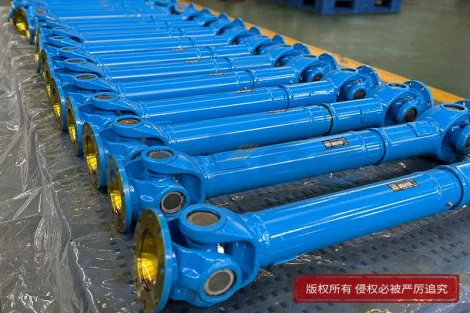
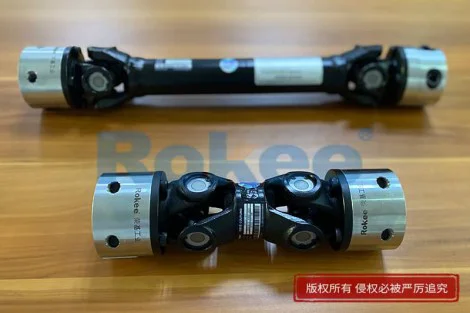
Rokee is a manufacturer of cardan driveshafts from china, we can provide non-standard custom cardan driveshafts based on parameters or drawings supplied by customers, with export support available.
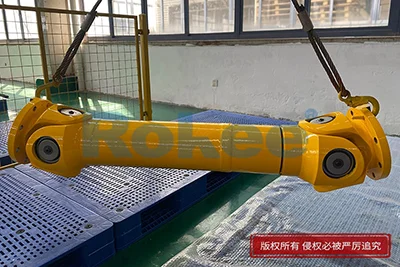
In the intricate ecosystem of mechanical transmission systems, the cardan driveshaft stands as one of the most ingenious and indispensable mechanical components ever engineered. Serving as a critical power transmission bridge between disjointed drive components, this precision mechanical structure has laid a solid foundation for the stable operation of countless mechanical devices and vehicles. Unlike rigid transmission parts that rely on perfectly aligned axes for normal operation, the cardan driveshaft boasts unique adaptive capabilities, enabling efficient and continuous torque transmission even when there are angular deviations, axial displacements, and radial misalignments between driving and driven shafts. Its profound mechanical principles, sophisticated structural design, and outstanding environmental adaptability have made it a core component across industrial manufacturing, transportation machinery, engineering equipment, and numerous other fields, becoming an essential guarantee for the efficient operation of modern mechanical power systems.


The origin and evolution of the cardan driveshaft can be traced back to early mechanical exploration, with its core universal joint structure first conceived and applied to solve the bottleneck of power transmission between non-coaxial components. After centuries of iterative optimization and technological upgrading, the original simple universal connection structure has evolved into a systematic, standardized, and high-precision transmission assembly. Early mechanical transmission systems were limited by rigid connection technology, which could only achieve power output under extremely precise axis alignment conditions. Once equipment vibration, structural deformation, or mechanical wear caused slight axis deviation, transmission efficiency would drop sharply, and severe mechanical jitter, component abrasion, or even equipment shutdown would occur. The emergence of the cardan driveshaft completely broke through this technical limitation. By integrating flexible universal connection and telescopic adjustment structures, it perfectly solves the technical pain point of unstable power transmission caused by dynamic axis misalignment in mechanical operation, providing a reliable solution for long-distance and variable-condition power transmission.
The excellent working performance of the cardan driveshaft stems from its rigorous mechanical operating principle. The core working logic relies on the cooperative motion of universal joint assemblies and telescopic structures, realizing continuous and stable torque and rotational speed transmission under complex misalignment conditions. In the actual operating state, the power source drives the input end of the driveshaft to rotate at a constant speed. When there is an angular deviation between the input shaft and the output shaft, the cross shaft structure inside the universal joint can flexibly tilt and rotate, converting the input rotational motion into stable output motion adapted to the offset angle. For the axial distance changes between components caused by mechanical vibration, load changes, or structural displacement during equipment operation, the built-in spline telescopic structure of the driveshaft can automatically stretch and compensate, effectively eliminating transmission dead zones and mechanical stress concentration caused by axial displacement. This dual compensation mechanism for angle and displacement enables the cardan driveshaft to maintain consistent transmission accuracy and power output efficiency throughout the dynamic operation process, avoiding the power fluctuation and mechanical impact common in traditional rigid transmission structures.
The overall structure of the cardan driveshaft follows scientific mechanical design logic, with each component cooperating closely to undertake independent and complementary transmission functions. A complete cardan driveshaft assembly is mainly composed of universal joint assemblies, hollow shaft tube, spline telescopic mechanism, and connecting flange components. The universal joint assemblies arranged at both ends are the core functional units of the entire system, responsible for achieving angular deviation compensation and torque conversion. The cross shaft and bearing structure inside the universal joint adopts high-precision forging and finishing technology, with excellent wear resistance and rotational flexibility, which can withstand frequent alternating loads and high-speed rotation for a long time. The hollow shaft tube is the main bearing and transmission body of torque. Compared with solid shaft tubes, the hollow structural design effectively reduces the overall weight of the equipment while ensuring structural strength and torsional resistance, reducing the additional load and energy consumption generated during operation, and improving the dynamic balance performance of the transmission system.
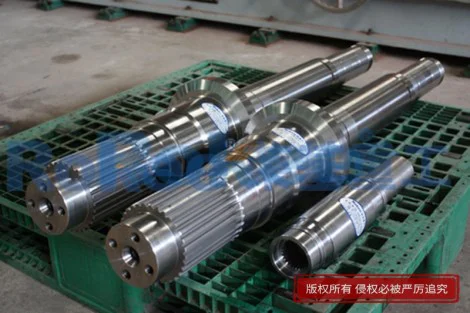
The spline telescopic structure is a key functional part to adapt to axial displacement changes. The precise matching internal and external splines can realize free stretching within a certain stroke range while ensuring synchronous rotation without slipping, perfectly adapting to the axial distance changes between driving and driven components during mechanical operation. The connecting flanges at both ends adopt standardized docking structures, which can realize stable and fast connection with various power components and working equipment. The overall structural assembly abides by the design concept of modularization and integration, with compact layout and reasonable stress distribution. Each component bears targeted mechanical loads, avoiding local overstress damage, and greatly improving the overall stability and service life of the assembly. In some long-distance transmission scenarios, intermediate support structures are also configured to enhance the overall rigidity of the driveshaft, suppress vibration and resonance during high-speed operation, and further optimize transmission stability.
Compared with other traditional transmission components, the cardan driveshaft has unparalleled comprehensive performance advantages, which are the fundamental reasons for its wide application in multiple fields. First of all, it has excellent misalignment compensation capability, which can simultaneously adapt to angular, axial, and radial deviations between transmission shafts. This all-round adaptive feature enables it to adapt to complex and variable working conditions, especially suitable for mechanical equipment with frequent vibration, load fluctuation, and structural displacement. Secondly, the cardan driveshaft has high transmission efficiency and stable power output. The optimized universal joint motion mechanism minimizes power loss during torque transmission, and the smooth rotational operation avoids periodic jitter and speed fluctuation, ensuring the consistency and accuracy of power transmission.
In terms of mechanical performance, the cardan driveshaft has strong load resistance and fatigue resistance. Through high-strength material selection and precise heat treatment processes such as carburizing and quenching, the key components have high torsional strength, wear resistance, and impact resistance, which can operate stably for a long time under heavy load, high speed, and alternating working conditions. In addition, its lightweight structural design effectively reduces the self-weight of the transmission system, helps reduce equipment energy consumption, and improves the dynamic response speed of mechanical operation. The modular structural design also brings convenient installation, disassembly, and maintenance characteristics. The standardized components are highly versatile, which can effectively reduce equipment maintenance costs and shorten maintenance cycles, improving the overall operating efficiency of mechanical equipment.
The excellent comprehensive performance of the cardan driveshaft makes it widely used in various industrial and mobile mechanical fields, becoming a ubiquitous core transmission component. In the field of commercial transportation machinery, it is applied to various medium and large vehicles, undertaking the power transmission task from the power unit to the driving axle. Vehicle operation is accompanied by complex working conditions such as road bumping, body shaking, and variable driving angles, and the cardan driveshaft's flexible compensation capability can well adapt to the dynamic changes of vehicle chassis structure, ensuring stable power output during driving, turning, and bumping, and improving driving safety and smoothness.
In engineering machinery and agricultural equipment, the operating environment is more harsh, with frequent heavy-load operation, complex terrain changes, and severe equipment vibration. The cardan driveshaft's strong impact resistance and misalignment adaptability can fully meet the extreme working condition requirements of engineering machinery such as excavators, loaders, and tractors, as well as agricultural machinery such as harvesters and tillers, ensuring continuous and reliable power transmission in complex working environments. In the field of industrial manufacturing and mechanical equipment, cardan driveshafts are widely used in various mechanical transmission systems such as production line equipment, processing machinery, and power transmission devices, realizing long-distance power transmission between equipment components, solving the layout limitations of mechanical structures, and improving the flexibility and rationality of industrial equipment design.
In the long-term service process, the operating state of the cardan driveshaft directly affects the overall operating efficiency and safety of mechanical equipment. Scientific and standardized daily maintenance is crucial to extending its service life and maintaining stable performance. The core of maintenance work lies in lubrication protection and regular state inspection. The universal joint and spline moving parts rely on lubricating grease to reduce friction and wear. Long-term operation will lead to lubricant loss, aging, and deterioration, resulting in increased component friction, accelerated wear, and even abnormal noise and jitter. Therefore, it is necessary to regularly supplement and replace professional lubricating grease to ensure sufficient lubrication of all moving pairs.
At the same time, regular inspection of the structural state of the driveshaft is required, including checking whether the connecting bolts are loose, whether the shaft tube is deformed or cracked, whether the universal joint rotates flexibly without jamming, and whether the spline telescopic movement is smooth. For equipment operating in high-load and harsh environments, the inspection cycle needs to be appropriately shortened to timely discover potential fatigue damage and wear problems. In addition, attention should be paid to avoiding long-term overload operation of the driveshaft. Long-term overload torque will cause irreversible fatigue deformation of the shaft tube and universal joint components, reducing transmission accuracy and service life. Timely dynamic balance calibration is also essential for high-speed operating driveshafts to suppress operational vibration and avoid resonance damage.
With the continuous progress of modern mechanical manufacturing technology and the upgrading of industrial equipment, the performance requirements for cardan driveshafts are constantly improving, and the industry is moving towards high precision, high strength, lightweight, and long-life development directions. In terms of material innovation, new high-strength alloy materials and composite materials are gradually applied to driveshaft manufacturing, which further improves the torsional strength, wear resistance, and corrosion resistance of components while reducing self-weight. In terms of processing technology, the application of precision CNC machining, integral forging, and intelligent heat treatment technology greatly improves the manufacturing accuracy and structural consistency of the driveshaft, effectively reducing assembly errors and operational wear.
In terms of structural optimization, the improved universal joint structure and optimized spline matching design further reduce transmission friction and power loss, improve transmission efficiency, and enhance the adaptive capacity of extreme working conditions. At the same time, with the development of intelligent manufacturing technology, the cardan driveshaft is also realizing intelligent iteration. Some optimized products are combined with monitoring structures, which can real-time monitor operating parameters such as rotational speed, torque, and vibration of the driveshaft, realize early warning of abnormal faults, and greatly improve the safety and reliability of equipment operation.
As a classic mechanical transmission component that has been polished by centuries of technology, the cardan driveshaft has never stopped evolving. From the initial simple flexible connection structure to the current high-precision and high-reliability modular transmission assembly, every technological upgrade is a deep adaptation to the development needs of modern machinery. In the entire mechanical transmission system, it undertakes the important task of power transmission and structural adaptation, solving many core technical problems in mechanical power transmission, and providing solid technical support for the normal operation of various mechanical equipment.
Looking at the future development of the mechanical industry, with the continuous advancement of high-end equipment manufacturing, new energy equipment, and intelligent engineering machinery, the application scenarios of cardan driveshafts will be further expanded, and the performance requirements of high efficiency, high stability, and long durability will continue to be upgraded. Through continuous material innovation, structural optimization, and intelligent technology integration, the cardan driveshaft will continue to exert its irreplaceable core value, become a more solid backbone of modern mechanical power transmission, and continuously empower the high-quality development of the global mechanical manufacturing industry.
« Cardan Driveshafts » Update Date: 2026/7/15
Contact
If you require custom machined couplings, please contact Rokee via the contact information below for inquiries.
Email: Rokee@Rokee.com
 WeChat