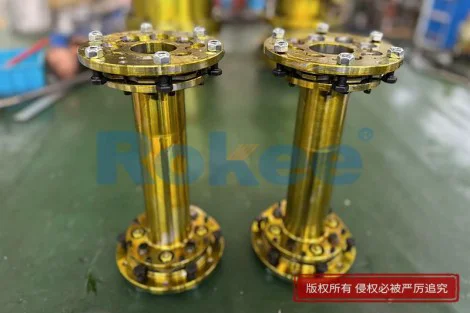
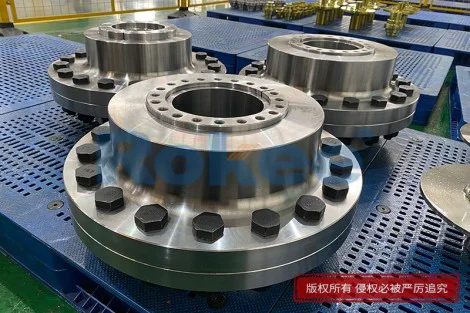
Steel Couplings
Rokee is a manufacturer of steel couplings from china, we can provide non-standard custom steel couplings based on parameters or drawings supplied by customers, with export support available.
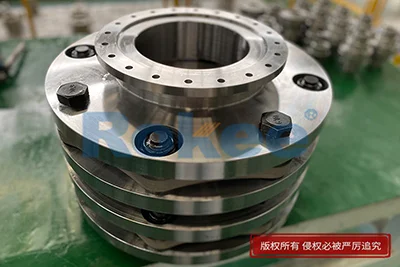
Steel couplings serve as indispensable mechanical connecting components widely adopted in industrial piping systems and mechanical transmission structures, functioning to link two separate steel pipes or shaft components while stabilizing overall system operation. Crafted from high-performance steel materials, these components integrate exceptional structural strength, environmental adaptability and connection stability, effectively solving the problems of pipeline and shaft connection deviation, vibration impact and medium leakage in complex industrial scenarios. They act as critical transition joints that balance connection firmness and operational flexibility, capable of bearing mechanical stress, temperature changes and minor displacement generated during equipment operation. Unlike ordinary connecting parts, steel couplings are designed for long-term heavy-duty work, with outstanding wear resistance and deformation resistance. They can adapt to diverse working environments ranging from conventional indoor industrial workshops to outdoor high-load operation scenes, providing reliable basic guarantees for the normal operation of fluid transportation, mechanical transmission and industrial pipeline systems in various industries. Their versatile structural forms and excellent comprehensive performance make them a core component that cannot be replaced in modern industrial manufacturing and engineering construction.
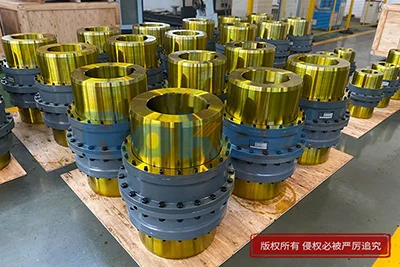


The core value of steel couplings lies in their superior material performance and structural rationality, which lay a solid foundation for stable and durable industrial connections. Steel as the base material endows couplings with remarkable tensile strength and pressure resistance, enabling them to withstand continuous mechanical impact and load pressure without permanent deformation or structural damage during long-term operation. This inherent material advantage distinguishes steel couplings from couplings made of plastic, aluminum alloy and other soft materials, making them suitable for high-load and high-strength industrial working conditions. In terms of structural design, most steel couplings adopt integrated or assembled precision structures with smooth internal structures and tight matching interfaces, which can effectively avoid medium leakage at connection joints and ensure the tightness of fluid transportation pipelines and the stability of mechanical power transmission. Meanwhile, the surface of steel couplings usually undergoes optimized treatment processes to enhance wear resistance and anti-oxidation ability, slowing down material aging and loss caused by long-term exposure to air, moisture or trace corrosive media. This excellent material and structural performance greatly extends the service life of the coupling, reduces the frequency of component replacement, and provides stable and continuous connection support for industrial systems in long-cycle operation scenarios.
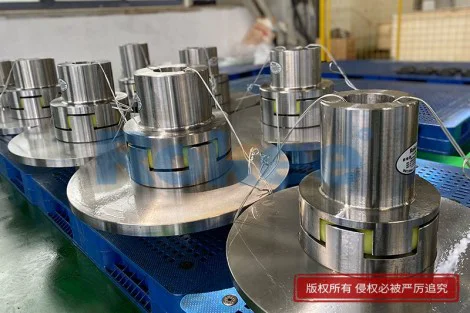
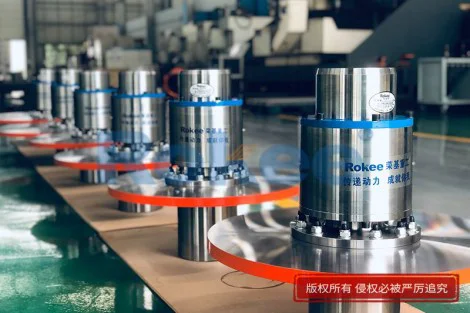
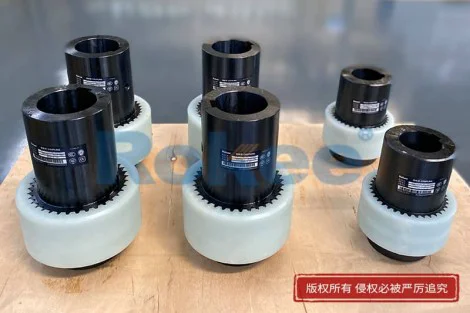
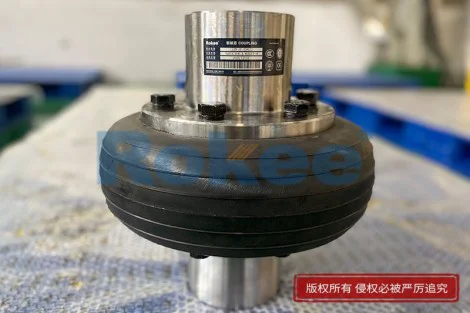
Steel couplings can be divided into multiple types according to structural characteristics and functional attributes, each tailored to differentiated industrial application needs, forming a comprehensive product system covering various working scenarios. Rigid steel couplings are designed for high-precision connection scenarios, featuring high structural rigidity and zero displacement tolerance. They can maintain precise alignment of connected pipes and shafts, ensuring error-free transmission of mechanical power and stable operation of high-precision equipment, and are mostly used in fixed mechanical transmission systems with strict alignment requirements. Flexible steel couplings, by contrast, adopt elastic buffer structures inside, which can effectively absorb minor angular deviation, axial displacement and radial misalignment between connected components caused by equipment operation or environmental changes. They also have excellent vibration and noise reduction effects, mitigating the resonance problem of mechanical systems and protecting equipment components from fatigue damage. In addition, special functional steel couplings such as threaded connection types and socket welding types are widely applied. Threaded couplings feature simple installation and convenient disassembly, suitable for systems requiring frequent maintenance and adjustment, while socket welding couplings form integrated seamless connections through welding processes, with stronger overall tightness and structural stability, adapting to high-pressure and high-sealing requirement scenarios.
The application scenarios of steel couplings cover almost all core industrial fields involving pipeline connection and mechanical transmission, showing extremely high industrial universality. In the energy industry, steel couplings are applied to various fluid transportation pipelines, stably connecting pipeline sections to ensure the safe and continuous transmission of various fluid media under high-pressure and extreme temperature conditions, avoiding pipeline connection failures caused by complex working conditions. In municipal engineering and water treatment fields, they are used in water supply, drainage and sewage treatment pipeline systems, adapting to long-distance pipeline laying and environmental temperature changes, effectively resisting pipeline stress changes caused by thermal expansion and cold contraction, and maintaining the long-term stable operation of municipal pipe networks. In mechanical manufacturing and automation industries, steel couplings are key connecting parts of transmission shafts, motors and mechanical equipment, accurately transmitting power while buffering mechanical vibration, improving the overall operating stability and operational precision of automated production equipment. In agricultural irrigation and industrial cooling systems, they also play an important role, realizing efficient connection of branch pipelines and ensuring the orderly circulation and transportation of water resources and cooling media.
In actual industrial operation, steel couplings provide outstanding operational stability and fault tolerance, effectively reducing system failure risks caused by connection problems. Industrial equipment and pipelines will inevitably produce slight vibration, displacement and stress fluctuation during long-term operation, and ordinary connecting parts are prone to loosening, deformation and leakage under such dynamic working conditions, leading to system operation faults and even safety hazards. Steel couplings are structurally optimized for dynamic industrial environments, with strong stress dispersion ability, which can evenly distribute the concentrated pressure and vibration stress at connection joints to the overall structure, avoiding local stress overload damage. For pipeline systems, their excellent sealing performance can effectively prevent medium leakage, not only ensuring the efficient operation of fluid transportation systems, but also avoiding resource waste and environmental pollution caused by leakage. For mechanical transmission systems, the precise matching structure of steel couplings ensures synchronous operation of connected components, avoids power transmission loss and operational deviation, and improves the overall working efficiency of equipment. Meanwhile, steel materials have strong fatigue resistance, which can adapt to long-term cyclic operation and maintain stable structural performance without failure, greatly improving the safety and reliability of industrial system operation.
The installation and maintenance advantages of steel couplings further enhance their cost-effectiveness and practicability in industrial engineering applications. Most steel coupling products adopt standardized structural design with high component compatibility, which can match most conventional steel pipes and mechanical shaft parts on the market, reducing the matching difficulty and preparation cost of engineering construction. In terms of installation, different structural types of steel couplings can adapt to various construction conditions. The threaded structure can complete rapid connection through simple assembly operation without complex construction equipment, while the welded structure can realize rapid forming of high-strength connections through mature welding processes, meeting the construction efficiency requirements of different engineering projects. In daily maintenance, steel couplings have extremely low failure rates and no easily worn vulnerable parts, basically realizing maintenance-free operation in conventional working environments. When system adjustment or component replacement is required, detachable steel couplings can be quickly disassembled and reassembled, greatly shortening equipment downtime and maintenance cycle. This convenient installation and low-maintenance characteristic not only improves engineering construction efficiency, but also reduces the later operation and maintenance cost of industrial systems, bringing long-term economic benefits for enterprise production and engineering operation.
With the continuous upgrading of modern industrial manufacturing technology, the production process and performance of steel couplings are also constantly optimized and improved to adapt to increasingly complex industrial working conditions. Traditional steel coupling production processes are gradually replaced by precision processing technologies, which effectively improve the dimensional accuracy and structural uniformity of products, making the connection matching degree higher and the operation stability stronger. In terms of material optimization, through fine material proportioning and heat treatment processes, the comprehensive performance of steel couplings is further improved, with stronger corrosion resistance, high temperature resistance and pressure resistance, enabling them to operate stably in harsh environments such as strong corrosion, high temperature and low temperature for a long time. At the same time, the structural design of steel couplings is developing towards diversification and refinement. More lightweight and high-strength structural schemes are applied to product design, which not only ensures structural strength and connection performance, but also reduces self-weight and space occupation, adapting to the compact layout requirements of modern precision equipment and integrated pipeline systems. The continuous technological iteration makes steel couplings more adaptable to the development needs of modern industry, and their industrial application value is constantly highlighted and improved.
Looking at the entire industrial component field, steel couplings, as basic core connecting parts, occupy an irreplaceable important position in industrial operation and engineering construction. Their excellent structural performance, diverse functional types, wide application range and low maintenance cost form comprehensive competitive advantages that other connecting components cannot match. In the context of continuous industrial upgrading and increasingly strict engineering operation standards, the requirements for connection stability, environmental adaptability and service life of industrial components are constantly improving, which also provides broader development space for steel couplings. In the future, with the further innovation of material technology and processing technology, steel couplings will achieve greater breakthroughs in high-precision connection, extreme environment adaptation and intelligent matching, and will be more widely applied in emerging industrial fields such as intelligent equipment, new energy engineering and precision manufacturing. As a basic guarantee for industrial system connection and transmission, steel couplings will continue to support the stable and efficient operation of various industrial systems and become an important cornerstone of modern industrial development.
« Steel Couplings » Update Date: 2026/8/5
Contact
If you require custom machined couplings, please contact Rokee via the contact information below for inquiries.
Email: Rokee@Rokee.com
 WeChat