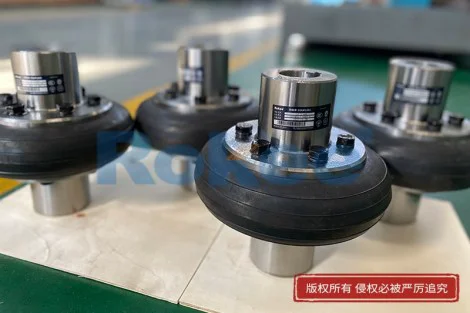
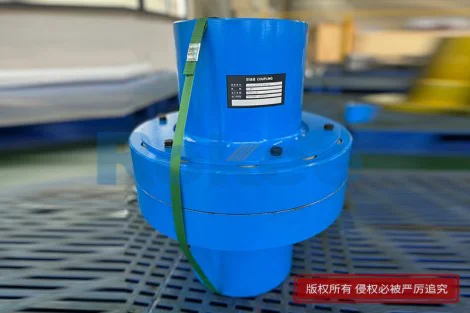
Nylon Sleeve Gear Couplings
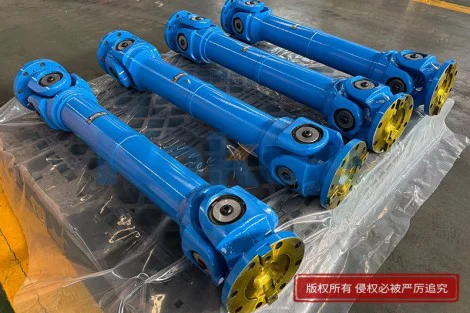
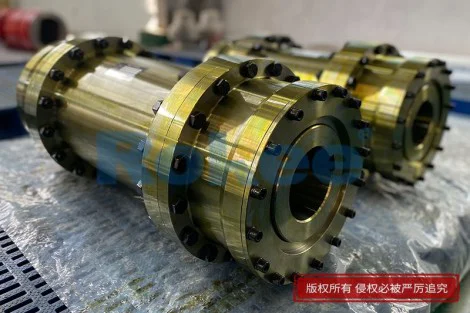
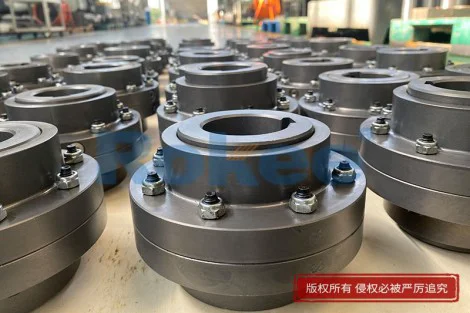
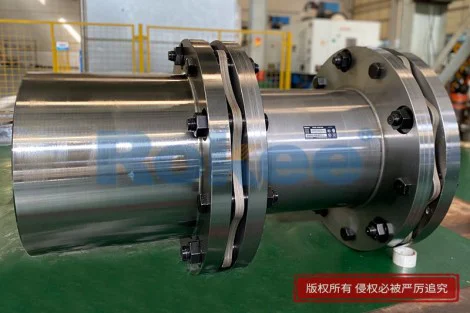
Rokee is a manufacturer of nylon sleeve gear couplings from china, we can provide non-standard custom nylon sleeve gear couplings based on parameters or drawings supplied by customers, with export support available.
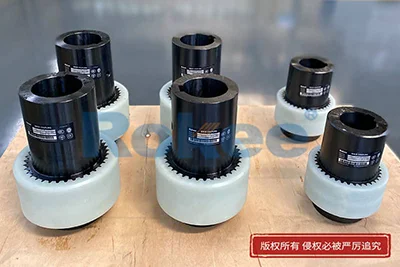
Nylon sleeve gear couplings are versatile elastic transmission components widely adopted in modern mechanical drive systems, integrating robust metal transmission performance with the flexible damping characteristics of polymer materials. As a core connecting part between driving and driven shafts, they primarily serve to transmit torque, compensate for shaft misalignment, and buffer mechanical vibration and impact during equipment operation. Different from traditional all-metal gear couplings that feature rigid contact and poor shock resistance, this type of coupling adopts a unique composite structure with precision-molded nylon sleeves and hardened metal gear hubs, achieving a perfect balance of high torque bearing capacity and flexible operation. Thanks to the inherent self-lubricating, wear-resistant and anti-corrosion properties of nylon materials, these couplings eliminate the need for regular lubrication maintenance, greatly reducing the operational and maintenance costs of mechanical equipment. They are adaptable to various complex working conditions, including variable load operation, frequent start-stop cycles, and slightly misaligned shaft installation scenarios, delivering stable and reliable power transmission for general industrial machinery, pumping equipment, textile machinery and various light and medium-duty transmission devices.
The structural design of nylon sleeve gear couplings is the core foundation of their superior operational performance, featuring a simple, compact and highly practical assembly structure with no complex accessories or connecting fasteners. The overall structure mainly consists of two symmetrical metal gear hubs and a single integral nylon sleeve with internal gear teeth. The metal hubs are processed with high-precision external gear teeth through fine machining and heat treatment, ensuring high hardness, structural rigidity and strong torque transmission capacity. The intermediate nylon sleeve is integrally molded with matched internal gear teeth, which can perfectly mesh with the external teeth of the two metal hubs to form a closed transmission structure during assembly. This split assembly design enables seamless docking of the driving shaft and driven shaft, and the elastic characteristics of the nylon sleeve allow it to undergo slight elastic deformation during operation. Such deformation effectively offsets minor axial, radial and angular misalignments generated by installation errors, equipment vibration or mechanical aging, avoiding rigid friction and extrusion between metal components. Compared with bulky rigid couplings, the compact structure saves installation space, while the integrated nylon sleeve avoids loose parts failure, greatly improving the overall structural stability and operational safety of the coupling in long-term continuous operation.
The working principle of nylon sleeve gear couplings centers on flexible meshing torque transmission and elastic displacement compensation, enabling efficient and stable power transmission under diverse operating conditions. When mechanical equipment starts and runs, the driving shaft drives one metal gear hub to rotate, and the torque is transmitted to the nylon sleeve through precise gear meshing. The nylon sleeve then drives the other metal hub and the connected driven shaft to operate synchronously, completing the entire power transmission process. Unlike rigid couplings that rely on hard metal contact for torque transmission, the nylon sleeve acts as an elastic buffer medium in the whole working process. When the equipment encounters instantaneous load changes, start-stop impacts or operational vibrations, the nylon material absorbs and dissipates impact energy through micro elastic deformation, preventing sharp torque fluctuations from being directly transmitted to the driven equipment. In addition, during high-speed or long-term operation, slight shaft displacement and deflection are inevitable, and the elastic ductility of the nylon sleeve can automatically adapt to these minor position deviations. This real-time compensation function eliminates additional mechanical stress and friction loss caused by shaft misalignment, ensuring consistent and uniform torque output, and effectively avoiding abnormal wear, noise and mechanical jitter of the transmission system.
The material characteristics of nylon sleeves endow the gear couplings with unique operational advantages that distinguish them from traditional metal coupling products. The specially engineered nylon materials used for the sleeves possess excellent self-lubricating properties, with a smooth molecular structure that greatly reduces the friction coefficient between meshing gear teeth. This self-lubricating feature eliminates the need for grease or oil lubrication throughout the service life, completely solving the problems of lubricant deterioration, leakage and frequent refueling maintenance that plague traditional gear couplings. Meanwhile, nylon materials have outstanding wear resistance and anti-aging performance, resisting long-term friction and extrusion wear during continuous meshing operation, and maintaining stable structural performance in long-cycle industrial operation. In terms of environmental adaptability, nylon sleeves exhibit good chemical stability, resisting corrosion from common industrial dust, moisture and mild chemical media, and will not rust or deform like metal components in humid and dusty working environments. Additionally, nylon has excellent vibration and noise reduction capabilities; its elastic polymer structure can effectively dampen mechanical vibration generated by gear meshing and equipment operation, reducing operational noise significantly and creating a quieter and more stable mechanical operation environment compared with all-metal transmission structures.
Nylon sleeve gear couplings deliver prominent vibration damping and shock absorption performance, which is one of their most valuable functional advantages in industrial transmission systems. Mechanical operation inevitably produces periodic vibration and instantaneous impact load due to motor rotation, load variation and mechanical clearance, and these unstable mechanical forces are the main causes of equipment wear, component fatigue damage and shortened service life. As the core elastic component of the coupling, the nylon sleeve can effectively absorb and buffer these harmful mechanical vibrations and impact forces. When instantaneous impact load occurs during equipment start-up, shutdown or sudden load change, the nylon sleeve undergoes reversible elastic deformation to consume impact energy, preventing rigid impact between metal hubs and protecting key mechanical components such as shafts, bearings and motors from instantaneous overload damage. During stable operation, the nylon material continuously dampens high-frequency vibration generated by gear meshing and shaft rotation, isolating vibration transmission between the driving and driven ends. This vibration isolation effect not only reduces the wear of transmission components but also avoids vibration resonance of the entire mechanical equipment, improving the overall operational stability and precision of the machinery, and extending the service life of the entire transmission system.
The misalignment compensation capability of nylon sleeve gear couplings makes them highly adaptable to practical industrial installation and operation scenarios. In actual mechanical assembly, it is difficult to achieve absolute coaxial alignment between the driving shaft and driven shaft due to manual installation errors, equipment manufacturing tolerances, and foundation settlement after long-term operation. Tiny misalignments in axial, radial and angular directions will generate additional mechanical stress and friction if transmitted through rigid couplings, leading to accelerated component wear, increased operational noise and even equipment failure. Nylon sleeve gear couplings effectively solve this problem through the elastic deformation of the nylon sleeve. The flexible gear sleeve can adapt to axial stretching and contraction, radial offset and angular deflection within a certain range, automatically compensating for various shaft misalignments without generating additional transmission resistance or mechanical stress. This excellent compensation performance lowers the installation precision requirements of mechanical equipment, reduces the difficulty of assembly and debugging, and can adapt to shaft position changes caused by equipment operation vibration and thermal expansion and contraction. It ensures stable power transmission even in non-ideal installation states, greatly improving the fault tolerance and operational reliability of the transmission system.
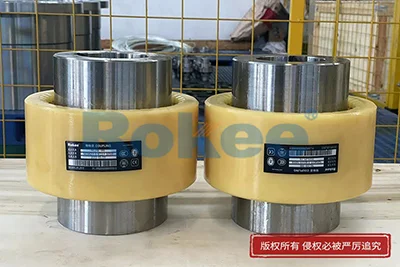
Maintenance convenience and long-term operational economy are important reasons for the wide popularization of nylon sleeve gear couplings in industrial fields. Traditional metal gear couplings require regular lubrication maintenance, including periodic grease replacement, dirt cleaning and sealing inspection, which consumes a lot of manpower and time costs, and may cause equipment downtime during maintenance. In contrast, nylon sleeve gear couplings realize maintenance-free operation in conventional working conditions by virtue of the self-lubricating characteristics of nylon materials, eliminating the need for daily lubrication and regular oil replacement. The integrated nylon sleeve structure has no loose small parts, avoiding common faults such as fastener loosening and sealing failure. The excellent wear resistance and anti-aging properties of nylon materials ensure long-term stable performance without frequent replacement. In addition, the overall structure of the coupling is simple and easy to disassemble and assemble. When inspection or replacement is needed, the operation can be completed quickly without professional tools or complex processes, greatly reducing equipment maintenance time and downtime loss. The long service life and low maintenance frequency effectively reduce the comprehensive operational cost of mechanical equipment, bringing significant economic benefits for long-term industrial production.
Nylon sleeve gear couplings have a wide range of application scenarios, covering most light and medium-duty mechanical transmission fields. In pumping and water supply equipment, they are widely used in various centrifugal pumps, water pumps and oil pump transmission systems, stably transmitting motor power while absorbing vibration generated by pump operation, avoiding pipeline vibration and noise, and ensuring the stable operation of fluid transmission equipment. In textile and light industry machinery, the precise and low-vibration transmission performance of the couplings can meet the high-precision operation requirements of textile looms and knitting machines, preventing vibration from affecting product processing precision and ensuring consistent production quality. In general industrial transmission equipment such as fans, conveyors and reducers, the couplings adapt to frequent start-stop and variable load operation, buffering mechanical impact and protecting motor and reducer components. They also perform well in some special working environments such as humid, dusty and lightly corrosive spaces, where metal couplings are prone to rust and failure. With their strong environmental adaptability and stable transmission performance, these couplings can meet the diverse power transmission needs of different industrial equipment.
Compared with other common types of elastic couplings, nylon sleeve gear couplings show comprehensive performance advantages in structural stability, transmission efficiency and environmental adaptability. Jaw couplings and rubber sleeve couplings, which are commonly used in light-duty transmission, have poor torque bearing capacity and are easy to age and deform under long-term high-load operation, resulting in reduced transmission precision. Metal diaphragm couplings have high precision and load capacity but complex structures, high manufacturing costs and strict requirements for installation precision and working environment, making them unsuitable for conventional general machinery. In contrast, nylon sleeve gear couplings combine the high torque transmission advantage of gear couplings and the flexible damping performance of elastic couplings. Their metal gear hubs ensure high structural strength and transmission efficiency, while the nylon sleeve provides excellent vibration reduction, noise reduction and misalignment compensation functions. Meanwhile, they avoid the defects of easy aging of rubber materials and high maintenance cost of all-metal structures, balancing performance and practicality perfectly. With stable transmission, low noise, strong adaptability and low maintenance cost, they become the optimal choice for most medium and low-speed, medium-torque general mechanical transmission scenarios.
The operational limitations and applicable boundary conditions of nylon sleeve gear couplings need to be fully considered in equipment selection and application to ensure safe and efficient operation. Restricted by the material properties of nylon, this type of coupling is not suitable for ultra-high load, ultra-high speed and high-temperature working environments. Nylon materials will undergo structural softening and performance degradation under long-term high-temperature conditions, reducing wear resistance and elastic compensation capacity, thus affecting transmission stability. In extreme high-load and high-speed operation scenarios, the nylon sleeve may produce excessive elastic deformation or accelerated wear, leading to reduced transmission precision and shortened service life. In addition, nylon materials have poor resistance to strong corrosive media such as strong acid and strong alkali, so they cannot be used in harsh chemical corrosion environments. These limitations determine that nylon sleeve gear couplings are mainly applicable to conventional light and medium-duty industrial scenarios with normal temperature, conventional load and common working media. For special extreme working conditions, targeted structural optimization or alternative coupling products are required to match equipment operation requirements.
With the continuous upgrading of industrial mechanical equipment towards high efficiency, low energy consumption and low noise, nylon sleeve gear couplings are constantly optimized in material formula and structural design to adapt to evolving industrial needs. Modern modified nylon materials with enhanced wear resistance, high temperature resistance and anti-aging performance have been gradually applied to coupling production, effectively expanding the applicable temperature range and load capacity of the products. Optimized gear tooth profile design further improves the meshing precision and torque transmission efficiency, reducing meshing friction and energy loss. At the same time, standardized and integrated structural optimization makes the coupling more compact in size, more convenient to install and disassemble, and more stable in long-term operation. As industrial production puts forward higher requirements for equipment operational stability, environmental friendliness and low maintenance, the advantages of nylon sleeve gear couplings in vibration reduction, noise reduction, energy saving and economy will become more prominent. They will continue to be widely used in more industrial fields and become an indispensable core component of modern low-consumption and high-stability mechanical transmission systems.
Looking ahead, the development trend of nylon sleeve gear couplings will focus on material innovation, performance upgrading and scenario diversification to meet the increasingly complex industrial transmission demands. In terms of material research and development, new composite modified nylon materials will be developed to break through the limitations of traditional nylon in high temperature resistance and high load resistance, enabling the couplings to adapt to more extreme working conditions. In structural design, finite element analysis and mechanical simulation technology will be applied to optimize gear meshing structure and elastic deformation range, further improving misalignment compensation capacity and transmission efficiency while reducing operational wear and energy consumption. In terms of application expansion, with the continuous development of intelligent manufacturing, the optimized nylon sleeve gear couplings will be gradually applied to more precision mechanical equipment and automated production lines. With their unique comprehensive performance advantages and low-cost and low-maintenance operational characteristics, nylon sleeve gear couplings will maintain strong market competitiveness and play a more important role in the upgrading and development of modern industrial mechanical transmission technology.
« Nylon Sleeve Gear Couplings » Update Date: 2026/8/5
URL: https://www.rokee.com/en/tags/nylon-sleeve-gear-couplings.html
Contact
If you require custom machined couplings, please contact Rokee via the contact information below for inquiries.
Email: Rokee@Rokee.com
 WeChat