Stepped Couplings
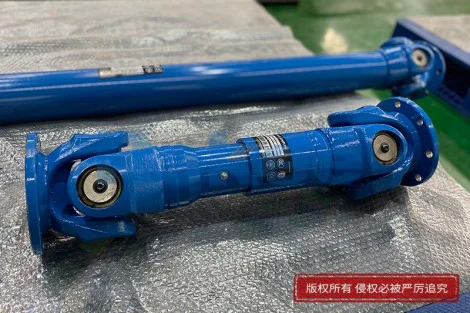
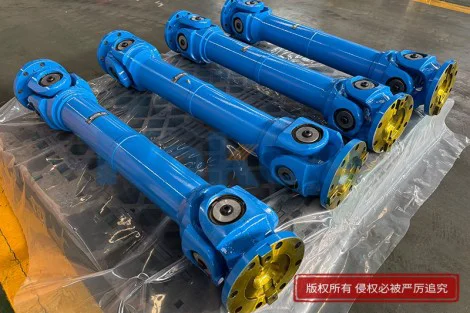
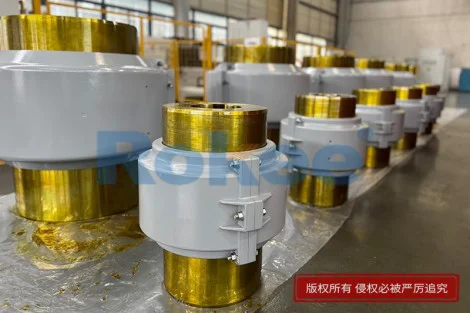
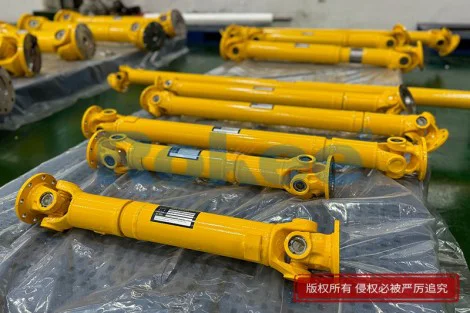
Rokee is a manufacturer of stepped couplings from china, we can provide non-standard custom stepped couplings based on parameters or drawings supplied by customers, with export support available.

Stepped couplings are specialized mechanical connecting components designed to link rotating shafts in diverse mechanical and industrial systems, serving as a critical bridge for power and torque transmission. Distinguished by their unique stepped structural design, these couplings stand out from conventional connecting parts with their outstanding adaptability to shaft misalignment, vibration absorption, and stable power delivery performance. Unlike standard couplings with uniform structural dimensions, the layered stepped configuration enables flexible adaptation to varying shaft diameters and assembly spaces, making them highly versatile for precision mechanical equipment, automated transmission systems, and general industrial machinery. Their core value lies in balancing rigid torque transmission accuracy and flexible buffering performance, effectively mitigating mechanical wear caused by operational deviations, reducing system vibration and noise, and extending the overall service life of mechanical transmission assemblies. As a reliable auxiliary component for rotary power systems, stepped couplings have become an indispensable part of modern mechanical design, catering to the evolving demands of high-precision, high-stability industrial operation scenarios.
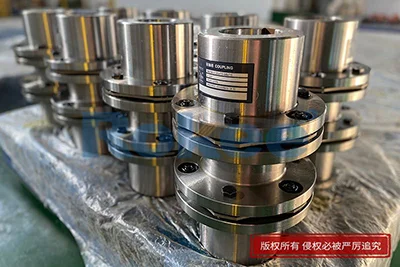
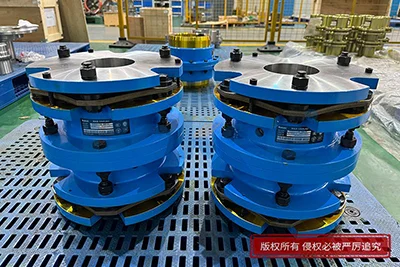
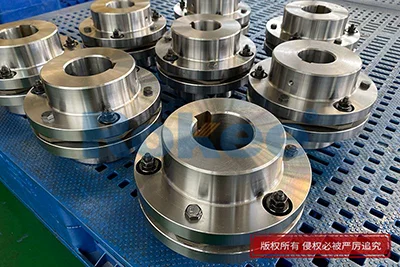
The structural design of stepped couplings constitutes the fundamental basis for their superior operational performance, featuring a layered stepped outline that integrates rigid connection and flexible compensation functions. The multi-stage stepped structure is precisely engineered with variable diameter sections and segmented fitting structures, which allows the coupling to perfectly match different shaft assembly specifications without additional modification of connected mechanical parts. Inside the main body, elastic auxiliary structures are embedded in the stepped gaps, working in tandem with the integral metal framework to form a dual-performance system of rigid transmission and flexible buffering. The layered step design also optimizes the stress distribution during torque transmission, avoiding local stress concentration that often occurs in ordinary couplings during high-load operation. Each stepped segment bears and disperses transmission pressure evenly, ensuring that torque is delivered smoothly and continuously even under fluctuating load conditions. Additionally, the compact stepped layout reduces the overall installation volume of the coupling, making it suitable for narrow and compact mechanical assembly spaces where traditional bulky couplings cannot be deployed, greatly improving the space utilization rate of mechanical equipment.
The working principle of stepped couplings centers on coordinated torque transmission and misalignment compensation, enabling stable and efficient operation in complex mechanical working environments. During equipment operation, the stepped coupling’s rigid main structure undertakes the main torque transmission task, synchronizing the rotational speed and operating rhythm of the driving shaft and driven shaft to ensure consistent power output. When minor radial, angular, or axial misalignments occur between the connected shafts due to mechanical assembly errors or long-term operational wear, the flexible gaps reserved by the stepped structure produce subtle elastic deformation. This deformation effectively offsets shaft offset deviations, avoiding rigid friction and extrusion between shaft components. Meanwhile, the layered structural characteristics can absorb and dilute the vibration and impact force generated during equipment start-up, shutdown, and load switching. The sequential force-bearing mode of each stepped segment ensures that impact pressure is not concentrated on a single structural part, realizing gradual buffering of mechanical impact. This working mechanism fundamentally reduces abnormal wear of shaft surfaces and transmission parts, maintaining the long-term operational stability of the entire power transmission system.
Stepped couplings possess a series of unique performance advantages that make them superior to traditional coupling types in practical industrial applications. First and foremost, they achieve zero backlash transmission under normal operating conditions, which is critical for precision transmission scenarios requiring accurate rotational positioning and frequent forward and reverse rotation. The optimized stepped structural design eliminates the idle travel and transmission delay common in ordinary couplings, ensuring highly responsive power transmission. Secondly, these couplings exhibit excellent vibration and noise reduction capabilities; their layered structure can effectively isolate mechanical vibration generated by rotating operation, prevent vibration conduction between adjacent mechanical components, and lower the overall operating noise of equipment. In terms of durability, the uniform stress-bearing design avoids local structural fatigue damage, greatly improving structural stability and service life. Moreover, the structural compatibility of stepped couplings is extremely strong, with customizable structural parameters to adapt to various non-standard assembly requirements, solving the matching difficulties of different shaft diameter combinations and special installation spaces in mechanical design.
Material selection and surface treatment processes are key factors determining the comprehensive performance and service life of stepped couplings, with scientific material matching ensuring adaptability to diverse working conditions. High-strength metal materials are commonly used for the main body of stepped couplings, featuring high rigidity, good toughness, and strong torsional resistance, which can withstand long-term high-load torque transmission without structural deformation. For the elastic compensation parts in the stepped gaps, high-elasticity and wear-resistant auxiliary materials are adopted to maintain stable elastic deformation performance after repeated extrusion and stretching, avoiding aging and failure in long-term operation. In terms of surface processing, professional anti-corrosion and wear-resistant treatments are applied to the outer surface and fitting parts of the coupling. These treatments enhance the surface hardness of the product, reduce friction loss during shaft rotation, and effectively resist oxidation, rust, and chemical corrosion in complex working environments such as high humidity and dust. Reasonable material collocation and exquisite processing technology enable stepped couplings to maintain stable working performance in high-speed operation, heavy load bearing, and harsh environmental conditions, meeting the long-term and stable operation requirements of industrial equipment.
Stepped couplings are widely applied in multiple industrial fields, covering precision automation equipment, general mechanical processing systems, and special power transmission devices. In precision servo transmission systems, they serve as core connecting components for servo motors and execution shafts, ensuring high-precision synchronous rotation and positioning accuracy, and adapting to frequent speed regulation and forward-reverse switching working modes. In mechanical processing equipment such as machine tools and milling machines, stepped couplings stabilize the power transmission of rotating components, reduce equipment vibration during processing, and improve the machining accuracy of workpieces. In automated production lines and transmission machinery, their compact structure and strong misalignment adaptability solve the assembly matching problems of dense mechanical structures, ensuring continuous and stable operation of production equipment. Additionally, they are also applied in light industrial machinery, transportation auxiliary equipment, and intelligent mechanical devices, providing reliable transmission guarantee for various rotary power systems with different load characteristics and assembly requirements.
The installation and daily maintenance of stepped couplings are simple and standardized, which helps reduce equipment operation costs and improve mechanical management efficiency. During installation, the standardized stepped structure enables quick positioning and fitting, without complex debugging and modification processes. The segmented assembly feature allows operators to complete shaft connection and fixation efficiently, effectively reducing installation errors caused by manual operation. After installation, the structural characteristics of the coupling enable self-adaptive adjustment of minor misalignments, avoiding frequent manual calibration. In daily maintenance, the integrated compact structure is not prone to dust accumulation and foreign matter jamming, reducing the frequency of cleaning and inspection. Routine maintenance only requires regular checking of the fastening state of connecting parts and the elasticity of internal compensation components. When individual parts are worn or aged, targeted replacement can be carried out without disassembling the entire transmission system, greatly improving maintenance efficiency. Simple installation and low maintenance costs make stepped couplings more cost-effective in long-term industrial applications compared with other high-precision coupling products.
With the continuous upgrading of modern mechanical manufacturing and intelligent equipment technology, stepped couplings are evolving towards higher precision, stronger adaptability, and more diversified functions. Current industrial development puts forward higher requirements for mechanical transmission stability, precision, and environmental adaptability, driving the continuous optimization of stepped coupling structural design and performance parameters. New optimized structural schemes further improve the misalignment compensation range and vibration absorption capacity, while lightweight design concepts reduce the overall weight of the product without sacrificing structural strength, helping equipment achieve energy-saving operation. In addition, personalized customized design has become a major development trend, which can meet the special transmission needs of differentiated mechanical equipment. As a key basic mechanical component, stepped couplings will continue to iterate and upgrade with industrial technological progress, providing more reliable and efficient connection solutions for high-end intelligent mechanical equipment and complex industrial transmission systems in the future.
« Stepped Couplings » Update Date: 2026/8/5
Contact
If you require custom machined couplings, please contact Rokee via the contact information below for inquiries.
Email: Rokee@Rokee.com
 WeChat