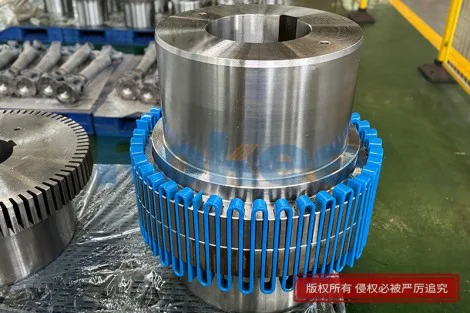
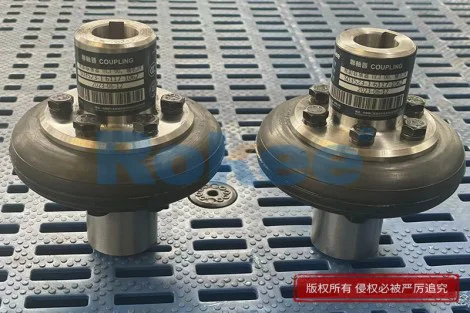
Slide Couplings
Rokee is a manufacturer of slide couplings from china, we can provide non-standard custom slide couplings based on parameters or drawings supplied by customers, with export support available.
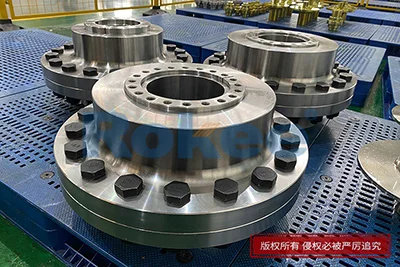
Slide couplings are essential mechanical transmission components widely adopted in general industrial mechanical systems, serving as a flexible connecting medium for two rotating shafts in power transmission equipment. Designed to solve common shaft alignment deviations and operational displacement problems in mechanical operation, these couplings mainly rely on the sliding fit between internal structural parts to stably transmit torque while tolerating multiple forms of shaft misalignment. Different from rigid couplings that require high-precision shaft alignment, slide couplings feature simple structural composition, flexible adaptability and stable operational performance, which can effectively compensate for axial displacement, radial offset and small angular deflection between connected shafts. In daily mechanical operation, subtle misalignment caused by installation errors, equipment vibration, thermal expansion and mechanical wear is inevitable, and slide couplings can absorb such displacement changes to avoid additional stress, vibration and noise in the transmission system. They are applicable to medium and low-speed, medium-load transmission scenarios with frequent startup and slight load fluctuation, providing reliable protection for the stable operation and service life of mechanical transmission structures.


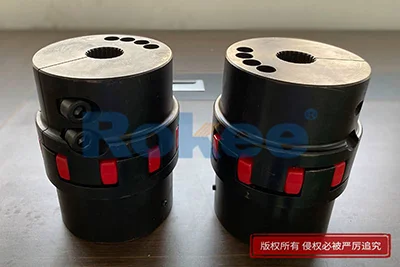
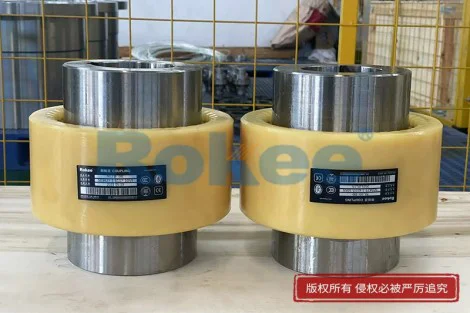
The basic structural composition of slide couplings is simple and compact, consisting of two symmetrical half-coupling bodies and an intermediate sliding movable part, which forms the core sliding transmission mechanism of the whole device. The end face of each half-coupling is processed with standardized groove structures, and the middle movable component is equipped with matching convex structures or square sliding blocks that can fit closely with the grooves. This embedded matching structure enables the intermediate component to slide freely within a certain range along the grooves of the half-couplings during the rotation process, realizing flexible connection while ensuring synchronous rotation of the two shafts. Most slide coupling components adopt high-strength wear-resistant materials, and some intermediate sliding parts use special insulating and wear-resistant composite materials to reduce friction loss during sliding movement. The overall structure has no complex elastic components or precision connecting parts, which greatly reduces the failure probability in operation. The compact structural design also makes the coupling occupy a small installation space, convenient for layout in various compact mechanical equipment. Moreover, the integrated structural form avoids loose parts falling off during high-speed rotation, ensuring basic operational safety in continuous working conditions.
The working principle of slide couplings centers on flexible sliding compensation and synchronous torque transmission, realizing efficient and stable mechanical power transmission through the coordination of structural movements. When the mechanical equipment starts to operate, the driving shaft drives one half-coupling to rotate, and the convex or sliding block structure of the intermediate component is clamped in the groove of the half-coupling, so as to drive the intermediate part to rotate synchronously. Subsequently, the intermediate component transmits rotational torque to the other half-coupling and the driven shaft, completing the whole power transmission process. When misalignment or displacement occurs between the two shafts due to installation deviation or operational deformation, the intermediate sliding part will produce corresponding sliding displacement in the groove gap. This sliding behavior can automatically offset the axial, radial and angular displacement errors between the shafts, avoiding rigid force transmission between the two shafts. In this process, the coupling always maintains synchronous rotation of the shafts without transmission stagnation or torque loss. The friction generated by sliding is mild and controllable, which will not affect the overall transmission efficiency, and can effectively buffer the impact load generated by equipment startup, shutdown and sudden load changes.
Slide couplings possess unique performance advantages in mechanical transmission systems, making them stand out among various coupling types and suitable for diverse conventional working conditions. Their most prominent advantage is the excellent multi-directional misalignment compensation capability, which can adapt to various minor shaft position deviations that are difficult to avoid in actual mechanical operation, greatly reducing the assembly precision requirements of equipment. Compared with elastic couplings, slide couplings have stronger bearing capacity and more stable torque transmission performance, and will not produce fatigue deformation or elastic failure under long-term continuous load. Compared with rigid couplings, they have obvious flexible buffering performance, which can effectively reduce system vibration and noise, and relieve the torsional stress of the transmission shaft. In addition, the simple structure of slide couplings brings outstanding durability and low maintenance characteristics. The wear of sliding parts is uniform and slow in long-term operation, and there is no need for frequent inspection and replacement of accessories. The whole coupling has strong environmental adaptability, can work stably in conventional temperature and dust environment, and is not easily affected by slight environmental changes, ensuring long-term stable operation of mechanical equipment.
In actual industrial application scenarios, slide couplings are widely used in various general mechanical transmission equipment with medium and low speed and stable load operation. They are commonly applied in conveyor transmission systems, where the continuous operation of conveyor equipment is prone to slight shaft displacement and vibration, and the flexible compensation performance of slide couplings can effectively protect the conveyor shaft and motor transmission structure, avoiding equipment damage caused by long-term rigid friction. They also have extensive applications in light industrial machinery, textile equipment and packaging machinery, which mostly have compact transmission structures and require stable and low-noise power transmission. The sliding buffer characteristic of slide couplings can meet the precision operation requirements of such equipment. In addition, general mechanical processing equipment, small and medium-sized fan and pump equipment also widely adopt slide couplings. These devices have frequent startup and stable load changes, and the good impact resistance and misalignment adaptability of slide couplings can effectively reduce the failure rate of transmission parts. For mechanical systems requiring regular disassembly, assembly and maintenance, the simple structure of slide couplings also facilitates quick disassembly and installation, improving equipment maintenance efficiency.
Daily maintenance and wear judgment of slide couplings are simple and operable, which is one of the important reasons for their wide popularization in industrial production. In the routine operation of equipment, staff only need to conduct regular visual inspection and operational state observation to judge the working condition of the coupling. The core of maintenance is to check the wear degree of the intermediate sliding component and the groove of the half-coupling, because long-term sliding friction will cause slight wear on the matching parts. When uniform minor wear occurs on the sliding contact surface, it will not affect the transmission performance, but obvious groove wear, deformation or jamming of the sliding block indicates that the parts need to be replaced in time. In addition, it is necessary to keep the coupling operation surface clean to avoid hard dust and sundries from entering the sliding gap, which may cause increased friction, jamming or abnormal wear. Proper lubrication can be carried out according to the operating environment to reduce sliding friction resistance and prolong the service life of parts. During equipment startup and operation, attention should be paid to abnormal vibration and noise; once abnormal conditions occur, the equipment should be shut down for inspection to eliminate hidden dangers of structural failure.
Although slide couplings have excellent comprehensive performance in conventional working conditions, they also have applicable limitation boundaries, and reasonable type selection and use need to be combined with actual working conditions. This type of coupling relies on mechanical sliding to realize compensation and buffering, so it is not suitable for ultra-high-speed operation scenarios. Excessively high rotating speed will lead to increased sliding friction and temperature rise, resulting in accelerated part wear and reduced transmission stability. Meanwhile, slide couplings are not applicable to heavy-duty and high-impact load working conditions, as excessive instantaneous load will cause extrusion deformation of sliding parts and affect the compensation effect. In addition, slide couplings have no ultra-high-precision transmission positioning performance, so they are not suitable for precision mechanical equipment that requires strict synchronous positioning and zero displacement error. In the process of equipment design and type selection, it is necessary to avoid exceeding the speed and load range of the coupling, and reasonably match the installation accuracy to give full play to its flexible compensation and stable transmission advantages, so as to ensure the long-term efficient and reliable operation of the mechanical transmission system.
With the continuous upgrading of industrial mechanical equipment, the optimization and improvement of slide coupling technology have been advancing steadily, adapting to the increasingly diverse industrial transmission demands. Modern slide couplings are constantly optimized in material selection and structural design, adopting new wear-resistant and high-temperature resistant composite materials to further improve the wear resistance and environmental adaptability of sliding parts, and extend the overall service life of the product. The structural design is also continuously refined, optimizing the groove matching gap and sliding stroke, making the misalignment compensation more accurate and the torque transmission more uniform, which effectively reduces system energy consumption. At the same time, the lightweight and integrated design trend makes the coupling more adaptable to miniaturized and compact modern mechanical equipment. In the future, with the development of intelligent and automated industrial equipment, slide couplings will further combine optimized structural performance with low-energy consumption and high durability characteristics, and continue to maintain important application value in the field of general mechanical transmission, providing basic and reliable support for the stable operation of various industrial mechanical systems.
« Slide Couplings » Update Date: 2026/8/5
Contact
If you require custom machined couplings, please contact Rokee via the contact information below for inquiries.
Email: Rokee@Rokee.com
 WeChat