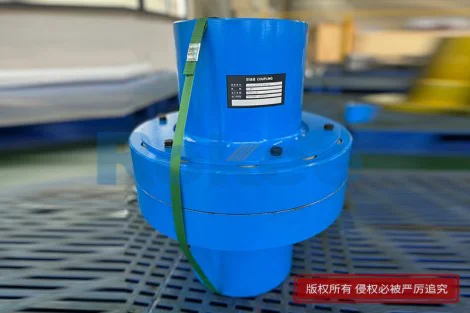
Spline Couplings
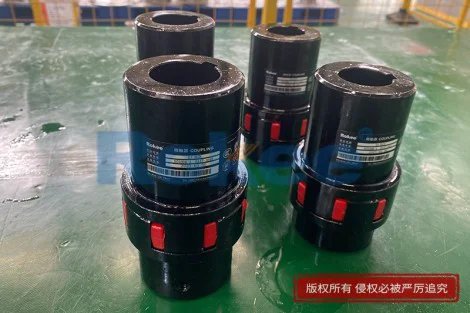
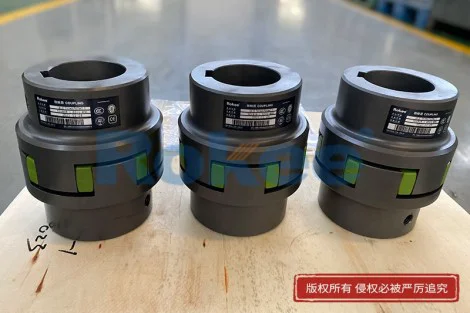
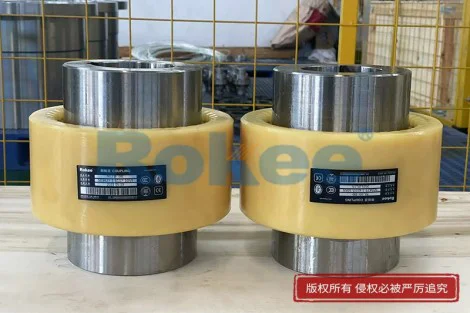
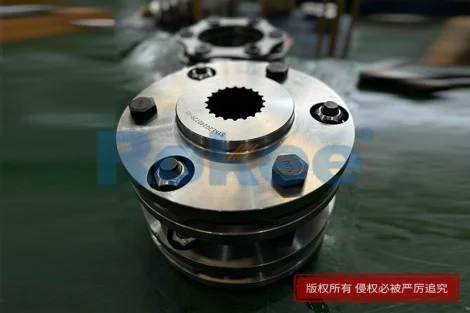
Rokee is a manufacturer of spline couplings from china, we can provide non-standard custom spline couplings based on parameters or drawings supplied by customers, with export support available.
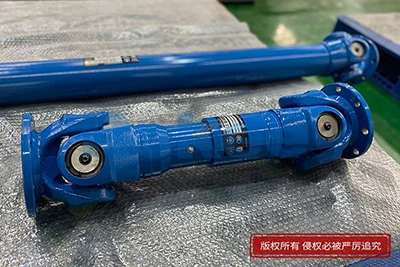
Spline couplings are essential mechanical transmission components designed to connect rotating shafts and deliver stable, efficient torque transfer across a wide range of mechanical systems. Unlike traditional keyed couplings that rely on single-point force bearing, these specialized couplings utilize interlocking internal and external spline tooth structures to distribute mechanical load evenly across multiple contact surfaces. This unique structural design effectively reduces stress concentration, minimizes mechanical wear, and enhances the overall stability and durability of power transmission processes. Capable of accommodating minor axial displacement while maintaining precise rotational synchronization, spline couplings stand out for their excellent adaptability to dynamic operating conditions. They strike a perfect balance between high torque transmission capacity and structural flexibility, making them indispensable in light, medium, and heavy-duty mechanical equipment. With superior fatigue resistance and operational reliability, these couplings solve common transmission problems such as unstable power output and rapid component aging caused by uneven force distribution in conventional connection structures.


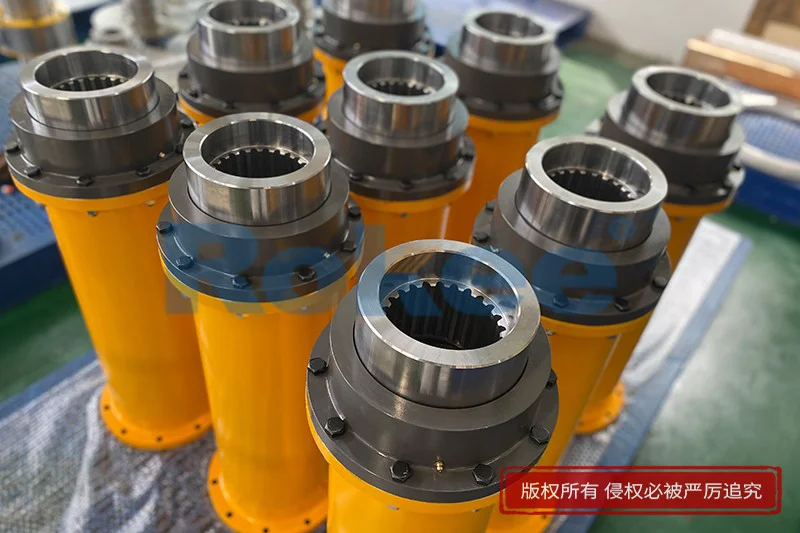
The core working principle of spline couplings lies in the precise meshing of paired spline teeth between two connected shafts, which converts rotational motion and torque from the driving shaft to the driven shaft in a continuous and uniform manner. Each spline tooth acts as an independent force-bearing unit, working synchronously to share the entire transmission load, which fundamentally avoids the localized overstress and premature failure that plague single-key connection structures. During equipment operation, the tightly fitted spline teeth eliminate rotational backlash, ensuring zero idle travel in torque transmission and maintaining highly consistent rotational accuracy even under variable load conditions. Beyond basic torque transfer, the clearance-reserved meshing structure allows subtle axial sliding between shafts during operation, effectively compensating for minor axial displacement caused by mechanical vibration, thermal expansion, or assembly deviations. This adaptive capability prevents additional mechanical tension from accumulating in the transmission system, protects shaft components from bending and abrasion, and maintains long-term operational stability of mechanical transmission chains. Whether in continuous high-speed operation or intermittent variable-load working scenarios, this working mechanism enables spline couplings to deliver consistent and reliable transmission performance.
Spline couplings are mainly categorized into two mainstream types based on tooth profile design, each with unique structural characteristics and applicable working scenarios to meet diversified mechanical transmission demands. Straight-sided spline couplings feature flat and parallel tooth faces with regular rectangular cross-sections, boasting a simple and compact structural layout. Their uncomplicated tooth profile greatly simplifies machining and assembly processes, reduces manufacturing complexity, and tolerates minor dimensional deviations in production and installation. This type of coupling is highly suitable for light to medium-duty transmission systems with stable load and low to medium rotating speed, such as conventional mechanical transmission devices and general industrial processing equipment. In contrast, involute spline couplings adopt curved tooth profiles with smooth transition surfaces, which enable more uniform stress distribution on each tooth during operation. The curved meshing contact increases the effective contact area of teeth, significantly improving torque bearing capacity and impact resistance. This design performs excellently in heavy-duty, high-speed, and high-precision mechanical systems, effectively resisting instantaneous shock loads and cyclic fatigue stress generated during long-term continuous operation.
One of the most prominent advantages of spline couplings is their exceptional load-bearing and anti-fatigue performance, which far surpasses traditional keyed connection structures in long-term operational reliability. By dispersing torque load over multiple spline teeth, these couplings eliminate localized stress concentration, the primary cause of mechanical component damage, and greatly extend the service life of transmission components. The integrated meshing structure ensures tight connection between shafts, effectively suppressing rotational vibration and torque fluctuation during power transmission. This enables mechanical equipment to maintain smooth and stable operation even under high-load and dynamic working conditions, reducing operational noise and mechanical vibration amplitude. Additionally, spline couplings feature high alignment accuracy and low backlash characteristics, which guarantee precise synchronization of rotational angles between connected shafts. This precision is critical for high-precision mechanical equipment that requires strict motion accuracy. Meanwhile, their adaptive axial sliding function can automatically compensate for assembly errors and thermal deformation displacement, avoiding additional mechanical friction and structural damage, and further improving the overall stability and safety of the mechanical system.
Spline couplings have been widely applied in multiple industrial fields relying on their comprehensive performance advantages, becoming a core component of modern mechanical transmission systems. In the mechanical manufacturing industry, they are extensively used in machine tool gearboxes, processing equipment transmission shafts, and automated production lines, providing stable power support for precision machining and continuous mechanical operation. In the automotive industry, these couplings serve in vehicle transmission systems, power steering structures, and engine auxiliary drive components, effectively transmitting power while absorbing operational vibration and minor misalignment, optimizing vehicle driving stability and power output efficiency. In heavy engineering machinery, spline couplings undertake high-torque transmission tasks for large mechanical equipment, adapting to harsh working conditions such as heavy load, frequent start-stop, and complex vibration. Moreover, they are also applied in textile machinery, robotic arm transmission structures, and hydraulic power systems, meeting the stable and precise power transmission needs of different types of equipment in various working environments.
Reasonable selection of spline couplings is key to giving full play to their performance and ensuring long-term stable operation of mechanical systems, requiring comprehensive consideration of multiple operational and structural factors. First, the actual torque demand of the equipment must be accurately evaluated, including rated operating torque and instantaneous peak torque, to select a coupling with matching load-bearing capacity and avoid overload operation-induced tooth wear or structural damage. Second, the operating speed and working environment of the equipment should be taken into account; high-speed rotating systems prioritize couplings with smooth tooth profiles and low friction resistance, while complex environments with vibration and impact require products with strong anti-shock and anti-fatigue capabilities. In addition, the alignment state and displacement compensation demand of the transmission shaft system are crucial. Equipment with frequent axial displacement needs flexible spline coupling structures with good sliding adaptability, while high-precision positioning equipment requires low-backlash spline couplings to ensure motion accuracy. Matching the coupling type and structural parameters with actual working conditions can maximize transmission efficiency and operational stability.
Scientific daily maintenance and standardized operation can effectively extend the service life of spline couplings and maintain stable transmission performance for a long time. Regular surface inspection is essential to check for tooth surface wear, scratches, or corrosion, as minor tooth damage will gradually expand under cyclic load and affect transmission accuracy and load-bearing capacity. It is necessary to keep the spline meshing area clean and lubricated, using suitable lubricants to reduce meshing friction and wear, and prevent dry friction from causing rapid aging of tooth structures. During equipment operation, abnormal vibration, noise, or power output fluctuation should be monitored in real time, as these phenomena often indicate poor meshing or internal wear of spline couplings. Regularly check the assembly tightness of the coupling connection parts to avoid loose installation leading to shaft misalignment and aggravated component wear. Meanwhile, avoid long-term overload operation and frequent violent start-stop impacts, which can effectively reduce fatigue loss of spline teeth. Standardized maintenance procedures can not only reduce equipment failure rates and maintenance costs but also ensure the spline couplings maintain efficient and accurate power transmission performance throughout the service cycle.
With the continuous upgrading of modern mechanical equipment towards high precision, high efficiency, and high load resistance, the technical optimization and application prospects of spline couplings are becoming increasingly broad. Current structural optimization of spline couplings mainly focuses on improving tooth profile accuracy, optimizing stress distribution, and reducing transmission backlash, further enhancing the precision and stability of power transmission. Advanced processing technologies are applied to improve the surface finish and structural uniformity of spline teeth, reducing meshing friction and wear loss, and improving the overall transmission efficiency of the system. In emerging fields such as intelligent manufacturing and new energy equipment, the demand for high-precision, long-life, and high-adaptability transmission components is growing continuously, providing a broader application space for spline couplings. In the future, spline couplings will develop towards lightweight structure, stronger environmental adaptability, and higher transmission precision, continuously adapting to the iterative upgrading of modern mechanical systems and playing an irreplaceable core role in industrial power transmission fields.
« Spline Couplings » Update Date: 2026/8/5
Contact
If you require custom machined couplings, please contact Rokee via the contact information below for inquiries.
Email: Rokee@Rokee.com
 WeChat