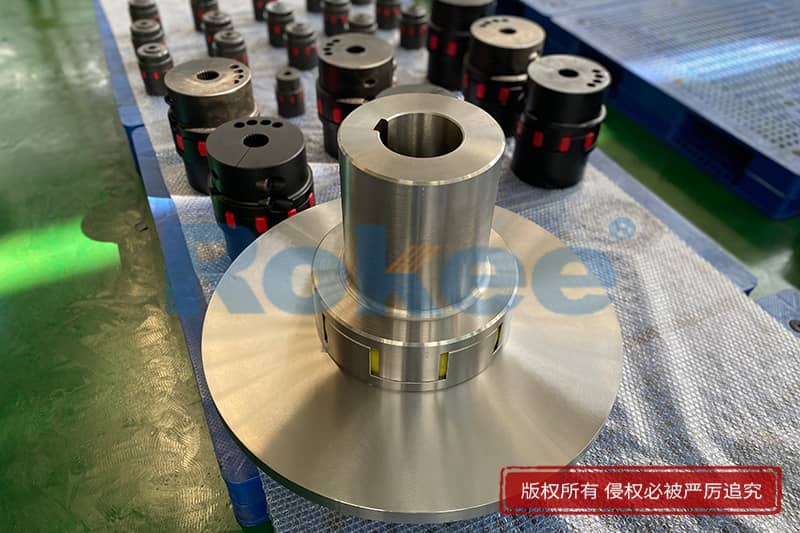
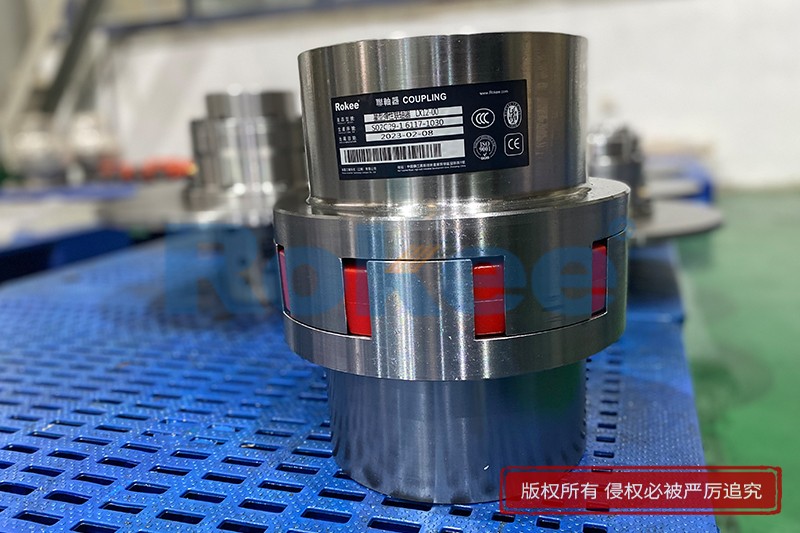
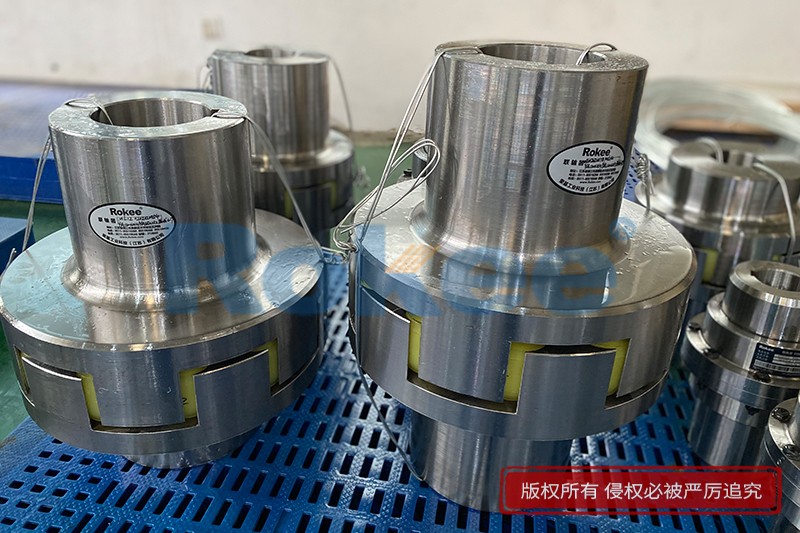
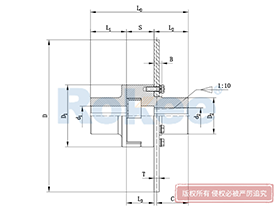
Rokee is a manufacturer of jaw type couplings from china, we can provide non-standard custom jaw type couplings based on parameters or drawings supplied by customers, with export support available.

Jaw type couplings, also commonly recognized as spider couplings, stand as one of the most prevalent and versatile flexible transmission components widely adopted in modern mechanical power transmission systems. Renowned for their ingenious simple structure, reliable operational performance and outstanding adaptive capacity, these couplings have become a core connecting component for shaft transmission in various mechanical equipment, effectively solving the common technical problems of rigid connection limitations and transmission failure caused by shaft misalignment in traditional mechanical systems. Unlike rigid couplings that pursue absolute rigid transmission and elastic couplings that rely solely on material shear deformation for power transfer, jaw type couplings adopt a unique compression-based transmission mechanism, which perfectly balances transmission efficiency, vibration damping performance and equipment protection capability, making them applicable to countless medium and small power transmission scenarios with complex operating conditions and frequent start-stop cycles.


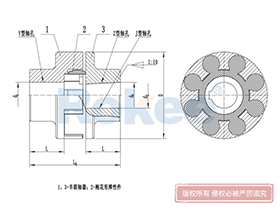
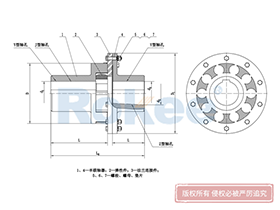
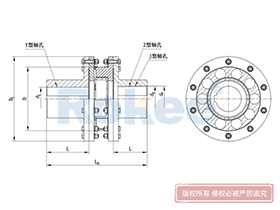
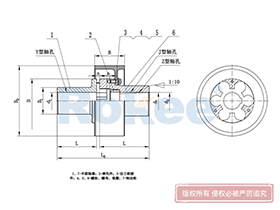
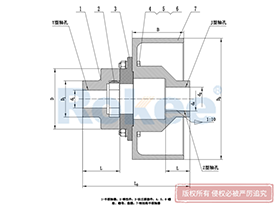
The basic structural composition of jaw type couplings follows a classic three-piece integrated design, which lays the foundation for their simple assembly and stable operation. The entire component is composed of two symmetrical metal hubs and a central elastomeric insert universally known as a spider. Each metal hub is processed with evenly distributed claw-shaped protrusions along the circumferential direction, and the claws of the two hubs are arranged in a staggered and interlocking manner during installation, forming uniform gaps between adjacent claw structures. The elastomeric spider, usually molded into an integral star-shaped or block-shaped structure with multiple radial lobes, is precisely embedded in the gaps between the interlocking metal claws. This structural design completely abandons complex fastening structures and lubrication-dependent transmission modes, realizing a pure mechanical elastic matching transmission form. The metal hubs can be manufactured from diverse metal materials including aluminum alloy, ductile iron, sintered iron and stainless steel according to different usage scenarios, while the elastomeric inserts are mostly made of high-elasticity polymer materials such as polyurethane, rubber and thermoplastic elastomers, providing diversified performance combinations to adapt to different load and environmental conditions.
The working principle of jaw couplings centers on the elastic compression deformation of the elastomeric insert and the cooperative force transmission of interlocking metal structures. During equipment operation, the driving shaft drives the connected driving hub to rotate synchronously, and the claw structures on the driving hub continuously apply uniform compressive force to the lobes of the intermediate elastomeric spider. Through the elastic compression deformation of the polymer material, the torque is stably transmitted to the corresponding claws of the driven hub, thereby driving the driven shaft to rotate and complete the power transmission process. In the whole transmission cycle, the elastomeric insert does not produce shear displacement or torsional distortion in a large range, and the compression-based force transmission mode ensures high torsional stiffness of the coupling. This means that the angular displacement difference between the driving end and the driven end is extremely small during operation, achieving nearly synchronous rotation of the two shafts and avoiding the power loss and transmission delay common in shear-type flexible couplings. When the equipment is started, stopped or subjected to sudden load fluctuations, the elastic deformation of the spider can absorb instantaneous impact energy, buffer peak load and avoid rigid collision between metal structures, realizing flexible and stable power transmission.
One of the most core functional advantages of jaw type couplings is their excellent misalignment compensation capability, which effectively adapts to inevitable installation deviations and operational shaft position changes in mechanical equipment. In the actual assembly process of mechanical systems, it is difficult to achieve absolute coaxial alignment of the driving shaft and the driven shaft due to manual installation errors, equipment manufacturing tolerances and base fixation deviations. In addition, during long-term operation, factors such as equipment vibration, component wear and environmental temperature changes will cause minor axial displacement, radial offset and angular deflection between the two shafts. Jaw type couplings can well adapt to these subtle deviations through the elastic deformation of the intermediate elastomer. The flexible matching between the interlocking claws and the elastic insert can compensate for small-range radial misalignment, axial displacement and angular misalignment, eliminating additional bending stress and friction resistance caused by shaft misalignment. This compensation performance avoids the problems of accelerated bearing wear, shaft deformation and abnormal equipment noise caused by long-term eccentric operation, and greatly improves the operational stability and service life of the entire transmission system.
Vibration damping and impact absorption performance is another key feature that makes jaw type couplings widely popular in industrial transmission systems. Mechanical operation is inevitably accompanied by periodic vibration generated by component rotation, meshing friction and load changes, as well as instantaneous impact force formed by start-stop, load mutation and equipment jitter. These vibration and impact energies will be directly transmitted to the entire equipment structure through the rigid shaft connection, causing equipment resonance, component fatigue damage and reduced processing accuracy. The high-elasticity polymer insert of jaw type couplings can effectively absorb and dissipate vibration energy in the transmission process, isolate the mutual transmission of vibration between the driving end and the driven end, and weaken the amplitude of mechanical vibration. For instantaneous impact loads, the elastic compression and recovery of the insert can buffer and decompose the impact force, prevent the impact energy from acting on precision components such as bearings and gears, and play a reliable protective role for the core mechanical structure. Compared with rigid couplings that cannot buffer vibration and impact at all, jaw type couplings significantly reduce equipment operation noise and mechanical fatigue loss, and are more suitable for variable load and intermittent operation scenarios.
The fail-safe structural design of jaw type couplings endows them with extremely high operational safety and reliability, which is a crucial advantage in continuous industrial production. In the long-term high-load operation process, the elastomeric insert will gradually age, wear or fatigue due to continuous compression deformation, high temperature environment and repeated impact. When the elastic insert fails or is completely damaged, the staggered metal claws of the two hubs will directly contact and mesh with each other to continue transmitting torque. Although the flexible damping and misalignment compensation functions will be lost at this time, the basic power transmission function can still be maintained, avoiding sudden shaft disconnection and equipment shutdown. This unique fail-safe design prevents sudden production interruption and equipment failure accidents caused by the damage of vulnerable parts, providing sufficient time for equipment inspection, maintenance and part replacement. It is particularly suitable for continuous operating production equipment that is not allowed to stop suddenly, effectively improving the stability and continuity of industrial production.
In terms of installation, maintenance and application economy, jaw type couplings have obvious comprehensive advantages over other types of flexible couplings. The overall compact three-piece structure features small axial and radial occupied space, simple assembly process and no complicated debugging steps. The installation process does not require professional precision calibration equipment and tedious fastening procedures, and the disassembly and replacement of components can be completed quickly by ordinary operation and maintenance personnel. Meanwhile, the whole transmission system of jaw type couplings does not need lubricating oil or grease for auxiliary operation, completely avoiding the failure problems caused by lubricant deterioration, leakage and pollution, and reducing daily maintenance workload and operating costs. The vulnerable part of the coupling is only the intermediate elastomeric insert, and the metal hub has a long service life and can be reused for a long time. When the insert is worn and failed, only the low-cost elastic insert needs to be replaced, without replacing the whole coupling, which greatly reduces the later operation and maintenance cost of the equipment.
Despite their numerous advantages, jaw type couplings also have inherent performance limitations that need to be fully considered in type selection and application. Restricted by the compression bearing capacity and elastic fatigue performance of polymer elastomer materials, this type of coupling is not suitable for ultra-high load, ultra-high speed and severe continuous impact working conditions. Long-term operation under excessive load will cause permanent compression deformation, fatigue cracking and rapid aging of the elastic insert, resulting in reduced transmission accuracy, weakened damping performance and shortened service life. In addition, due to the certain elastic deformation gap of the elastomer, the coupling will produce tiny torsional backlash during positive and negative rotation switching, so it is not applicable to high-precision positioning transmission scenarios that require absolute synchronous rotation and zero backlash. Moreover, the conventional elastomeric inserts have poor high-temperature and low-temperature resistance, and will become hard and brittle in ultra-low temperature environments, losing elastic buffering performance, while they will soften and deform in high-temperature environments, affecting torque transmission stability, which limits their application in extreme temperature working conditions.
The selection of jaw type couplings needs to comprehensively consider multiple factors such as equipment operating conditions, transmission load characteristics, working environment and transmission accuracy requirements to achieve the best matching effect. First of all, the material of the elastomeric insert should be selected according to the load type and environmental conditions. Conventional rubber inserts are suitable for general room temperature, medium and low load conventional working conditions, with good vibration damping effect and low cost; polyurethane inserts have higher wear resistance, compression resistance and load-bearing capacity, suitable for medium and high load, frequent start-stop working conditions; special modified elastomer materials can be selected for high and low temperature, dust and humid environments to ensure stable performance. Secondly, the specification model of the coupling should be matched according to the actual transmission torque, shaft diameter and operating speed, to avoid performance failure caused by small specification overload operation or resource waste caused by excessive specification. In addition, for equipment with high vibration and frequent load changes, it is necessary to appropriately select couplings with higher elastic flexibility and better fatigue resistance to improve the adaptive capacity of the system.
In industrial practical applications, jaw type couplings cover a wide range of medium and small power mechanical transmission fields, and are widely used in automated production equipment, conveying machinery, packaging equipment, printing machinery, light industrial machinery, fan and water pump equipment and general mechanical transmission systems. In these scenarios, the equipment mostly has the characteristics of medium and low power, frequent start-stop, variable load operation and high requirements for operational stability and low noise. The excellent vibration damping, misalignment compensation and fail-safe performance of jaw type couplings can effectively solve the common operation problems of such equipment, reduce equipment failure rate, and extend the service life of mechanical components. With the continuous upgrading of material technology and structural optimization design, the performance of jaw type couplings is constantly improving. New high-temperature and wear-resistant elastic materials and optimized claw structure design further expand their application scope, making them still the preferred flexible coupling type for most conventional industrial transmission systems.
In conclusion, jaw type couplings occupy an irreplaceable important position in the field of mechanical power transmission by virtue of their simple and compact structure, stable transmission performance, excellent vibration damping and misalignment compensation capability, safe fail-safe design and low operation and maintenance cost. Although they have certain limitations in extreme working conditions and high-precision transmission scenarios, their comprehensive performance advantages are extremely prominent in conventional industrial transmission systems. Reasonable selection, standardized installation and regular maintenance can give full play to the performance advantages of jaw type couplings, ensure the long-term stable and efficient operation of mechanical transmission systems, and provide reliable basic guarantee for the normal operation of industrial mechanical equipment. With the continuous development of modern mechanical industry towards high efficiency, stability and low energy consumption, jaw type couplings will continue to be optimized and upgraded, and their application value in industrial production will be further improved.
« Jaw Type Couplings » Update Date: 2026/7/17
If you require custom machined couplings, please contact Rokee via the contact information below for inquiries.
Email: Rokee@Rokee.com
WeChat