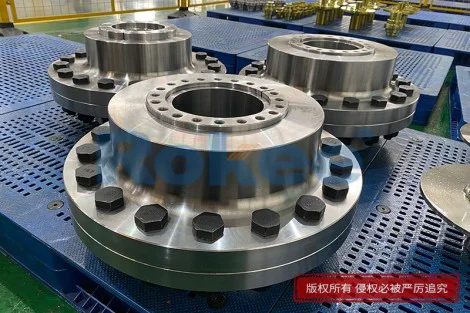
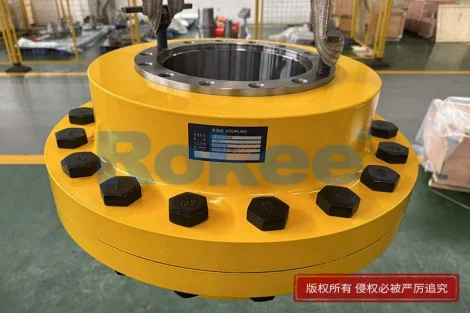
Flexible Jaw Shaft Couplings
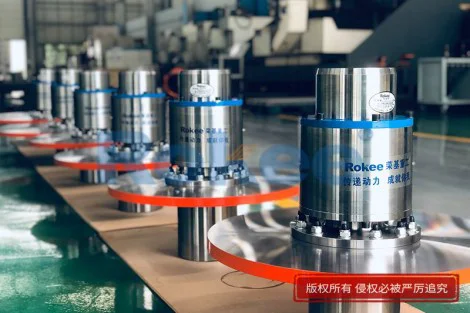
Rokee is a manufacturer of flexible jaw shaft couplings from china, we can provide non-standard custom flexible jaw shaft couplings based on parameters or drawings supplied by customers, with export support available.

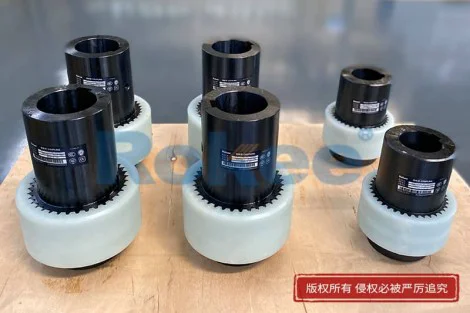
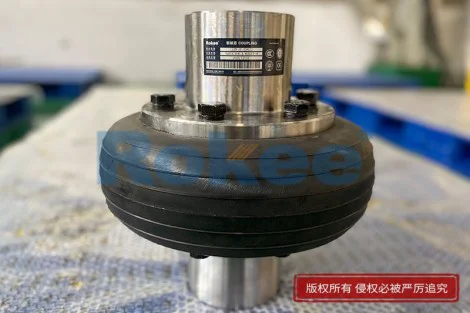
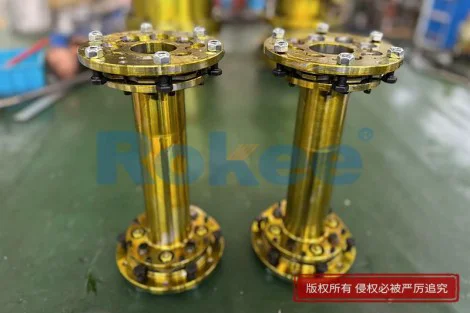
Flexible jaw shaft couplings are essential mechanical transmission components designed to connect two rotating shafts while delivering flexible torque transmission across diverse industrial and precision motion systems. Distinguished by their simple yet robust structural design, these couplings primarily consist of two interlocking metallic jaw hubs and a central elastomer spider insert, which serves as the core flexible functional unit. Unlike rigid coupling alternatives that deliver rigid torque transfer with zero tolerance for shaft deviation, flexible jaw shaft couplings effectively accommodate minor axial, radial, and angular misalignments between paired shafts during equipment operation. Meanwhile, the elastic insert can efficiently absorb mechanical vibration, buffer sudden impact loads, and reduce operational noise generated by transmission friction and load fluctuations. This dual capability of stable torque transmission and dynamic mechanical protection enables the components to extend the service life of shafts, bearings, and other precision transmission parts. With compact dimensions, lightweight construction, and convenient assembly and disassembly features, they have become a versatile and cost-effective solution for medium and low torque transmission scenarios, widely applied in general machinery, automated equipment, and power transmission systems with frequent start-stop operations.


The fundamental structural composition of flexible jaw shaft couplings underpins their superior flexible transmission performance and operational stability, with every component designed to balance mechanical strength and elastic buffering capacity. The two symmetrical jaw hubs are typically crafted from high-strength metal materials with uniform protruding jaw teeth arranged in a regular pattern, forming an interlocking structure that wraps around the central elastomer spider. The spider insert, fabricated from high-elasticity polymer materials, is the most critical functional part of the coupling, as it fills the gap between the interlocked jaw teeth to achieve non-rigid torque conduction. This unique three-piece assembly eliminates rigid contact between metal hubs, ensuring all torque transfer is mediated through the elastic deformation of the polymer insert. The integrated structure features no complex transmission accessories or lubrication devices, streamlining the overall mechanical layout and reducing the occupied installation space. Additionally, the modular design allows for independent replacement of the worn elastomer insert without disassembling the entire shaft connection, greatly simplifying routine maintenance work. The standardized structural matching also ensures strong compatibility with various shaft diameters and mechanical assembly spaces, making it adaptable to most conventional power transmission configurations without customized structural modifications.
The core working principle of flexible jaw couplings centers on elastic deformation and flexible torque conduction, which resolves the common operational defects of rigid transmission systems. During equipment startup, steady operation, and load switching processes, torque is transmitted from the driving shaft hub to the driven shaft hub through the compression and rebound deformation of the central elastomer spider. When minor misalignments occur between the two connected shafts due to assembly errors, mechanical wear, or operational vibration, the elastic insert can produce adaptive micro-deformation to compensate for shaft deviation, avoiding rigid extrusion and shear stress between metal components. In scenarios of sudden load changes, frequent start-stop movements, or instantaneous impact loads, the polymer insert absorbs and dissipates mechanical shock energy through reversible elastic deformation, preventing sharp torque fluctuations from directly acting on precision mechanical parts. This flexible transmission mechanism effectively stabilizes the rotational speed of the transmission system, eliminates jitter and resonance phenomena, and maintains consistent torque output accuracy. Unlike elastic couplings relying on tensile deformation, the jaw coupling’s compression-based working mode features higher structural stability and stronger load resistance, avoiding fatigue fracture caused by long-term tensile stress and ensuring continuous and reliable transmission performance in cyclic operating conditions.
Flexible jaw shaft couplings possess a series of distinctive performance advantages that make them stand out among various flexible transmission coupling types, adapting to complex and diverse mechanical operating environments. First and foremost, their excellent vibration damping and noise reduction performance optimizes the operating environment of mechanical equipment. The elastomer insert can effectively isolate high-frequency vibration generated by motor operation and mechanical friction, suppressing vibration transmission along the shaft system and reducing overall equipment noise. Second, the fail-safe structural design greatly enhances operational reliability. Even if the central elastomer insert suffers fatigue wear or damage after long-term operation, the interlocking metal jaw teeth of the two hubs can still maintain basic torque transmission, preventing sudden equipment shutdown and providing sufficient time for maintenance and replacement. Moreover, these couplings require zero daily lubrication, eliminating the need for regular oil filling and grease maintenance required by gear and chain couplings, which significantly reduces equipment operation and maintenance costs. Their lightweight and low-inertia characteristics also enable rapid response to speed adjustment and forward-reverse switching, making them highly suitable for precision motion control scenarios that require sensitive dynamic response.
Material selection is a key factor determining the service performance, durability, and applicable scenarios of flexible jaw shaft couplings, with hub and insert materials tailored to different operating conditions. The metal jaw hubs are mostly made of high-rigidity, wear-resistant metal materials that provide stable structural support and strong torque bearing capacity, resisting deformation and wear under long-term high-speed rotation and cyclic load. These metal materials also feature good thermal conductivity, which can timely dissipate minor heat generated by friction during operation and avoid local overheating of the coupling structure. The central elastomer spider is available in multiple polymer materials with differentiated elasticity, wear resistance, and environmental adaptability. Conventional elastic materials deliver balanced softness and toughness for general vibration damping and misalignment compensation, while enhanced wear-resistant materials adapt to long-term continuous operation scenarios, and special modified materials can resist aging and deformation in environments with temperature changes and slight chemical corrosion. The scientific matching of metal and polymer materials enables the coupling to maintain stable elastic performance and mechanical strength for a long time, avoiding performance degradation caused by material fatigue, and effectively extending the overall service cycle of the transmission component.
Flexible jaw shaft couplings are widely utilized in a vast range of mechanical transmission scenarios, covering general industrial equipment and precision automated motion systems. In conventional industrial machinery, they are commonly applied in fan and pump equipment, where they buffer the vibration generated by high-speed rotation and fluid impact, protecting pump shafts and motor bearings from long-term alternating stress damage. In compressor and conveyor equipment, the couplings adapt to frequent load fluctuations and continuous cyclic operation, stabilizing torque transmission and reducing equipment failure rates caused by transmission jitter. In modern automated production equipment, including servo motion systems, robotic transmission mechanisms, and precision machining auxiliary equipment, their low inertia, high response speed, and precise flexible transmission characteristics meet the requirements of frequent speed regulation and forward-reverse switching. Additionally, they are suitable for light and medium-duty power transmission scenarios in packaging machinery, printing equipment, and textile machinery, where their compact structure and easy installation features optimize equipment layout. The wide application versatility stems from their balanced performance in stability, precision, and cost-effectiveness, making them a preferred flexible transmission component for most medium and low-power mechanical systems.
Compared with other mainstream flexible coupling products, flexible jaw shaft couplings exhibit unique comprehensive performance and application value with obvious competitive advantages. When contrasted with bellows couplings, jaw couplings feature stronger impact resistance and better load buffering capacity, though with slightly lower ultra-high precision, making them more suitable for general precision scenarios rather than extreme micro-motion transmission. Unlike sleeve and diaphragm couplings with complex structures and high maintenance difficulty, jaw couplings adopt a simple three-piece modular structure with extremely low replacement and maintenance costs, requiring no professional tools or complex disassembly processes. In comparison with gear couplings that rely on lubrication for operation, they completely avoid lubricant deterioration, leakage, and regular replacement problems, achieving maintenance-free long-term operation. Although their torque bearing capacity is lower than that of heavy-duty rigid couplings and gear couplings, their flexible protection capability for precision equipment is far superior. This balanced performance positioning enables flexible jaw shaft couplings to fill the market gap between high-precision high-cost couplings and low-precision rigid couplings, providing a cost-effective and reliable transmission solution for most industrial and automated equipment.
Reasonable installation, debugging, and daily maintenance methods are crucial to maximizing the service performance and service life of flexible jaw shaft couplings, ensuring long-term stable operation of the transmission system. During installation, it is necessary to ensure the coaxiality of the driving and driven shafts is within the allowable misalignment range, avoiding excessive shaft deviation that causes long-term over-deformation of the elastomer insert and accelerated fatigue wear. The clamping degree of the coupling hubs should be moderate to prevent shaft slipping caused by insufficient clamping force or shaft deformation caused by excessive compression. After installation, a no-load test run is required to check for abnormal vibration, noise, or jitter, adjusting the shaft position timely if any abnormal phenomenon occurs. In daily operation, regular visual inspection of the elastomer insert is essential to observe for aging, cracking, deformation, or wear, and replace the insert promptly once damage is found to avoid affecting transmission stability. It is also necessary to keep the coupling operating environment clean, preventing dust, debris, and corrosive substances from adhering to the insert and hubs, which may cause material aging and structural wear. Standardized operation and maintenance can effectively maintain the coupling’s vibration damping and misalignment compensation performance, reduce equipment failure rates, and ensure the long-term efficient operation of the entire mechanical transmission system.
« Flexible Jaw Shaft Couplings » Update Date: 2026/8/5
URL: https://www.rokee.com/en/tags/flexible-jaw-shaft-couplings.html
Contact
If you require custom machined couplings, please contact Rokee via the contact information below for inquiries.
Email: Rokee@Rokee.com
 WeChat