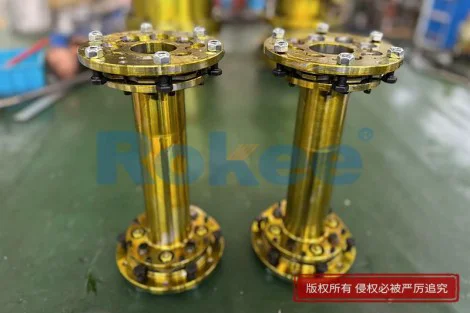
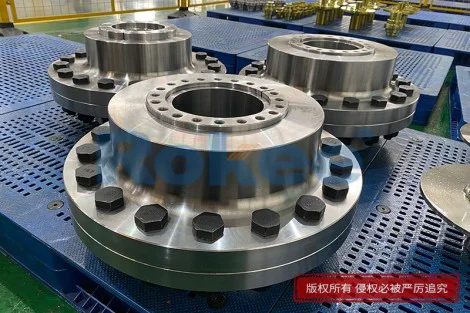
Motor Gear Couplings
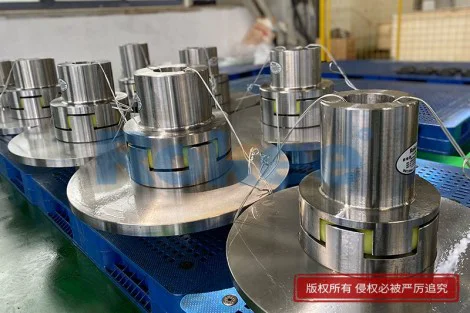
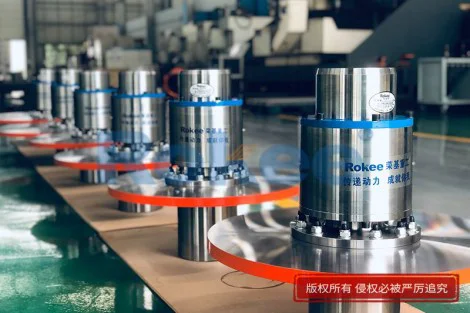
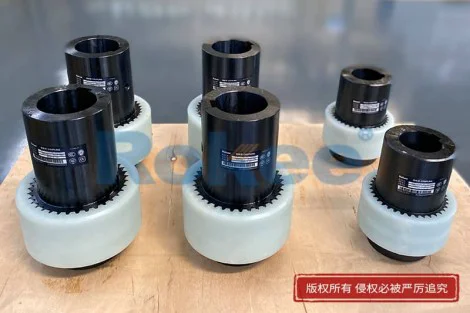
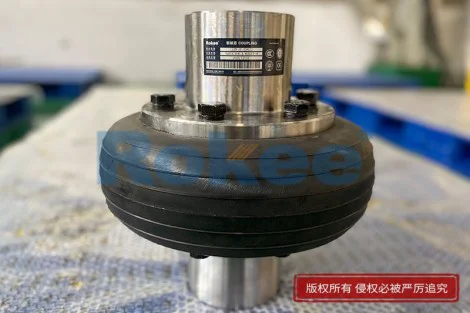
Rokee is a manufacturer of motor gear couplings from china, we can provide non-standard custom motor gear couplings based on parameters or drawings supplied by customers, with export support available.
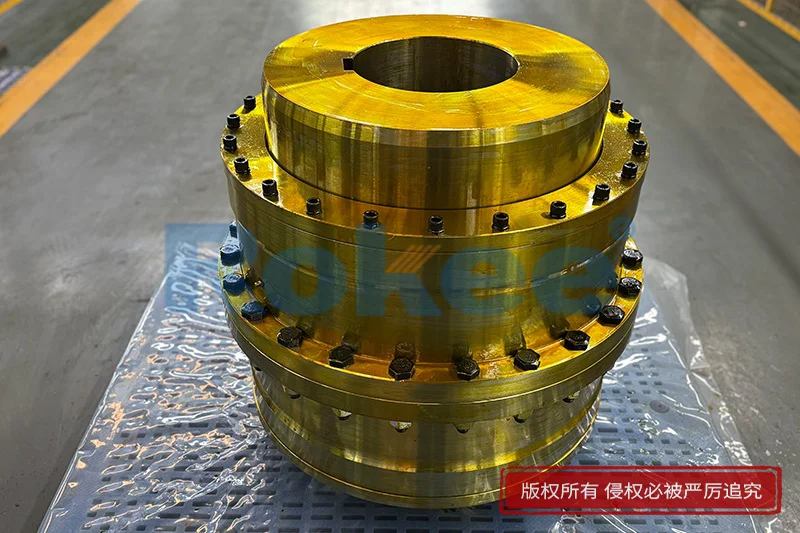
Motor gear coupling stands as a core mechanical transmission component widely applied in industrial power transmission systems, serving as a critical connecting medium between motor power sources and driven mechanical equipment. As a specialized rigid movable transmission part, it relies on the precise meshing of internal and external gear structures to complete torque and rotational speed transmission, effectively linking driving shafts and driven shafts while adapting to various minor shaft displacement deviations generated during equipment operation. Different from elastic couplings that depend on flexible deformation for power transfer, motor gear couplings adopt all-metal meshing transmission structures, which endow them with outstanding load-bearing capacity and transmission stability, making them the preferred choice for heavy-load, high-speed, and long-duration continuous operation scenarios in modern mechanical engineering. The inherent structural characteristics and functional advantages of this component enable it to solve many common shaft connection problems in mechanical operation, ensuring the synchronous and efficient operation of the entire power transmission system.

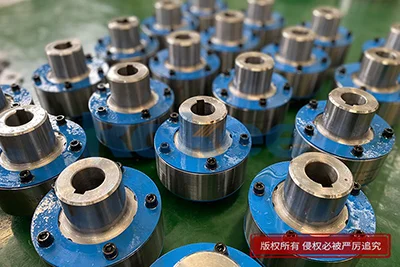
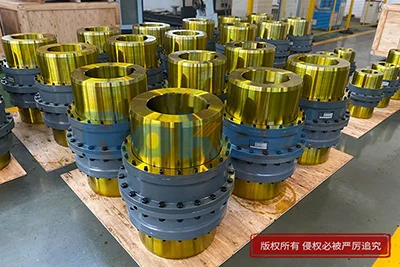
The basic structural composition of motor gear couplings is concise and practical, with each component designed to target transmission efficiency and operational stability. A complete motor gear coupling is mainly composed of two external gear hubs fixed on the shaft ends and a hollow sleeve with internal gear teeth. The external gear hubs are installed on the driving shaft connected to the motor and the driven shaft of the mechanical equipment respectively, while the internal gear sleeve is sleeved outside the two gear hubs, realizing the nested meshing of internal and external gear teeth. To ensure the stability of long-term operation, the whole set of matching structures is equipped with auxiliary sealing and lubrication components. The external gear teeth are usually processed with a slight crown modification on the tooth surface, which can effectively avoid excessive local friction and tooth surface wear caused by minor shaft misalignment during operation. This subtle structural optimization greatly improves the component’s adaptability to dynamic working conditions and extends its overall service life. All metal components are made of high-strength alloy materials processed by fine forging and heat treatment, with excellent mechanical properties such as high hardness, strong toughness and anti-fatigue deformation, laying a solid foundation for stable transmission under complex working conditions.
The working principle of motor gear couplings is based on the basic mechanical law of gear meshing transmission, realizing continuous and efficient power transmission in mechanical systems. When the motor starts to operate, the driving shaft drives the fixed external gear hub to perform synchronous rotational motion. Through the close meshing contact between external gear teeth and the internal gear teeth of the outer sleeve, rotational torque and power are stably transmitted to the sleeve structure. The rotating outer sleeve further drives the external gear hub on the other side and the connected driven shaft to rotate synchronously, thus completing the power transmission from the motor to the driven equipment. In the whole transmission process, the meshing fit between gear teeth can ensure almost no power loss, achieving high-efficiency torque output. More importantly, the gap reserved by the meshing structure and the flexible fit of the tooth surface allow the coupling to automatically compensate for various minor displacements between the two connected shafts during operation, including axial telescopic displacement, radial offset and angular deflection. This adaptive compensation function avoids the additional mechanical stress, vibration and noise caused by shaft misalignment, ensuring the smooth operation of the entire transmission system.
Motor gear couplings possess unparalleled performance advantages compared with other types of transmission couplings, which is why they are widely used in industrial fields. First of all, they have extremely high torque transmission capacity. The all-metal gear meshing structure can bear huge instantaneous impact load and continuous heavy load, and can maintain stable transmission state even in long-term high-intensity operation, which is far superior to elastic couplings limited by flexible material bearing capacity. Secondly, the transmission efficiency of gear couplings is extremely high. The precise machining of gear teeth ensures tight meshing fit, with minimal friction loss and power loss during operation, realizing efficient conversion and transmission of mechanical energy. In addition, this type of coupling has excellent dynamic adaptability. It can effectively cope with the shaft position deviation caused by equipment installation errors, mechanical vibration, thermal expansion and contraction of components during long-term operation, avoiding local stress concentration and component damage caused by rigid connection. Meanwhile, the overall structural rigidity is strong, the operation synchronization is high, and the rotational speed difference between the driving and driven shafts is extremely small, which can meet the high-precision synchronous operation requirements of most mechanical equipment.
In terms of environmental adaptability, motor couplings also show strong robustness and can operate stably in various harsh industrial working environments. Different from flexible couplings that are easily affected by high temperature, low temperature, humidity and corrosive media, all-metal gear structures will not deform, age or fail due to environmental temperature changes. They can maintain stable mechanical performance in high-temperature operation environments generated by long-term equipment operation and low-temperature working conditions in special industrial scenarios. The surface of the components is treated with anti-corrosion and anti-rust processes, which can resist the erosion of humid air, industrial dust and weak corrosive media, reducing the failure rate caused by environmental factors. Moreover, the structural wear resistance is excellent. The high-hardness tooth surface processed by special technology can resist long-term friction and impact wear, and can maintain accurate meshing state for a long time even under high-speed rotating and frequent start-stop working conditions, avoiding transmission failure caused by excessive tooth surface wear.
Motor gear couplings are widely applied in multiple industrial fields involving motor power transmission, covering almost all heavy-duty mechanical operation scenarios. In traditional heavy industry and manufacturing equipment, they are used for the power connection of large rotating machinery, providing stable power support for high-load operation of equipment. In power transmission equipment, they undertake the synchronous transmission task between power motors and power generation components, ensuring the efficient and stable output of electric energy. In building materials, metallurgy and chemical industries, where equipment operates continuously for a long time and the working environment is harsh, gear couplings rely on their durability and stability to reduce equipment failure frequency and improve production continuity. In addition, they are also commonly used in large conveying equipment, lifting machinery and engineering machinery, adapting to the working characteristics of frequent load changes and instantaneous impact in mechanical operation. Whether it is constant-speed stable operation or variable-speed dynamic operation, motor gear couplings can adjust adaptively to match different power transmission requirements.
Although motor gear couplings have excellent comprehensive performance, their stable operation and service life are closely related to daily installation, lubrication and maintenance work. The installation accuracy directly affects the operating state of the coupling. Excessive shaft misalignment caused by improper installation will lead to increased tooth surface friction, accelerated wear and even abnormal vibration and noise during operation. Therefore, precise calibration of the coaxiality of the driving and driven shafts is required during installation to control the displacement deviation within the adaptive range of the coupling. Lubrication maintenance is the core link to ensure the performance of gear couplings. The meshing operation of gear teeth depends on lubricating media to reduce friction and wear, and lubricating grease can also play a role in heat dissipation, shock absorption and sealing dust prevention. Long-term operation will lead to lubricant aging, deterioration and loss, so regular inspection and replacement of lubricating grease are required to ensure sufficient and effective lubrication between gear teeth. At the same time, it is necessary to regularly check the sealing structure of the coupling to prevent external dust, impurities and moisture from entering the meshing gap, avoiding tooth surface abrasion, corrosion and meshing jamming caused by foreign matter intrusion.
In the long-term operation process, regular fault inspection and maintenance can effectively extend the service life of motor gear couplings and reduce equipment operation risks. Daily inspection mainly focuses on the operating state of the coupling, including whether there is abnormal vibration, irregular noise and local temperature overheating during equipment operation. Abnormal vibration and noise usually indicate excessive tooth surface wear, poor lubrication or increased shaft misalignment, which requires timely shutdown inspection and troubleshooting. Regular disassembly and inspection can check the wear degree of gear tooth surface, judge whether there are tooth surface peeling, deformation, crack and other damage, and replace severely worn components in time to avoid sudden transmission failure. In addition, the fastening state of the connecting structure should be checked regularly to prevent component loosening caused by long-term vibration, which leads to unstable transmission and equipment failure. Scientific and standardized maintenance management can maximize the working performance of gear couplings and reduce the comprehensive operation cost of mechanical equipment.
With the continuous upgrading of modern mechanical equipment towards high speed, high load and high precision, the performance requirements for motor gear couplings are also constantly improving. The continuous progress of material processing technology and mechanical design technology promotes the iterative optimization of gear coupling structures. Modern optimized motor gear couplings adopt more precise tooth surface modification technology and lightweight structural design, which not only maintain high torque transmission capacity and stability, but also reduce the overall weight and rotational inertia of components, improving the dynamic response speed of power transmission. At the same time, the optimized sealing and lubrication system further enhances the environmental adaptability and maintenance cycle of the coupling, reducing the frequency of daily maintenance and the operating cost of industrial equipment. As an indispensable basic component of mechanical transmission systems, motor gear couplings will always occupy an important position in industrial manufacturing, and their performance optimization will continuously support the efficient and stable operation of various mechanical equipment.
In summary, motor gear couplings rely on their unique gear meshing transmission principle, excellent mechanical performance, strong environmental adaptability and wide application compatibility to become a key component in motor power transmission systems. They solve many pain points in traditional shaft connection transmission, such as insufficient load capacity, poor misalignment compensation ability and easy environmental interference, and provide reliable guarantee for long-term continuous and efficient operation of industrial mechanical equipment. Reasonable structural design, high-strength material application and standardized operation and maintenance management together ensure the stable performance of motor gear couplings in complex working conditions. In the future, with the continuous development of industrial machinery towards intelligence and high efficiency, motor gear couplings will continue to complete technological innovation and performance upgrading, adapt to more diversified and high-standard industrial application scenarios, and provide more solid basic support for the development of modern industrial manufacturing industry.
« Motor Gear Couplings » Update Date: 2026/7/17
URL: https://www.rokee.com/en/tags/motor-gear-couplings.html
Contact
If you require custom machined couplings, please contact Rokee via the contact information below for inquiries.
Email: Rokee@Rokee.com
 WeChat