Multi Jaw Couplings
Rokee is a manufacturer of multi jaw couplings from china, we can provide non-standard custom multi jaw couplings based on parameters or drawings supplied by customers, with export support available.

Multi jaw couplings stand as one of the most practical and widely adopted flexible transmission components in modern mechanical power systems, renowned for their integrated advantages of stable torque transmission, vibration damping, and misalignment compensation. Featuring a simple three-piece modular structure consisting of two metal jaw hubs and a central elastic spider insert, these couplings effectively connect rotating shafts to transfer mechanical power while buffering operational shocks and reducing system noise. Unlike rigid couplings that lack flexibility and specialized couplings with complex structures, multi jaw couplings strike a perfect balance between transmission rigidity and operational adaptability, making them suitable for both general industrial power transmission and high-precision motion control scenarios. Their compact structure, easy assembly, and maintenance-free operation further enhance their application value, allowing them to adapt to diverse working environments from low-speed heavy-load operations to high-speed precise transmission, and they have become an indispensable core component in mechanical transmission systems.


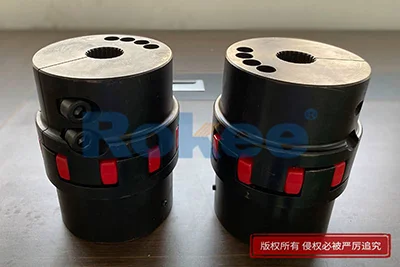
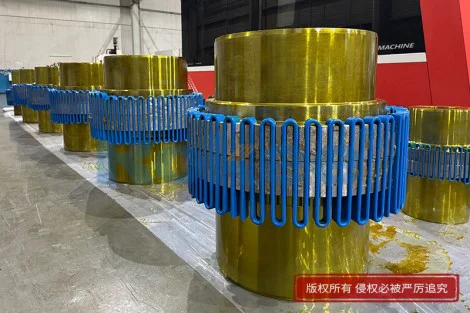
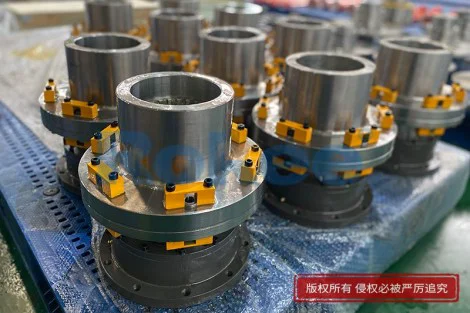
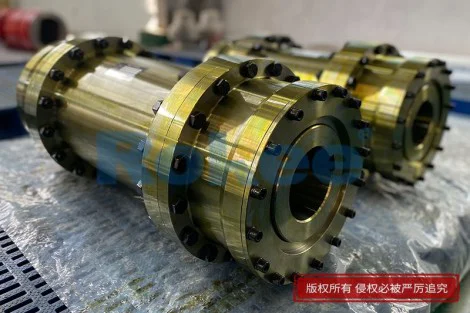
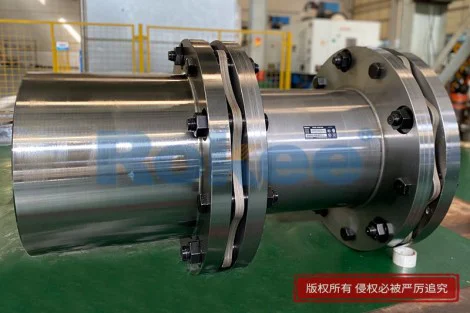
The structural design of multi jaw couplings is the core foundation of their superior transmission performance, featuring a concise and highly practical modular configuration with no redundant components. The two symmetrical metal hubs are processed with evenly distributed convex jaws, and the jaw quantity and structural radian are scientifically optimized to ensure uniform force bearing during operation. Sandwiched between the two interlocking hubs is an elastic spider insert, which fits tightly with the gaps of the jaw structures to form a complete transmission assembly. This embedded fitting mode eliminates axial and radial gaps in conventional connecting structures, realizing synchronous rotation of the two shafts. The metal hubs are usually made of high-strength ductile iron, aluminum alloy or stainless steel, providing excellent structural rigidity and wear resistance to support stable long-term torque output. The elastic insert, as the flexible core part, adopts high-elasticity polymer materials with adjustable hardness, which can undergo mild compression deformation during operation without permanent damage. The overall compact structure requires minimal installation space, enabling flexible deployment in narrow mechanical equipment layouts, a key advantage over bulky traditional coupling structures.
The working principle of multi jaw couplings relies on the compression deformation of elastic elements to realize efficient and buffered torque transmission, differing fundamentally from rigid friction or meshing transmission structures. During equipment operation, the driving shaft drives one metal hub to rotate, and the convex jaws of the active hub squeeze the elastic spider insert, which then transmits rotational force to the driven hub and the connected driven shaft. All torque transmission processes are completed through uniform compression of the elastic material, avoiding rigid collision and hard friction between metal components. When the connected two shafts produce minor angular, radial or axial misalignment due to equipment assembly errors or operational vibration, the elastic insert can adaptively deform to compensate for such displacement deviations. This adaptive compensation effectively avoids additional mechanical stress caused by shaft misalignment, which would otherwise lead to component wear, shaft deformation or transmission efficiency reduction. In addition, the elastic material can absorb and dissipate torsional vibration and instantaneous impact loads generated during equipment start-up, shutdown and variable-speed operation, smoothing the transmission process and maintaining the stability of the entire mechanical system.
Material selection for multi jaw couplings directly determines their service performance, service life and environmental adaptability, with hub and elastic insert materials matching different working conditions respectively. Metal hubs, as the load-bearing and force-transmitting framework, prioritize high rigidity, structural stability and fatigue resistance. Lightweight aluminum alloy hubs are widely used in high-speed, low-load and precision motion equipment due to their low inertia and excellent processing accuracy. Ductile iron hubs feature outstanding impact resistance and load-bearing capacity, ideal for heavy-load, low-speed industrial transmission scenarios with frequent start-stop operations. Stainless steel hubs are applied in humid, corrosive and dust-prone working environments to resist oxidation and chemical erosion. The elastic spider insert has diverse material options to meet differentiated performance needs. Soft elastic materials with low hardness provide superior vibration damping and misalignment compensation, suitable for precision equipment sensitive to vibration and noise. Hard high-strength elastic materials offer higher torsional stiffness and torque resistance, adapting to high-load and high-speed continuous operation. All matching materials are optimized for compatibility, ensuring coordinated operation of rigid and flexible parts without local stress concentration.
Multi jaw couplings possess multiple core performance advantages that make them superior to many other coupling types in comprehensive applicability. First, they deliver efficient and stable torque transmission with high torsional stiffness, ensuring no power loss or rotational speed deviation during synchronous shaft operation, which guarantees high transmission accuracy for motion control systems. Second, their excellent vibration damping and noise reduction performance effectively suppress mechanical resonance and operational noise generated by equipment operation, improving the working environment and reducing equipment fatigue loss. Third, the good misalignment tolerance allows them to adapt to minor shaft displacement errors caused by assembly, thermal expansion and mechanical vibration, reducing assembly precision requirements and lowering equipment failure rates. Moreover, these couplings feature strong overload protection capability. When the system encounters sudden overload impact, the elastic insert preferentially bears deformation and buffers instantaneous pressure, avoiding direct damage to expensive core equipment such as motors, reducers and bearings. Additionally, the fully enclosed matching structure prevents dust and impurities from entering the transmission gap, ensuring stable long-term operation with excellent environmental adaptability.
The application scenarios of multi jaw couplings cover almost all fields of mechanical power transmission, showing extremely high universal applicability. In general industrial manufacturing, they are widely used in conveyor equipment, mixing machinery, packaging equipment and processing machine tools, providing stable power connection for conventional production lines and ensuring continuous and efficient operation of production equipment. In precision motion control fields such as servo systems, automation equipment and robotic transmission mechanisms, their high transmission accuracy and low inertia characteristics ensure precise positioning and synchronous operation, meeting the strict precision requirements of automated production. In fluid power equipment including water pumps, fans and hydraulic systems, the vibration damping performance effectively reduces pipeline and equipment vibration, extending the service life of fluid transmission systems. They also perform well in light and medium-load power transmission of textile machinery, printing machinery and food processing equipment. Whether for continuous stable operation of fixed equipment or frequent variable-speed and start-stop operation of mobile equipment, multi jaw couplings can maintain reliable working performance, fully adapting to diversified industrial production needs.
The installation and daily maintenance of multi jaw couplings are extremely simple, which is an important reason for their widespread industrial application and low comprehensive use cost. During installation, workers only need to fix the two metal hubs on the driving and driven shafts respectively, place the elastic insert in the jaw gap, and adjust the coaxiality of the two shafts appropriately to complete assembly, with no complex debugging procedures or professional auxiliary equipment required. The modular structure allows for quick disassembly and replacement, greatly improving equipment maintenance efficiency. In daily operation, these couplings require no lubrication or regular oiling maintenance, eliminating the trouble of frequent oil supplement and cleaning compared with gear couplings and chain couplings. In routine inspections, staff only need to check the integrity of the elastic insert and the fastening state of the hub connection. Minor aging and wear of the elastic insert can be replaced independently without replacing the entire coupling, reducing maintenance material costs. Scientific and standardized installation and simple daily maintenance can effectively extend the service life of multi jaw couplings, ensuring long-term stable and reliable operation of mechanical transmission systems.
With the continuous upgrading of modern mechanical equipment towards high precision, high efficiency and high stability, the technical optimization and application prospects of multi jaw couplings are becoming increasingly broad. Current iterative optimization of multi jaw coupling products mainly focuses on material upgrading and structural fine-tuning. New composite elastic materials are being developed to balance high elasticity, high wear resistance and high temperature resistance, enabling couplings to adapt to more extreme working environments such as high temperature, low temperature and strong corrosion. Structural optimization is committed to improving the uniformity of jaw stress distribution, further enhancing torque transmission capacity and reducing fatigue wear of components. In terms of application development, with the rapid development of intelligent manufacturing, automated production and new energy equipment, the demand for high-precision and high-stability transmission components is constantly rising, providing a broader market space for multi jaw couplings. In the future, multi jaw couplings will continue to rely on their structural simplicity, superior performance and low maintenance cost, and become more widely used in emerging industrial fields, continuously empowering the stable and efficient operation of modern mechanical transmission systems.
« Multi Jaw Couplings » Update Date: 2026/8/5
Contact
If you require custom machined couplings, please contact Rokee via the contact information below for inquiries.
Email: Rokee@Rokee.com
 WeChat