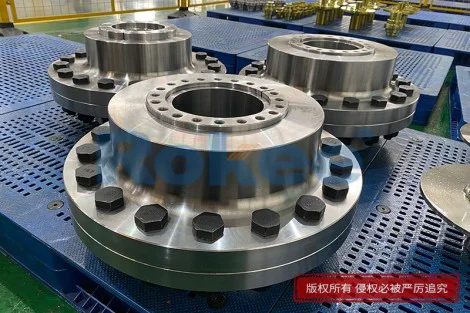
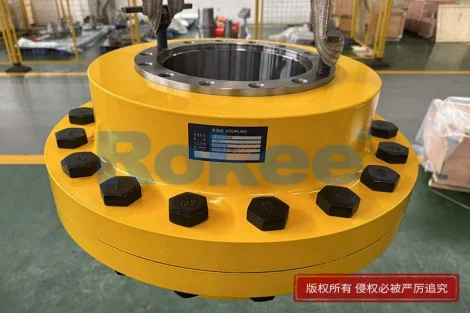
Flexible Propeller Shaft Couplings
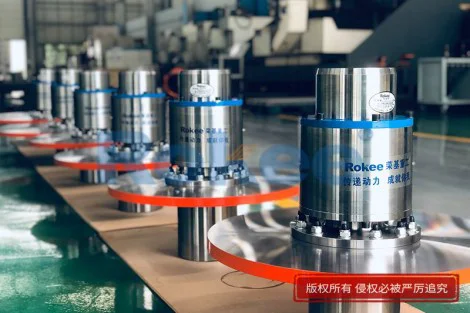
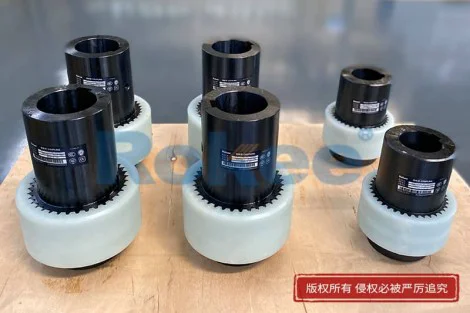
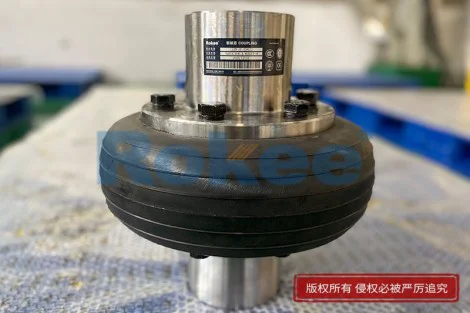
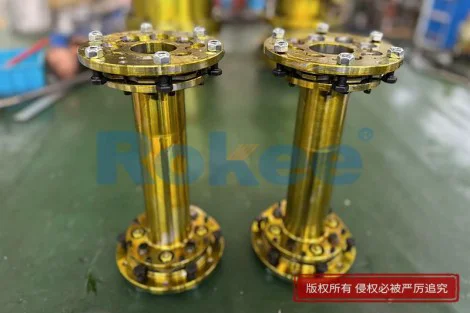
Rokee is a manufacturer of flexible propeller shaft couplings from china, we can provide non-standard custom flexible propeller shaft couplings based on parameters or drawings supplied by customers, with export support available.
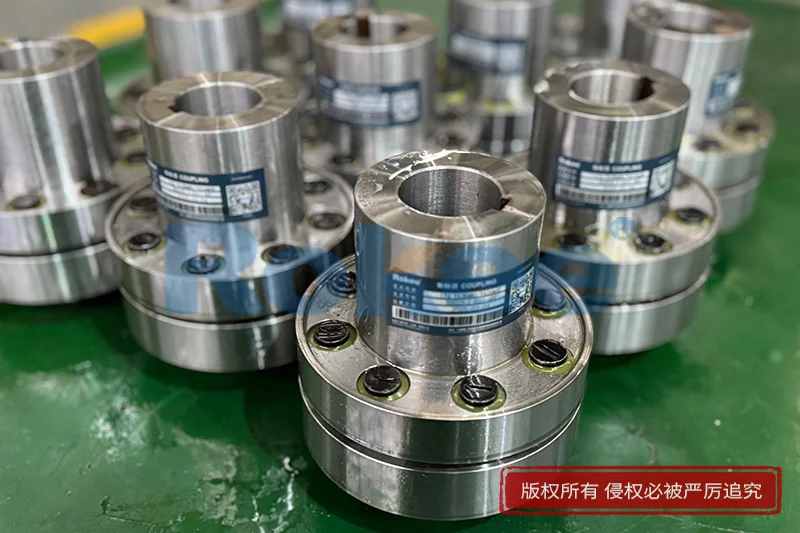
Flexible propeller shaft couplings are indispensable mechanical components designed to connect rotating shafts within propulsion and power transmission systems, serving as a critical buffer between driving and driven equipment. Unlike rigid couplings that prioritize fixed connection, these flexible units integrate elastic structural elements to deliver adaptive flexibility while maintaining stable torque transmission, effectively addressing common operational issues including shaft misalignment, mechanical vibration, and impact load fluctuations. Widely applied in marine propulsion, industrial transmission, and mobile mechanical equipment, they balance structural rigidity and elastic ductility to prevent excessive stress concentration on shafts, bearings, and power devices. By offsetting axial, radial, and angular deviations generated during equipment operation, they reduce mechanical wear, lower operational noise, and significantly extend the overall service life of transmission systems. Their versatile structural design and reliable adaptive performance make them a core component for optimizing the stability and durability of modern mechanical power transmission systems.
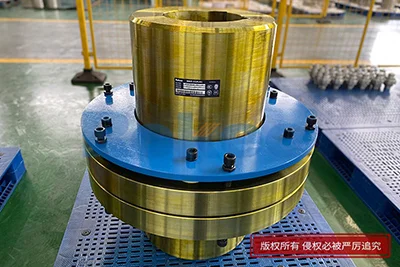
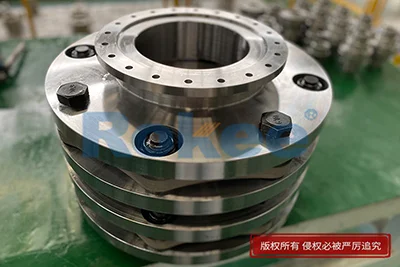

The core working principle of flexible propeller shaft couplings lies in the elastic deformation of internal flexible elements, which enables compliant power transmission and dynamic error compensation during equipment operation. In conventional mechanical transmission systems, assembly deviations, long-term operational wear, and structural deformation often lead to subtle misalignment between the driving shaft and driven shaft. Rigid connection structures cannot adapt to such deviations, resulting in additional alternating stress on shaft components, intensified friction between matching parts, and even periodic mechanical vibration. Flexible propeller shaft couplings solve this problem thoroughly by utilizing the elastic displacement capability of their internal components. When shaft misalignment occurs, the flexible structure produces controllable elastic deformation to absorb displacement differences, ensuring continuous and uniform torque transmission without generating additional mechanical resistance. Meanwhile, during equipment startup, shutdown, and load mutation processes, the elastic elements can buffer instantaneous impact loads, disperse peak stress acting on the transmission system, and avoid sudden torque shocks that may damage precision mechanical parts. This adaptive working mechanism allows the entire transmission system to operate smoothly under complex and variable working conditions, greatly improving the operational tolerance of mechanical equipment.
Structural composition determines the core performance and application adaptability of flexible couplings, and mature products adopt a modular assembled structure with stable and reliable performance. The basic structure mainly includes rigid flange connectors, elastic flexible elements, and fastening assembly parts. The rigid flanges on both sides are responsible for fixed connection with the driving and driven shafts, ensuring accurate positioning and stable torque output of the overall structure. The middle flexible element is the key functional part, which can be made of high-elastic polymer materials, composite elastic structures, or flexible metal components according to different usage scenarios. This part undertakes all elastic deformation, vibration absorption, and misalignment compensation work in operation. The fastening parts adopt high-precision matching structures to ensure the tight combination of various components, avoiding structural loosening or displacement caused by long-term high-speed rotation. Different from traditional transmission couplings, this modular structure realizes the separation of rigid connection and flexible buffering functions, ensuring sufficient structural strength for torque transmission while retaining excellent elastic adaptive capacity. Moreover, the integrated structural design avoids complex assembly processes, reduces structural gaps, and effectively prevents torque loss and abnormal mechanical noise during high-speed operation.
Vibration and noise reduction is one of the most prominent functional advantages of flexible propeller shaft couplings, bringing significant optimization effects to the operating environment of mechanical equipment. In high-speed rotating transmission systems, tiny shaft deviations, unbalanced load distribution, and mechanical friction will inevitably generate continuous vibration and resonant noise. Such vibration will not only accelerate the fatigue wear of shaft parts, bearings, and gear components but also cause structural resonance of the entire equipment, affecting operational stability and safety. Flexible propeller shaft couplings rely on the excellent damping performance of elastic elements to effectively absorb and attenuate mechanical vibration generated during operation. When vibration energy is transmitted to the coupling, the flexible structure converts mechanical vibration energy into tiny elastic deformation energy and dissipates it gradually, avoiding the continuous transmission of vibration between the driving end and the driven end. At the same time, the elastic isolation effect cuts off the vibration transmission path, suppresses the generation of resonant noise, and reduces the overall operating noise of the equipment. Long-term stable vibration reduction can effectively protect precision mechanical components, reduce the failure rate of vulnerable parts, and create a more stable and low-noise operating state for mechanical systems.
Misalignment compensation capability is the core value of flexible propeller shaft couplings in practical engineering applications, solving many pain points in mechanical transmission operation. In the assembly and long-term operation of mechanical equipment, three common types of shaft misalignment will inevitably occur: axial displacement caused by thermal expansion and contraction of components, radial offset caused by assembly errors or structural wear, and angular deflection caused by structural deformation. These misalignment problems cannot be completely eliminated by precision processing and assembly technology, and rigid couplings will amplify the adverse effects of misalignment, leading to accelerated component wear, increased transmission resistance, and even shaft bending and fracture in severe cases. Flexible propeller shaft couplings have excellent adaptive compensation ability for all three types of misalignment through elastic structural deformation. Within the allowable deformation range, they can automatically offset displacement and angle deviations, ensure the coaxiality of the transmission system is relatively stable, and maintain efficient torque transmission. This compensation performance greatly reduces the assembly precision requirements of equipment, lowers assembly and maintenance costs, and enables the transmission system to maintain stable operation even after long-term operational wear and structural changes.
Load buffering and overload protection functions effectively improve the operational safety and fault tolerance of mechanical transmission systems, becoming an important safety barrier for equipment operation. Mechanical equipment often faces variable load impacts in actual operation, such as instantaneous load surge during startup, sudden load change caused by working condition adjustment, and abnormal load impact caused by foreign matter jamming or equipment failure. These instantaneous overload impacts will produce huge peak torque in the transmission system, which is easy to damage precision parts such as engines, gearboxes, and bearings, and even cause irreversible structural damage to the entire transmission system. Flexible propeller shaft couplings can effectively buffer instantaneous overload impact through the elastic deformation of flexible elements, disperse peak torque, and avoid concentrated stress on key components. When the load exceeds the safe operating range of the system, the elastic structure will produce large deformation to absorb excess energy, and form a passive protection mechanism to reduce the torque transmission efficiency temporarily. This intelligent load adaptation effect avoids sudden damage to core equipment caused by abnormal load changes, improves the anti-interference ability of the transmission system under complex working conditions, and greatly reduces the risk of sudden equipment failure.
Flexible propeller shaft couplings have extremely wide application scenarios, covering multiple fields of mechanical transmission due to their excellent comprehensive performance. In marine propulsion systems, they are widely used in various vessel power transmission structures, adapting to the bumpy and variable marine working environment, offsetting shaft deformation caused by hull vibration and water impact, and ensuring stable power output of propulsion systems. In industrial mechanical equipment, they are applied to rotating equipment such as fans, pumps, and transmission machinery, effectively reducing equipment vibration and extending the service life of transmission components. In mobile engineering machinery, they adapt to frequent startup, shutdown and variable load operation conditions, buffer mechanical impact, and improve the stability of equipment operation. In addition, they also play an important role in power generation equipment and transportation machinery, providing reliable guarantee for efficient power transmission. With the continuous upgrading of mechanical equipment towards high speed, high precision and high stability, the market demand for high-performance flexible propeller shaft couplings is constantly increasing, and their structural design and functional performance are also continuously optimized to adapt to more complex and diversified working conditions.
Daily maintenance and reasonable selection are key factors to ensure the long-term stable operation of flexible propeller shaft couplings and give full play to their performance advantages. In terms of selection, it is necessary to comprehensively consider key factors such as equipment operating speed, conventional load range, working environment characteristics and shaft matching parameters, and select couplings with appropriate elastic performance and structural specifications to avoid performance mismatch affecting transmission efficiency and service life. For equipment operating in high vibration, high humidity or variable load environments, priority should be given to couplings with strong environmental adaptability and fatigue resistance. In daily maintenance, regular visual inspection should be carried out to check for aging, deformation, cracking or wear of flexible elements, and timely replace failed parts to avoid functional failure. It is also necessary to check the fastening state of connecting parts regularly to prevent structural loosening caused by long-term high-speed rotation. Meanwhile, avoid long-term overload operation of the equipment to prevent excessive elastic deformation of the coupling from causing permanent fatigue damage. Scientific selection and standardized maintenance can maximize the service life of flexible propeller shaft couplings, maintain the long-term stability of the mechanical transmission system, and reduce equipment operation and maintenance costs effectively.
« Flexible Propeller Shaft Couplings » Update Date: 2026/8/5
URL: https://www.rokee.com/en/tags/flexible-propeller-shaft-couplings.html
Contact
If you require custom machined couplings, please contact Rokee via the contact information below for inquiries.
Email: Rokee@Rokee.com
 WeChat