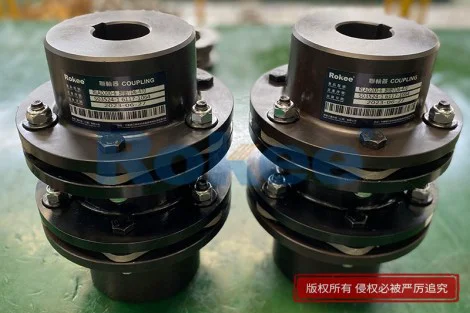
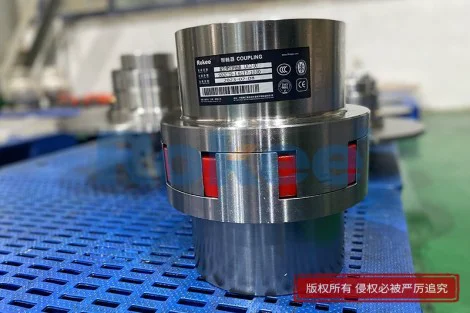
Flexible Rubber Drive Couplings
Rokee is a manufacturer of flexible rubber drive couplings from china, we can provide non-standard custom flexible rubber drive couplings based on parameters or drawings supplied by customers, with export support available.

Flexible rubber drive couplings are essential elastomeric mechanical components designed to connect rotating drive and driven shafts in diverse mechanical systems, serving as a vital buffer and transmission medium in industrial and commercial machinery. Unlike rigid coupling structures that deliver fixed torque transmission, these couplings leverage the unique elastic deformation properties of rubber materials to achieve flexible power transfer, effectively resolving common operational issues in mechanical operation. Their core functions cover torque transmission, misalignment compensation, vibration damping and shock absorption, which greatly optimize the overall operating stability of mechanical equipment. Widely adaptable to medium and low torque operating scenarios, they stand out for their simple structure, reliable performance and low maintenance demand. As a cost-effective and practical transmission accessory, they have become an indispensable part of modern mechanical transmission systems, helping extend equipment service life and reduce operational failure risks in long-term continuous operation.
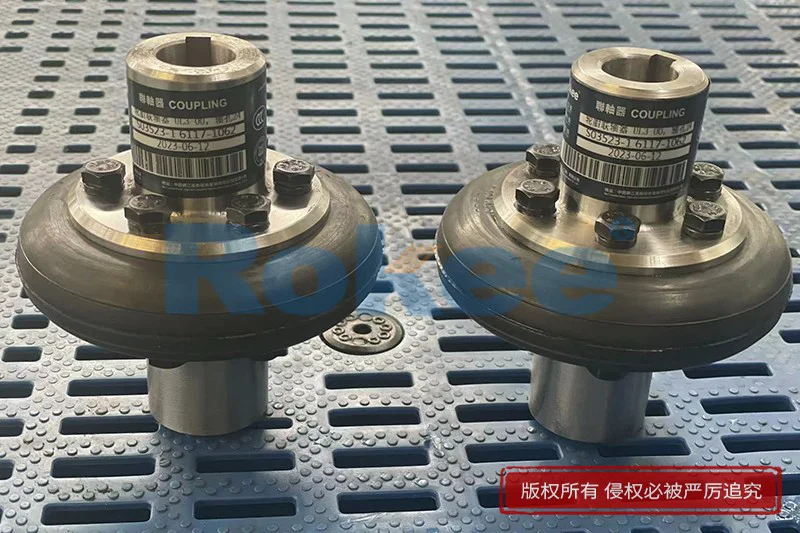
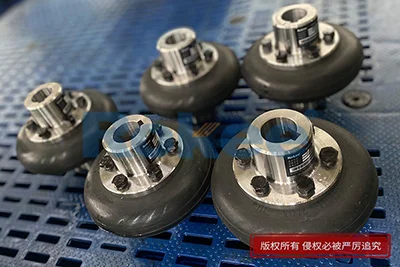

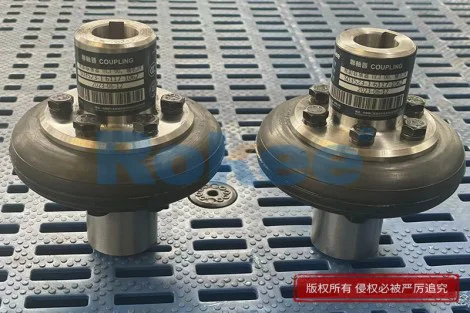
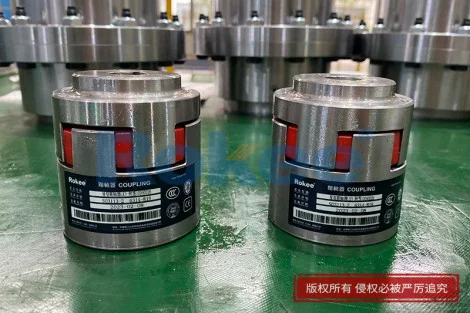
The basic structural composition of flexible rubber drive couplings is simple and scientific, mainly consisting of two metal coupling hubs and integrated rubber elastic components, forming a compact and integrated transmission structure. The metal hubs are responsible for connecting and fixing the driving and driven shafts respectively, ensuring stable assembly with mechanical shafts and accurate torque input and output. The rubber elastic core, as the core functional part of the coupling, is vulcanized or assembled between the two metal hubs, and its special structural design enables it to produce controllable elastic deformation under operating loads. Different from traditional rigid metal couplings with fully fixed structures, the rubber medium eliminates rigid contact between metal parts, creating a flexible transmission buffer zone. Some optimized structural designs adopt segmented rubber structures or integral annular rubber structures, which can evenly disperse torque pressure and avoid local stress concentration during operation. This simple yet efficient structural layout not only reduces the overall weight and assembly difficulty of the coupling, but also lays a solid foundation for its excellent flexible compensation and damping performance, making it suitable for various complex installation and operating environments.
One of the most prominent performance advantages of flexible rubber drive couplings is their excellent misalignment compensation capability, which solves the installation and operation deviations that are unavoidable in mechanical assembly and long-term operation. In actual mechanical assembly, it is difficult to achieve complete coaxiality of two connecting shafts due to manual installation errors, equipment assembly tolerances and base fixing deviations. During long-term equipment operation, factors such as mechanical vibration, base settlement and component wear will also cause gradual deviation of shaft positions, resulting in axial, radial and angular misalignment between driving and driven shafts. Rigid couplings cannot adapt to such deviations, which will cause severe friction, extrusion and additional stress on shaft components, accelerating component wear and even causing shaft deformation and equipment failure. Flexible rubber drive couplings rely on the elastic deformation of rubber materials to flexibly adapt to various slight misalignments, automatically offsetting position deviations between shafts without generating additional mechanical stress. This adaptive compensation performance ensures continuous and stable torque transmission, avoids abnormal wear of shafts, bearings and other key components, and greatly improves the fault tolerance of mechanical transmission systems in actual operation.
Superior vibration damping and noise reduction performance makes flexible rubber drive couplings widely used in precision and low-noise mechanical equipment operation scenarios. Most mechanical systems will produce periodic vibration and impact force during startup, shutdown and variable-speed operation, especially when the equipment is running at variable loads or crossing critical speeds. Such torsional vibration and mechanical impact will be transmitted along the rigid shaft system, causing resonance of the whole equipment, resulting in increased operating noise and accelerated fatigue wear of mechanical parts. The rubber material of flexible drive couplings has good viscoelasticity, which can effectively absorb and consume vibration energy generated during mechanical operation. When vibration and impact torque act on the coupling, the rubber elastic component undergoes slow elastic deformation to buffer instantaneous impact force and attenuate vibration amplitude, preventing vibration from being transmitted between the driving end and the driven end. While suppressing mechanical resonance and reducing equipment operating noise, this damping performance also protects precision mechanical components from vibration damage, maintains the operating accuracy of precision equipment, and creates a more stable and low-noise operating environment for mechanical systems.
Flexible rubber drive couplings have outstanding shock resistance and load buffering performance, which can effectively protect mechanical equipment from damage caused by sudden load changes in complex working conditions. In the operation of various mechanical devices, sudden startup, emergency stop, instantaneous load surge and intermittent impact load are common working conditions. These instantaneous impact loads will generate huge instantaneous torque in the transmission system, which is easy to cause rigid impact damage to gears, bearings, motors and other key transmission components, and even lead to mechanical failure and shutdown in severe cases. The elastic characteristics of rubber enable the coupling to produce gradual deformation under instantaneous impact torque, disperse and release instantaneous impact energy, and convert sudden rigid impact into gentle flexible transmission. This buffering effect greatly reduces the peak load borne by the transmission system at the moment of load change, avoids component damage caused by excessive instantaneous stress, and improves the anti-impact ability of the whole mechanical system. For mechanical equipment operating in intermittent and variable-load working conditions, this performance can effectively reduce equipment failure rate and improve operational safety and stability.
In terms of daily operation and maintenance, flexible rubber drive couplings have obvious practical advantages, featuring maintenance-free operation, strong durability and low comprehensive operating cost. Different from gear couplings and chain couplings that require regular lubrication, oil replacement and wear part inspection, rubber drive couplings have a fully sealed and integrated structure with no sliding friction parts inside. The high-quality rubber materials used have excellent aging resistance, wear resistance and fatigue resistance, and can maintain stable elastic performance during long-term continuous operation without frequent maintenance and debugging. In normal operating environments, the coupling can run stably for a long time without special manual maintenance, which greatly reduces daily equipment maintenance workload and labor cost. Even in long-term cyclic deformation operation, the rubber component has strong fatigue resistance and is not easy to deform and fail. In case of extreme working conditions leading to partial aging of rubber parts, the elastic components can be replaced independently without replacing the whole coupling, which further reduces equipment replacement and maintenance costs and improves the economic efficiency of equipment operation.
Flexible rubber drive couplings are applicable to an extremely wide range of industrial scenarios, covering most medium and low-power mechanical transmission systems in various industries. In general industrial equipment, they are widely used in supporting transmission systems of pumps, fans, conveyors and ordinary motor equipment, adapting to conventional continuous operation working conditions. In the field of environmental protection and water treatment equipment, their good vibration damping performance can protect precision water pump and valve components from vibration damage and ensure stable operation of water treatment systems. In light industry, chemical and food processing equipment, the coupling’s stable and pollution-free operation characteristics meet the operating requirements of clean working environments, and its flexible transmission performance adapts to variable-load production operation. In mining, construction and general mechanical processing equipment, their excellent impact resistance and misalignment tolerance can adapt to harsh working conditions with complex vibration and load changes. Whether it is continuous stable operation of conventional equipment or variable-load intermittent operation of special equipment, flexible rubber drive couplings can exert stable transmission and protection effects, showing strong scenario adaptability.
With the continuous upgrading of modern mechanical equipment towards high precision, low noise and high stability, the application value and development potential of flexible rubber drive couplings are constantly highlighted. Modern mechanical systems have increasingly strict requirements for transmission stability, vibration control and equipment durability, and traditional rigid transmission structures can no longer meet the high-standard operating needs of precision equipment. Flexible rubber drive couplings continuously optimize material formula and structural design, further improving elastic deformation stability, aging resistance and high and low temperature resistance, enabling them to adapt to more extreme working environments. Their flexible transmission characteristic can effectively optimize the dynamic performance of mechanical transmission systems, reduce mechanical loss and energy consumption in the operation process, and help mechanical equipment achieve more efficient and energy-saving operation. As a mature and continuously optimized mechanical transmission component, flexible rubber drive couplings will continue to be widely used in more emerging mechanical equipment fields, providing reliable basic guarantee for the stable and efficient operation of modern mechanical systems.
« Flexible Rubber Drive Couplings » Update Date: 2026/8/5
URL: https://www.rokee.com/en/tags/flexible-rubber-drive-couplings.html
Contact
If you require custom machined couplings, please contact Rokee via the contact information below for inquiries.
Email: Rokee@Rokee.com
 WeChat