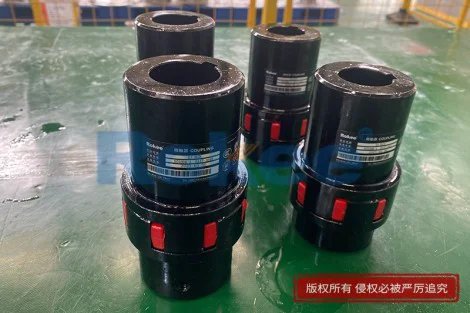
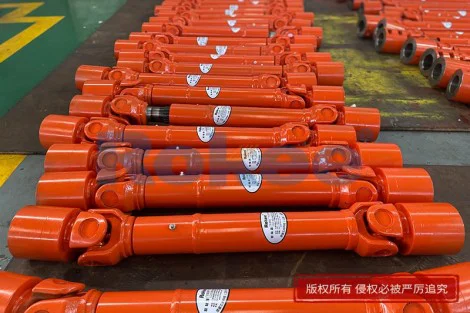
Double Flex Coupling
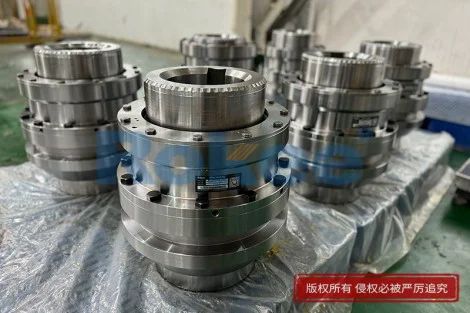
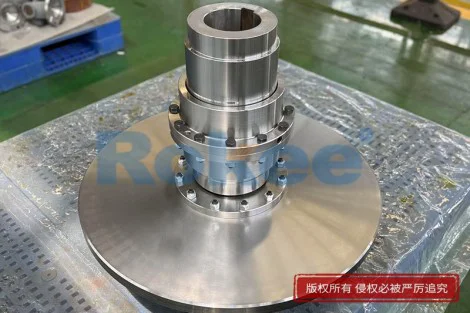
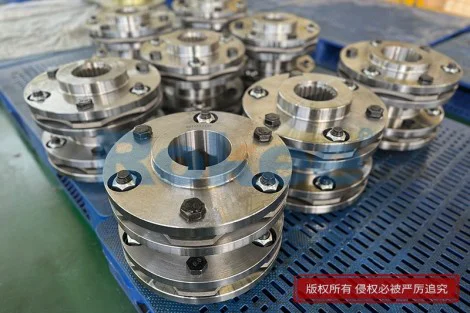
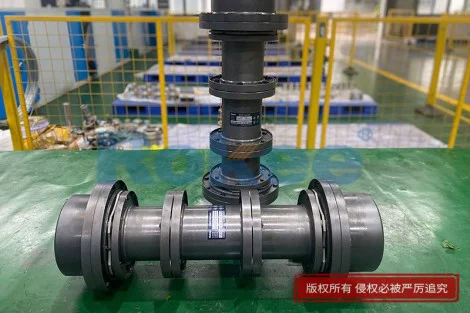
Rokee is a manufacturer of double flex coupling from china, we can provide non-standard custom double flex coupling based on parameters or drawings supplied by customers, with export support available.

Double flex coupling stands as a high-performance mechanical transmission component engineered to connect rotating shafts and deliver stable torque transmission in complex industrial operating environments. Distinguished from traditional single-flex coupling structures, it adopts a dual flexible element layout with two independent flexible deformation units and an intermediate connecting structure, endowing it with superior multi-directional misalignment compensation capabilities. This mechanical device is primarily designed to resolve common operational issues in shaft transmission systems, including axial displacement, angular deflection, and radial offset caused by mechanical vibration, thermal expansion, and assembly deviations. Featuring backlash-free transmission, low operational vibration, and excellent torsional stiffness, it can effectively buffer instantaneous impact loads during equipment operation, protect core mechanical components from fatigue damage, and maintain long-term transmission accuracy. Widely adaptable to high-speed, high-precision, and heavy-duty mechanical systems, it has become an indispensable core part in modern industrial transmission equipment, balancing transmission efficiency, operational stability and service durability comprehensively.


The core structural design of double flex coupling lays the foundation for its outstanding transmission performance and adaptive capacity. The overall structure consists of two symmetrical flexible functional units and a central intermediate spacer, forming a double independent flexible transmission system. Each flexible unit is equipped with high-strength elastic deformation components, which work in coordination to undertake torque transmission and displacement compensation tasks respectively. The intermediate spacer serves as a stable connecting bridge between the two flexible units, realizing uniform load distribution and synchronous deformation coordination during operation. Unlike single-flex structures that rely on a single flexible component to bear all deformation pressure, the double-flex design disperses stress on two independent functional areas, avoiding local stress concentration and excessive component fatigue. The compact and integrated structural layout not only reduces the overall installation space occupation but also ensures structural rigidity while retaining flexible deformation space, enabling the coupling to maintain stable structural integrity under long-term continuous operation and frequent load changes.
The working principle of double flex coupling centers on coordinated elastic deformation and intelligent displacement compensation during torque transmission. When the driving shaft outputs rotational power, torque is first transmitted to the first flexible unit, which generates mild elastic deformation to absorb initial transmission vibration and tiny displacement deviations. Subsequently, power is transferred through the intermediate spacer to the second flexible unit, which further adjusts deformation amplitude and direction according to the real-time offset state of the driven shaft, realizing accurate compensation for multi-dimensional shaft misalignment. This two-stage progressive compensation mode effectively solves the limitation of insufficient compensation range of single-flex couplings. In the process of positive and negative rotation switching and instantaneous load fluctuation, the dual flexible units can synchronously respond to mechanical changes, eliminate transmission backlash, and ensure synchronous and consistent rotation of the driving and driven shafts. The whole transmission process relies on pure mechanical elastic deformation without auxiliary transmission parts, realizing smooth and efficient power output with low energy loss.
Double flex coupling possesses unique performance advantages in misalignment compensation that make it superior to conventional transmission couplings. It can simultaneously and efficiently compensate for three typical shaft misalignment states in mechanical operation: axial displacement caused by thermal expansion and mechanical creep, angular deflection generated by equipment assembly errors and operational vibration, and radial offset derived from long-term mechanical wear. The dual flexible unit structure greatly expands the allowable deformation range, enabling it to adapt to larger displacement deviations without generating excessive reaction force on connected equipment. During high-speed operation, its balanced structural design effectively suppresses resonance and vibration, reducing noise generation and improving the overall smoothness of the transmission system. Additionally, the independent deformation design of the two flexible units avoids mutual interference of deformation, ensuring that each compensation action is accurate and effective, which significantly improves the stability and reliability of mechanical operation in complex working conditions.
Material selection and structural craftsmanship endow double flex coupling with excellent durability and environmental adaptability. The core flexible deformation components are made of high-toughness, fatigue-resistant premium materials, which can withstand repeated elastic deformation for a long time without permanent deformation or structural failure. The connecting and fixing parts adopt high-rigidity and wear-resistant materials, ensuring stable structural fastening and strong load-bearing capacity under heavy-duty and high-speed operating conditions. The overall structure undergoes fine processing and surface optimization treatment, which effectively resists oxidation, corrosion and mechanical abrasion, adapting to various harsh working environments including high temperature, low temperature and dusty industrial scenes. Benefiting from the high-quality material matching and precise structural design, the coupling features outstanding anti-fatigue performance, stable mechanical properties after long-term cyclic operation, and low wear rate, greatly reducing the probability of equipment failure caused by coupling aging and damage.
In terms of operational economy and maintenance performance, double flex coupling shows remarkable practical value in industrial application. Its optimized structural design realizes completely maintenance-free operation in daily use, eliminating the need for regular lubrication, fastening adjustment and component replacement required by traditional couplings. The backlash-free transmission characteristic avoids transmission clearance wear and power loss, maintaining stable transmission accuracy and high mechanical efficiency throughout the service cycle. The uniform stress distribution design effectively delays component fatigue aging, greatly extending the overall service life compared with ordinary flexible couplings. In actual industrial operation, it can effectively reduce equipment downtime caused by coupling failure, lower manual maintenance costs and equipment operation loss. Even under frequent start-stop, forward-reverse switching and variable load operation modes, it can maintain stable working state, bringing long-term economic benefits to mechanical system operation.
Double flex coupling has a wide range of application scenarios, covering multiple fields of modern precision machinery and heavy-duty industrial equipment. It is widely used in precision motion control equipment, where its high-precision transmission and vibration suppression performance ensure the dimensional accuracy and operational stability of precision processing. In fluid power equipment such as industrial pumps and compressors, it compensates for shaft displacement caused by operational vibration and thermal change, protecting equipment bearings and transmission components from impact damage. It also performs excellently in high-speed rotating equipment and power transmission systems, adapting to high-speed continuous operation and complex load changes. Whether in precision light industrial machinery or heavy industrial production equipment, it can match different operational demands, providing reliable transmission guarantee for mechanical systems and effectively improving the overall operational efficiency and service life of equipment.
With the continuous upgrading of modern industrial manufacturing technology, the application value and development potential of double flex coupling are constantly highlighted. Modern industrial equipment is developing towards high precision, high speed and high intelligence, putting forward higher requirements for the stability, accuracy and durability of transmission components. As a high-performance transmission part, double flex coupling perfectly adapts to this development trend by virtue of its dual-flex compensation advantage, stable transmission performance and low maintenance characteristics. Continuous structural optimization and material innovation further enhance its environmental adaptability and load-bearing capacity, enabling it to cope with more extreme and complex working conditions. In the future industrial transmission field, double flex coupling will become a more core basic component, providing solid technical support for the stable and efficient operation of various mechanical equipment and promoting the optimization and upgrading of industrial transmission systems.
« Double Flex Coupling » Update Date: 2026/8/5
Contact
If you require custom machined couplings, please contact Rokee via the contact information below for inquiries.
Email: Rokee@Rokee.com
 WeChat