Nylon Flex Coupling
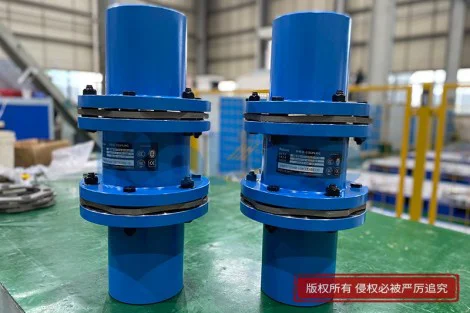
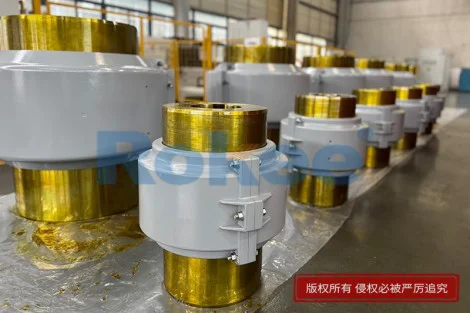
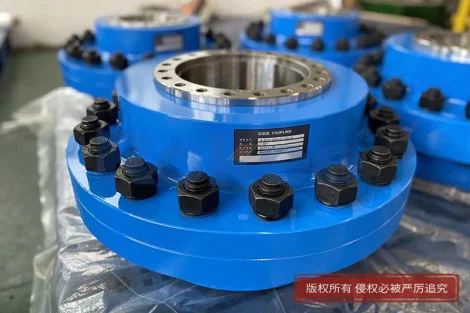
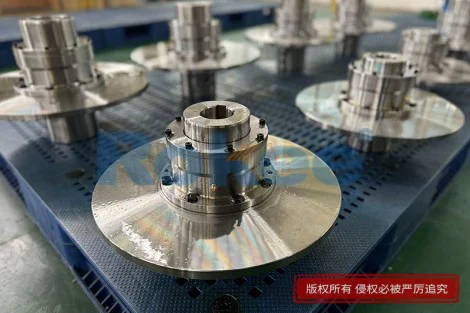
Rokee is a manufacturer of nylon flex coupling from china, we can provide non-standard custom nylon flex coupling based on parameters or drawings supplied by customers, with export support available.
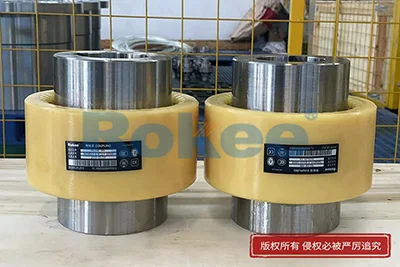
Nylon flex coupling is a widely adopted elastic mechanical component designed to connect rotating shafts in various mechanical transmission systems, delivering stable torque transmission while accommodating minor operational deviations. Distinguished from rigid metal couplings, this flexible coupling leverages the inherent elastic and polymeric properties of premium nylon materials to integrate multiple practical functions in one compact structure. It effectively compensates for shaft misalignment, absorbs mechanical vibration, buffers instantaneous impact loads, and reduces operational noise during equipment running. Lightweight in structure and simple in installation, it avoids the complex maintenance procedures and heavy weight drawbacks of traditional metal coupling products. Suitable for light to medium-duty mechanical transmission scenarios, it maintains consistent and reliable performance in long-term continuous operation, making it a cost-effective and versatile solution for modern industrial automation, general machinery, and auxiliary mechanical systems.
The core performance advantages of nylon flex coupling stem from the unique physical and chemical properties of high-quality nylon materials, which lay a solid foundation for its stable operation in diverse mechanical environments. Nylon features excellent inherent elasticity and moderate rigidity, enabling the coupling to produce tiny elastic deformation during transmission processes. This deformation allows the product to tolerate radial, axial, and angular misalignment between connected shafts that inevitably occur during equipment assembly and long-term operation. Unlike rigid couplings that are prone to structural stress damage under misalignment conditions, nylon flex couplings release residual mechanical stress through flexible buffering, effectively avoiding abnormal wear of shafts, bearings, and other core components. In addition, nylon material has natural self-lubricating characteristics, forming a microscopic anti-friction layer on the contact surface during rotation. This property eliminates the need for regular lubrication maintenance, greatly simplifying daily equipment upkeep and reducing auxiliary operating costs for mechanical systems. Meanwhile, the material’s stable chemical inertness prevents reactions with common industrial oils, dust, and conventional environmental substances, ensuring structural integrity and performance stability in complex working conditions.
Vibration damping and noise reduction capabilities are key functional highlights of nylon flex couplings, significantly improving the overall operating experience and service life of mechanical equipment. Most mechanical transmission systems generate periodic vibration and impact forces during startup, shutdown, speed switching, and load fluctuation processes. Rigid transmission structures directly transmit these vibrations and impacts to the entire equipment system, leading to accelerated component fatigue wear and increased operating noise. Nylon flex couplings can effectively absorb and dissipate vibration energy through their elastic polymer structure, cutting off the transmission path of mechanical vibration between driving and driven shafts. For high-frequency micro-vibrations generated by high-speed operation and instantaneous impact loads caused by frequent start-stop actions, the flexible nylon structure can achieve gentle buffering and energy dissipation. In practical operation, this vibration reduction effect not only lowers equipment operating noise to create a quieter production environment but also avoids loose structural connections and precision deviation caused by long-term vibration. It effectively protects precision mechanical parts, extends the overall service cycle of transmission systems, and improves the stability and continuity of equipment operation.
Lightweight structural design brings prominent application advantages to nylon flex couplings, optimizing the dynamic performance of mechanical transmission systems compared with traditional metal coupling products. Made of high-strength nylon polymer materials, the overall weight of nylon flex couplings is far lower than that of iron and steel couplings of the same specification, with a significant weight reduction ratio. The light weight greatly reduces the additional rotational inertia of the transmission system during operation, enabling the equipment to respond more sensitively to speed adjustment, start, and stop commands. This advantage is particularly critical for automated mechanical equipment that requires frequent speed regulation and rapid dynamic response. Meanwhile, the reduced overall load of the transmission system lowers the operating burden on power components such as motors, helping equipment achieve more energy-saving operation effects. In addition, the lightweight structure makes the installation, disassembly, and replacement of the coupling more convenient, reducing manual operation difficulty and equipment downtime. For mobile mechanical equipment and lightweight automated devices, the lightweight design also helps optimize the overall equipment structure, reduce equipment self-weight energy consumption, and improve operational flexibility and application adaptability.
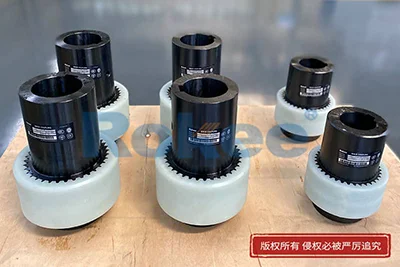
Nylon flex couplings exhibit excellent high-speed operation adaptability and durable fatigue resistance, meeting the long-term continuous operation needs of various industrial mechanical equipment. Optimized structural matching and superior material toughness enable the coupling to stably adapt to a wide range of operating speeds, supporting both low-speed high-torque transmission and high-speed smooth rotation scenarios. During high-speed operation, the nylon material’s good dynamic balance performance avoids eccentric vibration and rotational jitter caused by structural unbalance, ensuring precise and consistent torque transmission. Moreover, nylon materials have strong anti-fatigue properties, capable of withstanding repeated elastic deformation and cyclic load impact for a long time without structural aging, cracking, or performance attenuation. In mechanical scenarios with frequent start-stop, forward-reverse switching, and continuous cyclic operation, the coupling can maintain stable transmission accuracy and structural integrity for a long time. Its excellent wear resistance also reduces material loss caused by long-term friction, avoiding transmission failure and equipment abnormality caused by coupling wear. This outstanding durability greatly reduces the frequency of equipment maintenance and part replacement, improving the continuous operation efficiency of industrial production lines.
The environmental adaptability of nylon flex couplings further expands their application boundaries, enabling stable work in various complex and harsh working environments. The nylon material used in the product has good temperature resistance, maintaining stable structural elasticity and transmission performance within a conventional operating temperature range, without softening deformation in high-temperature working environments generated by mechanical friction or hardening brittleness in low-temperature environments. Meanwhile, the material has excellent dust-proof and anti-fouling capabilities; its compact structural design and stable material properties prevent dust, fine particles, and conventional industrial impurities from affecting internal transmission performance. Unlike metal couplings that are prone to rust and corrosion in humid environments, nylon flex couplings do not rust, effectively resisting mild humid and corrosive working conditions in general industrial environments. In addition, the product’s sealed flexible structure can adapt to vertical installation, blind installation, and various special installation poses, with strong on-site installation flexibility. It can operate stably in open industrial workshops, semi-enclosed mechanical spaces, and other complex scenarios, providing reliable transmission guarantees for different types of mechanical equipment.
Nylon flex couplings feature a highly versatile modular structure, supporting diversified matching and flexible application in multiple mechanical fields. The overall structure adopts a simple and compact integrated flexible design, which can be perfectly matched with various shaft diameter specifications and mechanical transmission structures. The standardized structural form enables it to adapt to most light and medium-duty transmission equipment, including pumping equipment, fan equipment, automated transmission machinery, textile machinery, agricultural machinery, and general industrial power transmission devices. In actual application, the coupling can accurately transmit torque without slippage, ensuring high-efficiency power output while protecting equipment power components and transmission parts. Its strong compatibility allows it to replace traditional metal couplings in most conventional transmission scenarios, achieving equivalent or better vibration reduction and stability effects with lower weight and lower maintenance costs. Moreover, the flexible structural design can adapt to minor assembly errors of equipment, reducing the precision requirements of mechanical assembly and improving the overall installation efficiency and operational fault tolerance of mechanical systems.
With comprehensive performance advantages in structural design, material characteristics, and operational stability, nylon flex couplings have become an indispensable basic component in modern mechanical transmission systems. Their unique combination of lightweight, vibration damping, wear resistance, low maintenance, and strong environmental adaptability fills the performance gap between rigid metal couplings and high-cost precision flexible couplings. They balance operational stability, application economy, and use durability, fully meeting the diversified and refined operation needs of current light and medium-duty mechanical equipment. As industrial mechanical equipment continues to develop toward lightweight, high-efficiency, and low-noise operation, the application value and market adaptability of nylon flex couplings continue to improve. With reliable practical performance and wide scenario compatibility, they provide efficient, stable, and economical transmission solutions for various industrial and civilian mechanical systems, maintaining important application status in the field of mechanical transmission components.
« Nylon Flex Coupling » Update Date: 2026/8/5
Contact
If you require custom machined couplings, please contact Rokee via the contact information below for inquiries.
Email: Rokee@Rokee.com
 WeChat