Shaft To Shaft Couplings
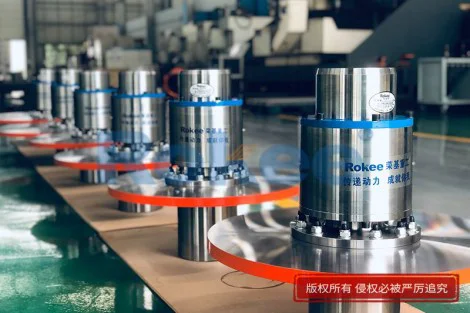
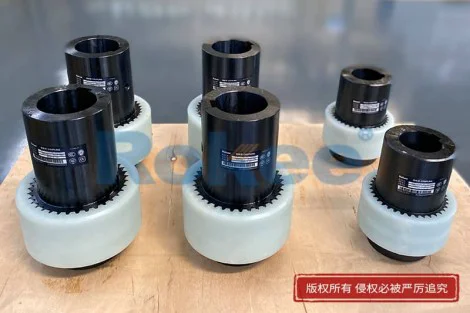
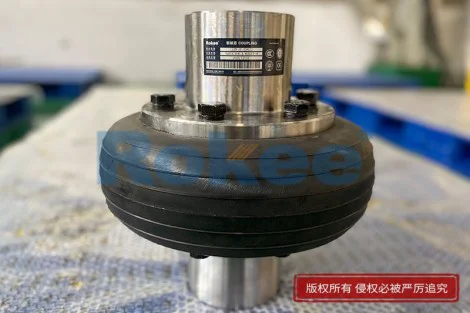
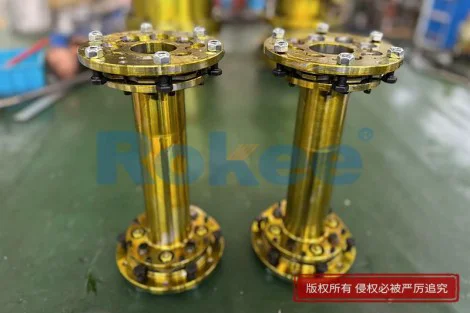
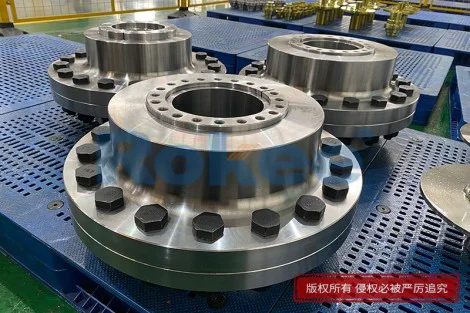
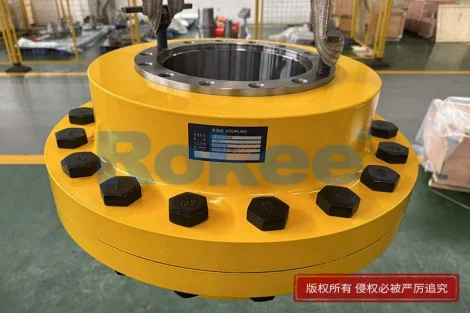
Rokee is a manufacturer of shaft to shaft couplings from china, we can provide non-standard custom shaft to shaft couplings based on parameters or drawings supplied by customers, with export support available.

Shaft to shaft couplings are indispensable mechanical components designed to connect two rotating shafts for the seamless transmission of torque and rotational motion across diverse mechanical and industrial systems. Serving as a critical link between driving and driven shafts, these components lay the foundation for stable equipment operation by transferring power while accommodating minor mechanical deviations that inevitably occur during installation and long-term operation. Beyond basic power transmission, modern shaft couplings deliver core protective functions, including vibration damping, shock load absorption, and overload buffering, which effectively reduce wear on bearings, gears, and other precision mechanical parts. They also simplify equipment assembly and maintenance processes, allowing for convenient disassembly and component replacement without disrupting the entire mechanical structure. Classified primarily into rigid and flexible types based on structural flexibility and functional characteristics, shaft couplings adapt to varying operating conditions, from high-precision stationary transmission scenarios to dynamic environments with frequent vibration and misalignment. Their versatile performance makes them widely applied in general machinery, precision automation, power transmission equipment, and industrial production systems, ensuring efficiency, stability, and durability of mechanical operation.


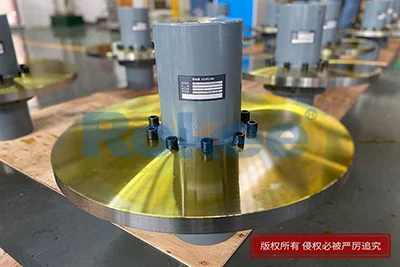
The core working principle of shaft to shaft couplings revolves around synchronous rotation linkage and adaptive mechanical compensation, which enables consistent power transfer between two independent shafts despite subtle structural and positional differences. When mechanical equipment operates, the driving shaft generates rotational torque, which is fully transmitted to the driven shaft through the coupling’s integrated structural connection, achieving synchronized rotational speed and power output. Rigid couplings rely on rigid mechanical fastening to lock the two shafts in a fixed positional relationship, ensuring zero relative displacement during operation and delivering ultra-high transmission accuracy. This rigid connection mode eliminates power loss caused by structural deformation, making it ideal for scenarios that demand precise rotational positioning and stable high-power transmission. In contrast, flexible couplings leverage elastic elements or special movable structures to produce tiny deformations and displacements during operation, which offset angular, parallel, and axial misalignments between shafts. These adaptive compensations prevent local stress concentration on shaft surfaces and bearings, avoiding abnormal vibration, noise, and accelerated component aging caused by misalignment. Whether rigid or flexible, the fundamental working logic of shaft couplings focuses on balancing efficient power transmission and mechanical system protection, adapting to the dynamic operating characteristics of different mechanical devices.
Rigid shaft couplings represent the most basic and high-precision category of shaft connection components, characterized by fully rigid structural design with no movable or deformable parts during operation. Constructed from high-strength metal materials through integral machining or precise splicing and fastening, these couplings form a completely fixed connection between two aligned shafts, maintaining absolute positional consistency throughout the power transmission process. Their most prominent advantage is zero transmission backlash and minimal power loss, enabling highly accurate torque and rotation transfer that meets the strict precision requirements of high-end mechanical systems. Due to their rigid structural attributes, rigid couplings cannot compensate for any shaft misalignment, which demands extremely high installation precision during equipment assembly. Even minor deviations in shaft alignment will lead to concentrated operational stress, resulting in increased bearing friction, shaft bending fatigue, and prolonged mechanical vibration. For this reason, rigid couplings are exclusively applied in scenarios with fixed shaft positions, precise installation benchmarks, and stable operating environments, such as precision spindle systems, fixed gear transmission assemblies, and high-stability industrial rotary equipment. Regular inspection of fastening tightness is essential for rigid coupling maintenance, as loose fasteners will directly damage transmission accuracy and cause equipment operational failures.
Flexible shaft couplings are the most widely used type in modern industrial applications, distinguished by their adaptive compensation capability for shaft misalignment and excellent vibration reduction performance. Different from rigid structures, flexible couplings incorporate elastic components such as polymer elastomers, metal spring structures, or movable sliding parts into their designs, which can generate controllable elastic deformation or mechanical displacement during operation. This unique structural feature allows them to effectively compensate for three common types of shaft misalignment: angular deviation, parallel offset, and axial displacement, all of which are unavoidable in daily equipment installation and long-term mechanical operation. Beyond misalignment compensation, the elastic structures of flexible couplings can absorb instantaneous shock loads and continuous mechanical vibration generated during equipment start-up, shutdown, and variable-speed operation. This buffering effect greatly reduces the impact of dynamic loads on core mechanical components, extending the service life of bearings, shafts, and transmission parts. Although flexible couplings have slight transmission backlash compared with rigid types, their comprehensive adaptability makes them suitable for most general industrial machinery, including fans, pumps, conventional transmission devices, and automated production equipment. Most flexible coupling models require no lubrication and feature simple structural composition, bringing convenient daily maintenance and stable long-term operational performance.
Diversified structural subtypes of flexible shaft couplings further enrich their application scenarios, with each tailored to specific operational requirements and mechanical working conditions. Jaw couplings, as one of the most common flexible types, adopt a split structure with an intermediate elastic spider element, featuring simple assembly, good vibration damping, and fail-safe performance that prevents complete transmission failure even if the elastic component is damaged. This design is highly adaptable to medium-torque and medium-speed operating scenarios with slight vibration. Beam couplings are integrally machined metal couplings with spiral groove structures, achieving high flexibility through structural deformation while maintaining high transmission precision, making them ideal for precision instruments, encoders, and small servo transmission systems with low torque and high positioning requirements. Oldham couplings utilize a double-disc sliding structure to provide excellent parallel misalignment compensation, solving the transmission instability problem caused by large parallel offset between shafts in medium-load equipment. Bellows couplings rely on thin-walled metal bellows for elastic deformation, combining zero backlash and high flexibility to adapt to high-speed and high-precision servo transmission scenarios. Each structural subtype has unique performance advantages in misalignment tolerance, torque capacity, and speed adaptability, providing targeted solutions for differentiated mechanical transmission needs.
Material selection is a key factor that directly determines the performance, service life, and applicable working environment of shaft to shaft couplings. Rigid couplings are mostly made of high-strength alloy steel and carbon steel, which possess excellent structural rigidity, tensile strength, and deformation resistance. These metal materials can withstand high torque and high-speed rotation without structural deformation, ensuring long-term transmission stability in high-load and high-precision scenarios. For flexible couplings, material selection varies by structural function: elastic components commonly use polyurethane, rubber, and nylon materials, which feature good elasticity, fatigue resistance, and vibration absorption, suitable for normal-temperature and conventional vibration-damping transmission environments. Metal elastic components such as stainless steel and spring steel are applied in high-temperature, low-temperature, or oil-corrosive working conditions, as they maintain stable elastic performance in extreme environments where polymer materials are prone to aging and failure. The surface treatment of coupling materials also affects operational performance, with anti-rust and wear-resistant treatments effectively reducing surface friction loss and environmental corrosion damage. Reasonable material matching must comprehensively consider operating temperature, load magnitude, vibration intensity, and environmental medium factors, ensuring that the coupling maintains stable mechanical performance and prolonged service life under specific working conditions.
Scientific selection and standardized installation of shaft to shaft couplings are crucial prerequisites for ensuring efficient and stable operation of mechanical transmission systems. The selection process needs to comprehensively evaluate core operating parameters, including equipment transmission torque, rotational speed, shaft misalignment range, vibration level, and working environment conditions. High-precision and high-load fixed transmission scenarios prioritize rigid couplings for their zero-backlash and high-efficiency transmission advantages, while equipment with frequent vibration, dynamic load changes, and unavoidable installation misalignment should adopt flexible couplings with corresponding compensation capabilities. It is necessary to match the coupling’s torque bearing capacity and speed adaptability with equipment operating parameters to avoid performance attenuation or structural damage caused by overloaded operation. During installation, strict shaft alignment calibration is required regardless of coupling type; even flexible couplings have a limited misalignment compensation range, and excessive deviation will exceed structural tolerance and accelerate component wear. Fastening components need uniform force application to avoid eccentric stress caused by asymmetric locking, which induces operational vibration. After installation, trial operation and regular routine inspection are required to check for loose fasteners, aging elastic components, and abnormal operational noise, eliminating potential equipment failures in advance.
As a core connecting component of mechanical transmission systems, shaft to shaft couplings play an irreplaceable role in improving equipment operational efficiency, reducing maintenance costs, and extending mechanical service life. With the continuous upgrading of industrial machinery and precision automation equipment, the performance requirements for shaft couplings are constantly improving, driving continuous optimization in structural design, material technology, and processing accuracy. Modern coupling design is evolving toward high precision, high durability, lightweight, and strong environmental adaptability, meeting the diverse needs of high-speed operation, extreme temperature environments, and high-precision positioning scenarios. Reasonable application of shaft couplings can effectively reduce mechanical failure rates, stabilize equipment operating accuracy, and lower long-term equipment maintenance and replacement costs. In the entire mechanical system design and equipment operation process, shaft couplings are no longer simple connecting accessories but key functional components that restrict overall equipment performance and operational stability. Mastering their performance characteristics, selection logic, and maintenance methods is essential for optimizing mechanical transmission systems and ensuring long-term stable and efficient operation of industrial equipment.
« Shaft To Shaft Couplings » Update Date: 2026/8/5
URL: https://www.rokee.com/en/tags/shaft-to-shaft-couplings.html
Contact
If you require custom machined couplings, please contact Rokee via the contact information below for inquiries.
Email: Rokee@Rokee.com
 WeChat