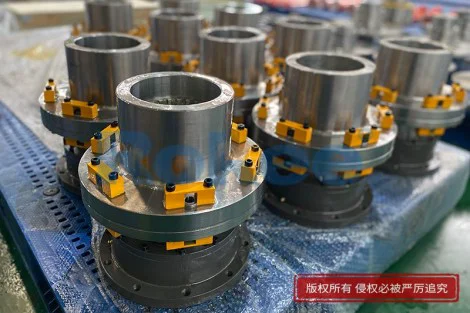
Sliding Shaft Couplings
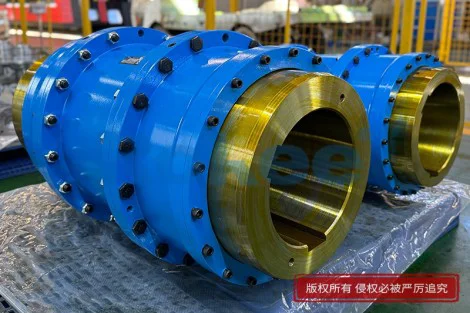
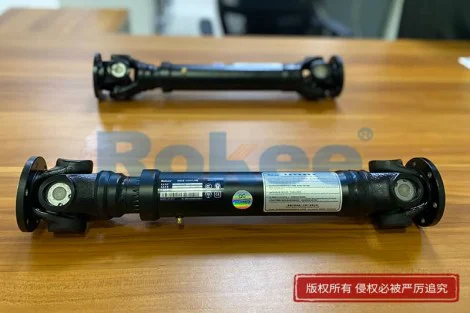
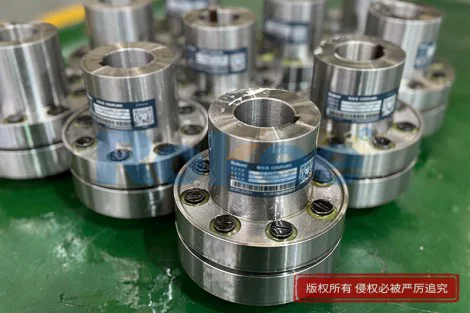
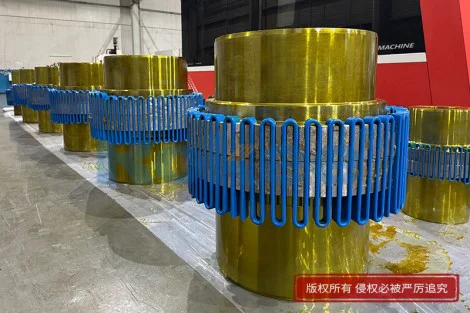
Rokee is a manufacturer of sliding shaft couplings from china, we can provide non-standard custom sliding shaft couplings based on parameters or drawings supplied by customers, with export support available.

Sliding shaft couplings are essential mechanical transmission components designed to connect two rotating shafts and deliver torque while permitting controlled relative movement between connected equipment parts. Distinct from rigid couplings that enforce fixed shaft alignment, these flexible sliding structures effectively compensate for multiple types of shaft misalignment and displacement generated during mechanical operation, including axial drift, parallel offset, and minor angular deviation. Their core functional advantage lies in integrating stable power transmission and dynamic displacement adaptation, which alleviates mechanical stress, reduces component wear, and extends the service life of entire transmission systems. Widely adopted in low-to-medium speed, high-torque industrial transmission scenarios, they stand out for their simple structural design, reliable operational stability, and convenient installation and maintenance, becoming a cost-effective solution for optimizing the smooth operation of various mechanical transmission systems.


The fundamental structural composition of sliding shaft couplings centers on a coordinated sliding fit system, which mainly consists of two shaft hubs and a central sliding block or disc with mutually perpendicular tenon structures. The two hubs are respectively fixed on the driving shaft and driven shaft, with precise radial grooves machined on their matching end faces, and the grooves of the two hubs maintain a 90-degree staggered layout. The intermediate sliding component is embedded between the two hubs, with its protruding tenons perfectly fitting into the radial grooves of the corresponding hubs, forming a flexible sliding pair that restricts radial separation while allowing directional sliding displacement. This pure mechanical contact structure eliminates complex elastic components, ensuring overall structural compactness and high torsional rigidity. All matching surfaces undergo fine processing to guarantee smooth sliding and stable torque transmission, avoiding transmission lag or power loss during continuous rotation. The overall structure features high structural stability, strong deformation resistance, and can maintain consistent working performance under long-term continuous operation, laying a solid structural foundation for reliable mechanical transmission.
The working principle of sliding shaft couplings relies on the relative sliding motion between internal matching components to achieve synchronous torque transmission and dynamic displacement compensation. When the driving shaft rotates, the hub fixed on the driving end drives the central sliding component through the groove tenon fit, and the sliding component further drives the driven hub and the connected driven shaft to rotate synchronously, realizing efficient torque transfer between the two shafts. During the operation of mechanical equipment, factors such as thermal expansion and contraction of components, equipment vibration, and minor installation errors will cause relative displacement between the driving and driven shafts. At this time, the central sliding block can freely slide along the radial grooves of the two hubs, automatically adapting and offsetting parallel misalignment and axial displacement between shafts. Unlike flexible couplings that rely on elastic deformation to absorb displacement, sliding couplings complete displacement adjustment through physical sliding, which will not produce additional elastic reaction force, effectively protecting shaft bearings and key transmission parts from excessive alternating stress and fatigue damage.
Sliding shaft couplings possess unique performance advantages that make them irreplaceable in specific industrial transmission scenarios. First of all, they deliver stable and efficient torque transmission with high torsional rigidity, enabling accurate and synchronous rotation of the connected two shafts without angle deviation or speed difference, which ensures high-precision power output. Secondly, their multi-dimensional displacement compensation capability is outstanding, being able to adapt to axial, radial and minor angular misalignment generated in real time during equipment operation, greatly reducing the assembly precision requirements of the transmission system and lowering the difficulty of equipment installation and debugging. In addition, the all-rigid contact structure without vulnerable elastic parts endows the coupling with excellent durability and fatigue resistance, allowing it to operate stably for a long time under high-torque, continuous-load working conditions. Meanwhile, its simple internal structure means fewer wearing parts, low operational failure rate, and strong environmental adaptability, capable of maintaining stable performance in conventional industrial working environments with dust and slight temperature changes.
Despite their prominent comprehensive performance, sliding shaft couplings also have inherent application limitations that need to be fully considered in mechanical design. The most obvious limitation is their unsuitability for high-speed operation scenarios. The relative sliding friction between internal components will generate certain kinetic friction resistance and heat during high-speed rotation, which not only reduces transmission efficiency but also accelerates the wear of matching surfaces, affecting the overall stability and service life of the coupling. In addition, although they can compensate for minor angular misalignment, their adaptive capacity for large-angle shaft deflection is weak, and excessive angular deviation will cause uneven stress on sliding parts and abnormal mechanical vibration. Moreover, the sliding friction working mode makes them unable to buffer and absorb strong impact loads and torsional vibration. When the equipment is frequently started, stopped or subjected to sudden load shocks, the coupling cannot effectively dissipate impact force, which may cause local stress concentration and damage to transmission components. These limitations determine that they are mainly applicable to low-speed, stable-load, and low-vibration transmission systems.
Sliding shaft couplings are widely applied in various traditional and modern industrial mechanical equipment, covering multiple fields of industrial production. In material handling and lifting machinery, they are commonly used for the connection between crane reels and reduction gearboxes, effectively compensating shaft offset caused by steel wire rope winding and mechanical vibration, and ensuring stable power transmission during lifting and telescopic operations. In metallurgical processing equipment such as rolling mills and straightening machines, their high-torque resistance and stable transmission performance adapt to the heavy-load and continuous operation characteristics of metallurgical production, avoiding transmission failure caused by shaft displacement. In light industrial equipment including printing and packaging machinery, they adapt to frequent start-stop and low-speed reciprocating working conditions, maintaining the synchronization accuracy of transmission shafts and ensuring consistent product processing precision. In addition, they are also widely used in general mechanical transmission equipment such as conventional motor supporting devices and conveyor systems, providing reliable connection solutions for various low-speed and high-torque transmission scenarios.
The installation and daily maintenance of sliding shaft couplings are simple and convenient, which is one of their important advantages in industrial practical application. During installation, workers only need to fix the two hubs on the driving and driven shafts respectively, embed the central sliding component in the middle, and complete the basic assembly by ensuring the accurate fit of tenons and grooves. There is no need for ultra-high-precision shaft alignment calibration, which greatly shortens the equipment assembly cycle and improves installation efficiency. In daily use, the core maintenance focus lies in keeping the sliding matching surfaces smooth and clean to prevent dust, impurities and metal debris from adhering to the friction surfaces, which may cause increased wear or jamming. Regular lubrication of the sliding contact parts with professional lubricating grease can effectively reduce friction resistance, lower operating heat generation, and slow down component wear. In addition, regular visual inspection of component wear degree and fastening state is required. Once excessive wear of sliding parts or loose fixation is found, timely replacement and adjustment can avoid equipment failure, ensuring long-term stable operation of the transmission system.
With the continuous upgrading of modern industrial mechanical equipment, the optimization and development of sliding shaft coupling technology are also advancing steadily, adapting to increasingly diverse industrial transmission needs. At present, the optimization direction of sliding shaft couplings mainly focuses on structural upgrading and material innovation. Many optimized products adopt more streamlined sliding groove structures and precision-machined matching surfaces, further reducing friction coefficient and improving displacement compensation sensitivity and transmission efficiency. The application of high-strength wear-resistant alloy materials effectively enhances the wear resistance, pressure resistance and high-temperature adaptability of components, expanding their applicable load range and service life. In terms of structural design, integrated anti-loosening structures and dust-proof protection structures have been gradually added to avoid component loosening and dust interference during operation, improving the overall operational stability and environmental adaptability. In the future, with the continuous development of intelligent and high-efficiency industrial equipment, sliding shaft couplings will further develop towards high precision, high durability and low energy consumption, and will be more widely used in more refined and specialized industrial transmission scenarios.
« Sliding Shaft Couplings » Update Date: 2026/8/5
URL: https://www.rokee.com/en/tags/sliding-shaft-couplings.html
Contact
If you require custom machined couplings, please contact Rokee via the contact information below for inquiries.
Email: Rokee@Rokee.com
 WeChat