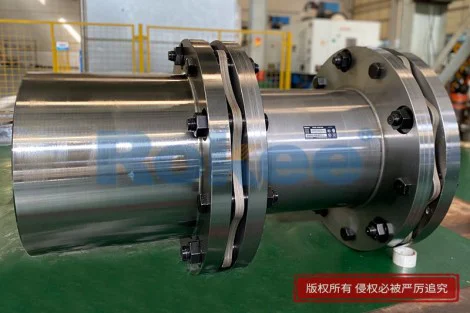
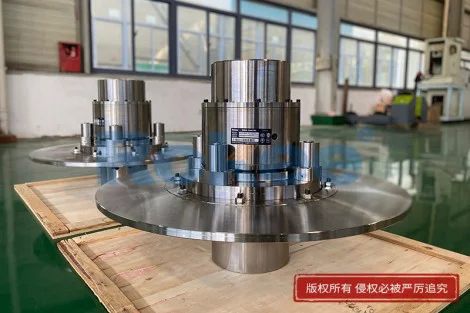
Flexible Rubber Shaft Couplings
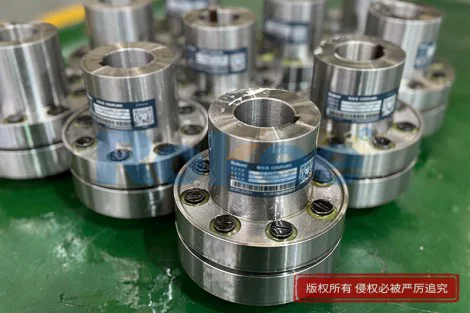
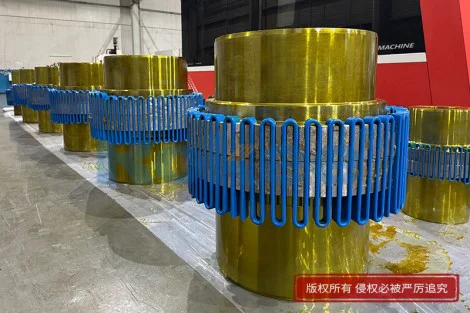
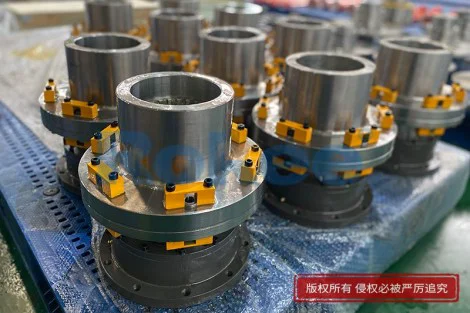
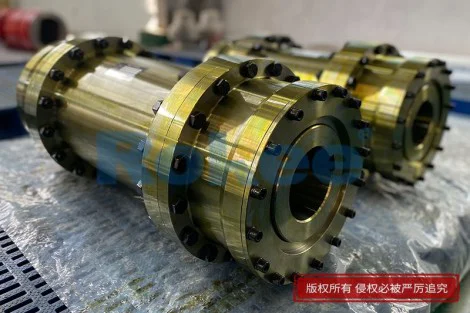
Rokee is a manufacturer of flexible rubber shaft couplings from china, we can provide non-standard custom flexible rubber shaft couplings based on parameters or drawings supplied by customers, with export support available.
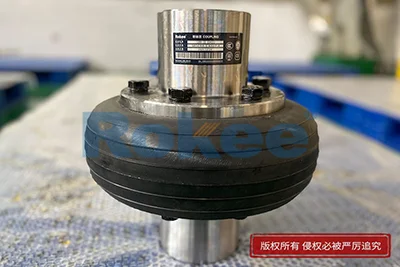
Flexible rubber shaft couplings are essential mechanical components designed to connect rotating shafts in machinery systems, serving as a critical bridge for power transmission while delivering unique flexible performance that rigid couplings cannot match. Constructed with durable elastomeric rubber elements and rigid metal hubs, these specialized couplings integrate torque transmission, misalignment compensation, and vibration attenuation into a single compact structure. Unlike stiff mechanical couplings that require precise shaft alignment and offer no buffer effect, rubber flexible couplings rely on the natural elasticity of rubber materials to tolerate minor axial, angular, and parallel shaft deviations generated during installation or long-term operation. They effectively isolate mechanical vibration, absorb sudden impact loads, and reduce operational noise, thereby protecting connected equipment components from excessive friction, fatigue wear, and structural stress. Widely adaptable to medium and low torque operating scenarios across diverse mechanical systems, they stand out for their simple structure, stable operation, and excellent environmental adaptability, becoming a mainstream flexible transmission solution for modern general mechanical equipment.

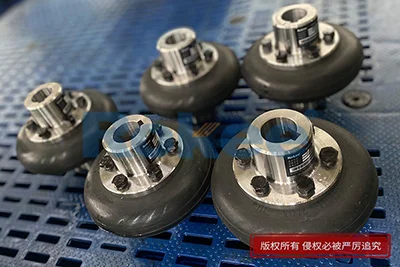
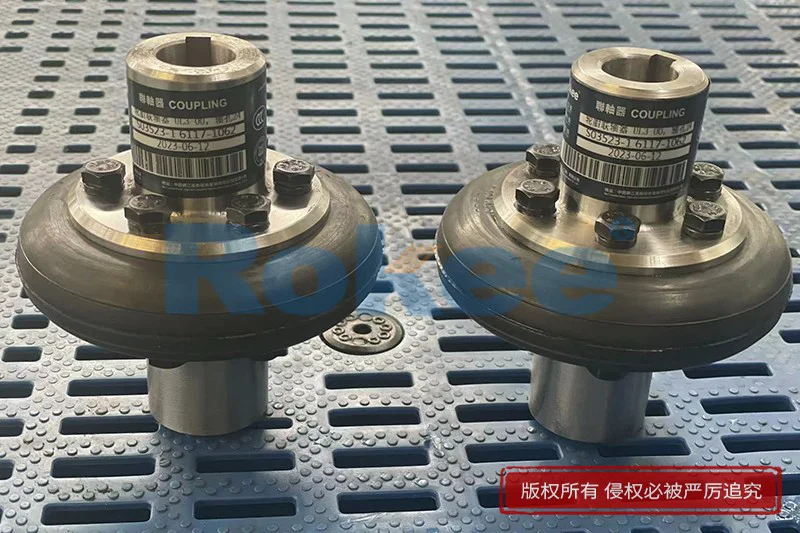
The core operational principle of flexible rubber shaft couplings centers on the elastic deformation characteristics of high-performance rubber materials, which enables coordinated power transmission and adaptive mechanical adjustment during equipment operation. When mechanical equipment starts, runs steadily, or undergoes load changes, the rubber elastomer sandwiched between two metal hubs undergoes controllable elastic deformation to transmit rotational torque smoothly from the driving shaft to the driven shaft. This deformation process is highly flexible and reversible, allowing the coupling to automatically offset various slight shaft misalignments that are inevitable in practical mechanical assembly and operation. Axial displacement caused by thermal expansion and contraction of equipment components, angular deflection from assembly deviations, and parallel offset of rotating shafts can all be buffered and corrected through the rubber’s elastic stretch and compression. The reversible deformation feature also ensures the coupling can restore its original structural state after load changes, maintaining consistent transmission accuracy and structural stability for a long time without permanent deformation or structural failure. This inherent working mechanism fundamentally eliminates the rigid collision and forced friction between shafts, laying a solid foundation for stable and low-loss power transmission.
Vibration and noise reduction is one of the most prominent functional advantages of flexible rubber shaft couplings, making them irreplaceable in precision and low-noise mechanical systems. Mechanical operation inevitably produces periodic vibration from motor rotation, mechanical meshing, and load fluctuation, and rigid coupling structures directly transmit these vibration frequencies between shafts, leading to amplified equipment vibration and harsh operating noise. Rubber materials possess excellent damping and energy absorption properties, which can effectively consume and dissipate vibration energy generated during equipment operation. When vibration is transmitted to the coupling, the rubber elastomer undergoes micro-deformation to convert mechanical vibration energy into tiny thermal energy, which is gradually released, thus suppressing vibration transmission between adjacent mechanical components. Meanwhile, the elastic buffer structure weakens the rigid impact between rotating parts, reducing friction noise and resonance noise generated by high-frequency mechanical movement. Long-term vibration suppression also avoids secondary damage such as loose fasteners and component fatigue cracks caused by continuous vibration, effectively extending the overall service life of mechanical systems and improving the stability of operating environments.
Flexible rubber shaft couplings feature a streamlined and reasonable structural design, bringing outstanding convenience in installation, disassembly and daily maintenance compared with other types of flexible couplings. The overall structure mainly consists of two symmetrical metal connecting hubs and an integrated rubber elastic body, with no complex intermediate transmission parts or intricate assembly structures. The modular design allows the coupling to be quickly sleeved and fixed on the shaft ends of driving and driven equipment, requiring only conventional assembly tools for installation and positioning. In subsequent equipment maintenance and component replacement, the coupling can be disassembled efficiently without moving or adjusting the position of connected mechanical equipment, greatly reducing maintenance workload and downtime. In addition, the integrated rubber structure avoids the problems of loose parts and structural dislocation that plague split-type flexible couplings. The rubber material also has good anti-aging and wear-resistant properties under conventional operating conditions, requiring no frequent lubrication or regular calibration, which greatly reduces daily maintenance costs and technical thresholds for equipment operation.
These couplings exhibit excellent comprehensive adaptability to diverse operating environments and working conditions, supporting stable operation in complex and variable industrial scenarios. High-quality rubber elastomers are processed through special formulas and molding technologies, featuring good temperature resistance, oxidation resistance and corrosion resistance, enabling normal operation in conventional indoor and outdoor industrial environments. They can withstand continuous cyclic load operation under medium and low-speed working conditions, and maintain stable elastic performance and transmission efficiency for a long time without performance attenuation. In mechanical systems with frequent start-stop operations and intermittent load changes, the rubber elastic structure can effectively buffer instantaneous torque shocks generated by start and stop, avoiding instantaneous overload impact on motors, bearings and other precision components. Moreover, the compact overall size and lightweight structure of the coupling make it suitable for limited installation spaces, perfectly adapting to the structural layout requirements of small and medium-sized mechanical equipment, general industrial transmission devices and civilian electromechanical products.
In terms of equipment protection and operational safety, flexible rubber shaft couplings play a vital role in improving the fault tolerance and reliability of mechanical transmission systems. During long-term equipment operation, factors such as component wear, load fluctuation and external mechanical interference may cause abnormal shaft misalignment or instantaneous overload. Rigid couplings cannot adapt to these abnormal changes, which will directly lead to increased shaft friction, accelerated bearing wear, and even structural damage to key transmission components. In contrast, the elastic buffer performance of rubber couplings can effectively offset abnormal shaft deviations and disperse instantaneous overload stress, limiting the impact of abnormal working conditions on core equipment. When equipment encounters extreme instantaneous load impact, the rubber elastomer can absorb most of the impact energy to avoid rigid damage to gears, bearings and motors. This passive protection mechanism effectively reduces equipment failure rates, avoids sudden shutdown faults caused by transmission system damage, and improves the continuous and safe operation capability of mechanical equipment.
Compared with metal elastic couplings, gear couplings and chain couplings, flexible rubber shaft couplings show unique comprehensive performance advantages in general industrial transmission fields. Metal flexible couplings have high torsional rigidity but poor vibration damping effect, and are prone to resonance in medium and low-speed operation scenarios. Gear and chain couplings have complex structures and high assembly precision requirements, and are prone to abrasion and noise during operation with high maintenance costs. Flexible rubber shaft couplings balance transmission stability, flexibility and cost performance, with excellent misalignment compensation ability and ultra-low vibration transmission characteristics. Although their torsional rigidity is relatively lower than rigid metal couplings, this feature precisely meets the working requirements of most medium and low-torque mechanical equipment, where flexible buffer transmission is more important than high rigidity. In addition, the all-in-one molding process of rubber components ensures stable and consistent product performance, avoiding performance differences caused by assembly errors, and providing more reliable and stable transmission effects for long-term equipment operation.
With the continuous upgrading of modern mechanical equipment towards high stability, low energy consumption and low noise, the application value and market demand of flexible rubber shaft couplings are constantly improving, and they have become a key basic component in the field of general mechanical transmission. Their unique flexible transmission, vibration reduction and impact resistance performance can effectively optimize the operating state of mechanical systems, reduce mechanical loss and energy consumption, and improve the overall operational efficiency of equipment. With the continuous innovation of rubber material formulas and processing technologies, the temperature resistance, wear resistance and fatigue resistance of flexible rubber shaft couplings are further improved, enabling them to adapt to more diversified and harsh working scenarios. In the future development of mechanical manufacturing, this type of flexible coupling will continue to rely on its simple structure, reliable performance and strong practicability to be widely applied in more electromechanical transmission systems, providing stable and efficient basic guarantee for the safe and economical operation of various mechanical equipment.
« Flexible Rubber Shaft Couplings » Update Date: 2026/8/5
URL: https://www.rokee.com/en/tags/flexible-rubber-shaft-couplings.html
Contact
If you require custom machined couplings, please contact Rokee via the contact information below for inquiries.
Email: Rokee@Rokee.com
 WeChat