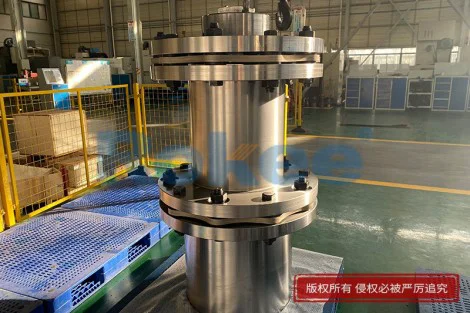
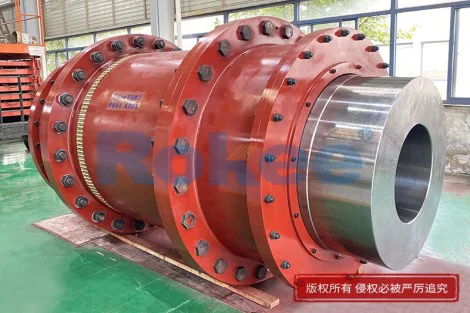
ROWH Heavy-duty Metallurgical Universal Joint
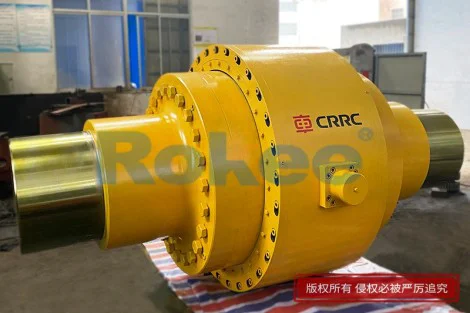
Heavy-duty metallurgical universal joints are core mechanical transmission components specially optimized for the extreme operating environments of the metallurgical industry, serving as critical connecting parts for various heavy industrial transmission equipment. Differing from ordinary universal joints for general mechanical use, these specialized joints are engineered to withstand sustained heavy loads, high-temperature radiation, intense mechanical vibration, and frequent shaft misalignment that are prevalent in metallurgical production processes. They primarily function to stably transmit torque and rotational motion while effectively compensating for angular deviation, axial displacement, and radial offset between connected shafts. This flexible transmission capability solves the operational defects of rigid connection structures, such as uneven stress concentration, accelerated component wear, and frequent equipment jitter. Widely applied in rolling mills, smelting auxiliary equipment, and heavy conveying machinery in metallurgical production lines, these universal joints guarantee continuous, stable, and efficient operation of high-load industrial equipment, laying a solid foundation for standardized and high-yield metallurgical manufacturing.

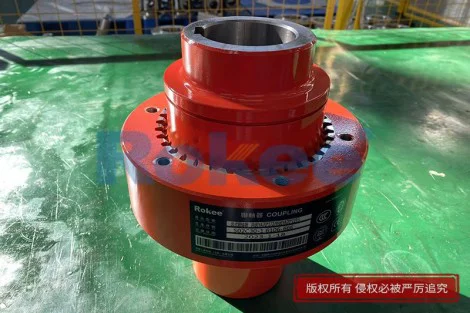
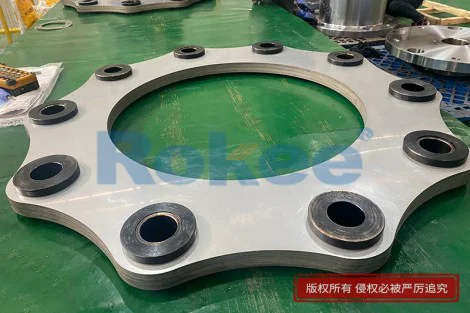
The structural design of heavy-duty metallurgical universal joints is refined and robust, tailored to adapt to the harsh working conditions unique to metallurgical scenarios. The core assembly mainly consists of reinforced fork joints, high-precision cross shafts, and heavy-duty bearing components, forming a reliable flexible transmission structure with multi-directional adaptive adjustment functions. The cross shaft, as the central force-bearing and transmission unit, adopts an integral forging molding process with high-strength alloy materials, eliminating structural weak points caused by welding or splicing, and greatly improving overall structural rigidity and impact resistance. The fork joints are thickened and optimized in structural curvature to disperse instantaneous impact torque generated during equipment start-up, shutdown, and load fluctuation, avoiding local stress overload and structural deformation. Equipped with oversized roller bearings, the joints effectively reduce friction resistance during high-load rotation, while the closed structural design prevents dust, high-temperature oxide debris, and corrosive substances in metallurgical workshops from invading internal moving parts. This integrated structural optimization enables the joints to maintain stable transmission accuracy and structural integrity under long-term heavy-duty operation.
Material selection is the fundamental guarantee for the superior performance of heavy-duty metallurgical universal joints, with every key component adopting industrial-grade high-performance materials suitable for extreme working environments. The cross shaft and main force-bearing parts are made of high-alloy structural steel with excellent tensile strength, fatigue resistance, and high-temperature stability, which can maintain stable mechanical properties under long-term high-temperature baking and heavy-load friction without softening deformation or performance attenuation. The bearing components adopt wear-resistant alloy materials with precise heat treatment processes, including quenching and tempering, to improve surface hardness and wear resistance, effectively resisting abrasive wear caused by metal debris and industrial dust in metallurgical production. Meanwhile, the surface of key parts is treated with anti-oxidation and anti-corrosion processes to adapt to the humid and high-temperature industrial atmosphere of metallurgical workshops, delaying oxidation aging and corrosion damage. Scientific material matching and professional processing treatments enable the universal joints to cope with complex and changeable working loads, extend service life, and reduce frequent component replacement caused by material fatigue failure.
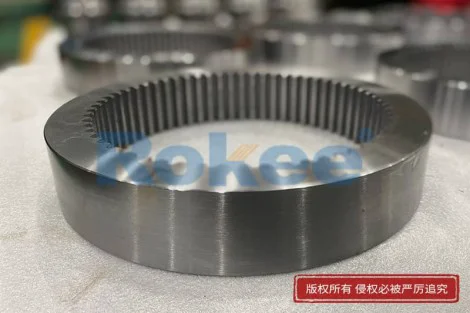
The core working principle of heavy-duty metallurgical universal joints relies on the flexible hinge motion of the cross shaft structure to realize efficient torque transmission and multi-dimensional displacement compensation. In the actual operation of metallurgical equipment, the installation deviation of mechanical shafts, thermal expansion and contraction caused by long-term high-temperature operation, and position offset generated by equipment vibration will lead to misalignment between driving and driven shafts. The cross shaft hinge structure can freely swing in multiple angles within a reasonable range, effectively compensating for angular deviation between shafts and ensuring continuous and uniform transmission of rotational torque. For equipment with frequent axial position changes, the matched telescopic spline structure can realize flexible axial sliding while maintaining torque transmission, absorbing axial displacement generated by equipment operation and thermal deformation. This adaptive transmission mode avoids the rigid extrusion and friction between shafts in traditional fixed connection structures, reduces equipment operation resistance and mechanical loss, and ensures the consistency and stability of power transmission efficiency even in dynamic working environments with continuous position changes.
Heavy-duty metallurgical universal joints possess unique performance advantages that make them irreplaceable in metallurgical heavy-load transmission systems, distinguishing them from ordinary mechanical coupling components. First, they feature ultra-high load-bearing capacity, capable of withstanding long-term stable operation under large torque and instantaneous impact loads, fully adapting to the high-power and heavy-duty operating characteristics of metallurgical main equipment. Second, they have excellent multi-dimensional compensation performance, covering angular, axial, and radial displacement compensation, which can adapt to various installation errors and dynamic displacement changes of metallurgical equipment. In addition, the optimized internal friction structure greatly reduces mechanical vibration and operating noise during transmission, realizing smoother power output and effectively reducing equipment operation jitter that affects product processing accuracy. Moreover, the highly sealed structural design enhances environmental adaptability, preventing internal component wear and failure caused by harsh workshop environments. These comprehensive performance advantages enable the universal joints to meet the high stability and high reliability operation requirements of modern automated metallurgical production lines.
The application scenarios of heavy-duty metallurgical universal joints cover all core links of metallurgical production, becoming an essential key component for the normal operation of heavy metallurgical machinery. In the steel rolling process, they are widely used in various types of rolling mill equipment, connecting driving motors and rolling rollers to stably transmit power, and adapting to the frequent lifting and position adjustment of rolling rollers during production to ensure the continuity of steel rolling processing. In smelting auxiliary systems, the joints are applied to heavy conveying equipment and stirring machinery, bearing continuous heavy-load operation and compensating for shaft displacement caused by high-temperature thermal deformation of equipment. In metal forging and shaping processes, they serve high-power transmission equipment, resisting instantaneous impact loads generated by forging operations and maintaining stable power transmission. Whether in continuous high-speed operation scenarios or intermittent impact working conditions, the universal joints can maintain excellent working performance, effectively reducing equipment failure rates and ensuring the orderly progress of various metallurgical production processes.
Daily maintenance and scientific operation management are crucial to maximizing the service life and working efficiency of heavy-duty metallurgical universal joints. In routine production work, regular lubrication maintenance must be carried out on internal bearing and hinge parts, using high-temperature resistant and wear-resistant lubricating grease suitable for metallurgical high-temperature environments to avoid dry friction and component abrasion caused by lubricant failure under high temperature. It is necessary to regularly check the tightness of connecting parts and the wear degree of key components such as cross shafts and bearings, timely replacing severely worn parts to prevent transmission jitter and torque attenuation caused by component aging. Meanwhile, excessive overload operation and long-term extreme angle operation should be avoided in equipment use, so as not to cause structural fatigue damage and reduce transmission accuracy. Regular cleaning of the sealed structure is also required to remove accumulated dust and oxide debris, ensuring the sealing performance and flexible movement of internal parts. Standardized maintenance can effectively reduce equipment failure downtime, lower production and maintenance costs, and maintain long-term stable operation of the transmission system.
With the continuous upgrading and intelligent development of modern metallurgical industry, the manufacturing technology and performance of heavy-duty metallurgical universal joints are also constantly innovating and optimizing. Current industry development trends focus on high load-bearing density, long fatigue life, low energy consumption, and intelligent adaptability, promoting the continuous improvement of universal joint comprehensive performance. Advanced precision machining technology and integrated molding processes are gradually applied to production, further reducing structural gaps and improving transmission accuracy and operational stability. New high-performance alloy materials and composite surface treatment technologies effectively enhance the high-temperature resistance, wear resistance, and corrosion resistance of products, adapting to more extreme metallurgical working conditions. In addition, optimized structural design realizes lighter weight on the premise of maintaining high load-bearing performance, reducing equipment self-weight load and energy consumption. In the future, with the continuous progress of industrial manufacturing technology, heavy-duty metallurgical universal joints will develop towards higher precision, longer service life and stronger environmental adaptability, providing more reliable core support for the high-efficiency and intelligent development of the global metallurgical industry.
Tags: Telescopic Universal Joint , Universal Joints , Flange Universal Joint Couplings , Industrial Universal Joint , Small Universal Joint Couplings , Universal Joint Shaft Coupling , Universal Joint Shaft Coupler , Universal Joint Shafts , pu sandwich panel machine , pu sandwich panel line
« ROWH Heavy-duty Metallurgical Universal Joint » Update Date: 2026/8/13
Contact
If you require custom machined couplings, please contact Rokee via the contact information below for inquiries.
Email: Rokee@Rokee.com
 WeChat