Precision Universal Drive Shaft
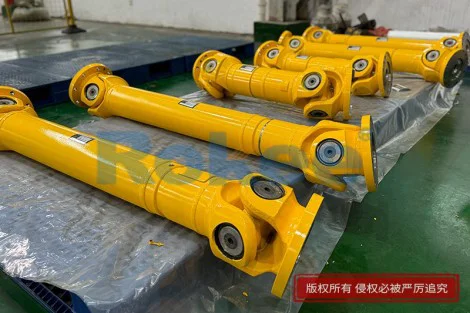
Precision universal drive shafts are core mechanical transmission components engineered to deliver accurate, stable, and flexible torque transfer across dynamically misaligned mechanical structures. Unlike ordinary drive shafts with rigid transmission limits, these precision-engineered parts excel at compensating for angular, axial, and parallel shaft deviations that inevitably occur during equipment operation, installation, and structural vibration. They integrate optimized joint structures and refined machining craftsmanship to minimize transmission backlash, rotational vibration, and power loss, ensuring consistent motion synchronization in high-precision mechanical systems. Widely adaptable to automated manufacturing equipment, industrial transmission devices, transportation machinery, and intelligent precision instruments, they serve as a foundational guarantee for the stable operation of high-precision mechanical power systems. Their unique combination of structural flexibility and transmission accuracy makes them irreplaceable in scenarios requiring both power output stability and precise motion control, effectively resolving the transmission contradictions between rigid power delivery and dynamic mechanical displacement.

The core operational principle of precision universal drive shafts centers on the flexible coordination of universal joint structures and telescopic shaft bodies, which fundamentally breaks through the transmission limitations of rigid shaft components. Traditional rigid drive shafts can only operate stably under absolute shaft alignment conditions, and minor deviations will trigger excessive mechanical stress, transmission jitter, and accelerated component wear. In contrast, precision universal drive shafts adopt a dual-joint or multi-joint linkage structure, which can freely adapt to real-time angular changes between the driving end and driven end during operation. The built-in telescopic shaft segment further compensates for axial distance variations caused by mechanical vibration, thermal expansion and contraction, or structural displacement. Each movement link is precisely machined to achieve ultra-tight fit tolerance, eliminating idle travel during torque transmission. This structural design enables continuous and uniform power output even when the connected mechanical components produce frequent and irregular displacement changes, laying the core foundation for high-precision, low-loss mechanical power transmission in complex working environments.
Material selection and precision manufacturing processes are the key determinants of the superior performance of precision universal drive shafts. These professional transmission components are mostly forged from high-strength alloy steel materials with excellent tensile resistance, torsional rigidity, and fatigue resistance, which can withstand long-term high-load torque impact without structural deformation or performance attenuation. Different from ordinary cast shaft parts, the overall forging process optimizes the internal metal fiber structure of the shaft body, enhancing the overall structural uniformity and mechanical stability. Subsequent multi-stage fine turning, grinding, and surface strengthening treatments further improve the surface finish and wear resistance of key components such as joint bearings and spline shafts. All matching parts are processed with micron-level precision control, ensuring seamless assembly and coordinated operation of each link. Strict dimensional calibration and dynamic balance correction are implemented in the manufacturing process to eliminate rotational unbalance, effectively suppressing high-speed operation vibration and ensuring stable and accurate power transmission in long-term continuous working conditions.
Precision universal drive shafts possess outstanding adaptive performance in complex and variable working environments, enabling stable operation in diverse harsh industrial and mechanical scenarios. In high-vibration working conditions such as automated production lines and heavy-duty processing equipment, their flexible joint structure can absorb and buffer mechanical vibration impact, avoiding the resonance and transmission failure caused by rigid connection. In scenarios with frequent mechanical displacement and angle adjustment, the universal joint structure can flexibly adjust the transmission angle in real time without affecting torque transmission efficiency, adapting to the dynamic operation state of intelligent mechanical equipment. Additionally, optimized structural sealing and surface protection designs effectively resist dust, moisture, and minor corrosive substances in the working environment, reducing the risk of internal component abrasion and rust. The reasonable lubrication structure ensures long-term stable lubrication of friction pairs, lowering operating friction coefficient and wear rate, and greatly improving the environmental adaptability and continuous operation capability of the drive shaft.
The application value of precision universal drive shafts is prominently reflected in improving mechanical operation accuracy and extending equipment service life. In precision automated processing equipment, tiny transmission errors will directly affect the dimensional accuracy of processed products and the stability of assembly operations. The ultra-low backlash transmission characteristic of precision universal drive shafts eliminates motion delay and position deviation in the power transmission process, ensuring that each rotational instruction is accurately executed, thus maintaining the consistent precision of mechanical processing and assembly. Meanwhile, their ability to compensate for shaft misalignment avoids concentrated stress on gears, bearings, and other matching components caused by forced rigid transmission, reducing abnormal wear and fatigue damage of core equipment parts. By smoothing torque transmission and buffering mechanical impact, these drive shafts effectively reduce equipment failure rates, lower daily maintenance frequency and operating costs, and improve the overall operational efficiency and service cycle of mechanical systems.
Precision universal drive shafts cover a wide range of application fields, penetrating almost all mechanical scenarios that require precise and flexible power transmission. In industrial manufacturing, they are applied to packaging machinery, conveying equipment, precision machine tools, and automated assembly lines, providing stable power support for high-speed and high-precision industrial production. In transportation machinery, they serve as key transmission components for various mobile equipment, adapting to the dynamic displacement and angle changes of suspension and transmission systems during operation to ensure smooth power output. In agricultural machinery and engineering equipment, they cope with complex working conditions such as uneven ground and variable load impact, maintaining reliable transmission performance of field operation equipment. In addition, they are also widely used in precision instrumentation, intelligent robotic equipment, and special mechanical systems, meeting the high-precision and high-stability transmission requirements of sophisticated mechanical equipment in emerging industries.
The structural optimization and performance upgrading of precision universal drive shafts have been continuously advanced with the development of modern mechanical technology. Traditional universal drive shafts often have defects such as limited precision, poor high-speed stability, and single adaptive capability, which can no longer meet the increasingly stringent precision and reliability requirements of modern intelligent mechanical systems. Modern precision universal drive shafts adopt optimized joint phase design and lightweight structural optimization, which further improves transmission smoothness and high-speed operation stability while ensuring structural strength. The upgraded spline matching structure and bearing coordination design enhance the torque transmission density and misalignment compensation range, enabling the equipment to maintain accurate transmission under larger angle deviation and higher load conditions. At the same time, modular structural design realizes flexible disassembly, assembly, and replacement of components, greatly improving the convenience of equipment maintenance and later upgrading, making the product more adaptable to the iterative development of modern mechanical equipment.
Looking at the development trend of mechanical transmission technology, precision universal drive shafts will continue to evolve towards higher precision, stronger durability, and smarter adaptability. With the continuous improvement of industrial automation and mechanical intelligence, mechanical systems have put forward higher requirements for transmission accuracy, anti-fatigue performance, and environmental adaptability of core transmission components. Future precision universal drive shafts will integrate more refined manufacturing technologies and new high-performance materials to further reduce transmission errors and energy loss, improve extreme working condition resistance and long-cycle stable operation capability. Meanwhile, combined with intelligent structural optimization, the products will realize more accurate dynamic misalignment compensation and real-time transmission state adaptation, better matching the operation needs of high-end intelligent mechanical equipment. As an indispensable core component of mechanical power transmission systems, it will continue to provide reliable basic support for the upgrading and innovation of various mechanical industries.
Tags: Telescopic Drive Shaft , Universal Drive Shafts , Telescoping Drive Shafts , Flexible Rubber Drive Couplings , Industrial Flexible Drive Couplings , Flex Drive Coupling , Motor Drive Shaft , Cardan Joint Drive Shafts , Cardan Driveshafts , pu sandwich panel machine , pu sandwich panel line
« Precision Universal Drive Shaft » Update Date: 2026/8/13
Contact
If you require custom machined couplings, please contact Rokee via the contact information below for inquiries.
Email: Rokee@Rokee.com
 WeChat