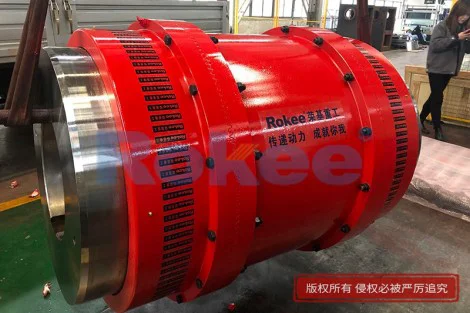
Drive Coupling Shaft
Drive coupling shafts are core mechanical transmission components designed to connect rotating shafts and transfer torque and rotational motion across diverse mechanical systems. Serving as a critical bridge between power sources and driven equipment, these specialized assemblies resolve common operational challenges including minor shaft misalignment, mechanical vibration, shock loads, and thermal deformation that inevitably occur during long-term equipment operation. Unlike rigid fixed shaft connections that require precise alignment and offer zero operational flexibility, drive coupling shafts integrate adaptive structural designs to maintain stable and efficient power transmission under complex working conditions. They not only ensure synchronous rotation of connected mechanical parts but also buffer mechanical stress, protect core equipment from excessive load impact, and extend the overall service life of transmission systems. Widely applied in industrial machinery, power equipment, and automated production systems, drive coupling shafts balance transmission accuracy, operational stability, and mechanical protection, making them irreplaceable in modern mechanical transmission technology.

The core functional logic of drive coupling shafts centers on efficient torque transmission and adaptive mechanical compensation, two attributes that define their value in industrial mechanical operation. At the most basic level, these components convert the rotational power generated by driving devices such as motors and engines into stable mechanical motion for driven equipment, ensuring consistent power output without energy attenuation or transmission interruption during continuous operation. What distinguishes high-performance drive coupling shafts from ordinary connecting components is their unique ability to tolerate multiple forms of shaft misalignment, including angular deviation, radial offset, and axial displacement, which are unavoidable in long-running mechanical systems due to equipment settlement, component wear, and temperature changes. In addition to power transmission and misalignment compensation, drive coupling shafts act as natural mechanical buffers. They absorb instantaneous shock loads generated by equipment startup, shutdown, and sudden load changes, isolate high-frequency mechanical vibration, and prevent vibration resonance from spreading across the entire transmission system. This multi-functional design effectively reduces mechanical friction and structural fatigue, minimizes the risk of component damage and equipment failure, and greatly improves the operational reliability and continuity of mechanical systems in complex working environments.
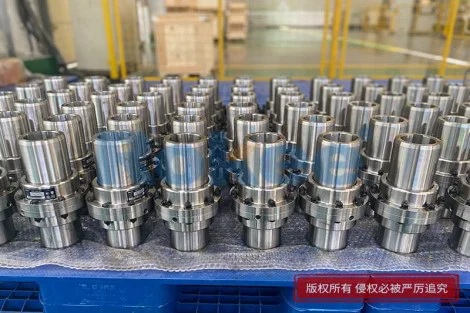
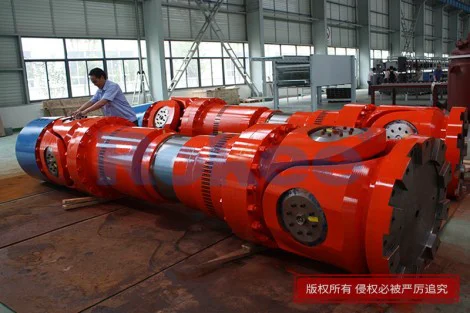
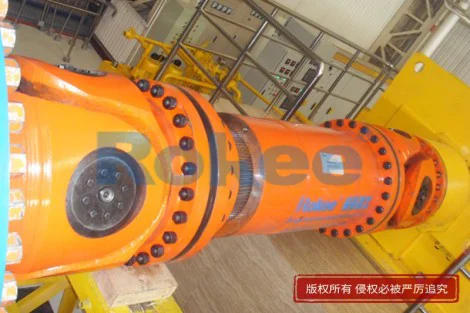
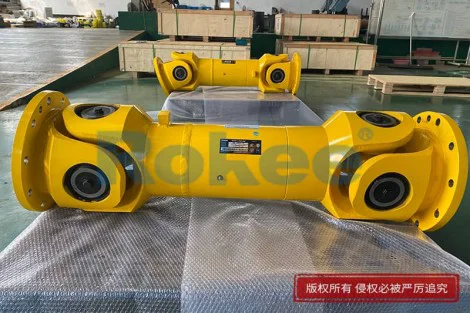
A standard drive coupling shaft assembly consists of multiple precision-processed components that work in tandem to achieve comprehensive transmission performance, with each part undertaking specific mechanical tasks. The main shaft body, usually fabricated from high-strength alloy materials, forms the core bearing structure that bears torque loads and rotational tension, ensuring structural rigidity and anti-deformation capability during high-speed and high-load operation. Universal joint units, the key adaptive components installed at both ends of the shaft body, enable flexible angle adjustment and directional rotation, laying the foundation for the assembly’s misalignment compensation function. Matching yoke assemblies and precision bearings connect the universal joints and shaft body tightly, reducing rotational friction and ensuring smooth and flexible angular movement. Splined connection structures are embedded in partial shaft designs to provide axial telescopic adjustment, adapting to linear distance changes between connected shafts caused by equipment operation or thermal expansion. Meanwhile, fastening and locking accessories fix all components in place to avoid structural loosening during long-term rotation. Every structural detail is optimized for mechanical coordination, enabling the entire drive coupling shaft to maintain stable transmission performance under variable load and displacement conditions.
Drive coupling shafts are broadly categorized into rigid and flexible types based on structural flexibility and adaptive performance, each suited for distinct mechanical application scenarios. Rigid drive coupling shafts feature an integrated fixed structure without elastic or movable adaptive parts, delivering ultra-high transmission accuracy and torque transmission efficiency. These rigid variants are ideal for precision mechanical systems that require strict shaft alignment and synchronous rotation, such as precision machine tools and high-precision transmission equipment, where zero transmission error and stable high-speed operation are prioritized. Flexible drive coupling shafts, by contrast, adopt elastic or movable joint structures, possessing strong adaptability to misalignment, vibration absorption, and shock resistance. They are widely used in general industrial equipment with frequent load changes and complex working conditions, including conveying machinery, pumping equipment, and light industrial production lines. Flexible designs effectively offset installation errors and operational displacement, while rigid structures guarantee extreme transmission precision. The differentiated structural designs allow drive coupling shafts to cover nearly all conventional mechanical transmission scenarios, meeting the diverse performance requirements of different industrial equipment.
Material selection is a decisive factor in determining the service performance, durability, and operational stability of drive coupling shafts, with different materials tailored to match varying working load and environmental conditions. High-strength carbon steel is the most commonly used base material for conventional drive coupling shafts, featuring excellent structural rigidity, strong torque-bearing capacity, and good mechanical stability under normal temperature and conventional load conditions, fully meeting the operational needs of most general industrial equipment. For high-load, high-speed, and long-duration continuous operation scenarios, alloy steel materials with enhanced toughness and fatigue resistance are widely adopted. After specialized heat treatment processes such as quenching and tempering, alloy steel drive coupling shafts exhibit stronger anti-deformation ability, better fatigue resistance, and longer service life, effectively resisting mechanical fatigue damage caused by long-term cyclic rotation. In special working environments involving humidity, corrosion, or high temperature, surface anti-corrosion and high-temperature resistant treatments are applied to the shaft surface, while individual key components adopt stainless steel or special alloy materials to avoid rust, corrosion, and structural aging. Scientific material matching ensures that drive coupling shafts maintain consistent performance stability in conventional and extreme working conditions alike.
The installation and commissioning process of drive coupling shafts directly affects their transmission efficiency, operational stability, and service life, requiring standardized and precise operational specifications. Before installation, comprehensive inspection of all components is essential, including checking the shaft body for deformation, cracks, or surface wear, verifying the flexibility of universal joints and bearings, and confirming the integrity of fastening accessories to eliminate potential structural hazards. During formal installation, the coaxiality and relative position of the driving shaft and driven shaft must be accurately calibrated to control misalignment within the adaptive range of the coupling shaft, avoiding excessive offset that may cause abnormal friction and torque loss. After component docking, all fastening parts are tightened symmetrically to ensure uniform stress on the entire structure and prevent loosening during high-speed rotation. Post-installation commissioning includes no-load trial operation and low-load running testing to observe the rotation smoothness, vibration amplitude, and noise level of the coupling shaft assembly. Abnormal vibration, noise, or jitter during operation indicates unqualified installation or misalignment, requiring timely readjustment and recalibration. Standardized installation and commissioning effectively avoid early wear and failure of drive coupling shafts, laying a solid foundation for long-term stable operation.
Routine maintenance and scientific fault diagnosis are critical to extending the service life and maintaining stable performance of drive coupling shafts in long-term industrial operation. Daily maintenance mainly includes regular surface cleaning to remove dust, oil stains, and mechanical impurities that may cause abrasive wear, as well as periodic lubrication of movable parts such as universal joints and bearings. Appropriate lubrication reduces rotational friction and mechanical wear, avoids dry friction damage under high-speed operation, and ensures flexible adaptive movement of movable structures. Regular structural inspection is also indispensable, covering fastening tightness of connecting parts, surface wear degree of the shaft body, and fatigue aging of key components. Loose fasteners need timely tightening, and severely worn or fatigued components require prompt replacement to prevent sudden equipment failure. In terms of fault diagnosis, abnormal operating signals such as excessive vibration, abnormal noise, and unstable power output are typical indicators of coupling shaft faults, usually caused by excessive misalignment, insufficient lubrication, component wear, or structural loosening. Timely troubleshooting and targeted maintenance can eliminate minor faults in advance, avoid expanded mechanical failures, and reduce equipment downtime and maintenance costs.
With the continuous upgrading of modern industrial mechanical systems, drive coupling shaft technology is evolving toward high precision, high durability, and intelligent adaptation to meet increasingly stringent industrial operational requirements. Traditional coupling shaft designs are being optimized in structural integration, with more compact and lightweight structures that reduce overall mechanical volume while improving torque transmission density and structural stability, making them suitable for refined and miniaturized modern mechanical equipment. Material technology innovation further enhances the comprehensive performance of coupling shafts, with new high-strength, fatigue-resistant, and corrosion-resistant composite materials improving adaptability to extreme working environments such as high temperature, high humidity, and heavy dust. In addition, modern drive coupling shafts are gradually combining with mechanical monitoring technology to realize real-time perception of operational parameters such as vibration amplitude, rotational speed, and stress load. This intelligent optimization enables early warning of potential faults, realizes predictive maintenance, and greatly improves the operational safety and reliability of mechanical transmission systems. As a foundational mechanical component, the continuous technological iteration of drive coupling shafts will further support the efficient, stable, and intelligent operation of modern industrial machinery.
Tags: Telescopic Drive Shaft , Universal Drive Shafts , Telescoping Drive Shafts , Flexible Rubber Drive Couplings , Industrial Flexible Drive Couplings , Flex Drive Coupling , Motor Drive Shaft , Cardan Joint Drive Shafts , Cardan Driveshafts , pu sandwich panel machine , pu sandwich panel line
« Drive Coupling Shaft » Update Date: 2026/8/13
Contact
If you require custom machined couplings, please contact Rokee via the contact information below for inquiries.
Email: Rokee@Rokee.com
 WeChat