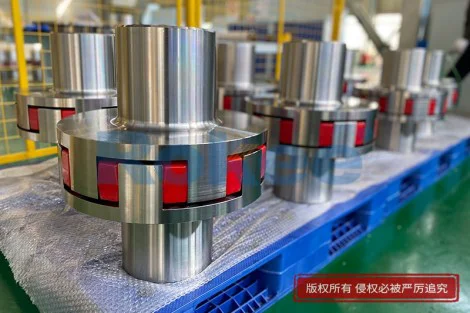
Types of Curved Tooth Couplings
Curved tooth couplings are high-performance flexible transmission components widely adopted in mechanical power transmission systems, renowned for their exceptional load-bearing capacity, misalignment compensation, and stable torque transmission performance. Distinct from straight tooth gear couplings, their uniquely curved tooth profile effectively reduces tooth surface friction, wear, and stress concentration during operation, enabling superior adaptability to complex working conditions such as shaft displacement, angular deviation, and torsional impact. These couplings are categorized into multiple types based on structural design, functional configuration, assembly mode, and application scenarios, each tailored to meet differentiated industrial transmission demands. The diversified classification covers basic conventional structures, specialized functional structures, and scenario-specific optimized designs, allowing flexible matching with various mechanical equipment. Understanding the core characteristics, structural advantages, and applicable ranges of each curved tooth coupling type is essential for selecting the most suitable transmission component to enhance mechanical operation stability, reduce maintenance frequency, and extend equipment service life in industrial production.

Basic integral curved tooth couplings represent the most fundamental and widely used type in the curved tooth coupling family, featuring an integrated compact structural design without additional intermediate connecting components. This structural form directly meshes internal and external curved teeth to connect two transmission shafts, realizing efficient and direct torque transmission with a streamlined overall layout and minimal occupied installation space. The integral processing technology ensures high structural rigidity and excellent concentricity, which effectively avoids assembly errors and loose connections that often occur in split structures during long-term operation. Thanks to the optimized curved tooth profile, this coupling type can compensate for minor axial, radial, and angular misalignments generated during equipment operation, while maintaining stable torque output under continuous and uniform load conditions. It boasts reliable operation, simple assembly and disassembly processes, and convenient daily maintenance, making it highly adaptable for conventional mechanical transmission scenarios with stable operating parameters and low impact loads. Common application scenarios include general industrial machinery, conventional transmission equipment, and medium-load operating systems that require continuous and steady power transmission, serving as the standard configuration for most basic mechanical connection needs.
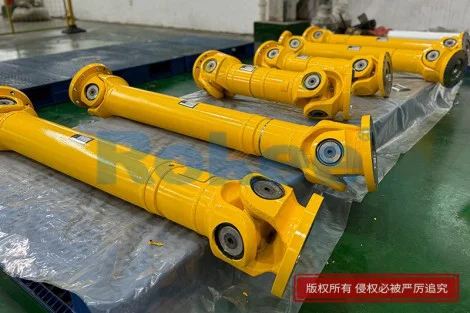
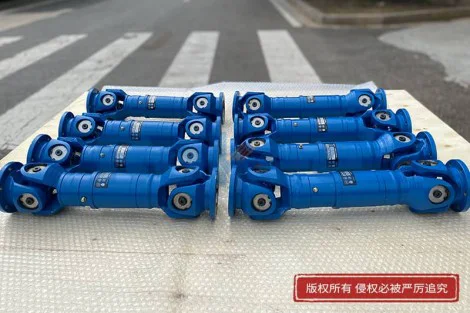
Intermediate shaft curved tooth couplings are specially optimized for long-distance power transmission scenarios, equipped with an independent intermediate connecting sleeve between two sets of curved tooth coupling structures. This unique structural design effectively solves the transmission limitations of basic integral couplings in long-span shaft connection environments, realizing stable power transmission between two shafts with a large center distance. The intermediate sleeve adopts high-strength integral processing or precise butt joint assembly technology, which not only extends the effective transmission distance but also maintains the overall rigidity and torsional stability of the coupling system. The double-section curved tooth meshing structure at both ends of the intermediate sleeve further enhances the misalignment compensation capability, allowing it to adapt to slight position deviations and vibration displacements of long-distance transmission shafts during equipment operation. In addition, the segmented structure design facilitates targeted disassembly and maintenance of local components, avoiding the need for overall dismantling of the transmission system. This type of coupling is extensively applied in large mechanical equipment with long-span transmission requirements, such as industrial conveyor systems, large-scale processing machinery, and long-axis transmission devices in metallurgical and chemical industries, providing consistent and reliable power support for long-distance mechanical operation.
Vertical installation curved tooth couplings are professional customized coupling products developed for vertical shaft power transmission working conditions, optimizing the structural layout and lubrication structure based on the basic curved tooth coupling principle to adapt to vertical operation characteristics. Different from horizontal conventional couplings, this type of coupling strengthens the structural sealing performance and axial bearing capacity, effectively preventing lubricant leakage caused by vertical gravity and avoiding the problem of insufficient lubrication of upper tooth surfaces. Its optimized internal tooth cavity structure can stably store grease or lubricating oil, ensuring full lubrication of meshing tooth surfaces during long-term vertical operation and reducing friction wear and operational noise. Meanwhile, the structural design enhances the axial anti-offset ability, which can resist axial floating and position deviation of vertical transmission shafts caused by equipment vibration and load changes. This effectively solves the stability problems of vertical power transmission that plague ordinary curved tooth couplings. It is mainly suitable for various vertical mechanical transmission equipment, including vertical pumps, vertical reducers, vertical fan equipment, and vertical transmission systems in mining and hydraulic machinery, ensuring safe and stable operation of vertical shaft transmission systems under long-term working conditions.
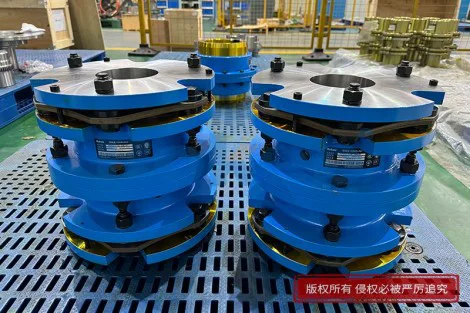
Brake-type curved tooth couplings integrate the traditional curved tooth transmission structure with brake matching components, forming a composite functional coupling that realizes synchronous power transmission and braking response. This structural design integrates brake disc or brake wheel structures on the basis of standard curved tooth meshing transmission, enabling the coupling to maintain efficient torque transmission during normal operation and achieve rapid and accurate braking coordination when equipment stops or adjusts speed. The curved tooth meshing part retains excellent load-bearing and misalignment compensation performance, ensuring stable power output under heavy-load operation, while the matching brake structure features high structural rigidity and fast response speed, which can quickly lock the transmission shaft to avoid inertial rotation of equipment. The overall structure undergoes anti-fatigue and anti-wear optimization to adapt to frequent start-stop and braking working conditions, effectively reducing component loss caused by alternating loads. This composite coupling type is widely used in mechanical equipment that requires frequent braking, speed regulation, and positioning, such as lifting machinery, mining hoisting equipment, and port handling machinery, greatly improving the operational safety and control accuracy of dynamic mechanical systems.
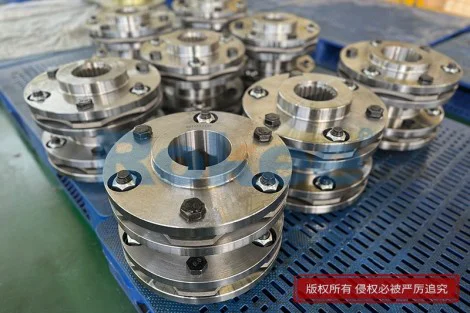
Flange-connected curved tooth couplings adopt a split flange assembly structure, separating the coupling into two independent flange tooth sets connected by high-strength fasteners, which differs significantly from integral structural couplings in assembly and stress modes. The flange connection design realizes modular assembly, allowing independent installation and positioning of the two shaft ends first, followed by integral butt joint and fixation, which greatly reduces the difficulty of equipment alignment and installation, especially for large-scale mechanical transmission systems with high installation precision requirements. The evenly distributed fastening structures on the flange surface ensure uniform stress during torque transmission, avoiding local stress concentration and tooth surface partial wear. The curved tooth meshing part still maintains excellent flexible compensation performance, which can buffer torsional impact and adapt to multi-directional shaft misalignment. In addition, the split structure enables convenient partial replacement of worn components without disassembling the entire transmission shaft system, effectively reducing equipment maintenance time and operating costs. It is mostly applied in heavy-duty industrial equipment, large mechanical transmission systems, and equipment requiring frequent disassembly, inspection and maintenance.
Floating tooth curved tooth couplings adopt a flexible floating tooth sleeve structural design, breaking the fixed meshing mode of traditional curved tooth couplings and enabling the tooth sleeve to produce a certain range of floating displacement during operation. This unique floating structure can automatically adapt to complex multi-dimensional misalignment of the transmission shaft, including irregular radial runout, angular deflection, and axial reciprocating displacement that cannot be fully compensated by conventional couplings. The floating tooth sleeve can adjust the meshing position in real time according to the operating state of the shaft system, ensuring uniform contact of each curved tooth surface, average load distribution, and avoiding overload wear of individual teeth. This design greatly improves the coupling’s adaptability to harsh working conditions such as variable loads, strong vibration, and frequent impact. Meanwhile, the flexible meshing state effectively buffers torsional vibration and impact force in the transmission process, protecting the main shaft and driving and driven equipment from rigid impact damage. It is mainly used in high-vibration, variable-load, and high-precision transmission scenarios such as heavy industrial machinery, engineering equipment, and automated production lines.
Lubrication-optimized curved tooth couplings are refined and upgraded products based on basic curved tooth transmission principles, focusing on optimizing internal lubrication channels, sealing structures and tooth surface processing techniques to adapt to high-speed, high-load and long-term continuous operation scenarios. This type of coupling is designed with independent circulating lubrication or grease storage structures inside, which can realize uniform and continuous lubrication of all meshing tooth surfaces, effectively solving the problems of insufficient lubrication, local dry friction and rapid wear under high-speed operation. The enhanced sealing structure can isolate external dust, moisture and corrosive substances, preventing tooth surface corrosion and lubricant deterioration, thus maintaining stable transmission performance in harsh working environments. The precision-polished curved tooth surface reduces meshing friction coefficient, lowers operating heat generation and energy consumption, and improves transmission efficiency. Compared with ordinary types, it has longer service life, lower failure rate and better high-speed stability. It is widely used in high-speed rotating machinery, precision transmission equipment, and mechanical systems that require long-term uninterrupted operation, providing high-efficiency and durable power transmission guarantee for high-demand industrial scenarios.
Tags: Tooth Couplings , Tooth Gear Couplings , Gear Tooth Couplings , Curved Tooth Couplings , Curved Tooth Gear Couplings , Toothed Couplings , Crowned Tooth Gear Couplings , sandwich panel machine , pu sandwich panel line
« Types of Curved Tooth Couplings » Update Date: 2026/8/18
URL: https://www.rokee.com/en/blog/types-of-curved-tooth-couplings.html
Contact
If you require custom machined couplings, please contact Rokee via the contact information below for inquiries.
Email: Rokee@Rokee.com
 WeChat