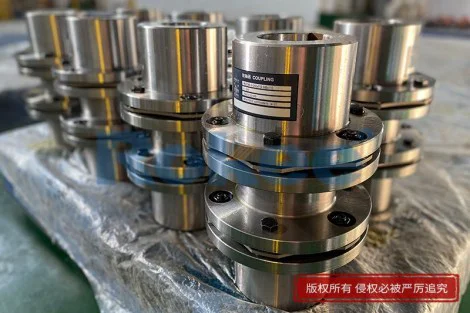
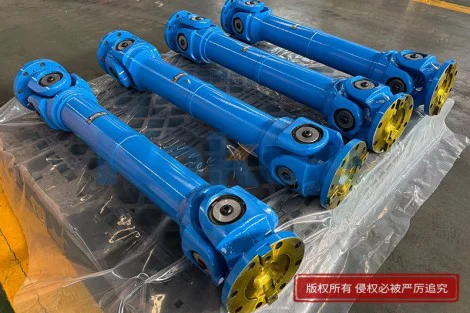
Curved Tooth Gear Couplings
Rokee is a manufacturer of curved tooth gear couplings from china, we can provide non-standard custom curved tooth gear couplings based on parameters or drawings supplied by customers, with export support available.

As a core component of mechanical transmission systems, curved tooth gear couplings have become an indispensable connecting element in modern industrial machinery and equipment, relying on their superior comprehensive mechanical properties and stable operating reliability. Serving as a flexible transmission device between rotating shafts, they primarily undertake the key functions of torque transmission, rotational speed transfer, and dynamic load buffering in mechanical operation. Different from traditional straight-tooth gear couplings and ordinary flexible couplings, the unique curved tooth profile design endows this type of coupling with outstanding adaptability to complex working conditions, enabling it to effectively cope with shaft misalignment, impact loads, and long-term continuous operation scenarios that are common in industrial production. With the continuous upgrading of industrial equipment towards high power, high precision, and high stability, curved tooth gear couplings have been widely applied in heavy machinery, energy power, petrochemical, metallurgical rolling, and other industrial fields, becoming a vital guarantee for the efficient and safe operation of mechanical transmission systems.

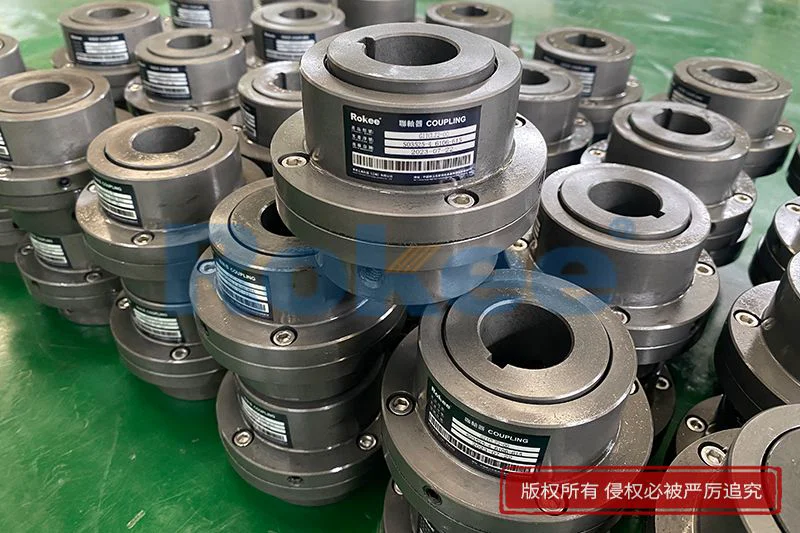
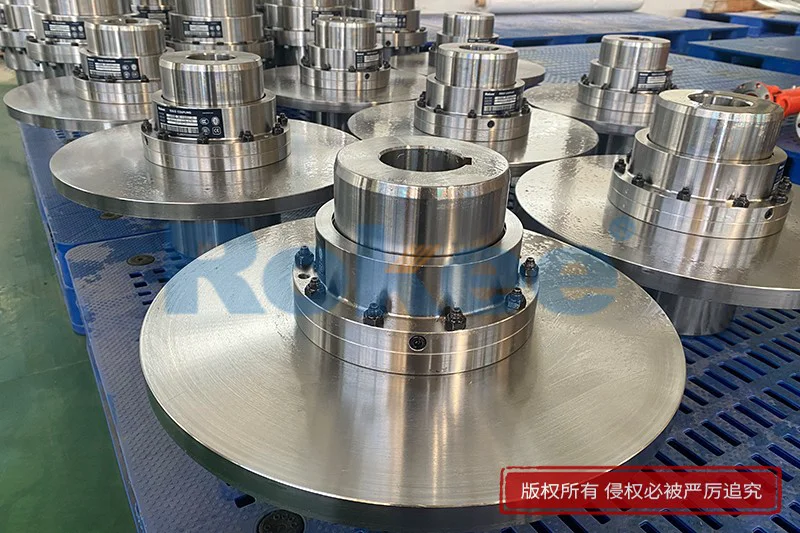
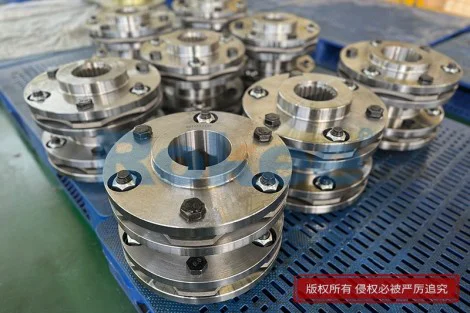
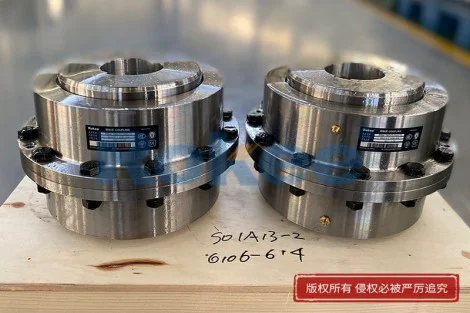
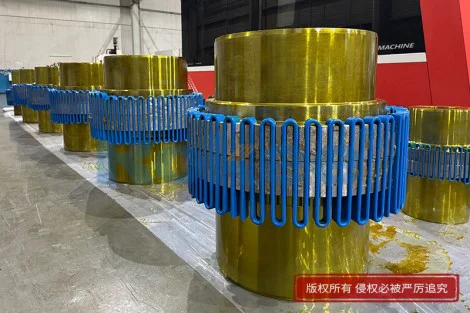
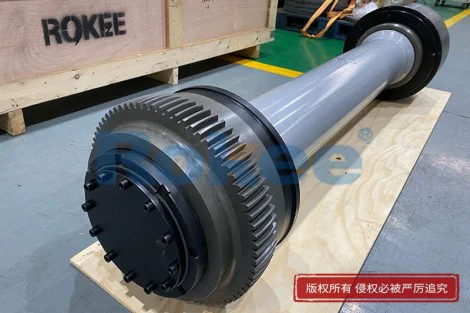
The basic structural composition of curved tooth gear couplings follows a modular and integrated design concept, with a simple and compact overall structure and high structural rigidity. The whole device is mainly composed of two gear hubs with curved external teeth and an intermediate sleeve with internal teeth, forming a three-part matching transmission structure. All core components adopt integral forging and precision machining processes, which effectively ensure the structural uniformity and mechanical strength of the parts. The external teeth of the gear hub are processed into a spherical curved structure, with the spherical center precisely located on the central axis of the gear shaft, while the internal tooth profile of the intermediate sleeve is matched with the curved external teeth to form a precise meshing pair. This special tooth profile matching mode reserves a reasonable fit clearance on the basis of ensuring meshing accuracy, which lays a structural foundation for the coupling to realize flexible displacement compensation and stable torque transmission. In addition, the overall structural design avoids redundant parts, realizing lightweight integration while maintaining high load-bearing capacity, which is conducive to reducing the overall assembly volume of equipment and optimizing the layout of mechanical transmission systems.
The unique working principle of curved tooth couplings is the core source of their superior performance, and the whole transmission process relies on the precise meshing and flexible coordination between curved tooth profiles. In the operating state, the driving shaft drives the gear hub to rotate, and the curved external teeth mesh with the internal teeth of the intermediate sleeve to transmit torque and rotational motion to the driven shaft. Unlike the linear contact mode of straight-tooth gear couplings, the curved tooth profile forms a continuous and uniform line contact state during meshing. This contact mode can disperse the concentrated stress generated in the process of torque transmission to a wider tooth surface area, effectively reducing the unit contact pressure of the tooth surface, avoiding local stress concentration and excessive partial wear of individual teeth. More importantly, the spherical curved tooth structure can produce a slight adaptive displacement and angle adjustment during operation. When the connected shafts produce angular, radial, or axial misalignment due to installation errors, thermal expansion and contraction, or dynamic operation vibration, the curved tooth meshing pair can automatically compensate for these displacement deviations without generating additional bending stress and extrusion stress on the shaft system and bearings. This flexible compensation mechanism enables the coupling to maintain a stable meshing state all the time, ensuring continuous and uniform torque transmission and avoiding transmission jitter and power loss caused by shaft misalignment.
Compared with other types of transmission couplings, curved tooth gear couplings have obvious comprehensive performance advantages, covering load-bearing capacity, misalignment adaptability, operation stability, and service life. In terms of load transmission performance, the large-area uniform meshing of curved teeth greatly improves the torque bearing limit of the coupling. Under the same volume and weight specifications, its load-bearing capacity is significantly higher than that of straight-tooth gear couplings and elastic sleeve couplings, and it can stably bear long-term heavy loads and instantaneous impact loads. This makes it fully adaptable to high-power transmission scenarios that ordinary flexible couplings cannot meet. In terms of misalignment compensation, the curved tooth structure allows a larger range of angular deflection and radial and axial displacement compensation. It can adapt to the tiny shaft position changes caused by equipment operation vibration, component thermal deformation, and long-term mechanical wear, and effectively avoid the fatigue damage of shafts, bearings, and box components caused by forced alignment transmission.
In terms of operation stability and noise control, the continuous overlapping meshing state of curved teeth ensures that multiple tooth pairs are always in contact during the transmission process, eliminating the periodic impact and vibration caused by alternate meshing of straight teeth. Even under the working conditions of frequent starting, sudden load changes, and forward and reverse rotation switching, the curved tooth profile can effectively buffer instantaneous impact force and smooth load fluctuation, realizing low-vibration and low-noise operation. Meanwhile, the uniform stress distribution of the tooth surface avoids local overheating and excessive wear, which greatly improves the thermal stability of the coupling during long-term continuous operation. In terms of structural durability, the precision-machined curved tooth surface has high surface finish and good wear resistance, and the reasonable clearance design reduces the friction and wear degree of the meshing pair. Under standardized installation and maintenance conditions, the service life of curved tooth gear couplings is far longer than that of ordinary flexible couplings, which can effectively reduce the frequency of equipment replacement and downtime loss.
Curved tooth couplings have extremely strong working condition adaptability, enabling stable operation in various harsh industrial environments, which is an important reason for their wide industrial application. In high-temperature working environments such as metallurgical rolling mills and industrial furnaces, the high-strength alloy steel materials and heat treatment processes adopted by the coupling enable it to maintain stable structural rigidity and tooth surface accuracy, avoiding structural deformation and transmission failure caused by high-temperature thermal expansion. In dusty and humid environments such as mining and construction machinery, the compact closed structure can effectively isolate external dust, moisture, and impurities, prevent abrasive particles from entering the meshing gap to cause tooth surface abrasion and jamming, and ensure the stability of long-term operation. In high-speed rotating equipment such as industrial turbines and high-power fans, the balanced structural design and smooth meshing characteristics enable the coupling to avoid resonance and violent vibration at high rotational speeds, maintaining the dynamic balance of the transmission system.
In the field of heavy industry and mechanical manufacturing, curved tooth gear couplings are widely used in core equipment such as rolling mills, crushers, mixers, and heavy-duty conveyors. These devices often operate under heavy load, frequent impact, and continuous working conditions, and the high load-bearing capacity and impact resistance of curved tooth gear couplings can fully meet the severe transmission requirements. In the energy and power industry, they are applied to power transmission systems of pumps, compressors, wind power equipment, and generator sets. The stable torque transmission and misalignment compensation performance can effectively solve the transmission failure problems caused by shaft vibration and thermal deformation of power equipment, ensuring the continuous and stable output of power equipment. In the petrochemical industry, various reaction kettles, delivery pumps, and pressurization equipment need to operate continuously for a long time with high stability requirements. The low wear and high reliability of curved tooth gear couplings reduce equipment failure rates and maintenance costs, providing a solid guarantee for the long-cycle operation of chemical production lines.
Reasonable installation and standardized daily maintenance are key factors to give full play to the performance of curved tooth gear couplings and extend their service life. In the installation process, the coaxiality of the two connected shafts must be strictly calibrated to control the misalignment within the allowable range of the product design. Although the coupling has a certain misalignment compensation capability, excessive installation deviation will still cause abnormal wear of the tooth surface and additional load of the shaft system, affecting the operation stability and service life. During assembly, the matching gap of the meshing parts should be checked strictly, and professional lubricating grease should be evenly coated on the tooth surface to reduce initial assembly friction and subsequent operating wear. After installation, no-load trial operation and load debugging should be carried out to check whether there is abnormal vibration, noise, and temperature rise, so as to ensure that the coupling is in a normal working state.
Daily maintenance mainly focuses on lubrication state inspection and regular replacement of lubricating media. The curved tooth meshing pair relies on lubricating oil film to reduce friction and wear and buffer impact. Long-term operation will lead to lubricant aging, deterioration, and loss, resulting in dry friction of the tooth surface and accelerated wear. Therefore, it is necessary to regularly check the lubrication state of the coupling according to the equipment operating intensity and working environment, and replace the lubricating grease regularly. At the same time, the operating temperature and vibration state of the coupling should be monitored daily. If abnormal temperature rise, violent vibration or irregular noise is found, the equipment should be shut down in time for inspection to eliminate hidden dangers such as tooth surface wear, loose assembly and excessive shaft misalignment. In addition, the modular structural design of curved tooth gear couplings enables individual replacement of worn parts without overall disassembly of the transmission system, which greatly reduces the difficulty and time cost of equipment maintenance and improves the operational efficiency of industrial production lines.
With the rapid development of modern industrial intelligence and high-end equipment manufacturing technology, the technical upgrading and performance optimization of curved tooth gear couplings are also advancing continuously. At present, the industry is constantly optimizing the curved tooth profile parameters through finite element simulation and mechanical performance testing, further improving the stress uniformity and misalignment compensation range of the tooth surface, and realizing higher torque transmission efficiency and lower energy loss. In terms of material technology, high-strength, wear-resistant and corrosion-resistant alloy materials and new surface strengthening processes are gradually applied to product manufacturing, which further enhances the adaptability of couplings to extreme working conditions such as low temperature, high corrosion and strong abrasion. In terms of processing technology, the popularization of precision CNC machining and intelligent detection technology effectively improves the machining accuracy and product consistency of curved tooth profiles, reducing the performance difference caused by processing errors.
In the future development trend, curved tooth gear couplings will develop towards miniaturization, high precision, intelligence and long life. On the premise of maintaining high load-bearing performance, the structural volume will be further optimized to adapt to the compact layout requirements of high-end precision equipment. At the same time, with the integration of intelligent sensing technology, real-time monitoring of the operating state, wear degree and temperature change of couplings will be realized, which can predict equipment failure in advance and realize predictive maintenance. As a basic core component of mechanical transmission, curved tooth gear couplings will continue to rely on technological innovation to expand their application scope in high-end manufacturing, new energy equipment, intelligent machinery and other emerging fields, and provide more reliable basic support for the high-quality development of modern industrial machinery.
In conclusion, curved tooth gear couplings occupy an important irreplaceable position in the field of mechanical transmission by virtue of their unique curved tooth profile design, excellent load-bearing performance, flexible misalignment compensation capability and stable and durable operating characteristics. They solve many pain points in the operation of traditional transmission components, such as poor misalignment adaptability, easy wear and short service life, and are suitable for almost all industrial mechanical transmission scenarios that require high-stability torque transmission. With the continuous progress of industrial technology and the continuous improvement of equipment performance requirements, the technical advantages and application value of curved tooth gear couplings will be further highlighted, becoming an important basic guarantee for the efficient, stable and long-term operation of modern industrial mechanical systems.
« Curved Tooth Gear Couplings » Update Date: 2026/7/15
URL: https://www.rokee.com/en/tags/curved-tooth-gear-couplings.html
Contact
If you require custom machined couplings, please contact Rokee via the contact information below for inquiries.
Email: Rokee@Rokee.com
 WeChat