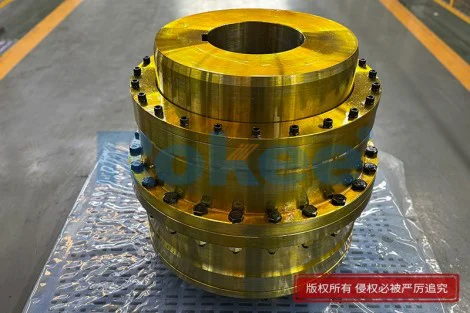
Spline Shaft Couplings
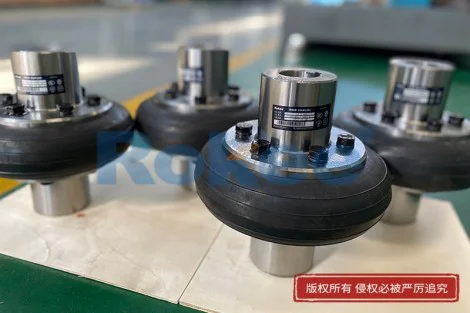
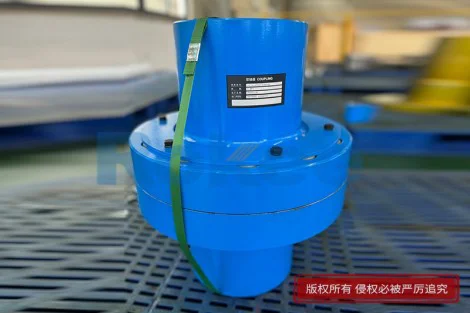
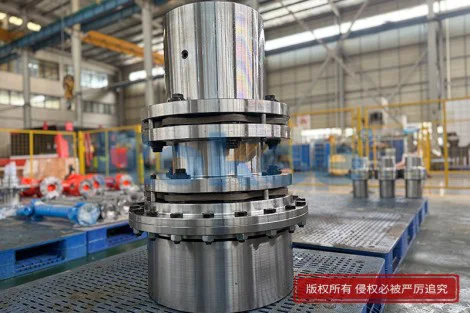
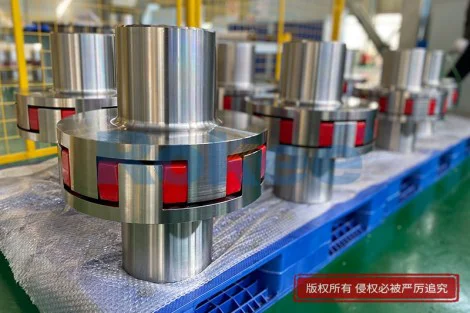
Rokee is a manufacturer of spline shaft couplings from china, we can provide non-standard custom spline shaft couplings based on parameters or drawings supplied by customers, with export support available.

Spline shaft couplings are essential mechanical components designed to connect rotating shafts and transmit torque efficiently across diverse power transmission systems. Distinct from conventional keyed couplings that rely on single-point contact for force transfer, these couplings utilize interlocking internal and external spline teeth to distribute mechanical load evenly over a broad contact surface. This unique structural design eliminates the stress concentration common in traditional coupling solutions, delivering superior torque capacity, enhanced operational stability, and excellent resistance to wear and fatigue. Beyond basic torque transmission, spline shaft couplings accommodate minor shaft misalignment and allow controlled axial sliding during equipment operation, making them highly adaptable to dynamic working conditions. Widely integrated into industrial machinery, automotive transmission systems, hydraulic equipment, and precision engineering devices, they serve as a reliable connection core that ensures consistent power output, reduces mechanical vibration, and extends the overall service life of mechanical transmission assemblies.


The fundamental working principle of spline shaft couplings centers on the precise meshing of paired spline structures, which distinguishes their performance advantages from ordinary coupling types. Each spline shaft coupling consists of two main mating parts: an external spline shaft with evenly machined protruding teeth and an internal spline hub with corresponding recessed grooves. When assembled, the teeth and grooves interlock tightly to form a unified rotating structure, enabling seamless transfer of rotational motion and torque between driving and driven shafts. Unlike single-key couplings that concentrate all bearing force on one narrow contact area, the multi-tooth spline layout disperses operational stress across dozens of contact points. This uniform load distribution significantly reduces local friction and abrasion, even under continuous high-load operation or frequent dynamic load fluctuations. Additionally, the structural clearance reserved in standard spline matching allows for slight radial and angular misalignment compensation during equipment installation and operation. This flexibility avoids rigid stress accumulation caused by shaft position deviation, effectively buffering mechanical impact and preventing component damage during start-stop cycles or variable-speed operation.
Structural characteristics endow spline shaft couplings with unique mechanical properties that support long-term stable operation in complex industrial scenarios. The symmetrical multi-tooth design of spline structures ensures balanced force bearing in all rotational directions, eliminating the eccentric rotation and torque loss often found in asymmetric connection structures. The enlarged contact area between spline teeth and grooves greatly improves the coupling’s load-bearing limit, allowing it to handle heavy torque transmission tasks that ordinary couplings cannot sustain. Most spline shaft couplings adopt an integrated machining structure with high dimensional accuracy, which guarantees excellent coaxiality of connected shafts during rotation and minimizes operational vibration and noise. Moreover, the sliding fit feature of spline connections enables axial displacement between paired shafts while maintaining stable torque transmission. This capability is particularly valuable for mechanical systems with thermal expansion and contraction or adjustable working strokes, as it avoids structural jamming and torque transmission failure caused by shaft length changes. The compact overall structure of spline shaft couplings also saves installation space, making them suitable for precision equipment with limited assembly dimensions.
Material selection is a critical factor that determines the durability, strength, and environmental adaptability of spline shaft couplings, with different material formulations tailored to diverse working conditions. High-strength alloy steel is the most commonly used material for heavy-duty spline shaft couplings, undergoing rigorous forging and heat treatment processes to enhance surface hardness and internal toughness. This treatment enables the couplings to resist extreme mechanical wear, impact loads, and cyclic fatigue failure during long-term high-intensity operation. For light-duty and precision transmission scenarios, high-quality carbon steel is widely adopted due to its balanced mechanical performance and stable processing characteristics, meeting the operational demands of conventional precision machinery. In corrosive or humid working environments such as fluid transmission equipment and outdoor mechanical devices, surface anti-corrosion treatments are applied to spline couplings to resist oxidation and chemical erosion. Reasonable material matching not only improves the structural rigidity and wear resistance of the couplings but also effectively reduces maintenance frequency. It avoids premature failure caused by material fatigue, corrosion, or abrasion, ensuring consistent transmission efficiency throughout the equipment service cycle.
Spline shaft couplings demonstrate extensive application value across multiple industrial fields, relying on their excellent comprehensive performance. In industrial manufacturing machinery, they are core connecting components for gearboxes, speed reducers, and conveyor drive systems, stably transmitting power under continuous variable-load operation and ensuring the synchronous operation of production equipment. In automotive transmission systems, spline shaft couplings are applied to drive shafts and power transmission assemblies, adapting to the dynamic load changes and frequent start-stop conditions during vehicle travel while maintaining efficient power output. In hydraulic and pneumatic power systems, they connect pump bodies and power output shafts, tolerating minor position deviations caused by fluid pressure fluctuations and ensuring stable hydraulic power conversion. Precision processing equipment such as machine tool spindles also adopts spline shaft couplings to maintain high-precision rotational alignment, guaranteeing the machining accuracy of workpieces. Additionally, they are widely used in agricultural machinery, engineering equipment, and aerospace actuation systems, providing reliable power connection solutions for various high-dynamic and high-load working scenarios.
Compared with traditional keyed couplings, rigid couplings, and flexible sleeve couplings, spline shaft couplings present prominent performance advantages in terms of transmission efficiency and operational reliability. Traditional keyed couplings suffer from severe local stress concentration, prone to keyway abrasion, loosening, and torque slippage after long-term operation, which reduces transmission accuracy. Rigid couplings feature high structural rigidity but lack misalignment compensation capability, easily causing shaft deformation and component damage when installation errors or operational vibration occur. Flexible sleeve couplings can buffer vibration but have limited torque bearing capacity and are not suitable for heavy-duty transmission scenarios. In contrast, spline shaft couplings combine high rigidity and moderate flexibility, achieving zero slippage torque transmission while adapting to minor shaft misalignment and axial displacement. Their uniform load distribution structure greatly extends service life, and their high machining accuracy ensures stable transmission precision without obvious power loss. In terms of assembly and maintenance, spline coupling structures are simple and intuitive, enabling convenient disassembly, replacement, and daily maintenance without complex auxiliary tools.
Scientific installation and daily maintenance are essential to maximize the operational performance and service life of spline shaft couplings. During installation, workers need to ensure clean matching surfaces of internal and external splines to avoid particle impurities affecting meshing accuracy and causing premature wear. The coaxiality of the two connected shafts should be calibrated reasonably to control misalignment within a reasonable range, preventing excessive deflection from increasing spline tooth friction and operational vibration. After installation, appropriate lubrication measures must be taken, with high-performance lubricants applied to spline meshing surfaces to reduce dry friction, lower operating temperature, and inhibit surface oxidation. In daily equipment operation, regular inspection of spline coupling operating status is required, focusing on checking for abnormal vibration, noise, or power transmission instability. Timely cleaning of surface dust and grease dirt, and regular replacement of aging lubricants can effectively avoid wear accumulation and structural failure. For equipment operating under high load and high speed, periodic disassembly inspection is necessary to check spline tooth wear status and ensure the long-term stable and efficient operation of the coupling.
With the continuous upgrading of modern mechanical transmission technology, spline shaft couplings are evolving toward high precision, high durability, and adaptive intelligence to meet increasingly stringent industrial operational requirements. Modern processing technologies such as precision grinding and numerical control machining have further improved the dimensional accuracy and surface finish of spline teeth, effectively reducing transmission backlash and improving power transmission precision. Optimized structural design continuously enhances the misalignment compensation capability and impact resistance of couplings, enabling them to adapt to more extreme working conditions including high-speed rotation, heavy impact load, and variable temperature environments. Meanwhile, the innovation of new wear-resistant and corrosion-resistant materials further improves the comprehensive environmental adaptability of spline shaft couplings. As core basic components of power transmission systems, spline shaft couplings will continue to play an irreplaceable role in intelligent manufacturing, precision engineering, and high-end mechanical equipment, providing stable, efficient, and long-lasting connection guarantees for the safe operation of various mechanical systems.
« Spline Shaft Couplings » Update Date: 2026/8/5
URL: https://www.rokee.com/en/tags/spline-shaft-couplings.html
Contact
If you require custom machined couplings, please contact Rokee via the contact information below for inquiries.
Email: Rokee@Rokee.com
 WeChat