Large Drum Tooth Shaft For Steel Reeling Machine
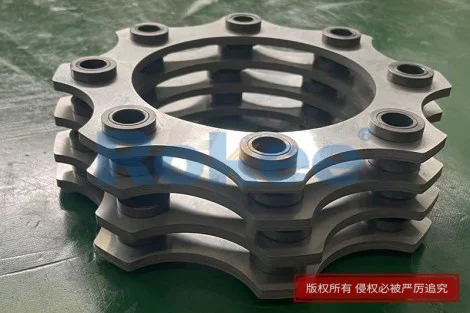
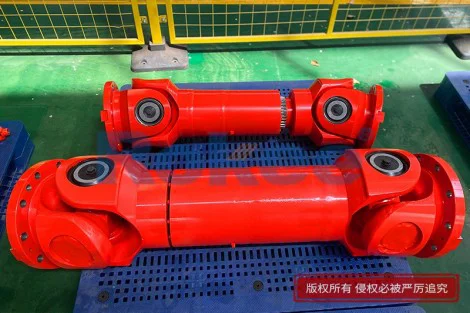
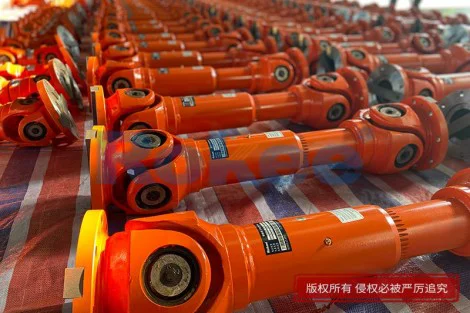
The large drum tooth shaft serves as a core transmission component of steel reeling machines, undertaking the critical task of torque transmission and operational stability support in the steel coiling process. As a key connecting part integrating drum-shaped tooth structure and shaft body performance, it bridges the power driving unit and the reeling drum, ensuring continuous and stable rotation during the winding of thick and heavy steel coils. Different from ordinary straight tooth shafts, its unique drum-shaped tooth profile design optimizes meshing contact state, effectively adapts to minor axis deviation and vibration generated during high-load steel reeling operation. This component directly determines the operating efficiency, coiling precision and service life of the entire reeling equipment, and is particularly suitable for heavy-duty working conditions of large-scale steel coil winding in metallurgical processing. Its structural rationality and mechanical stability are essential to eliminate transmission jitter, avoid steel coil deformation and reduce equipment failure rates in industrial production.

The structural design of the large drum tooth shaft is tailored to the heavy-load and high-continuity working characteristics of steel reeling machines, with every detail optimized for industrial coiling scenarios. The overall structure consists of an integrated solid shaft body and precision-machined drum-shaped tooth segments, abandoning the split design that is prone to loose connection. The shaft body adopts a thickened solid structure to enhance overall rigidity and bending resistance, which can withstand the huge torsion and radial pressure generated by winding large-tonnage steel coils for a long time. The drum-shaped teeth distributed on the shaft surface feature a curved spherical profile, which differs fundamentally from traditional straight teeth in contact mode. During meshing operation, the curved tooth surface forms uniform surface contact with the matching inner gear ring, rather than narrow line contact, which disperses local stress concentration and avoids tooth edge wear and collapse under extreme loads. Meanwhile, the transition part between the tooth segment and the shaft body adopts smooth arc processing to eliminate stress dead corners, effectively preventing shaft body fracture caused by long-term alternating load impact and greatly improving the structural fatigue resistance of the component.
The working principle of the large drum tooth shaft centers on flexible meshing power transmission and automatic axis deviation compensation, realizing efficient and stable operation of steel reeling equipment. In the working process, the power output by the driving device is transmitted to the reeling drum through the meshing cooperation between the drum tooth shaft and the inner gear ring. The unique drum-shaped tooth endow the transmission pair with excellent adaptive adjustment capability. When the steel reeling machine operates, factors such as equipment vibration, base slight deformation and uneven steel coil winding will cause tiny radial, axial and angular deviations between the driving end and the driven end. The curved tooth surface of the drum tooth shaft can automatically adapt to these deviations, maintaining a tight and uniform meshing state without generating additional meshing resistance or impact force. This flexible transmission mode avoids the rigid collision and jitter phenomenon common in straight tooth transmission, ensures constant and stable rotating speed of the reeling drum, and effectively guarantees the flatness and compactness of steel coil winding. Moreover, the meshing gap reserved by precision processing further buffers mechanical vibration, making the whole reeling process more stable and orderly.
Material selection and processing technology are the core guarantees for the excellent performance of the large drum tooth shaft, determining its load-bearing capacity and service life in harsh industrial environments. The base material of the shaft is selected from high-strength alloy steel with excellent toughness and hardenability, which has strong resistance to torsion, compression and fatigue damage, and can adapt to long-term uninterrupted heavy-load operation. After rough turning and fine turning of the overall shaft body, the drum-shaped tooth part undergoes special precision forging and integral heat treatment processes, including quenching and tempering treatment to improve surface hardness and core toughness simultaneously. The tooth surface is processed by high-precision gear grinding technology to ensure the smoothness and dimensional accuracy of the curved profile, reducing meshing friction and wear. In addition, the surface of the shaft body and tooth teeth is treated with anti-oxidation and wear-resistant coating, which can effectively resist the erosion of dust, moisture and metal debris in the metallurgical production environment, prevent rusting and tooth surface abrasion, and maintain stable transmission performance for a long time. Each processing link strictly controls precision errors to ensure the matching accuracy and mechanical stability of the finished product.
The large drum tooth shaft shows outstanding performance advantages compared with traditional transmission shafts in the application of steel reeling machines, solving many pain points of heavy-load coiling operation. First of all, its drum-shaped tooth structure greatly improves the axis deviation compensation ability, allowing a larger range of angular and radial misalignment adaptation, which far exceeds the compensation limit of ordinary straight tooth shafts, and can cope with various minor installation errors and operational deformation of equipment. Secondly, the uniform surface contact meshing mode reduces local contact stress, effectively avoids tooth surface pitting, gluing and edge chipping failures, and significantly extends the service life of the component. In terms of transmission efficiency, the precise meshing structure reduces friction loss and power attenuation, ensuring that the power output can be efficiently transmitted to the reeling drum and improving the overall working efficiency of steel coiling. In addition, the integrated high-rigidity structure has strong anti-vibration and anti-impact capabilities, which can suppress equipment jitter during high-speed and heavy-load reeling, avoid loose winding and uneven thickness of steel coils, and effectively improve the finished product quality of steel coils in industrial production.
Lubrication management is a key link to maintain the stable operation and extend the service life of the large drum tooth shaft, matching its high-load continuous working mode. The component is designed with a scientific self-circulating lubrication structure, which can drive lubricating oil to flow automatically with the rotation of the shaft body without additional complex lubrication equipment. During operation, the rotating shaft body guides the lubricating oil to accurately cover the meshing tooth surface and shaft body friction parts, forming a uniform and stable oil film. This oil film can isolate metal direct contact, reduce meshing friction and wear, and also play a good role in heat dissipation, taking away the heat generated by high-speed meshing friction in time to avoid tooth surface thermal deformation and performance degradation. Reasonable lubrication can also buffer the meshing impact between gear pairs, reduce equipment operating noise and vibration. In daily operation, maintaining a stable lubricating oil state and clean oil quality can effectively prevent dry friction wear and tooth surface corrosion, ensure that the drum tooth shaft always maintains efficient transmission performance, and reduce the frequency of equipment maintenance and downtime loss in industrial production.
Routine maintenance and fault prevention of the large drum tooth shaft are crucial to ensure the long-term stable operation of steel reeling machine equipment. Daily maintenance mainly includes regular inspection of shaft body operating state, tooth surface integrity and lubrication system stability. It is necessary to regularly observe whether there is abnormal vibration, noise and temperature rise during the operation of the shaft body, check the tooth surface for wear, pitting, chipping and other damage, and confirm that the lubricating oil volume is sufficient and the oil quality is free of deterioration and impurity contamination. Regular cleaning of the shaft body and tooth gaps is required to remove accumulated metal debris and dust, preventing hard particles from scratching the tooth surface and affecting meshing accuracy. For long-term continuous operating equipment, regular disassembly and inspection of meshing clearance and shaft body deformation are needed to adjust matching accuracy in time and eliminate potential hidden dangers. Standardized maintenance can effectively avoid common faults such as transmission jitter, power attenuation and shaft body fatigue fracture, ensure the continuous and efficient operation of the steel reeling machine, and reduce the comprehensive operating cost of industrial production.
With the continuous upgrading of metallurgical steel processing technology, the performance requirements for large drum tooth shafts supporting steel reeling machines are constantly improving, driving the continuous optimization of product design and manufacturing technology. Modern steel production tends to large-scale, high-speed and high-precision development, putting forward higher standards for the load-bearing capacity, transmission stability and fatigue resistance of transmission components. The future optimization direction of the large drum tooth shaft focuses on lightweight high-rigidity structure design, further improving torque transmission efficiency while reducing self-weight energy consumption. At the same time, combined with intelligent processing technology, the precision of tooth profile processing and structural consistency will be further improved, and the adaptive compensation capability under complex working conditions will be enhanced. In addition, the innovation of new wear-resistant and high-temperature resistant materials and surface treatment processes will enable the component to adapt to more harsh production environments, realize longer service life and lower maintenance frequency, and provide more reliable core support for the efficient and high-quality operation of modern steel reeling and processing equipment.
Tags: Tooth Couplings , Tooth Gear Couplings , Gear Tooth Couplings , Curved Tooth Couplings , Curved Tooth Gear Couplings , Toothed Couplings , Crowned Tooth Gear Couplings , pu sandwich panel machine , pu sandwich panel line
« Large Drum Tooth Shaft For Steel Reeling Machine » Update Date: 2026/8/13
Contact
If you require custom machined couplings, please contact Rokee via the contact information below for inquiries.
Email: Rokee@Rokee.com
 WeChat