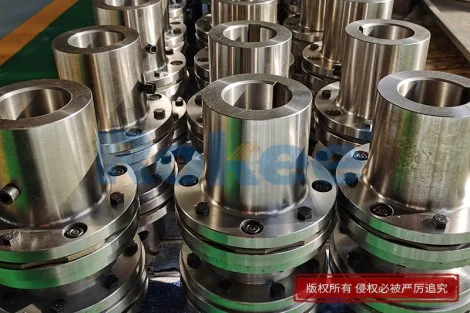
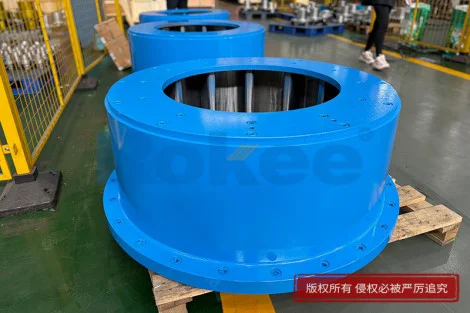
Large Universal Shaft
Large universal shafts are indispensable heavy-duty transmission components widely adopted in modern heavy industrial machinery, serving as core flexible connecting parts for power transmission systems. Unlike rigid transmission structures that can only work under coaxial conditions, these specialized shafts excel at transmitting stable torque and continuous rotational motion between two shafts with angular deviations and axial displacements, effectively solving the transmission limitations of traditional rigid couplings in complex operating environments. Constructed with high-strength mechanical structures and precision matching components, they integrate flexibility and load-bearing performance, adapting to variable working conditions including deflection, vibration and position offset during equipment operation. They play a vital role in ensuring the stable operation of large mechanical equipment, reducing transmission failure rates, and extending the overall service life of industrial transmission systems, becoming a key guarantee for efficient and reliable production in heavy industry scenarios.

The core working principle of large universal shafts revolves around flexible angle compensation and continuous torque transmission under non-coaxial operating conditions. Traditional rigid transmission structures fail to operate normally once axis deviation occurs, while large universal shafts rely on the flexible rotation of cross shaft bearings to break through the limitations of coaxial transmission. When the driving shaft rotates, the cross shaft linkage mechanism drives the driven shaft to rotate synchronously, even if a certain angle exists between the two shaft axes, stable power output can still be maintained. In single-section transmission structures, minor rotational speed fluctuations may occur during angle deflection operation, so most heavy-duty universal shafts adopt double-section or multi-section combined structures with intermediate shafts arranged at equal angles. This structural layout effectively offsets speed fluctuations generated by single-section deflection, realizing constant-speed and synchronous torque transmission. During equipment operation, the bearing components bear rotational friction and mechanical pressure, while the overall structure buffers instantaneous impact loads through flexible deflection, avoiding rigid extrusion and fatigue damage of transmission parts. This unique working mechanism enables large universal shafts to adapt to complex dynamic working conditions that cannot be covered by traditional transmission parts, achieving reliable power transmission in long-term variable-load operation.
Large universal shafts possess outstanding comprehensive performance advantages that make them dominant in heavy industrial transmission fields. First of all, they feature excellent load-bearing capacity, able to withstand ultra-high torque impact and long-term continuous load operation, fully meeting the power transmission demands of large-scale heavy machinery. Their unique flexible compensation capability allows them to adapt to a wide range of angular deflection and axial displacement, effectively coping with axis offset caused by equipment installation errors, mechanical vibration and thermal deformation. In terms of transmission efficiency, the precision-matched internal structure reduces friction resistance and mechanical loss during operation, maintaining high-efficiency power output even under long-term continuous working conditions. Compared with other flexible transmission components, large universal shafts have higher structural rigidity and stability, with strong resistance to mechanical deformation and fatigue damage, suitable for harsh working environments with high strength and high frequency operation. Additionally, their modular structural design brings good versatility and adaptability, which can be adjusted and optimized according to different mechanical equipment and working condition requirements, realizing flexible matching of various heavy-duty transmission systems and greatly improving the applicability of industrial transmission solutions.
Large universal shafts cover a wide range of application scenarios, almost penetrating all core fields of heavy industrial manufacturing. In metallurgical industry, they serve as key transmission components of rolling mill equipment, providing stable power support for continuous rolling operation of metal materials, adapting to the high-load and continuous operation characteristics of rolling production lines. In mining and engineering machinery, they are applied to large excavators, crushers and lifting equipment, resisting complex impact loads and position changes during mechanical operation to ensure stable power transmission of construction and mining equipment. In the field of new energy equipment, they undertake the yaw and rotation transmission tasks of large wind power equipment, adapting to angle changes and vibration interference caused by wind direction adjustment. Meanwhile, they are also widely used in ship power systems, petroleum drilling equipment, papermaking and rubber machinery, providing reliable transmission guarantees for various large-scale industrial production equipment. In different application scenarios, large universal shafts can adjust structural parameters and component configurations according to environmental characteristics such as load magnitude, operation frequency and working medium, always maintaining stable and efficient operating performance.
Material selection and manufacturing craftsmanship are key factors determining the service performance and service life of large universal shafts. High-quality alloy structural steel is mainly selected for the main stress-bearing components such as shaft tubes, cross shafts and yoke heads, which has excellent tensile strength, impact toughness and fatigue resistance, effectively resisting structural damage caused by long-term heavy load and alternating torque. The bearing parts adopt high-precision wear-resistant materials with optimized heat treatment processes, improving surface hardness and wear resistance to reduce friction loss during long-term high-speed rotation. In the manufacturing process, advanced precision machining technologies are adopted to ensure the dimensional accuracy and assembly tolerance of each component, eliminating transmission jitter and power loss caused by assembly deviation. Multiple heat treatment processes including quenching and tempering are carried out on key components to refine the internal metal structure, eliminate machining stress, and improve the overall structural stability and deformation resistance. The surface of components is treated with anti-corrosion and wear-resistant coatings to adapt to harsh industrial environments such as high humidity, dust and chemical corrosion, effectively delaying component aging and failure and ensuring long-term stable operation of equipment.
Scientific installation and standardized daily maintenance are crucial to maintaining the optimal working state of large universal shafts and extending their service life. During installation, it is necessary to strictly calibrate the coaxiality and installation angle of the equipment, reasonably control the deflection angle of the universal shaft within the optimal working range, and avoid excessive angle deviation causing increased transmission load and accelerated component wear. The assembly of spline parts and fastening components should be standardized to ensure tight and stable connection, preventing loose displacement during high-speed operation. In daily use, regular inspection of component operation status is required, focusing on checking bearing wear, spline matching clearance and structural fastening degree, and timely troubleshooting abnormal vibration, noise and torque attenuation. Regular lubrication maintenance should be carried out on rotating and matching parts to reduce mechanical friction and wear, and old lubricating oil should be replaced regularly to avoid impurity accumulation affecting transmission efficiency. For equipment operating in harsh environments, enhanced anti-corrosion and dust-proof protection measures need to be taken to prevent external factors from damaging internal components. Standardized operation and maintenance can effectively reduce equipment failure rates, stabilize transmission performance, and create higher economic benefits for industrial production.
With the continuous upgrading of modern heavy industrial equipment towards large-scale, high-efficiency and intelligent development, the technical iteration of large universal shafts is also advancing continuously. The current development trend focuses on lightweight and high-strength structural optimization, adopting bionic structural design and new composite alloy materials to reduce self-weight while improving load-bearing performance, reducing equipment operation energy consumption. Intelligent monitoring functions are gradually integrated into the product design, realizing real-time monitoring of operating parameters such as transmission torque, operating temperature and vibration frequency, which can timely predict potential faults and realize predictive maintenance. In terms of structural optimization, more precise flexible compensation designs are developed to adapt to more complex variable working conditions and further improve transmission stability and efficiency. Meanwhile, green manufacturing and low-consumption operation have become important development directions, optimizing processing techniques to reduce production energy consumption and improving component durability to reduce replacement frequency and resource waste. These technological innovations will further expand the application scope of large universal shafts and provide more reliable and efficient core support for the upgrading and development of modern heavy industry.
Tags: Universal Shafts , Universal Shaft Couplings , Universal Shaft Joint , pu sandwich panel machine , pu sandwich panel line
« Large Universal Shaft » Update Date: 2026/8/13
Contact
If you require custom machined couplings, please contact Rokee via the contact information below for inquiries.
Email: Rokee@Rokee.com
 WeChat