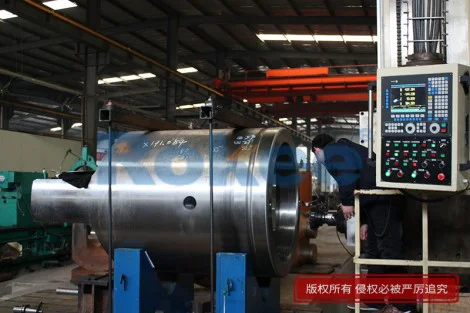
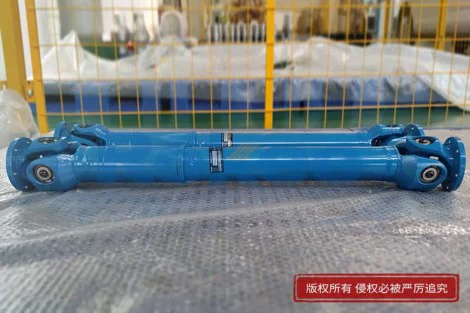
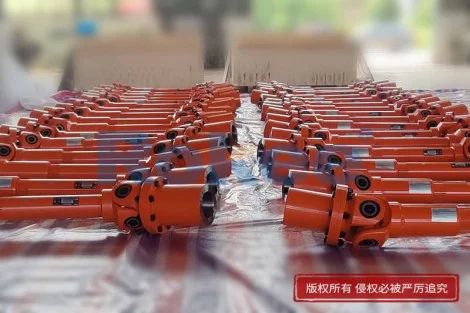
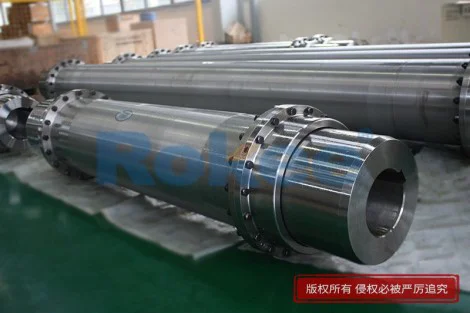
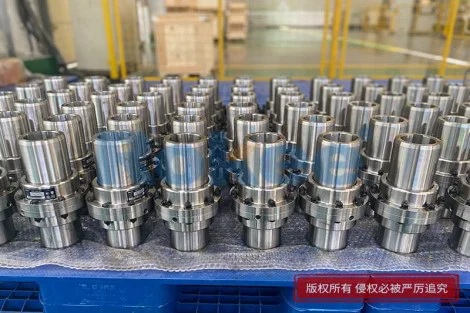
Drum Tooth Coupling (Exported to Mexico)
Drum tooth coupling is a high-performance rigid-flexible transmission component widely applied in mechanical power transmission systems, serving as a core connecting part between driving and driven shafts. Its unique drum-shaped tooth profile design distinguishes it from traditional straight tooth couplings, endowing it with excellent comprehensive mechanical properties and adaptive capabilities. This coupling mainly relies on the meshing of internal gear rings and external drum-shaped teeth to transmit torque, effectively solving common operational problems such as shaft misalignment, mechanical vibration, and local stress concentration during equipment operation. With compact structural layout, stable transmission performance, strong load-bearing capacity and low operating noise, it can adapt to complex and harsh working environments including high-speed operation, heavy-load rotation and frequent start-stop cycles. As a key component to ensure the synchronous operation of mechanical equipment, it not only improves the overall transmission efficiency of the system but also reduces equipment wear and failure rates, extending the service life of mechanical transmission systems in various industrial scenarios.

The core structural design of drum gear coupling lays the foundation for its superior transmission performance, featuring a scientific and integrated component combination without redundant structures. The main composition includes two flange half couplings with external drum-shaped teeth and a closed internal gear ring, forming a complete meshing transmission system. Different from the linear tooth profile of conventional gear couplings, the external teeth of this coupling adopt an integral arc spherical structure, with the spherical center precisely located on the central axis of the gear shaft. This special tooth shape changes the linear contact mode of traditional straight teeth into curved surface contact during meshing, greatly expanding the effective contact area between gear teeth. Meanwhile, the reasonable tooth gap design reserves sufficient space for shaft displacement compensation, avoiding the rigid extrusion and friction that often occur in straight tooth structures under offset conditions. All structural components are closely matched, realizing organic integration of rigid transmission and flexible compensation. The overall compact size effectively saves installation space for mechanical equipment, while the integrated structural design enhances the overall rigidity of the coupling, ensuring stable torque output without deformation under long-term heavy-load working conditions.
The working principle of drum tooth coupling centers on flexible meshing torque transmission and multi-dimensional displacement compensation, enabling stable power transmission under non-ideal installation and operating conditions. During equipment operation, the driving shaft drives the half coupling with external drum-shaped teeth to rotate, and torque is evenly transmitted to the internal gear ring through the curved tooth surface meshing, thereby driving the driven shaft to operate synchronously. Thanks to the arc design of the drum-shaped teeth, the tooth surface can maintain uniform contact stress even when radial, axial and angular deviations exist between the two connected shafts. When the mechanical system produces vibration, shaft deflection or position offset due to load changes or operating wear, the flexible meshing state of drum-shaped teeth can automatically adapt to such displacements, dispersing local pressure and avoiding stress concentration on individual gear teeth. This working mechanism fundamentally solves the defect of traditional couplings that are prone to tooth surface wear, tooth breakage and transmission jitter under shaft misalignment conditions. It ensures continuous and efficient power transmission, maintains the synchronous operation accuracy of the transmission system, and greatly reduces additional mechanical loss caused by shaft position deviation.
Drum tooth coupling boasts outstanding load-bearing and transmission efficiency advantages, making it suitable for high-intensity industrial transmission scenarios. The curved surface meshing structure allows multiple gear teeth to participate in torque transmission simultaneously, realizing uniform distribution of load on the entire tooth surface rather than concentrating stress on a single tooth or local area. This uniform stress distribution characteristic enables the coupling to bear larger torque loads under the same volume and size compared with ordinary gear couplings, achieving high torque density output. In terms of transmission efficiency, the smooth arc tooth surface reduces sliding friction resistance during meshing operation, avoiding the energy loss caused by rigid friction and tooth surface jamming of straight tooth structures. Its stable transmission state ensures that the power loss during torque transmission is extremely low, maintaining efficient power output for a long time. In addition, the uniform stress bearing mode effectively slows down the fatigue wear of gear teeth, avoids sudden failure caused by local overloading, and enables the coupling to maintain stable load-bearing performance even during long-term continuous operation and frequent variable load switching.
The adaptive operation and noise reduction performance of drum tooth coupling further enhances its practical value in industrial applications. In actual mechanical operation, equipment inevitably produces tiny shaft deviations, operational vibration and running deflection due to installation errors, component wear and load fluctuations. The unique drum-shaped tooth profile can flexibly adapt to these complex variable working conditions, providing reliable multi-dimensional compensation for various shaft displacements. This excellent self-aligning performance lowers the installation accuracy requirements of mechanical equipment, allowing for certain installation tolerances without affecting transmission stability, which greatly reduces the difficulty of equipment assembly and debugging. Meanwhile, the smooth meshing of arc tooth surfaces eliminates the rigid impact and intermittent friction of straight tooth meshing, effectively reducing mechanical vibration and operating noise during equipment operation. The stable and smooth operating state not only optimizes the on-site working environment but also reduces the vibration-induced wear of bearings and other matching components, maintaining the long-term operational stability of the entire mechanical system.
Material selection and surface processing technology endow drum tooth coupling with excellent durability and environmental adaptability. High-strength alloy materials are generally adopted for the core components, which have good mechanical toughness, compressive resistance and fatigue resistance, adapting to long-term high-load and high-frequency operating conditions. After precise machining, the gear teeth undergo professional surface strengthening treatment, which improves the hardness and wear resistance of the tooth surface while maintaining the internal toughness of the gear teeth, effectively preventing tooth surface scratching, abrasion and fatigue cracking during meshing. This composite processing technology solves the contradiction between the hardness and toughness of traditional coupling gear teeth, greatly extending the service life of components. In addition, the optimized structural sealing design can effectively isolate dust, moisture and corrosive substances in the external working environment, preventing internal meshing parts from contamination and corrosion. Whether in dry and dusty working scenes or humid and corrosive industrial environments, the coupling can maintain stable working performance and reduce the frequency of component replacement.
The maintenance characteristics of drum tooth coupling reflect its superior economy and operational convenience in long-term industrial use. Thanks to its uniform stress distribution and low-wear meshing mode, the wear speed of internal gear teeth is extremely slow during operation, avoiding frequent failure problems such as tooth surface peeling and tooth breakage of ordinary couplings. This greatly extends the maintenance cycle of the equipment and reduces the downtime loss caused by frequent maintenance and replacement. The compact and reasonable structural design makes daily inspection and maintenance work more convenient; staff can quickly check the meshing state and lubrication condition of internal components without complex disassembly operations. The coupling adopts a standardized lubrication mode, and regular quantitative lubrication can maintain the optimal meshing state of gear teeth, ensuring continuous and stable transmission performance. In the long-term equipment operation process, its low failure rate and simple maintenance mode effectively reduce the daily operation and maintenance cost of mechanical equipment, bringing stable economic benefits to industrial production.
Drum tooth coupling has a wide range of industrial application prospects, covering almost all mechanical transmission scenarios that require stable torque transmission and displacement compensation. It is widely used in various heavy-duty mechanical equipment, including conveying machinery, metallurgical equipment, mining machinery, and large rotating equipment, adapting to heavy-load, high-speed and continuous operating working conditions. In mechanical systems with frequent start-stop, variable load operation and complex vibration environments, its excellent flexible compensation and anti-vibration performance can effectively protect the transmission shaft system and core equipment components. With the continuous upgrading of industrial mechanical equipment towards high precision, high efficiency and high stability, the advantages of drum tooth coupling in improving transmission accuracy, reducing equipment loss and optimizing operating efficiency have become increasingly prominent. Its strong environmental adaptability, stable mechanical performance and low operational cost make it an indispensable core transmission component in modern industrial mechanical systems, and it will continue to play an important role in the field of mechanical power transmission with continuous structural optimization and performance improvement.
Tags: Tooth Couplings , Tooth Gear Couplings , Gear Tooth Couplings , Curved Tooth Couplings , Curved Tooth Gear Couplings , Toothed Couplings , Crowned Tooth Gear Couplings , pu sandwich panel machine , pu sandwich panel line
« Drum Tooth Coupling (Exported to Mexico) » Update Date: 2026/8/13
Contact
If you require custom machined couplings, please contact Rokee via the contact information below for inquiries.
Email: Rokee@Rokee.com
 WeChat