Specifications of Crown Pin Coupling
Crown pin coupling is a widely adopted flexible transmission component designed to connect rotating shafts in mechanical systems, delivering stable torque transmission while accommodating minor shaft misalignments and mitigating operational vibration and shock. Its core specifications revolve around structural configuration, transmission performance, adaptive capacity, material characteristics, and operational adaptability, making it a versatile choice for general and medium-duty mechanical equipment. Different from rigid couplings that lack flexibility and ordinary flexible couplings with limited load resistance, this coupling integrates crown-shaped pin structure and elastic buffer components to balance transmission efficiency and operational tolerance. All its core specifications are engineered to adapt to continuous rotary operation, frequent start-stop cycles, and slightly deviated shaft installation states, ensuring long-term stable power transmission in diverse mechanical scenarios without compromising overall system operation accuracy and stability.
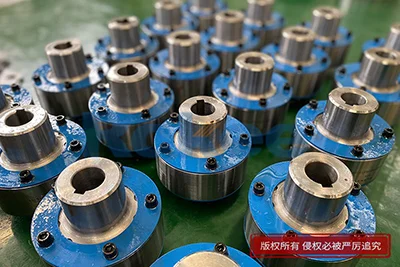
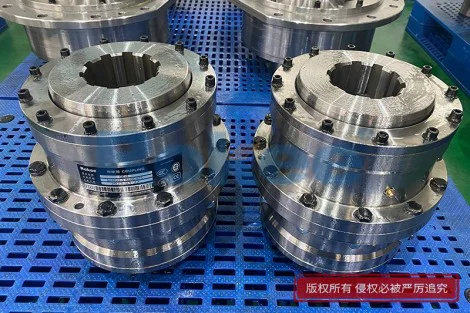
The structural specification of crown pin coupling constitutes the foundation of its overall performance, defining its assembly form, component matching relationship, and spatial adaptability in mechanical systems. The complete structure mainly consists of two symmetrical half-coupling hubs, evenly distributed crown pins, elastic buffer sleeves, and limit positioning components, with all parts designed for standardized assembly and disassembly. The half-coupling hubs feature precision-machined groove structures on their matching surfaces, which are uniformly arranged to ensure consistent stress distribution during torque transmission. The crown pins, as the core force-bearing parts, adopt a unique crown curved profile instead of conventional cylindrical structures, enabling multi-directional stress dispersion and improving the overall structural stability of the coupling. Elastic buffer sleeves are nested between crown pins and hub grooves, forming a flexible contact structure that avoids rigid friction and collision between metal components. The overall compact structural layout allows the coupling to be installed in limited mechanical spaces, while the modular component design simplifies daily inspection, part replacement, and equipment maintenance, effectively reducing the operational difficulty of mechanical transmission systems.
Torque transmission specification is the core performance index of crown pin coupling, determining its load-bearing capacity and applicable mechanical operation scenarios. This coupling is optimized for medium and continuous torque transmission, with its torque bearing range designed to adapt to most conventional industrial mechanical transmission demands. Its unique crown pin force transmission mode enables uniform load distribution on each pin during operation, avoiding local overstress and component fatigue damage caused by uneven torque conduction. Compared with common flexible couplings, it maintains stable torque transmission efficiency under dynamic operating conditions, with negligible power loss during long-term continuous rotation. In addition, the torque transmission specification also covers adaptive performance under variable load conditions, allowing the coupling to withstand instantaneous impact loads generated by equipment start-up, shutdown, and load fluctuation. The elastic matching between pins and buffer sleeves can buffer instantaneous torque peaks, protect connected shafts, bearings, and other precision components from impact damage, and ensure the continuity and stability of power transmission in variable-load mechanical systems.
Misalignment compensation specification is a key functional advantage of crown pin coupling, reflecting its adaptive capacity for installation errors and operational shaft deviation. In actual mechanical assembly, complete coaxiality of two connected rotating shafts is difficult to achieve due to machining errors, installation deviations, and equipment aging deformation. This coupling is specially designed to tolerate multiple types of shaft misalignment, including radial offset, angular deflection, and axial displacement. The crown curved structure of the pins and the elastic deformation space of buffer sleeves work together to produce flexible displacement compensation during rotation, eliminating additional bending stress and friction resistance caused by shaft misalignment. This compensation performance does not affect the basic torque transmission function, nor will it cause abnormal vibration or noise during equipment operation. Long-term operational adaptability ensures that the coupling can still maintain stable transmission performance after mechanical equipment undergoes slight structural deformation or position deviation, effectively extending the service life of the entire transmission system and reducing equipment failure rates caused by shaft misalignment.
Material specification directly determines the durability, wear resistance, and environmental adaptability of crown pin coupling, forming the basic guarantee of its long-term stable operation. The metal hubs and crown pins are made of high-strength structural materials with excellent tensile strength, hardness, and fatigue resistance, which can resist long-term rotary friction, mechanical impact, and cyclic load fatigue. Precision forging and machining processes are adopted for metal components to ensure uniform material density and stable structural performance, avoiding deformation or fracture under continuous mechanical action. The elastic buffer sleeves are made of high-elasticity polymer materials with excellent damping performance, aging resistance, and temperature adaptability. These elastic materials can maintain stable elastic deformation capacity under long-term compression and friction, without obvious aging hardening or elastic failure. The differentiated material matching of rigid force-bearing parts and flexible buffer parts realizes the complementary advantages of structural strength and damping performance, enabling the coupling to adapt to continuous high-frequency operation and harsh working environments with dust, humidity, and slight temperature changes.
Vibration and noise reduction specification is an important functional feature of crown pin coupling, optimizing the operational stability of mechanical transmission systems. In high-speed rotating equipment, rigid transmission structures often produce severe vibration and friction noise due to rigid contact and instantaneous load changes. The crown pin coupling uses flexible contact transmission between elastic sleeves and metal pins to replace full rigid meshing and force transmission, effectively absorbing and isolating mechanical vibration generated during equipment operation. When the equipment operates stably or undergoes load fluctuations, the elastic components can buffer high-frequency vibration waves, reduce vibration conduction between the driving shaft and driven shaft, and avoid vibration resonance of the entire mechanical structure. At the same time, the uniform stress distribution and smooth contact structure of crown pins eliminate local friction and impact noise caused by uneven force. This excellent vibration and noise reduction performance not only improves the working environment of mechanical equipment but also reduces vibration-induced wear of precision matching parts, maintaining the long-term operational accuracy of the transmission system.
Operational and durability specifications define the long-term service performance and application economy of crown pin coupling in mechanical systems. This coupling is designed for long-cycle continuous operation, with all structural components optimized for fatigue resistance and wear resistance to adapt to 24-hour continuous rotary working conditions. The reasonable structural gap and elastic buffer design avoid rigid wear of metal parts, greatly reducing the wear rate of core components. Under normal working conditions, the coupling can maintain stable transmission performance for a long time without frequent replacement or maintenance. Its operational specification also includes excellent start-stop adaptability, which can withstand frequent equipment start and stop impacts without structural damage or performance attenuation. In addition, the coupling has good anti-loosening and anti-deformation capabilities, and will not produce component displacement or structural failure due to long-term rotary centrifugal force and mechanical vibration. The reliable durability and low maintenance characteristics make it suitable for industrial production equipment that requires continuous and stable operation, reducing equipment downtime and maintenance costs.
Installation and adaptability specifications reflect the practical application value of crown pin coupling in different mechanical scenarios, covering assembly requirements and scenario matching performance. The coupling features a simple and intuitive assembly structure, with standardized component sizes and matching interfaces, enabling fast positioning and installation without complex debugging processes. It is compatible with most conventional shaft diameter specifications of mechanical equipment, with strong universality in general industrial transmission systems. Its compact structural design adapts to various installation spaces, including closed and narrow mechanical cavities, and can be flexibly arranged in horizontal, vertical, and inclined transmission structures. In terms of working condition adaptability, it can operate stably in medium-speed and medium-load transmission scenarios, and can also adapt to intermittent operation and variable-speed working modes. Meanwhile, the disassembly-free maintenance design allows daily inspection and fault troubleshooting without disassembling the entire transmission shaft system, greatly improving the convenience of equipment operation and maintenance and meeting the diverse application needs of different mechanical transmission systems.
Tags: Elastic Pin Couplings , Shear Pin Couplings , Flexible Pin Couplings , Crown Pin Couplings , Pin Couplings , sandwich panel machine , pu sandwich panel line
« Specifications of Crown Pin Coupling » Update Date: 2026/9/1
URL: https://www.rokee.com/en/blog/specifications-of-crown-pin-coupling.html
Contact
If you require custom machined couplings, please contact Rokee via the contact information below for inquiries.
Email: Rokee@Rokee.com
 WeChat