Tire Couplings Manufacturer
Tire couplings are essential flexible transmission components widely adopted in modern industrial mechanical systems, serving as a critical link for power transmission between driving and driven equipment. Structurally composed of durable metal hubs and high-elasticity rubber tire elements, these couplings stand out from traditional rigid and flexible coupling types due to their unique torsionally soft performance and comprehensive misalignment compensation capabilities. They are designed to address common operational challenges in mechanical transmission, including shaft misalignment, vibration interference, and sudden impact loads during equipment operation. By leveraging the elastic deformation of rubber materials, tire couplings can effectively buffer mechanical shocks, dampen operational vibrations, and compensate for angular, parallel, and axial shaft deviations generated during assembly and long-term operation. This versatile functionality enables them to stabilize power transmission efficiency, reduce mechanical wear, and extend the service life of supporting equipment, making them a preferred solution for diverse industrial machinery operating under variable and harsh working conditions.
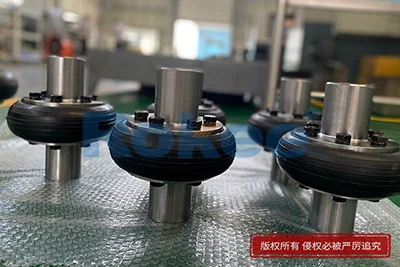
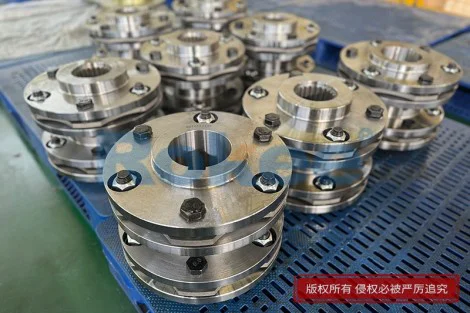
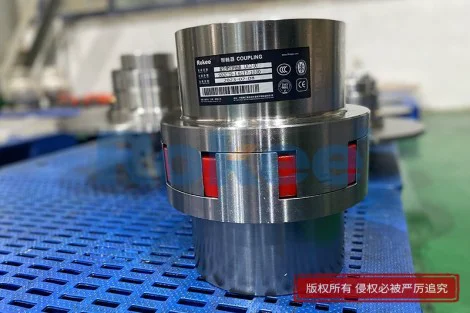
The fundamental structural design of tire couplings lays a solid foundation for their superior operational performance, integrating rigid metal structural parts and flexible rubber functional parts to achieve a perfect balance between transmission stability and deformation adaptability. The metal hubs on both sides are precision processed with high structural rigidity and wear resistance, ensuring stable connection with equipment shafts and reliable torque transmission during long-term continuous operation. The core functional part, the rubber tire element, adopts an integrated or split flexible structure with optimized rubber formula, endowing it with excellent elasticity, toughness and anti-aging performance. Unlike other elastomeric couplings with limited deformation space, the tire-shaped flexible structure provides a larger elastic deformation range, which can naturally adapt to minor shaft position changes caused by equipment vibration, thermal expansion and mechanical settlement. This integrated structure avoids rigid stress concentration during power transmission, effectively dispersing instantaneous impact force generated by equipment start-stop and load fluctuation, thus protecting key mechanical parts such as motors, reducers and transmission shafts from fatigue damage and abnormal wear.
One of the most prominent advantages of tire couplings is their exceptional multi-directional misalignment compensation ability, which solves the common pain point of shaft alignment deviation in industrial equipment operation. In actual industrial production, it is difficult to achieve absolute precise alignment of two connected shafts during equipment installation, and long-term mechanical operation will further produce subtle shaft offset due to vibration, temperature change and foundation settlement. Tire couplings can flexibly adapt to angular deviation, parallel offset and axial displacement of shafts through the elastic torsion and bending deformation of rubber tire elements. This powerful compensation performance eliminates the additional mechanical stress caused by shaft misalignment in the transmission system, avoiding abnormal vibration, noise and accelerated component aging problems that often occur in rigid couplings under offset conditions. Whether in precision light-duty transmission equipment or heavy-duty industrial machinery with large operating load fluctuations, this adaptive misalignment tolerance can maintain continuous and stable power transmission, greatly reducing the failure rate of transmission systems.
Superior vibration damping and shock absorption performance makes tire couplings irreplaceable in high-vibration and impact-intensive industrial scenarios. Industrial mechanical operation often involves instantaneous load changes, frequent start-stop actions and periodic mechanical vibration, which will generate continuous torsional vibration and impact load in the transmission chain. These unstable mechanical energies will not only reduce transmission efficiency, but also cause long-term fatigue damage to precision mechanical components. The high-elasticity rubber tire element of tire couplings acts as a natural buffer medium, which can effectively absorb and dissipate torsional vibration and instantaneous impact energy generated during equipment operation. It isolates the transmission of vibration and shock between the driving end and the driven end, preventing vibration resonance of the whole equipment system. For mechanical equipment operating in harsh working environments with frequent load fluctuations, this vibration isolation and shock absorption function can significantly optimize equipment operating status, reduce operational noise, and greatly improve the overall stability and safety of mechanical systems.
Tire couplings feature convenient installation, maintenance-free operation and low comprehensive operating cost, bringing high economic benefits to industrial production and equipment operation. The optimized modular structure design enables the flexible tire element to be installed and replaced radially without moving the connected equipment or re-calibrating shaft alignment, which greatly simplifies daily maintenance and fault replacement procedures. Compared with gear couplings and chain couplings that require regular lubrication and oil seal replacement, tire couplings adopt fully sealed flexible rubber structure with no need for lubrication maintenance throughout the service cycle, eliminating the cost of lubricating materials and regular manual maintenance. Meanwhile, the high-quality rubber formula has excellent anti-aging, wear-resistant and anti-fatigue properties, which can maintain stable elastic performance for a long time under continuous operation, high temperature and variable load conditions. The long service life and low failure rate effectively reduce equipment downtime and replacement frequency, helping enterprises save a lot of equipment operation and maintenance costs and improve production continuity.
The wide application adaptability of tire couplings enables them to cover diverse industrial fields and complex working condition scenarios. Relying on their stable transmission performance, strong environmental adaptability and excellent fault tolerance, they are widely applied in conventional mechanical equipment such as industrial fans, water pumps, compressors and mixers, ensuring stable and efficient power transmission for general production equipment. In heavy industrial fields including mining machinery, construction equipment and metallurgical machinery, tire couplings can withstand heavy load impact and harsh working environments such as dust and temperature fluctuation, maintaining reliable operational performance for high-intensity working machinery. In addition, they also show outstanding adaptability in light industry processing, chemical production and logistics conveying equipment, effectively solving the problems of vibration interference and shaft offset in precision production equipment. This multi-scenario adaptability makes tire couplings a universal power transmission component suitable for both light-duty precision transmission and heavy-duty high-intensity operation.
The material technology and production process optimization of tire couplings continuously improve their comprehensive performance and operational reliability. High-performance rubber composite materials are selected for the flexible tire elements, with adjusted formula ratios according to different working condition characteristics to balance elasticity, hardness and mechanical strength. The optimized vulcanization process enhances the bonding tightness and structural stability of rubber materials, effectively avoiding cracking, deformation and aging failure caused by long-term elastic deformation and load impact. The metal hubs adopt precision forging and finishing process to ensure uniform structural density and high dimensional accuracy, realizing tight and stable matching with equipment shafts. Strict production quality control is implemented in every production link from raw material screening, processing and forming to finished product inspection, ensuring that each batch of products has consistent performance stability. Continuous technological iteration and process upgrading enable modern tire couplings to adapt to higher speed, larger load and more complex working conditions, meeting the increasingly stringent performance requirements of modern industrial mechanical transmission systems.
As modern industrial machinery develops towards high efficiency, high stability and low maintenance, tire couplings show broad development prospects and irreplaceable application value in the power transmission component industry. Their unique flexible transmission mechanism, excellent misalignment compensation and vibration damping performance can well match the development trend of modern industrial equipment towards high-speed operation and variable load operation. Compared with other types of couplings, tire couplings have obvious comprehensive advantages in structural simplicity, operational stability, maintenance convenience and environmental adaptability, which can effectively help enterprises optimize equipment operation efficiency and reduce overall operating costs. With the continuous upgrading of industrial manufacturing technology and the expansion of industrial application scenarios, the material formula and structural design of tire couplings will continue to be optimized, and their performance in high temperature resistance, wear resistance and fatigue resistance will be further improved. They will continue to serve as key basic components of mechanical transmission systems, supporting the stable and efficient operation of various industrial mechanical equipment.
Tags: Rubber Tire Couplings , Tire Couplings , sandwich panel machine , pu sandwich panel line
« Tire Couplings Manufacturer » Update Date: 2026/8/13
URL: https://www.rokee.com/en/blog/tire-couplings-manufacturer.html
Contact
If you require custom machined couplings, please contact Rokee via the contact information below for inquiries.
Email: Rokee@Rokee.com
 WeChat