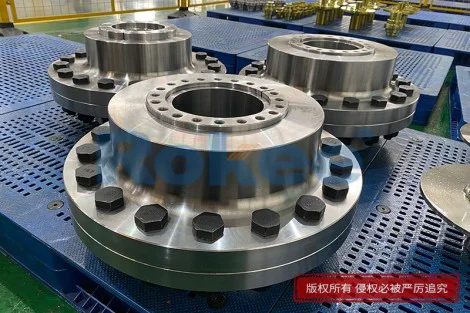
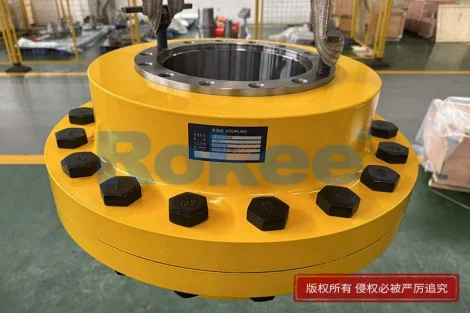
Spider Couplings
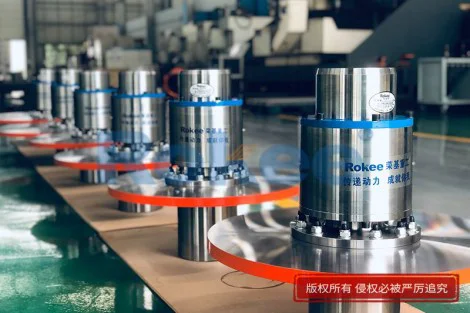
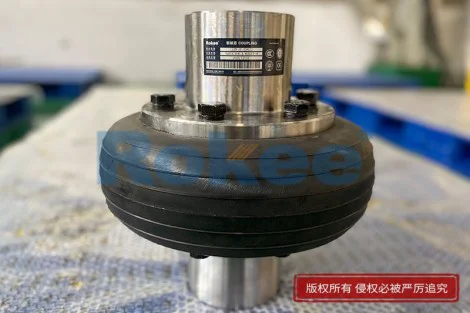
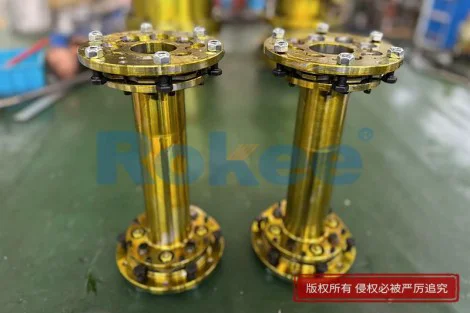
Rokee is a manufacturer of spider couplings from china, we can provide non-standard custom spider couplings based on parameters or drawings supplied by customers, with export support available.

In the intricate ecosystem of mechanical power transmission, the stability, efficiency, and durability of rotating equipment rely heavily on seemingly small but indispensable connecting components. Among all flexible shaft coupling solutions, spider couplings have emerged as one of the most widely adopted and versatile options in modern industrial machinery, serving as a critical bridge between driving and driven shafts across countless mechanical systems. Also commonly recognized as curved jaw couplings in professional industrial circles, this type of coupling integrates precise mechanical structure with flexible elastic performance, perfectly balancing rigid torque transmission and flexible vibration absorption, which makes it irreplaceable in medium and low-speed power transmission scenarios that demand stability, shock resistance, and misalignment compensation.


The fundamental design logic of spider couplings stems from solving the core contradictions in traditional rigid connection structures. In conventional shaft connection modes, rigid couplings can achieve accurate torque transmission but lack adaptability to assembly errors and operational deformation. Tiny deviations in shaft alignment, thermal expansion during equipment operation, or mechanical vibration generated by load changes will produce additional stress on shafts, bearings, and transmission components, accelerating component wear and even causing premature equipment failure. In contrast, the structural design of spider couplings fundamentally optimizes this problem by introducing an intermediate elastic buffer structure, realizing organic integration of rigid transmission and flexible protection.
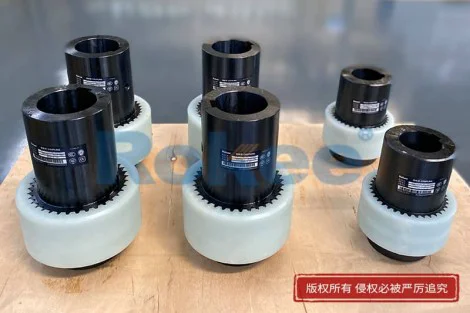
The overall structure of a spider coupling is simple, compact, and highly practical, consisting of two symmetrical metal hubs and a star-shaped elastic intermediate component universally called a spider. The two metal hubs feature concave claw structures arranged in a regular circumferential pattern, which mesh with the lobe structures of the central elastic spider in a seamless fitting state. The precision-machined central bore of each hub can perfectly match the outer diameter of equipment shafts, with diversified connection methods such as keyway positioning and clamping fixation available to ensure zero-slip connection between the coupling and the shaft. This reliable connection foundation guarantees that torque can be stably transmitted without power loss during high-speed rotation and variable load operation.
The core functional component of the entire coupling is the star-shaped elastic spider, whose material characteristics and structural elasticity determine the comprehensive performance of the coupling. Industrial-grade spider components are mostly made of high-performance elastomeric materials including polyurethane, nitrile rubber, and modified natural rubber compounds. Each material system has unique performance advantages, adapting to different industrial operating environments and load conditions. Polyurethane materials are favored for their excellent wear resistance, high torsional stiffness, and strong bearing capacity, suitable for heavy-load and long-term continuous operating scenarios. Nitrile rubber materials excel in oil resistance, aging resistance, and low-temperature adaptability, maintaining stable elastic performance in harsh environments with lubricant contamination and variable temperatures. Modified natural rubber features superior shock absorption and flexible deformation capacity, ideal for light-load equipment that requires sensitive vibration damping and noise reduction.
The working principle of spider couplings follows the basic law of elastic deformation torque transmission. During equipment operation, the driving shaft drives the connected active hub to rotate synchronously. The claw structures of the active hub closely fit and push the lobes of the central elastic spider, causing mild torsional compression and deformation of the spider. Relying on the elastic restoring force of the deformed spider, the rotational torque is stably transmitted to the driven hub, thereby driving the driven shaft to operate synchronously and completing the entire power transmission process. Unlike rigid transmission structures that rely on hard contact extrusion, the elastic deformation transmission mode of spider couplings forms a flexible buffer layer in the power transmission link, bringing multiple functional advantages to mechanical operation.
One of the most prominent core advantages of spider couplings is their comprehensive misalignment compensation capability, which can adapt to three common types of shaft displacement deviations in actual mechanical operation. In industrial assembly and equipment operation, it is almost impossible to achieve absolute perfect alignment of driving and driven shafts. Processing errors of mechanical parts, assembly deviations, thermal expansion and contraction during operation, and slight structural deformation caused by long-term load operation will lead to angular misalignment, radial parallel misalignment, and axial displacement between shafts. The flexible elastic structure of the spider can effectively compensate for these deviations through micro deformation. Angular misalignment is offset by the relative tilt adaptation between the hub claws and the spider lobes; radial parallel misalignment is buffered by the radial compression deformation of the elastic spider; axial displacement is accommodated by the reserved assembly gap and axial flexible deformation of the structure. This multi-dimensional compensation ability avoids additional shear stress and friction loss caused by shaft misalignment, greatly reducing the operating load of bearings and shafts.
Efficient vibration damping and shock buffering performance is another key value of spider couplings in industrial applications. Mechanical equipment will inevitably generate instantaneous impact load and periodic vibration during startup, shutdown, load switching, and continuous operation. Instantaneous peak torque generated by sudden startup or emergency shutdown is easily transmitted along the rigid transmission chain, causing impact damage to precision components inside the equipment. The elastomeric spider can absorb and dissipate most of the impact energy through rapid elastic deformation and recovery, effectively suppressing the transmission of instantaneous peak torque. For periodic mechanical vibration generated by rotating operation, the elastic material can continuously absorb vibration energy and convert it into tiny thermal energy for dissipation, reducing vibration amplitude and vibration frequency of the entire transmission system. This vibration damping effect not only optimizes the operating stability of the equipment but also reduces mechanical noise generated by friction and vibration, improving the overall operating environment of industrial production lines.
In terms of power transmission efficiency, spider couplings maintain high torsional stiffness while possessing flexible performance, achieving a perfect balance between flexibility and transmission accuracy. Many flexible coupling products on the market sacrifice transmission stiffness for vibration damping performance, resulting in excessive torsional deflection during torque transmission, which affects the synchronization accuracy of rotating equipment. However, the optimized star structure and high-performance elastic materials of spider couplings ensure low torsional deformation under rated load. The stable structural rigidity enables almost lossless transmission of rated torque, ensuring high synchronization of the driving and driven shafts during operation. This feature makes spider couplings applicable not only to ordinary conveying and power equipment but also to precision mechanical scenarios that require strict speed synchronization and position accuracy.
The wide application adaptability of spider couplings stems from their excellent environmental adaptability and structural compatibility. Thanks to the diversified material matching and standardized structural design, spider couplings can operate stably in complex working conditions such as variable temperature, humid, dusty, and slightly corrosive environments. The compact overall structure requires minimal installation space, adapting to limited assembly spaces of various integrated mechanical equipment. Meanwhile, the simple split structure brings extremely convenient installation, disassembly, and maintenance processes. The whole coupling can be assembled and disassembled without moving the connected equipment, which greatly improves the efficiency of daily maintenance and equipment overhaul, and reduces the downtime loss of industrial production.
In the industrial field, spider couplings cover a wide range of typical equipment application scenarios, penetrating various links of power transmission and mechanical operation. In fluid power equipment such as industrial pumps and fans, spider couplings effectively buffer the periodic vibration generated by impeller rotation and the fluid impact load during medium transmission, protecting pump shafts and motor bearings from fatigue damage and extending the service life of fluid transmission equipment. In material conveying systems such as belt conveyors and screw conveyors, the couplings resist the instantaneous impact load generated by uneven material feeding and startup acceleration, ensuring stable and continuous operation of conveying equipment and avoiding material accumulation and equipment jamming caused by transmission jitter.
In general industrial processing equipment including compressors, light-duty machine tools, and packaging machinery, spider couplings provide stable power transmission and precise speed synchronization. For intermittent operating processing equipment, their excellent shock resistance can adapt to frequent startup and shutdown cycles, reducing mechanical fatigue loss caused by frequent load changes. In agricultural machinery, environmental sanitation equipment, and outdoor mobile mechanical devices, spider couplings rely on their good environmental adaptability and anti-pollution performance to operate stably in dusty and humid outdoor working conditions, maintaining reliable transmission performance in long-term complex outdoor environments.
The service life and operational stability of spider couplings depend on scientific type selection and standardized use specifications. The core factors affecting the performance of the coupling include material hardness of the spider, rated torque capacity, and matching accuracy with equipment operating parameters. In actual industrial selection, it is necessary to comprehensively evaluate key parameters such as equipment operating speed, average load, peak impact load, and operating environment temperature. Working conditions with frequent impact loads require matching spider materials with high toughness and wear resistance; high-temperature operating environments need to select elastomeric materials with high-temperature aging resistance; low-speed and heavy-load scenarios prioritize coupling models with large rated torque to avoid structural deformation and performance attenuation caused by long-term overload operation.
Daily maintenance of spider couplings is simple and efficient, which is one of their important advantages compared with other complex flexible couplings. Conventional daily inspection only needs to check whether the elastic spider has aging deformation, surface cracking, excessive wear, or permanent deformation caused by long-term compression. For equipment operating continuously for a long time, regular visual inspection and periodic replacement of vulnerable spider components can effectively avoid sudden equipment failure. The metal hub has high structural strength and strong wear resistance, with a service life far exceeding that of the elastic spider. The replaceable modular design of the spider realizes partial component replacement without replacing the entire coupling, which greatly reduces the operational and maintenance cost of mechanical equipment and improves the economic efficiency of industrial production.
From the perspective of industrial mechanical design optimization, the popularization and application of spider couplings reflect the core design concept of balancing efficiency, stability, and economy in modern machinery. Traditional mechanical design often pursues excessive structural rigidity while ignoring the adaptive protection of the transmission system, leading to high failure rate of vulnerable parts and high maintenance costs. The design of spider couplings breaks this inherent thinking. Through reasonable flexible structure setting, it consumes and offsets harmful mechanical stress in the transmission process, protects core precision equipment components, and reduces the overall failure rate of the mechanical system. At the same time, its standardized and serialized production form ensures good versatility and interchangeability, which is convenient for unified matching and maintenance of various mechanical equipment in industrial production lines.
With the continuous upgrading of modern industrial machinery towards high precision, high stability, and low energy consumption, the performance advantages of spider couplings are further highlighted. In automated production lines that require continuous and stable operation, the low vibration, low noise, and high synchronization characteristics of spider couplings help improve the overall operational precision of automated equipment and reduce production errors caused by mechanical jitter. In energy-saving and consumption-reducing mechanical design, the efficient and low-loss transmission performance of spider couplings reduces invalid energy consumption in the power transmission process, realizing energy-saving optimization of mechanical operation. In intelligent mechanical equipment, the stable operating state of the coupling also provides a reliable mechanical foundation for sensor data acquisition and precise motion control, ensuring the accuracy and stability of intelligent control systems.
In conclusion, spider couplings, as mature and efficient flexible transmission components, rely on their simple and reliable structural design, excellent misalignment compensation capability, outstanding vibration damping and shock resistance, and wide application adaptability to occupy an important position in the field of industrial power transmission. They not only complete the basic mechanical function of torque transmission but also undertake the important task of protecting mechanical systems, optimizing operating conditions, and reducing maintenance costs. Whether in ordinary industrial conventional equipment or precision automated mechanical systems, spider couplings can provide stable and reliable transmission support. With the continuous progress of material technology and mechanical design technology, the performance of spider couplings will be further optimized, and their application scope will continue to expand, providing more solid basic component guarantee for the high-quality operation of modern industrial machinery.
« Spider Couplings » Update Date: 2026/7/15
Contact
If you require custom machined couplings, please contact Rokee via the contact information below for inquiries.
Email: Rokee@Rokee.com
 WeChat