Plum Couplings
Rokee is a manufacturer of plum couplings from china, we can provide non-standard custom plum couplings based on parameters or drawings supplied by customers, with export support available.

In the intricate and interconnected world of mechanical transmission systems, the pursuit of stable, efficient, and durable power connection has always been a core theme of industrial technological progress. Among numerous flexible transmission components, the plum coupling stands out as a sophisticated and practical structural design, silently supporting the normal operation of various mechanical equipment with its unique mechanical properties and ingenious structural logic. As a classic type of elastic flexible coupling, it integrates the advantages of vibration damping, deviation compensation, impact resistance and stable torque transmission, becoming an indispensable basic component in modern industrial manufacturing, precision motion control and general mechanical transmission fields. Far more than a simple mechanical connecting part, it embodies the industrial design philosophy of balancing rigidity and flexibility, stability and adaptability, and reliability and economy, and has become a key link to ensure the coordination and consistency of mechanical operation.

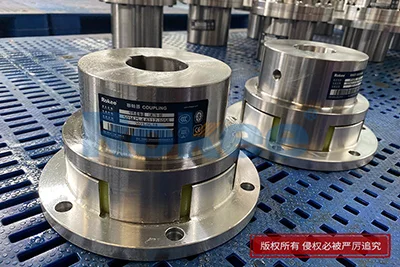
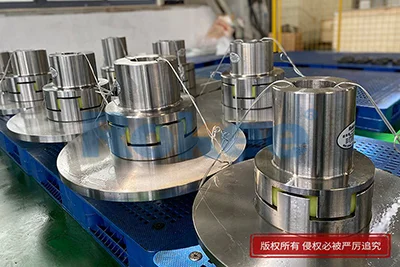
The unique naming of the plum coupling stems entirely from the bionic shape of its core elastic component. The middle flexible part of the coupling is designed with multi-lobe petal structures, which are neatly arranged in a circular distribution, vividly resembling the blooming posture of plum blossoms in nature. This bionic design is not a superficial aesthetic pursuit, but a functional optimization derived from in-depth mechanical principle research. Each petal-like elastic unit can independently bear pressure, buffer force and release deformation stress during operation, laying a structural foundation for the coupling’s excellent comprehensive performance. Different from rigid couplings that rely on hard contact for force transmission and lack deformation tolerance, the plum coupling introduces flexible elastic elements into the rigid connection system of mechanical shafts, realizing a perfect transition from rigid fixed connection to flexible adaptive connection.
The overall structural composition of the plum coupling is concise and rigorous, without redundant accessories or complex assembly procedures, which is one of the important reasons for its wide popularization in the industrial field. The complete set of components only includes two symmetrically arranged metal claw hubs and a central plum-shaped elastic body. The metal hubs are usually made of high-strength steel or lightweight alloy materials, with uniform and sturdy claw structures distributed on the end face. The claw parts of the two hubs are arranged in a staggered and embedded manner, and the gap between the staggered claws is exactly filled by the plum-shaped elastic body. This embedded assembly method enables the three parts to form an integrated force transmission structure after installation. In the working state, the torque is stably transmitted from one shaft to the other through the compression deformation of the elastic petals, rather than direct hard collision between metal parts. This structural design fundamentally avoids the mechanical loss and component wear caused by rigid friction and impact.
The selection of materials for the core elastic body directly determines the service performance and service life of the plum coupling. In industrial practical applications, polyurethane and high-performance rubber are the most mainstream elastic materials. Polyurethane materials have outstanding wear resistance, high tensile strength and excellent compression resilience, and can maintain stable elastic performance for a long time under continuous high-load operation. It is not easy to produce permanent deformation, aging and cracking, and is suitable for most medium and high-speed transmission working conditions. High-quality rubber materials focus on better low-temperature toughness and vibration absorption performance, which can maintain flexible adaptability in low-temperature environments and effectively filter high-frequency vibration generated by mechanical operation. In addition, the hardness of the elastic body can be adjusted according to actual working requirements. Soft elastic bodies are more suitable for working conditions that require high vibration damping and impact buffering, while hard elastic bodies can provide higher torsional stiffness and torque transmission efficiency, meeting the precision operation needs of high-precision mechanical equipment.
The most core functional advantage of the plum coupling lies in its excellent multi-dimensional deviation compensation capability. In the actual installation and operation of mechanical equipment, it is almost impossible to achieve absolute coaxial alignment of the driving shaft and the driven shaft. Processing errors of parts, installation deviations, thermal deformation during equipment operation, and slight vibration displacement will lead to axial, radial and angular misalignments between the two shafts. These tiny deviations will cause additional load, friction and vibration in the transmission process, accelerate component fatigue and wear, and even affect the operating accuracy and stability of the entire equipment. The plum coupling can effectively adapt to these subtle deviations through the elastic deformation of the petal structure. The elastic petals can produce micro-deformation in multiple directions to offset the dislocation displacement of the two shafts, ensure uniform and stable torque transmission, avoid local stress concentration, and greatly reduce the failure rate of mechanical transmission links.
Vibration damping and impact buffering are another key performance that makes the plum coupling widely favored in the industrial field. Many mechanical equipment will generate instantaneous impact force and periodic vibration during start-up, shutdown, load switching and variable-speed operation. These dynamic loads will cause rigid impact between transmission components, resulting in equipment noise, part wear and even structural fatigue damage. The plum-shaped elastic body, as a flexible buffer medium, can absorb and dissipate most of the impact energy and vibration energy through its own elastic deformation. When the equipment starts up with load, the elastic petals slowly compress and bear the torque, avoiding instantaneous rigid impact; when the equipment operates stably, the continuous micro-vibration generated by mechanical operation is filtered and attenuated by the elastic structure, making the overall operation of the equipment more stable and quiet. This vibration reduction and buffering effect not only protects the transmission shaft, bearing and other core components, but also effectively improves the operating environment of the equipment and extends the overall service life of the mechanical system.
In terms of transmission accuracy, the optimized structural design of the plum coupling enables it to meet the high-precision operation requirements of modern precision machinery. The zero-backlash design adopted by the precision plum coupling eliminates the rotational clearance between the two hubs and the elastic body. The elastic body is tightly embedded in the claw gap of the metal hub, and there is no idle stroke or lag in the torque transmission process. This enables the coupling to realize synchronous and accurate power transmission in high-speed and high-precision motion control systems, ensuring that the rotation speed and position of the driven shaft completely follow the driving shaft without deviation. This high-precision transmission performance is crucial for precision processing equipment, automated motion systems and intelligent manufacturing equipment, which puts forward strict requirements on positioning accuracy and motion consistency.
The practical application advantages of the plum coupling are also reflected in its extremely high convenience in installation, maintenance and use. Compared with other types of flexible couplings that require lubrication, complex calibration and regular maintenance, the plum coupling belongs to a maintenance-free mechanical component in the whole life cycle. Its force transmission depends on the compression of the elastic body, and there is no relative sliding friction between metal parts, so there is no need to add lubricating oil or grease, avoiding the pollution of lubricants to the equipment and the working environment. The assembly structure is simple and intuitive, with no complicated assembly procedures or special installation tools required. The disassembly and replacement of components can be completed quickly, which greatly reduces the downtime and maintenance cost of equipment. In addition, the overall structure of the coupling is compact, occupying a small installation space, and can adapt to various limited installation environments of mechanical equipment, with strong environmental adaptability.
The plum coupling has a very wide range of application scenarios, covering almost all fields of general machinery and precision industrial equipment. In traditional industrial fields such as water pump transmission, fan operation and conveyor equipment, it relies on good vibration damping and deviation compensation performance to ensure the stable operation of medium and low-speed transmission equipment and reduce equipment failure rates. In the field of precision manufacturing and numerical control processing equipment, high-precision plum couplings are used to connect motors and transmission screws, ensuring the positioning accuracy and motion stability of processing equipment, and providing reliable technical support for high-precision product processing. In automated production lines, robotic transmission systems and light industrial mechanical equipment, the coupling’s flexible transmission characteristics can adapt to frequent start-stop and variable-load operation conditions, effectively buffering dynamic impact and protecting precision transmission components.
In different working environments, the plum coupling can always maintain stable comprehensive performance, showing excellent environmental adaptability. It can work continuously in conventional indoor and outdoor industrial environments, and can also adapt to slightly dusty and humid working conditions. By adjusting the material hardness and structural specifications of the elastic body, it can meet the operation requirements of low-temperature cold environments and normal-temperature conventional environments. For high-speed rotating working conditions, the optimized petal structure can reduce centrifugal force and operational vibration, ensuring smooth high-speed transmission; for high-load working conditions, the high-strength elastic material and thickened petal structure can bear greater torque pressure and avoid structural damage caused by overload. This diversified adaptability makes the plum coupling have irreplaceable application value in multi-scenario industrial production.
From the perspective of industrial system operation, the value of the plum coupling is far beyond the simple power connection function. It is a key component that regulates the operating state of the entire mechanical transmission system. In a complete mechanical system, all components are interconnected and interacted. The tiny vibration, displacement and impact in the transmission link will be transmitted to the entire equipment system, affecting the overall operating state. The plum coupling acts as a "buffer regulator" and "error compensator" in the system. It eliminates the adverse effects of installation errors and operational deviations, weakens the vibration and impact of the transmission process, makes the power transmission more uniform and stable, and enables all parts of the mechanical equipment to operate in a coordinated and consistent state. This subtle and accurate regulation effect greatly improves the overall operational efficiency and stability of mechanical equipment.
With the continuous upgrading of modern industrial manufacturing towards high precision, high efficiency and high intelligence, the performance requirements for basic mechanical components are also constantly improving, which also promotes the continuous optimization and innovation of plum coupling technology. Modern optimized plum couplings adopt more precise bionic petal structural design, with more uniform stress distribution of each elastic unit, further improving the stability and fatigue resistance of long-term operation. The new composite elastic materials have better aging resistance, high temperature resistance and compression resistance, breaking through the performance limitations of traditional materials and enabling the coupling to adapt to more extreme industrial working conditions. At the same time, the standardized and serialized production design enables the plum coupling to form complete specification systems, which can accurately match the transmission needs of different types, different powers and different precision equipment, realizing efficient and accurate industrial matching.
In the entire industrial basic component industry, the plum coupling has become a model of balanced mechanical design with its simple structure, reliable performance, diverse adaptability and low maintenance cost. It does not pursue overly complex structural design, but focuses on solving the core pain points of mechanical transmission such as vibration, deviation, impact and wear. It realizes the organic unity of structural simplicity and functional comprehensiveness, and perfectly interprets the industrial design concept of "practicality, stability and efficiency". Whether it is large-scale industrial production equipment or small and medium-sized precision mechanical equipment, the plum coupling can play a stable and reliable connection role, providing basic guarantee for the normal operation of industrial mechanical systems.
Looking at the development of industrial machinery, every advanced mechanical system is inseparable from the support of excellent basic components. The seemingly ordinary plum coupling bears the important task of power transmission and operation regulation in the mechanical system. Its unique flexible connection principle, excellent comprehensive performance and wide application scenarios make it an indispensable core component in modern mechanical transmission systems. With the continuous progress of industrial technology and the continuous expansion of industrial application scenarios, the plum coupling will continue to complete technological iteration and performance optimization, maintain its unique application advantages in the field of flexible transmission, and continuously provide stable and reliable basic support for the high-quality development of modern industrial manufacturing industry. The subtle mechanical wisdom contained in its plum-shaped structure will always shine in the development of industrial machinery, witnessing the continuous progress and innovation of mechanical basic technology.
« Plum Couplings » Update Date: 2026/7/15
Contact
If you require custom machined couplings, please contact Rokee via the contact information below for inquiries.
Email: Rokee@Rokee.com
 WeChat