Working Principle of Barrel Gear Coupling
Barrel gear couplings stand as one of the most reliable and widely adopted mechanical transmission components in modern industrial machinery, renowned for their exceptional comprehensive performance in torque transmission, misalignment compensation and operational stability. Unlike conventional straight-tooth gear couplings that suffer from concentrated stress and poor adaptive capacity during operation, the unique barrel-shaped tooth profile design endows this type of coupling with flexible adjustability and rigid transmission characteristics, enabling it to adapt to complex and variable shaft system operating conditions while maintaining efficient and stable power transmission. The core working logic of barrel gear couplings revolves around the precise meshing transmission of internal and external gear pairs and the flexible adaptive adjustment of curved tooth surfaces, which organically combines high-rigidity torque output and multi-directional displacement compensation, making it applicable to heavy-load, high-speed and continuous-operation mechanical scenarios that put forward strict requirements on transmission accuracy and stability.
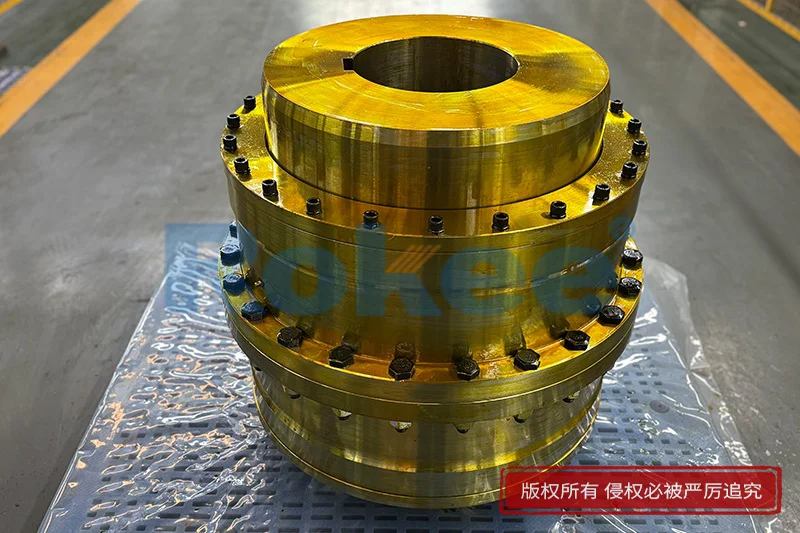
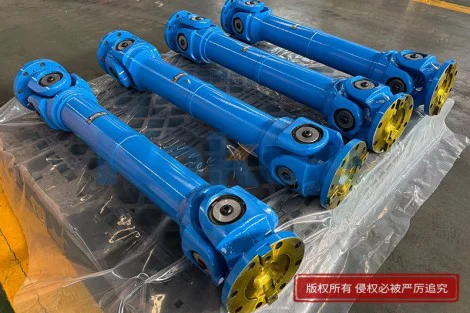
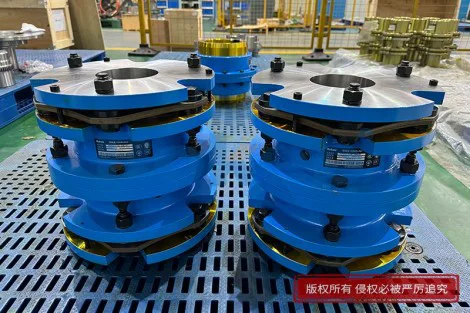
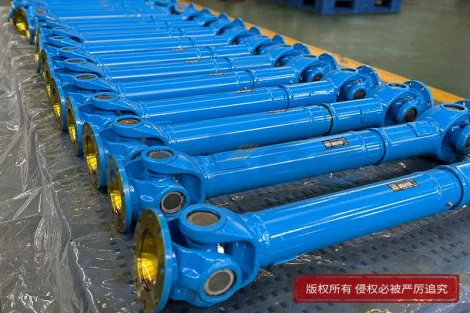
To fully understand the working principle of barrel gear couplings, it is essential to first clarify their basic structural composition, as the unique structural design lays the foundation for their superior working performance. The overall structure of the barrel gear coupling is compact and streamlined without redundant transmission structures, mainly consisting of two external gear hubs with barrel-shaped teeth, two internal gear sleeves, a closed lubrication sealing system and matching fastening components. The most distinctive structural feature lies in the curved profile of the external gear teeth, which are processed into a smooth arc barrel shape through precision machining, differing fundamentally from the linear tooth profile of ordinary gear couplings. The internal gear teeth inside the sleeve adopt a standard tooth profile that matches the barrel-shaped external teeth in modulus and tooth number, ensuring full and uniform meshing contact between tooth surfaces. The two external gear hubs are respectively fixed on the driving shaft and driven shaft of the equipment, while the internal gear sleeves sleeve the external gear teeth and connect the two hubs into a complete transmission whole. The supporting sealing structure can effectively lock internal lubricating grease and isolate external dust, moisture and abrasive impurities, creating a stable internal operating environment for gear meshing and avoiding abnormal wear caused by poor lubrication or contamination.
The basic power transmission principle of barrel gear couplings follows the mechanical meshing theory of gear transmission, realizing efficient and lossless transfer of rotational torque and motion between adjacent shafts. In the ideal operating state where the driving shaft and driven shaft are completely coaxial and free of any displacement deviation, the power transmission process is simple and straightforward. When the driving equipment operates, it drives the driving shaft and the fixed external gear hub to perform synchronous rotational motion. The barrel-shaped external teeth on the hub mesh tightly with the internal gear teeth of the sleeve, and the uniform contact pressure between the tooth surfaces converts the rotational kinetic energy of the driving end into the rotational driving force of the sleeve. Subsequently, the sleeve transmits the rotational motion and torque to the external gear hub on the driven shaft side, thereby driving the driven shaft to rotate synchronously and completing the continuous transmission of mechanical power. In this ideal coaxial state, all meshing gear teeth share the load evenly, the contact stress on each tooth surface is consistent, and the transmission resistance is extremely small, achieving ultra-high transmission efficiency with almost no power loss during operation. The rigid meshing fit of the gear pairs ensures that the coupling will not produce obvious rotational hysteresis or angular deviation during power transmission, maintaining high-precision synchronous operation of the shaft system.
The core advantage and essential working characteristic of barrel gear couplings lie in their excellent multi-directional misalignment compensation capability, which solves the inherent defect of traditional rigid couplings that cannot adapt to shaft system displacement deviations. In actual industrial operation, it is almost impossible for the driving shaft and driven shaft to maintain absolute coaxial alignment permanently. Various objective factors will cause different types and degrees of relative displacement between shafts, including installation errors during equipment assembly, micro-settlement of the equipment foundation after long-term operation, thermal expansion and contraction of shaft components caused by operating temperature changes, and slight vibration displacement generated by high-speed operation of mechanical equipment. These deviations, if not effectively compensated, will cause severe eccentric wear of shaft parts, increased transmission resistance, sharp vibration and noise of the equipment, and even fatigue damage of key components in severe cases, seriously affecting the service life and operational stability of the entire mechanical system.
The special barrel-shaped curved tooth profile perfectly addresses the above problems through its flexible meshing adjustment mechanism. Different from straight teeth that only maintain linear contact during meshing, the arc structure of barrel-shaped teeth enables the tooth surface to achieve multi-point and surface contact within a certain offset range. When radial offset occurs between the driving shaft and the driven shaft, the gap between the internal and external gear teeth changes adaptively, and the smooth curved tooth surface can slide slightly in the radial direction without separating the meshing state, thereby offsetting the radial displacement deviation of the shaft system. In the case of angular deflection where the two shafts are not parallel, the two ends of the barrel-shaped teeth can produce adaptive contact angle changes. The curved tooth surface can always maintain a sufficient effective meshing area with the internal gear teeth under different deflection angles, avoiding the edge contact and stress concentration problems that are prone to occur with straight-tooth couplings under angular deviation. For axial displacement caused by thermal expansion or assembly gaps, the reserved reasonable tooth side gap of the gear pair and the movable fit between the sleeve and the hub allow a certain range of axial sliding of the shaft system, realizing effective compensation of axial displacement.
The stress distribution optimization mechanism in the working process is another important part of the working principle of barrel gear couplings, which determines their excellent load-bearing capacity and wear resistance. During the operation of ordinary straight-tooth gear couplings, once shaft misalignment occurs, the contact state of the gear teeth changes instantly, resulting in local edge contact, excessive instantaneous stress on individual tooth surfaces, and uneven load distribution among each gear tooth. Long-term operation under this unbalanced stress state will lead to rapid local wear, tooth surface peeling and even tooth breakage, greatly reducing the service life of the coupling. In contrast, the barrel-shaped tooth profile of the optimized design can disperse the concentrated contact stress to the entire meshing tooth surface under various misalignment conditions. The smooth arc transition of the tooth surface eliminates sharp stress mutation points, so that the contact stress of each meshing gear tooth remains uniform and stable within the allowable deviation range. Even under heavy-load and impact-load operating conditions, the curved tooth structure can buffer instantaneous impact force, avoid rigid impact between gear teeth, and protect the integrity of the tooth surface structure. This uniform stress distribution characteristic enables barrel gear couplings to bear larger torque loads than ordinary gear couplings of the same specification, and significantly improves the fatigue resistance and durability of the product.
Lubrication and sealing cooperation is an indispensable auxiliary working principle that guarantees the long-term stable operation of barrel gear couplings. The internal meshing operation of gear pairs requires continuous lubrication to reduce friction and wear, and the closed structural design of barrel gear couplings builds an independent lubrication protection space. During assembly, the interior of the coupling is filled with high-performance lubricating grease, which adheres to the surface of the meshing gear teeth to form a stable lubricating oil film. In the high-speed rotating process of the coupling, the relative sliding and rolling between the internal and external gear teeth continuously squeeze and renew the oil film, maintaining a low-friction contact state between tooth surfaces. This lubricating mechanism can effectively reduce friction resistance during power transmission, lower operating heat generation, and avoid thermal deformation of gear teeth caused by excessive friction heat. Meanwhile, the matching sealing components can completely isolate the internal lubrication cavity from the external environment, preventing external dust, metal debris, humid air and other pollutants from entering the meshing area. It also avoids the volatilization and leakage of internal lubricating grease, ensuring that the gear pair can always maintain a good lubricating state during long-term continuous operation. The perfect combination of lubrication and sealing effectively delays the wear rate of gear teeth, reduces maintenance frequency, and improves the overall operational reliability of the equipment.
In terms of dynamic operation characteristics, the working principle of barrel gear couplings also endows them with excellent vibration damping and noise reduction effects. In the process of high-speed power transmission, the slight adaptive sliding and flexible meshing of the curved gear teeth can buffer the micro-vibration generated by shaft system operation and equipment operation. Different from the rigid collision and friction of straight gear teeth, the smooth contact of barrel-shaped teeth reduces high-frequency friction vibration and impact noise during meshing. The uniform load distribution and stable meshing state avoid abnormal vibration caused by local overload and uneven stress, making the operation of the entire transmission system more stable and quiet. This dynamic stability is particularly important for high-speed operating equipment, which can effectively reduce the vibration fatigue of mechanical components and improve the overall operating accuracy of the equipment.
In summary, the superior working performance of barrel gear couplings stems from the organic integration of curved tooth meshing transmission, multi-directional misalignment compensation, uniform stress distribution and closed lubrication protection. Relying on the unique barrel-shaped tooth profile design, it breaks through the performance limitations of traditional gear couplings, realizing the perfect balance between rigid high-efficiency torque transmission and flexible shaft system deviation adaptation. It can stably cope with various complex operating conditions such as shaft displacement deviation, heavy load impact, high-speed continuous operation and temperature deformation in industrial production. With its compact structure, stable transmission, strong compensation ability and long service life, barrel gear couplings have become a key basic component to ensure the stable operation of mechanical transmission systems, and their unique working principle and structural advantages determine their irreplaceable position in modern industrial transmission equipment.
Tags: Gear Couplings , Motor Gear Couplings , Nylon Sleeve Gear Couplings , Tooth Gear Couplings , Sleeve Gear Couplings , Half Gear Coupling , Crown Gear Couplings , Curved Tooth Gear Couplings , Full Flex Gear Coupling , Full Gear Coupling , Spline Gear Coupling , Mill Motor Type Gear Coupling , Internal Gear Coupling , Industrial Gear Couplings , Hydraulic Pump Gear Couplings , Flexible Gear Couplings , Face Gear Couplings , Crowned Tooth Gear Couplings , Barrel Gear Couplings , sandwich panel machine , pu sandwich panel line
« Working Principle of Barrel Gear Coupling » Update Date: 2026/7/17
URL: https://www.rokee.com/en/blog/working-principle-of-barrel-gear-coupling.html
Contact
If you require custom machined couplings, please contact Rokee via the contact information below for inquiries.
Email: Rokee@Rokee.com
 WeChat