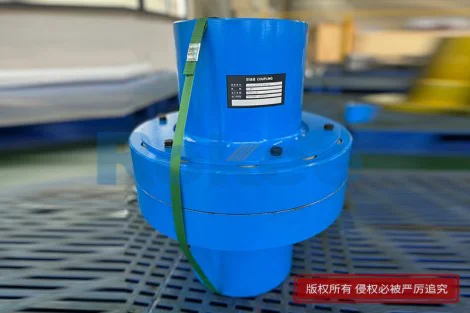
Diaphragm Couplings
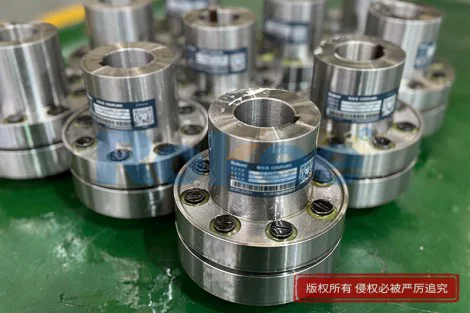
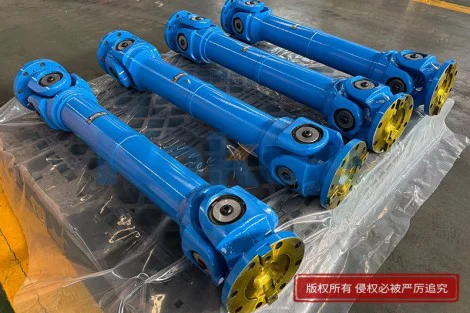
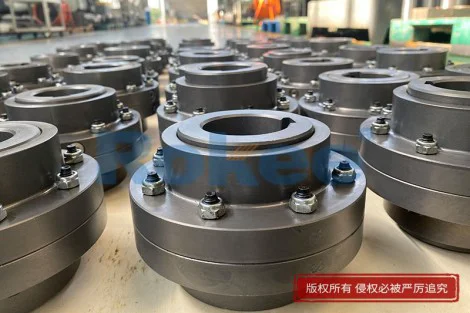
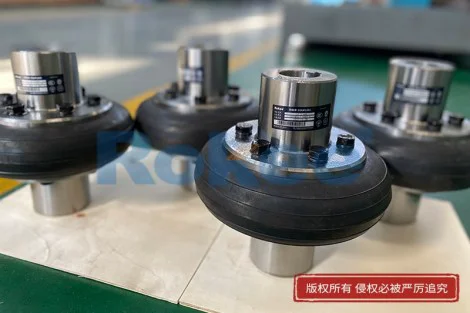
Rokee is a manufacturer of diaphragm couplings from china, we can provide non-standard custom diaphragm couplings based on parameters or drawings supplied by customers, with export support available.

In the sophisticated and dynamic field of modern mechanical power transmission, the stability, accuracy and durability of shaft connection components determine the overall operational efficiency and service life of rotating machinery systems. As a core type of all-metal flexible transmission component, diaphragm coupling has gradually replaced many traditional coupling structures and become a preferred solution for high-speed, high-precision and long-cycle continuous operation scenarios in various industries. It integrates efficient torque transmission, multi-dimensional misalignment compensation, ultra-low wear and maintenance-free operation, perfectly adapting to the increasingly stringent technical requirements of modern industrial equipment for power transmission stability and operational reliability. Different from conventional flexible couplings that rely on non-metallic elastic materials or meshing friction structures to realize flexible transmission, diaphragm coupling adopts an all-metal elastic deformation design, eliminating vulnerable auxiliary structures and realizing a perfect balance between high torsional rigidity and flexible displacement compensation, which makes it uniquely advantageous in complex and harsh industrial operating environments.

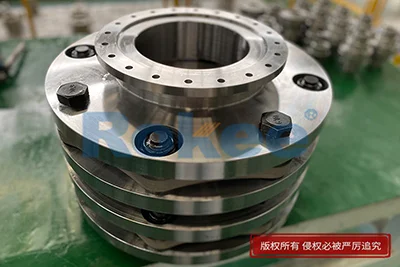

The basic working mechanism of diaphragm coupling originates from the controlled elastic deformation of metal diaphragm components. The core transmission structure is composed of precision-stacked metal diaphragms, which are fixed with the driving and driven shaft hubs through high-strength fasteners. When the equipment operates, the rotational torque generated by the driving end is stably transmitted to the driven end through the elastic deformation of the diaphragm group. During this process, the metal diaphragm can produce tiny and controllable elastic displacement in multiple directions, which can effectively compensate for the axial, radial and angular misalignment of the two connected shafts caused by installation errors, equipment operation vibration, thermal expansion and contraction, and mechanical foundation settlement. This working mode based on metal elastic deformation fundamentally avoids the structural defects of traditional couplings. Non-metallic elastic couplings are prone to aging, deformation and fatigue damage under high temperature, high speed and long-term load conditions, while gear couplings rely on sliding friction between teeth for power transmission, which is accompanied by severe wear, backlash and continuous lubrication maintenance requirements. In contrast, the elastic deformation of metal diaphragms belongs to reversible physical deformation within the material fatigue limit, ensuring long-term stable and consistent transmission performance without backlash and power loss.
The structural design of diaphragm coupling follows the rigorous mechanical optimization logic of balancing rigidity and flexibility. The overall structure is compact and lightweight, mainly including metal diaphragm assemblies, connecting bolts, shaft hubs and positioning components. The diaphragm group is the core functional component, usually composed of multiple thin metal diaphragms stacked in a specific arrangement. The thin-plate structure of the diaphragm enables it to generate flexible deformation in the bending direction to adapt to shaft misalignment, while the integral metal structure maintains extremely high torsional rigidity in the rotational direction. This unique structural characteristic endows the coupling with two core performance attributes that are difficult for other products to achieve simultaneously: on the one hand, the high torsional rigidity ensures synchronous and accurate torque transmission, avoids rotational angle deviation and speed loss, and meets the high-precision transmission requirements of precision processing equipment and high-speed rotating machinery; on the other hand, the flexible bending deformation capability effectively buffers the vibration and impact load generated during equipment start-up, shutdown and variable-speed operation, reducing the transmission of mechanical vibration between the driving and driven equipment, and protecting the main shaft, bearing and other core components of the equipment from impact damage.
In terms of material selection and manufacturing process, diaphragm couplings adopt high-strength alloy steel with excellent fatigue resistance, elastic stability and corrosion resistance. After precise stamping, heat treatment and surface finishing processes, the diaphragms have uniform thickness, stable elastic performance and ultra-high fatigue resistance. Special heat treatment processes can eliminate internal structural stress, avoid elastic attenuation and permanent deformation during long-term cyclic operation, and ensure that the coupling can maintain consistent deformation compensation capability and torque transmission efficiency throughout the service cycle. All connecting components are processed with high-precision machining technology to ensure the matching accuracy of assembly surfaces, effectively reduce assembly gaps, and further eliminate transmission backlash. The optimized structural design and high-precision manufacturing process enable diaphragm couplings to adapt to a wide range of operating conditions, from low-speed heavy-load industrial transmission to ultra-high-speed precision transmission, and maintain stable and reliable working performance.
The outstanding comprehensive performance of diaphragm couplings makes them widely applicable in multiple high-end and heavy-duty industrial fields. In the field of energy power transmission, they are applied to gas turbines, steam turbines, wind power generation equipment and large generator sets. These devices have the characteristics of ultra-high operating speed, continuous long-term operation and high operational stability requirements. The maintenance-free performance and high-speed stability of diaphragm couplings can fully meet the demand of long-term uninterrupted operation of power equipment, and effectively compensate for shaft displacement caused by thermal expansion of high-temperature equipment, avoiding equipment vibration and power transmission failure caused by misalignment. In the field of precision mechanical processing and automated manufacturing, precision servo equipment, CNC machine tools and robotic transmission systems require extremely high transmission accuracy and response sensitivity. The zero-backlash transmission characteristic of diaphragm couplings ensures real-time and synchronous torque and speed transmission, eliminates transmission delay and angle error, and improves the processing accuracy and motion control precision of automated equipment.
In the petrochemical, metallurgical and heavy machinery industries, the operating environment of equipment is harsh, with frequent variable load operation, large vibration amplitude and complex environmental factors such as high temperature and humidity. Traditional couplings are prone to rapid wear, aging and failure in such environments, requiring frequent inspection and replacement, which increases equipment downtime and operating costs. Diaphragm couplings, with their all-metal corrosion-resistant structure, strong impact resistance and fatigue resistance, can adapt to harsh working conditions stably. Their excellent displacement compensation capability can offset the shaft misalignment caused by foundation vibration and equipment thermal deformation, ensuring the continuous and stable operation of large-scale production equipment and effectively reducing production interruption losses caused by coupling failure. In addition, in the fields of aerospace, transportation and precision testing equipment, diaphragm couplings are also indispensable core transmission components, providing high-reliability transmission guarantee for high-precision and high-stability mechanical systems.
Compared with traditional coupling products, diaphragm couplings have obvious comprehensive advantages in service performance and life cycle cost. First of all, they have ultra-low maintenance characteristics. Due to the all-metal non-friction transmission structure, there is no relative sliding and wear between components during operation, and no lubricating oil, grease and other lubricating media are required, completely eliminating the daily maintenance work of regular oil injection, lubrication and wear part replacement. This not only saves a lot of manual maintenance costs and time costs for industrial production, but also avoids equipment operation risks caused by insufficient lubrication or aging of wearing parts. Secondly, the service life of diaphragm couplings is far longer than that of traditional products. Under standard operating conditions, the fatigue failure cycle of metal diaphragms is extremely long, which can match the long-term operation cycle of main industrial equipment, reducing the frequency of component replacement and equipment disassembly and assembly.
Moreover, diaphragm couplings have excellent vibration damping and noise reduction effects. The flexible elastic deformation of the diaphragm can absorb and isolate the mechanical vibration and impact generated during equipment operation, suppress the resonance phenomenon of the transmission system, reduce the vibration amplitude of the equipment shaft system, and lower the operating noise of the entire mechanical system. This performance is particularly important for precision equipment and closed production environments, which can not only improve the operating stability of equipment, but also optimize the on-site production environment. In terms of installation and adaptation, diaphragm couplings have strong dimensional tolerance adaptability and flexible installation characteristics. They can adapt to multi-dimensional shaft misalignment within the design range, reduce the difficulty of installation and alignment, and allow tiny displacement changes of the shaft system during equipment operation, which greatly improves the fault tolerance of the mechanical transmission system.
In the actual operation and application process, the performance stability of diaphragm couplings is closely related to reasonable model selection, standardized installation and correct operating parameter matching. Reasonable model selection needs to comprehensively consider key factors such as equipment operating speed, transmission torque magnitude, operating environment temperature, and misalignment variation range, to ensure that the coupling's load capacity and deformation compensation range match the actual working conditions. Standardized installation operations can avoid assembly stress caused by excessive deviation during installation, prevent local stress concentration of the diaphragm, and eliminate potential fatigue failure risks in advance. At the same time, although diaphragm couplings are maintenance-free, regular routine inspection of the operating state is still required in long-term industrial applications, focusing on checking whether the diaphragm has abnormal deformation, whether the fasteners are loose, and whether the equipment shaft system has excessive misalignment, so as to ensure that the coupling always operates within the optimal working state.
With the continuous upgrading of modern industrial manufacturing technology and the gradual improvement of equipment precision and intelligence level, the industrial demand for high-performance transmission components is constantly escalating. Traditional coupling products with short service life, high maintenance frequency and low transmission accuracy can no longer meet the development needs of high-end manufacturing, intelligent equipment and large-scale energy power systems. As a high-performance flexible transmission component, diaphragm coupling is evolving towards higher precision, stronger environmental adaptability and longer service life with the progress of material technology and mechanical design optimization. The continuous innovation of high-strength alloy materials and precision processing technology further improves the fatigue resistance, corrosion resistance and high-temperature stability of diaphragm couplings, enabling them to be applied in more extreme working environments such as ultra-high temperature, ultra-low temperature and strong corrosion.
In the future industrial development process, diaphragm couplings will occupy a more important core position in the mechanical transmission field. Its unique all-metal flexible transmission mechanism, zero-backlash high-precision transmission performance, maintenance-free operation advantage and strong environmental adaptability can perfectly meet the high-efficiency, stable and low-consumption operation requirements of modern industrial equipment. It not only solves many pain points of traditional transmission components in industrial applications, such as easy failure, frequent maintenance and poor precision stability, but also provides a reliable basic guarantee for the high-speed and high-precision operation of intelligent manufacturing equipment, new energy power equipment and high-end precision machinery. As an indispensable key component of modern mechanical transmission systems, diaphragm coupling will continue to drive the optimization and upgrading of industrial transmission technology and create greater value for efficient and stable industrial production.
« Diaphragm Couplings » Update Date: 2026/7/15
Contact
If you require custom machined couplings, please contact Rokee via the contact information below for inquiries.
Email: Rokee@Rokee.com
 WeChat