Teeth Couplings Manufacturer
Teeth couplings stand as one of the most reliable and versatile mechanical transmission components in modern industrial machinery, widely adopted for heavy-duty power transmission scenarios across diverse manufacturing and engineering fields. Featuring a unique inner and outer tooth meshing structure, these couplings excel at transferring rotational torque and mechanical power between connected shafts while effectively compensating for minor axial, radial, and angular misalignments that inevitably occur during equipment operation. Their robust mechanical structure, high load-bearing capacity, and stable operational performance set them apart from conventional coupling types, making them indispensable for continuous and high-intensity industrial production. Designed to withstand fluctuating loads and instantaneous impact forces, teeth couplings deliver consistent transmission efficiency, reduce mechanical vibration, and extend the service life of connected equipment. As a core part of transmission systems, they balance durability, adaptability, and cost-effectiveness, catering to the evolving demands of modern industrial automation and heavy machinery operation.

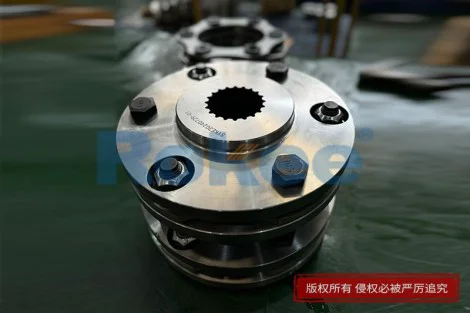
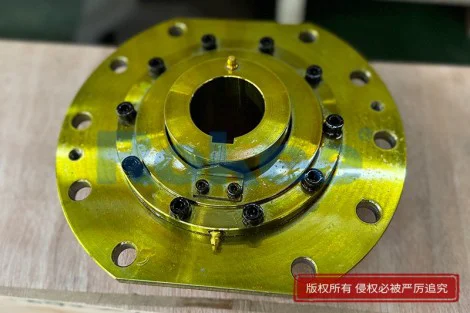
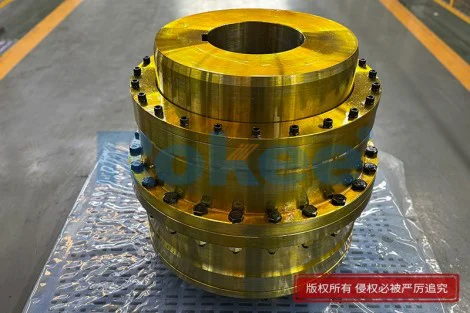
The fundamental working principle of teeth couplings revolves around the precise meshing of internal and external gear teeth, which forms the foundation of their superior power transmission performance. Each complete teeth coupling consists of two main hubs with outer teeth and two annular sleeves with inner teeth, where the interlocking tooth structure enables seamless torque transfer between driving and driven shafts during rotation. Unlike rigid couplings that cannot tolerate any shaft misalignment, the sliding contact between tooth surfaces allows subtle positional deviations between paired shafts, effectively offsetting installation errors, mechanical wear-induced displacement, and thermal expansion deformation during equipment operation. This flexible compensation mechanism eliminates additional mechanical stress on shafts, bearings, and other adjacent components, avoiding premature component fatigue and failure. Moreover, the multi-tooth meshing design distributes overall operational load evenly across all contact tooth surfaces, preventing localized stress concentration and ensuring uniform force bearing even under heavy and dynamic working conditions. This structural rationality enables teeth couplings to maintain stable transmission status for long-term continuous operation, laying a solid foundation for high-efficiency mechanical power delivery in complex industrial environments.
Teeth couplings boast unparalleled structural and performance advantages compared with other common coupling types, consolidating their dominant position in heavy industrial transmission scenarios. First, their exceptional torque transmission capacity allows them to handle ultra-large mechanical power output, far exceeding the load limits of elastic couplings and sleeve couplings of the same volume. This high torque density makes them ideal for large-scale mechanical equipment that requires stable high-power transmission without occupying excessive installation space. Second, their excellent misalignment tolerance covers multiple dimensional deviations, solving the common operational problems caused by inaccurate installation and long-term mechanical deformation. In addition, the integral metal structure of teeth couplings provides outstanding mechanical rigidity and impact resistance, enabling them to adapt to harsh working conditions with frequent load fluctuations and instantaneous shock loads. They also feature low operational resistance and stable transmission efficiency, with minimal power loss during long-term operation, which effectively improves the overall energy utilization rate of mechanical systems. Furthermore, the compact and integrated structural design simplifies overall mechanical layout, reducing the overall equipment volume while ensuring reliable operational performance.
The industrial application scope of teeth couplings covers almost all heavy-duty mechanical fields that require stable power transmission, showing strong environmental adaptability and scenario compatibility. In the metallurgical industry, they are widely applied in rolling mills, smelting equipment, and material conveying machinery, stably transmitting power under high-temperature environments and heavy cyclic loads to ensure continuous operation of metal processing production lines. In the mining and mineral processing sector, teeth couplings serve core equipment such as excavators, crushers, and belt conveyors, resisting severe vibration, dust interference, and irregular impact loads generated during ore mining and transportation. In cement and building material production, they adapt to the high-load and continuous operation requirements of rotary kilns, mixers, and grinding equipment, maintaining transmission stability in long-cycle production modes. Additionally, they are extensively used in large fan equipment, pump units, chemical processing machinery, and port handling equipment, providing reliable power transmission support for various high-intensity and long-duration industrial production scenarios.
Material selection and manufacturing craftsmanship are core factors that determine the service performance and service life of teeth couplings, directly affecting their operational stability in complex working environments. High-quality teeth couplings are usually forged from high-strength alloy steel materials, which undergo strict heat treatment processes including quenching and tempering to enhance overall structural toughness and surface hardness. The integral forging process eliminates internal material pores and cracks, ensuring uniform structural strength and avoiding local fracture under extreme loads. The tooth surfaces adopt precision machining and fine grinding technology to achieve smooth and accurate tooth profile dimensions, reducing friction resistance and wear during meshing operation. Advanced precision machining effectively controls tooth pitch, tooth depth, and surface flatness errors, ensuring uniform contact of each meshing tooth and balanced force distribution. Meanwhile, professional surface anti-corrosion and wear-resistant treatment is carried out on the outer surface and tooth surfaces of the couplings, improving their resistance to oxidation, corrosion, and mechanical abrasion in humid, dusty, and high-temperature industrial environments, thus greatly extending the continuous service cycle of the equipment.
Scientific installation and standardized commissioning are crucial to giving full play to the performance advantages of teeth couplings and avoiding early operational failures. Before installation, comprehensive inspection of all components is required to check for processing defects, surface damage, or foreign matter adhesion on tooth surfaces, ensuring the cleanliness and integrity of matching parts. During the assembly process, precise alignment of the driving and driven shafts must be strictly controlled to minimize installation misalignment, excessive deviation will cause abnormal tooth surface friction and additional load during operation. The assembly sequence of hubs and sleeves needs to follow mechanical matching principles to ensure tight and accurate fitting without looseness or jamming. After preliminary assembly, rotational debugging is necessary to check for flexible rotation, no abnormal jitter or stuck phenomenon, and verify the uniformity of tooth meshing. In addition, standardized sealing assembly is essential to prevent external dust, impurities, and moisture from entering the meshing area. Reasonable installation gaps and sealing treatments can effectively maintain the internal working environment of the coupling, laying a foundation for subsequent stable operation and daily maintenance.
Routine maintenance and scientific fault prevention are key measures to ensure the long-term stable operation of teeth couplings and reduce industrial equipment operation costs. Daily maintenance work focuses on regular inspection of sealing performance to avoid lubricant leakage caused by aging or damaged sealing parts, as good lubrication is the core of reducing tooth surface friction and wear. It is necessary to regularly check the lubricant stock and quality inside the coupling cavity, replace deteriorated or contaminated lubricant in a timely manner, and fill in high-quality special lubricating grease according to operational requirements. Regular visual inspection and operational monitoring are also required to observe abnormal vibration, noise, and temperature rise during equipment operation, which are typical signs of tooth surface wear, misalignment, or lubrication failure. Meanwhile, regular cleaning of external dust and attachments can prevent foreign matters from invading the meshing structure. Timely correction of minor shaft misalignment and replacement of worn accessories can effectively avoid the expansion of small faults into major equipment failures, reduce downtime maintenance frequency, and improve the overall operational efficiency of industrial mechanical systems.
With the continuous upgrading of modern industrial manufacturing technology, teeth coupling production and application are evolving towards high precision, high durability, and intelligent adaptation. Modern manufacturing technologies continue to optimize the tooth profile design and structural parameters of teeth couplings, further improving their torque transmission efficiency and misalignment compensation capability while reducing operational noise and vibration. The continuous innovation of material processing technology enables couplings to adapt to more extreme working conditions, including ultra-high temperature, ultra-low temperature, and strong corrosive industrial environments, expanding their application boundaries. In terms of industrial matching, customized structural design can meet the personalized transmission needs of different mechanical equipment, realizing better compatibility with diverse production lines. As industrial machinery moves towards high automation, high load, and long-cycle operation, high-performance teeth couplings will continue to serve as core transmission components, providing stable, efficient, and durable power transmission guarantees for the sustainable development of various industrial fields.
Tags: Teeth Couplings , sandwich panel machine , pu sandwich panel line
« Teeth Couplings Manufacturer » Update Date: 2026/8/5
URL: https://www.rokee.com/en/blog/teeth-couplings-manufacturer.html
Contact
If you require custom machined couplings, please contact Rokee via the contact information below for inquiries.
Email: Rokee@Rokee.com
 WeChat