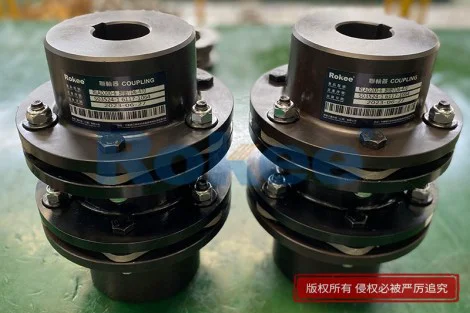
Spherical Couplings
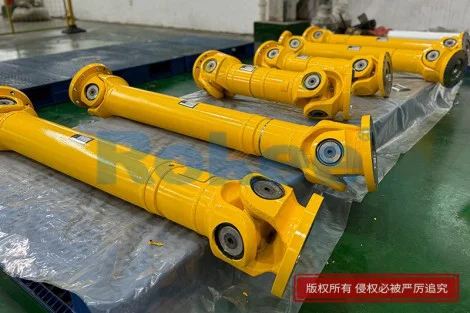
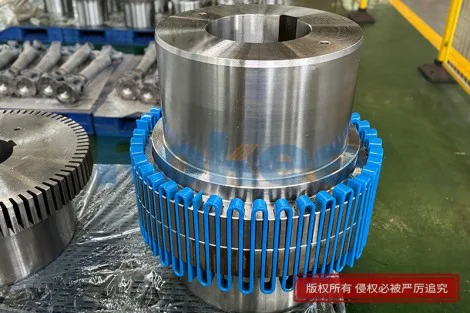
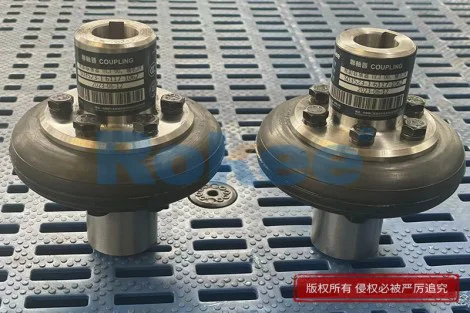
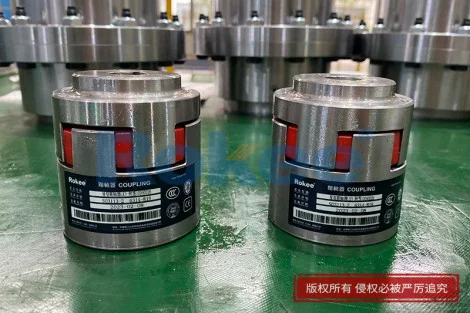
Rokee is a manufacturer of spherical couplings from china, we can provide non-standard custom spherical couplings based on parameters or drawings supplied by customers, with export support available.

Spherical couplings are flexible mechanical connection components designed to transmit torque and motion between adjacent mechanical shafts while compensating for various forms of shaft misalignment, serving as a core buffer and transmission unit in modern mechanical systems. Unlike rigid couplings that rely on fixed-axis connection and lack adaptive adjustment capability, spherical couplings adopt a unique spherical contact structure, enabling multidirectional flexible displacement compensation including angular deviation, radial offset and axial displacement during equipment operation. This structural characteristic effectively resolves the assembly errors, mechanical deformation and vibration displacement commonly generated in mechanical transmission processes. By alleviating concentrated stress on shafts, bearings and key transmission parts, these couplings significantly reduce mechanical wear, lower operational vibration and noise, and extend the overall service life of mechanical equipment. Widely adaptable to high-speed, high-torque and complex operating working conditions, spherical couplings have become indispensable basic components in industrial transmission machinery, precision automation equipment and heavy-duty mechanical systems, balancing stable power transmission and flexible mechanical protection efficiently.


The core operational logic of spherical couplings originates from their innovative spherical contact transmission mechanism, which differentiates them fundamentally from traditional flexible coupling structures such as gear couplings and diaphragm couplings. The basic structural composition centers on a matched spherical pair, usually consisting of a spherical core body and an inner spherical socket, with the spherical center of the core body precisely overlapping the axis of the connected shaft. This special structural design allows the spherical contact surface to achieve omnidirectional rotational deflection and fine sliding adjustment during power transmission, rather than being limited to single-plane displacement compensation. When mechanical equipment operates with shaft misalignment caused by assembly deviation, thermal expansion and contraction of components, or external load impact, the spherical fitting structure can automatically adapt to the displacement change without generating additional restraining stress on the transmission shaft system. In the process of torque transmission, the spherical surface achieves uniform surface contact force bearing, avoiding the local stress concentration and uneven wear that plague point-contact or line-contact coupling structures. Even under continuous dynamic load operation, the spherical fitting state remains stable, ensuring consistent and efficient power transmission while realizing passive protection for the entire transmission system against abnormal displacement impacts.
The internal structural design of spherical couplings focuses on the integration of structural stability, motion flexibility and wear resistance, forming a mature and reliable mechanical configuration after long-term technical iteration. The main components include symmetric coupling half bodies, spherical movable matching parts, anti-loosening limit structures and auxiliary sealing components. The spherical movable parts are processed with high-precision spherical profiles, with smooth and uniform surface finishes to reduce friction resistance during relative motion. The matching spherical socket is designed with a conformal curved surface that fits tightly with the spherical core, ensuring no idle stroke or backlash during torque transmission. The overall structure adopts a compact integrated layout, which effectively saves installation space compared with multi-part combined flexible couplings. Meanwhile, the structural symmetry design enables the coupling to transmit torque bidirectionally, adapting to forward and reverse rotating working conditions of mechanical equipment. The built-in limit structure reasonably controls the maximum deflection and displacement range of the spherical pair, preventing excessive displacement caused by extreme working conditions from damaging the coupling or transmission components. Auxiliary sealing structures can isolate internal matching surfaces from external dust, moisture and corrosive media, maintaining the precision of spherical matching and long-term operational stability in complex industrial environments.
Spherical couplings exhibit excellent comprehensive mechanical performance, making them suitable for diverse and harsh industrial working conditions. In terms of load bearing capacity, the spherical surface uniform contact mode enables the coupling to bear large continuous torque and instantaneous impact load, with strong overload resistance that avoids structural damage under sudden load fluctuations. In terms of displacement compensation performance, it can simultaneously adapt to angular misalignment, radial parallel offset and axial telescopic displacement, realizing multi-degree-of-freedom adaptive adjustment that far exceeds the compensation range of ordinary elastic couplings. For high-speed operating scenarios, the compact and symmetrical structural design ensures low rotational inertia and excellent dynamic balance, effectively suppressing high-speed vibration and resonance phenomena, maintaining stable transmission accuracy during long-term high-speed operation. Additionally, the structural material of spherical couplings is usually optimized for high-strength and wear-resistant properties, with good mechanical stability under variable temperature environments, avoiding structural deformation or performance attenuation caused by temperature changes. These superior mechanical properties enable the coupling to maintain efficient and reliable operation in continuous industrial production without frequent performance degradation.
Compared with other types of flexible couplings, spherical couplings possess prominent application advantages in structural adaptability and operational reliability. Traditional elastic couplings relying on elastic deformation have limited compensation capacity and are prone to fatigue aging and elastic failure after long-term operation, while gear couplings have complex structures, high processing costs and poor adaptability to frequent variable load working conditions. In contrast, spherical couplings adopt rigid spherical flexible matching, which has no fatigue aging problem, ensuring long-term stable transmission accuracy and service life. Their multi-dimensional displacement compensation capability can comprehensively solve various misalignment problems in shaft transmission, greatly reducing the installation and debugging difficulty of mechanical equipment and lowering the technical requirements for assembly precision. During equipment operation, the spherical sliding friction mode produces extremely low vibration and noise, improving the overall operating environment of mechanical systems. Moreover, the structural design of spherical couplings avoids transmission backlash, which is crucial for precision transmission equipment that requires accurate motion control, effectively ensuring the consistency and accuracy of power and motion transmission in automated and precision mechanical systems.
Spherical couplings are widely applied in multiple industrial fields relying on their superior comprehensive performance, covering heavy-duty machinery, precision automation, transportation equipment and general industrial transmission systems. In heavy mechanical equipment such as mining machinery, engineering machinery and metallurgical equipment, they adapt to high-torque, high-impact and severe vibration working conditions, stabilizing power transmission and protecting key shaft parts from impact damage. In modern automated production equipment including robotic transmission mechanisms, automated assembly lines and precision machine tools, the zero-backlash and high-precision transmission characteristics of spherical couplings ensure accurate motion control and improve the processing and assembly precision of equipment. In fluid transmission and power machinery such as fans, pumps and compressors, their excellent vibration damping and misalignment compensation performance reduce equipment operation noise and vibration, extending the service life of rotating components. In addition, they are also applied in agricultural machinery, textile machinery and general mechanical transmission occasions, providing reliable connection and transmission guarantees for various mechanical systems with complex operating conditions and diverse motion requirements.
The daily maintenance and service cycle of spherical couplings is simple and efficient, which is an important reason for their wide promotion in industrial production. Unlike elastic couplings that require regular replacement of aging elastic components and gear couplings that need frequent lubrication maintenance, spherical couplings have a wear-resistant and stable spherical matching structure with low daily maintenance requirements. Daily operation only requires regular visual inspection to check for abnormal vibration, noise or surface abrasion, and timely cleaning of external dust and dirt on the coupling surface to ensure the flexibility of spherical motion. The internal lubrication state of the spherical pair only needs periodic inspection and supplementary lubricating oil or grease according to the operating frequency and working environment, which can effectively reduce friction and wear and maintain long-term operational stability. The overall structural wear of spherical couplings is uniform, and local damage is not easy to occur, avoiding frequent disassembly, replacement and debugging work. The simple maintenance mode greatly reduces the daily operation and maintenance cost of mechanical equipment, improves the continuous operation rate of production lines, and creates higher economic benefits for industrial production while ensuring equipment operational reliability.
With the continuous upgrading of modern mechanical equipment towards high precision, high speed and high intelligence, spherical coupling technology is also undergoing continuous optimization and innovation to adapt to evolving industrial needs. Current technical development focuses on precision optimization of spherical matching surfaces, adopting advanced processing technologies to further improve the fitting accuracy of spherical pairs, reduce transmission backlash and enhance the stability of precision transmission. In terms of material innovation, new high-strength, wear-resistant and corrosion-resistant alloy materials are gradually applied to the production of spherical couplings, improving their adaptability in extreme working conditions such as high temperature, low temperature and strong corrosion. Structural optimization is also moving towards miniaturization and lightweight design, reducing the overall weight and rotational inertia of the coupling while ensuring load-bearing performance, which is more suitable for lightweight and high-efficiency modern mechanical equipment. In addition, combined with intelligent monitoring technology, new spherical coupling products are endowed with real-time monitoring functions of operating vibration, displacement and wear state, realizing predictive maintenance of equipment, further improving the safety and intelligence level of mechanical transmission systems.
« Spherical Couplings » Update Date: 2026/8/5
Contact
If you require custom machined couplings, please contact Rokee via the contact information below for inquiries.
Email: Rokee@Rokee.com
 WeChat