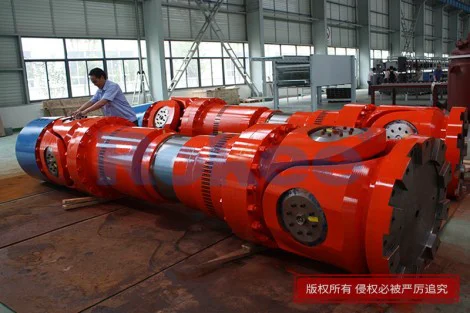
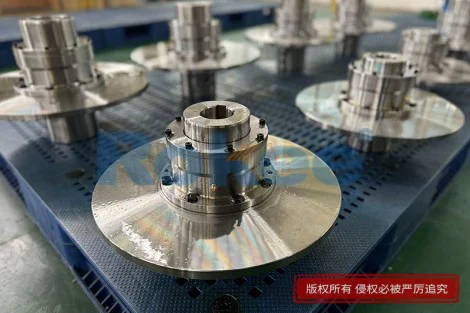
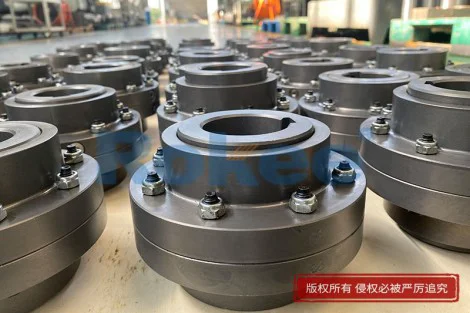
LT Pin Coupling
LT pin coupling is a widely adopted flexible shaft connection component designed to deliver stable torque transmission while accommodating minor shaft misalignments in general industrial mechanical systems. Featuring a simple and compact structural layout, this coupling relies on precision pins and elastic bushing assemblies to connect two shaft hubs, effectively bridging driving and driven mechanical parts. Its core design integrates rigid torque-bearing metal components and flexible elastic elements, striking a balanced performance between structural rigidity and operational flexibility. Unlike rigid couplings that lack adaptability and overly complex flexible couplings with high maintenance thresholds, the LT pin coupling focuses on practicality and versatility, excelling in vibration damping, shock buffering, and misalignment compensation. It can effectively offset axial, radial, and angular deviations generated during equipment operation, reduce mechanical operation friction and impact losses, and protect rotating parts from abnormal wear. With reliable operational stability and convenient installation and maintenance characteristics, it is suitable for most conventional rotating mechanical equipment, becoming a foundational connecting part in medium and low torque transmission scenarios across various industrial fields.
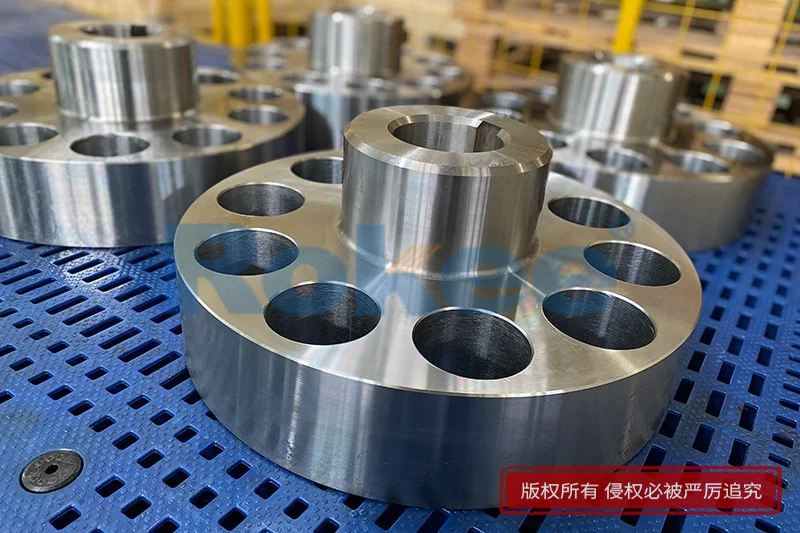
The structural composition of LT pin coupling follows a minimalist and practical design concept, consisting mainly of two symmetrical flange hubs, high-strength connecting pins, and elastic buffer bushings. The two flange hubs are respectively fixed on the end faces of the driving shaft and driven shaft, with reserved matching pin holes distributed evenly on the hub surfaces to ensure uniform force bearing during operation. The core connecting pins are made of high-toughness metal materials, which can withstand continuous torque impact and cyclic load without permanent deformation or fracture. Each pin is sleeved with an elastic bushing made of high-quality elastic materials, which is the key functional component that endows the coupling with flexible performance. This integrated structure abandons redundant auxiliary parts, making the overall volume compact and the assembly space highly adaptable. During equipment operation, the pins undertake the main torque transmission task, while the elastic bushings fill the gap between pins and hub holes, avoiding rigid contact and direct metal friction. This structural design not only ensures efficient power transmission efficiency but also lays a solid foundation for the coupling’s vibration reduction and misalignment compensation capabilities, adapting to the stable operation needs of most conventional mechanical transmission systems.
The working principle of LT pin coupling centers on flexible torque transmission and dynamic deviation compensation, realizing efficient and stable power transfer between rotating shafts. When the driving shaft starts to operate, the flange hub on the driving side rotates synchronously, driving the connecting pins to push the elastic bushings and further drive the driven-side hub and shaft to rotate, completing the whole torque transmission process. In the ideal state of complete shaft alignment, the coupling operates stably with uniform stress on each component and minimal power loss. In actual industrial operation, however, mechanical installation errors, equipment operation vibration, and component thermal deformation will inevitably cause different degrees of misalignment between the two connected shafts. At this time, the elastic bushings produce slight elastic deformation to adapt to axial stretching, radial offset, and angular deflection of the shafts. This flexible adaptation eliminates the additional mechanical stress generated by shaft misalignment, preventing stress concentration on shaft bodies, bearings, and other precision parts. While ensuring uninterrupted power transmission, this working mode greatly reduces rigid impact in the transmission system and effectively improves the overall operational smoothness of mechanical equipment.
Vibration damping and shock absorption are the most prominent functional advantages of LT pin coupling, which significantly optimizes the operating environment of mechanical transmission systems. In the continuous operation of industrial equipment, periodic vibration generated by motor rotation, mechanical meshing, and load changes will be transmitted along the shaft system, easily causing equipment resonance, increased noise, and accelerated component aging. The elastic bushing components of the LT pin coupling can effectively absorb and consume vibration energy in the transmission process, block the conduction path of vibration between the driving end and the driven end, and reduce the vibration amplitude of the whole machine. In addition, when the equipment starts, stops, or bears sudden load changes, the elastic structure can buffer instantaneous impact force, avoid rigid collision between internal components of the transmission system, and protect key parts such as shafts and bearings from impact damage. This excellent damping and buffering performance not only reduces operational noise and improves the working environment but also stabilizes the operating accuracy of mechanical equipment, effectively extending the service life of the entire transmission system and reducing unexpected equipment failures caused by vibration impact.
LT pin coupling possesses excellent misalignment compensation capability, which solves the common operational problems of mechanical transmission systems caused by installation and operation deviations. In the equipment installation process, manual operation errors and assembly tolerances will lead to tiny deviations in the coaxiality of the two connecting shafts, which are difficult to completely eliminate by precise debugging alone. During long-term operation, factors such as equipment base settlement, component wear, and thermal expansion and contraction will further increase shaft misalignment. The unique pin-bushing flexible structure of LT pin coupling can adapt to multiple types of shaft deviations simultaneously. It can compensate for axial displacement caused by thermal expansion of the shaft body, offset radial deviation generated by equipment vibration and component wear, and adapt to small-angle deflection between shafts. This multi-dimensional compensation performance avoids the additional shear force and torsional stress caused by shaft misalignment, prevents abnormal wear of shaft holes, pins, and bearings, and ensures that the transmission system can maintain efficient and stable operating status even under non-ideal installation and operating conditions.
The installation and maintenance convenience of LT pin coupling makes it highly cost-effective in long-term industrial application. Its standardized and modular structural design simplifies the whole installation process without complex debugging tools and professional operation procedures. During installation, workers only need to fix the two flange hubs on the corresponding shaft ends, align the pin holes, and embed the pins and elastic bushings in place to complete assembly, which greatly shortens the equipment assembly cycle. In terms of daily maintenance, the coupling has strong operational stability and low failure rate under normal working conditions, requiring no frequent inspection and maintenance. When local components are worn or aged after long-term operation, targeted replacement can be realized without disassembling the overall coupling structure or moving the connected equipment and shafts. The independent replaceable design of pins and bushings avoids overall scrapping of the coupling due to partial component damage, effectively reducing equipment maintenance difficulty and operational cost. This convenient maintenance feature improves equipment maintenance efficiency and ensures the continuous and stable operation of industrial production lines.
LT pin coupling exhibits outstanding durability and load-bearing performance, adapting to long-term stable operation in various conventional industrial working conditions. The metal pins and flange hubs are processed with rigorous forging and finishing technology, with high structural strength, good toughness, and strong fatigue resistance, which can withstand long-term cyclic torque load and frequent start-stop impact. The elastic bushings are made of wear-resistant and aging-resistant elastic materials, which can maintain stable elastic performance for a long time in conventional temperature and working environments, avoiding aging failure, deformation, and damage in a short period. Under medium and low torque operating conditions, the coupling can maintain efficient power transmission without slippage or power attenuation. Its integrated structural design avoids loose assembly and component displacement during high-speed operation, ensuring good operational safety and stability. Whether in continuous operating production equipment or intermittent operating mechanical devices, it can maintain stable working performance, reduce equipment downtime caused by coupling failure, and provide reliable basic guarantee for the stable operation of mechanical systems.
With its comprehensive and balanced performance, LT pin coupling has been widely applied in multiple industrial mechanical fields, becoming a universal and reliable transmission connecting component. It is commonly used in conventional rotating equipment such as fans, water pumps, reducers, and general processing machinery, adapting to the medium and low torque transmission needs of most industrial production scenarios. In light industrial production, it can stabilize the operation of transmission equipment, reduce equipment vibration and noise, and improve production precision and efficiency. In general mechanical processing and manufacturing scenarios, it can buffer equipment operation impact, protect precision mechanical parts, and reduce equipment wear and failure probability. Its compact structure enables it to adapt to equipment with limited installation space, while its flexible performance ensures good adaptability to complex operating conditions. With the dual advantages of stable performance and low maintenance cost, LT pin coupling has always occupied an important position in general industrial transmission components, providing stable and efficient connection support for various mechanical transmission systems.
Tags: Elastic Pin Couplings , Shear Pin Couplings , Flexible Pin Couplings , Crown Pin Couplings , Pin Couplings , pu sandwich panel machine , pu sandwich panel line
« LT Pin Coupling » Update Date: 2026/8/13
Contact
If you require custom machined couplings, please contact Rokee via the contact information below for inquiries.
Email: Rokee@Rokee.com
 WeChat