Working Principle of Bush Pin Type Flexible Coupling
Rokee® is a well-known high-quality bush pin type flexible coupling supplier from china, learn more about working principle of bush pin type flexible coupling, pls contact Rokee technology. Rokee has been established in China since 1999, over the years, with excellent quality, we have been continuously providing many bush pin type flexible coupling products of various categories and uses complying with multiple standards and a full range of services, from the bush pin type flexible coupling selection to final installation and operation, for the industry fields of ferrous metallurgy, nuclear power, gas turbine, wind power, ropeway construction, lifting transportation, general equipment, etc.
There are many types of flexible couplings available on the market. Each has its own features and benefits, but all are required to perform a few primary functions: connect two shafts, transmit rotary power and compensate for some shaft misalignment. Elastic couplings are integrally formed metal elastomers, usually cut from metal round rods. Commonly used materials include aluminum alloy, stainless steel, and engineering plastics, which are suitable for various deviations and precise torque transmission.
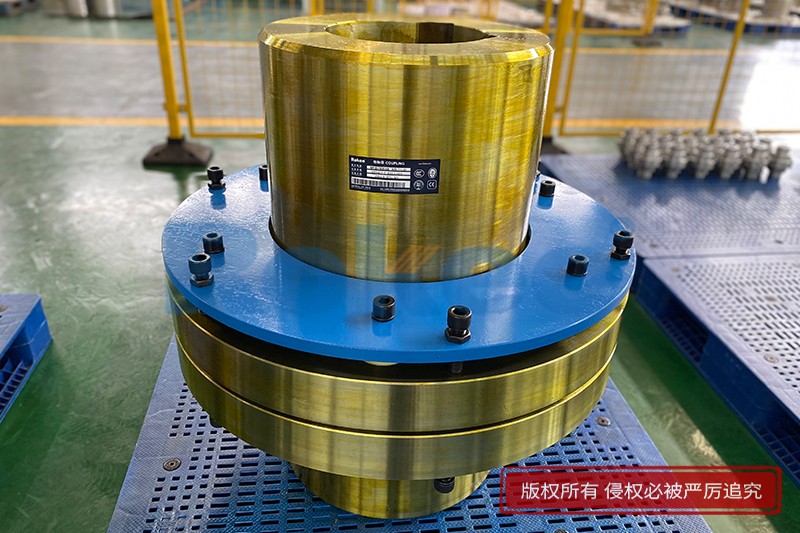
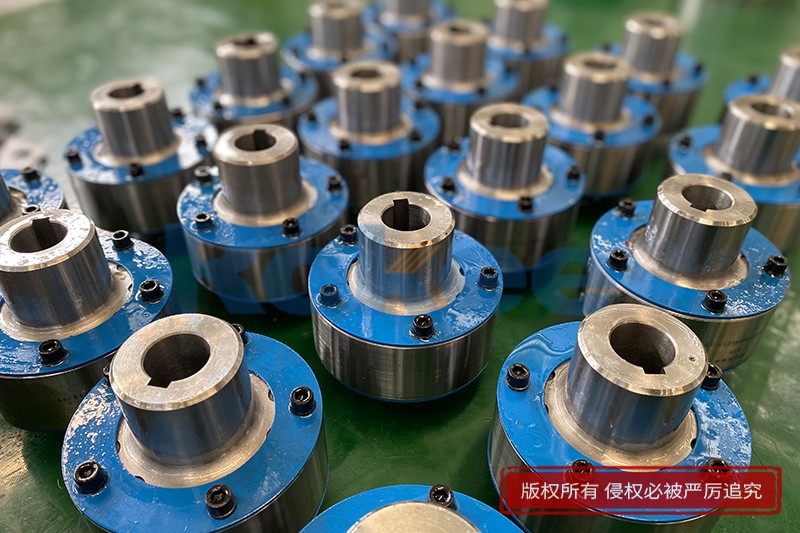
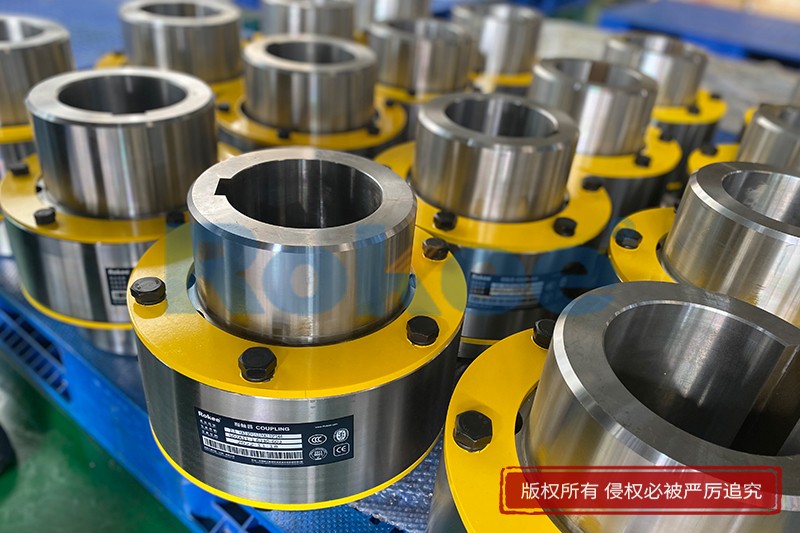
The bush pin type flexible coupling is a type of power transmission mechanical coupling used to connect two shafts together at their ends for the purpose of transmitting power.
The pin gear coupling is designed with non-metallic flexible pin, two toothed semi-couplings and a toothed sleeve ring with an outer ring. It uses non-metallic flexible deformation to transfer torque and cushion shock and compensate angular displacement.
The flexible pin coupling is a basic transmission parts that has simple structure, needs no lubrication, and is easy to manufacture, install and disassemble the flexible pin. It uses two semi-couplings with flange holes and a non-metallic flexible pin for crane to transmit torque, suitable for low-to-medium speed and low-to-medium torque occasions.
The design of the elastic sleeve pin coupling is simple and clever in design and has wide applicability. It uses the pin with elastic sleeve to connect two semi-couplings with pin holes to realize torque transmission and larger angular compensation. At the same time, it has good shock absorption and buffering performance, which can be used in high-speed occasions without lubrication and requiring easy pin sleeve replacement.
Bush Pin Type Flexible Coupling Products
-
![LZ/ZL Pin Gear Coupling,Working Principle of Bush Pin Type Flexible Coupling]()
LZ/ZL Pin Gear Coupling
Basic Type
LZ Pin Gear Coupling is the basic form of this series of couplings.View More -
![LZD/ZLD Pin Gear Coupling,Working Principle of Bush Pin Type Flexible Coupling]()
LZD/ZLD Pin Gear Coupling
Conical Shaft Hole
One end of the LZD Pin Gear Coupling is designed with a conical shaft hole, and the clearance between the semi-couplings is increased to facilitate the fixing space at the shaft end.View More -
![LZZ/ZLL Pin Gear Coupling,Working Principle of Bush Pin Type Flexible Coupling]()
LZZ/ZLL Pin Gear Coupling
With Brake Wheel
LZZ Pin Gear Coupling is designed with a brake wheel, suitable for situations where braking is required.View More -
![LX/HL Flexible Pin Coupling,Working Principle of Bush Pin Type Flexible Coupling]()
LX/HL Flexible Pin Coupling
Basic Type
LX(HL) Flexible Pin Coupling is the basic form of this series of couplings.View More -
![LXZ/HLL Flexible Pin Coupling,Working Principle of Bush Pin Type Flexible Coupling]()
LXZ/HLL Flexible Pin Coupling
With Brake Wheel
LXZ(HLL) Flexible Pin Coupling is designed with a brake wheel, suitable for situations where braking is required.View More -
![LT/TL Elastic Sleeve Pin Coupling,Working Principle of Bush Pin Type Flexible Coupling]()
LT/TL Elastic Sleeve Pin Coupling
Basic Type
LT Elastic Sleeve Pin Coupling is the basic form of this series of couplings.View More -
![LTZ/TLL Elastic Sleeve Pin Coupling,Working Principle of Bush Pin Type Flexible Coupling]()
LTZ/TLL Elastic Sleeve Pin Coupling
With Brake Wheel
LTZ Elastic Sleeve Pin Coupling is designed with a brake wheel, suitable for situations where braking is required.View More
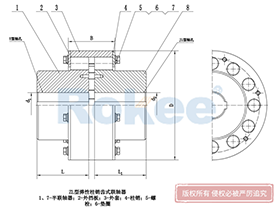
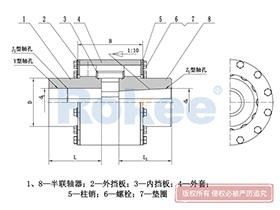
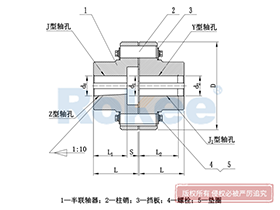
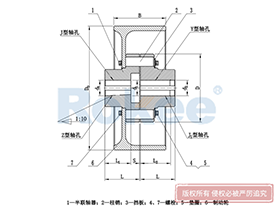
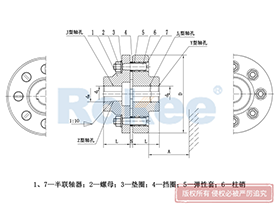
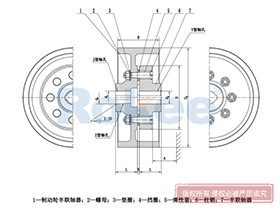
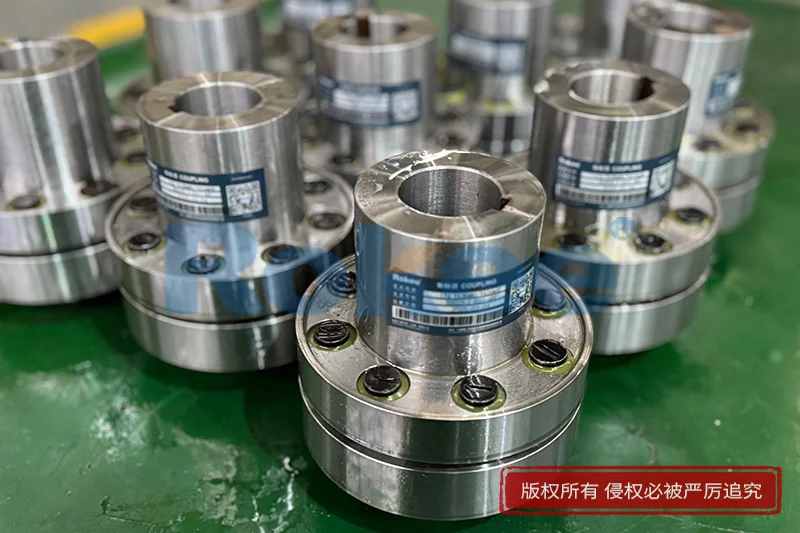
In the field of mechanical power transmission, flexible couplings serve as critical intermediate components that bridge driving and driven shafts, addressing the inherent challenges of shaft misalignment, vibration transmission, and torque delivery in diverse industrial machinery. Among the various flexible coupling designs, the bush pin type flexible coupling stands out for its balanced performance, simple structure, and wide adaptability to moderate-load and medium-speed operating conditions, making it a staple in general manufacturing, petrochemical processing, agricultural machinery, and light industrial equipment. Unlike rigid couplings that demand perfect shaft alignment and offer no tolerance for mechanical deviations, this type of coupling integrates elastic elements and a pin-bush assembly to deliver reliable torque transmission while accommodating multiple forms of shaft misalignment, dampening minor vibrations, and protecting connected machinery from premature wear and damage.
At its core, the bush pin type flexible coupling is composed of two robust hub halves, a set of precision-machined pins, and elastic bushings that encase each pin, with no complex auxiliary components or specialized fastening systems that would compromise its simplicity and maintainability. The two hubs are typically constructed from high-strength ferrous materials, engineered to withstand repeated torsional stress and radial loads without deformation or fatigue failure; their inner bores are precisely machined to fit tightly onto the driving and driven shafts, secured via standard mechanical fasteners to ensure zero slippage during torque transmission. Each hub features a series of evenly spaced radial holes arranged in a circular pattern around the central axis, aligned symmetrically to match the hole pattern on the opposing hub, creating a uniform load distribution across the entire coupling assembly. The pins, crafted from durable alloy materials, are inserted through the aligned holes of the two hubs, acting as the primary load-bearing elements that transfer rotational force from one hub to the other. The defining feature of this coupling lies in the elastic bushings that surround each pin, positioned between the outer surface of the pin and the inner wall of the hub holes; these bushings are manufactured from resilient, wear-resistant elastomeric materials that possess excellent elastic deformation properties, tear resistance, and longevity under cyclic loading. Unlike rigid pin couplings that rely on direct metal-to-metal contact, the incorporation of these elastic bushings transforms the assembly into a flexible torque transmission system, laying the foundation for its unique working principle and operational advantages.
The fundamental working principle of the bush pin type flexible coupling revolves around two core functions: efficient torque transmission and effective misalignment accommodation, both of which are enabled by the synergistic interaction between the rigid hubs, load-bearing pins, and elastic bushings. Under normal operating conditions, when the driving shaft rotates, the torque generated by the prime mover is transferred to the driving hub, which then exerts a rotational force on the pins embedded within its radial holes. Instead of transferring this force directly to the driven hub via rigid metal contact, the pins compress and interact with the elastic bushings, which act as a compliant medium to transmit the rotational load to the driven hub and, subsequently, to the driven shaft. This indirect, elastomer-assisted torque transfer ensures that rotational force is delivered smoothly and evenly, eliminating sudden jolts or shock loads that could occur with rigid mechanical connections. The elastic nature of the bushings allows for controlled deformation under torsional stress, absorbing minor fluctuations in rotational speed and torque that are common in machinery with uneven load profiles, such as conveyor systems, pump units, and fan assemblies. This damping effect not only enhances the smoothness of power transmission but also reduces noise generation, creating a more stable and quiet operating environment for connected equipment.
Beyond basic torque transmission, the ability to accommodate shaft misalignment is a defining attribute of the bush pin type flexible coupling, and this functionality is rooted in the elastic deformation capacity of the bushings and the clearance design within the pin-bush assembly. In practical industrial installations, achieving perfect coaxial alignment between driving and driven shafts is extremely difficult, if not impossible, due to manufacturing tolerances, foundation settlement, thermal expansion and contraction of machinery components, and operational wear over time. Misalignment typically manifests in three primary forms: angular misalignment, where the central axes of the two shafts intersect at a small angle; parallel misalignment, where the shaft axes run parallel but are offset radially; and axial misalignment, where the shafts shift along their central axes during operation. The bush pin type flexible coupling addresses each of these misalignment types through distinct elastic responses, all while maintaining uninterrupted torque transmission. For angular misalignment, the elastic bushings compress and deform unevenly around the pins as the hubs tilt relative to one another, accommodating the angular deviation without creating excessive binding stress or compromising load transfer. For parallel radial misalignment, the bushings undergo lateral elastic compression and shear deformation, allowing the pins to move slightly within the hub holes to compensate for the radial offset, ensuring that the rotational force remains evenly distributed across all pins and bushings. For axial misalignment, the inherent flexibility of the elastomeric bushings permits limited axial movement between the two hubs, absorbing minor shaft end play without imposing destructive axial loads on the bearings or shaft surfaces of the connected machinery. It is important to note that this misalignment accommodation is intentional and controlled; the elastic deformation of the bushings remains within the material’s elastic limit, ensuring that the coupling returns to its original shape once the misalignment stress is removed, preserving long-term dimensional stability and performance.
The efficiency of the bush pin type flexible coupling is closely tied to the material properties of the elastic bushings and the precision of the pin-bush fit, both of which are optimized to balance flexibility and load-bearing capacity. The elastomeric materials used for the bushings are selected for their high elastic modulus, which allows them to withstand significant torsional and radial loads without permanent deformation, as well as their resistance to oil, grease, temperature fluctuations, and environmental contaminants commonly found in industrial settings. This material resilience ensures that the coupling maintains its flexible properties over extended service life, even in harsh operating conditions where exposure to lubricants or moderate temperature variations is unavoidable. The clearance between the pins and bushings, and between the bushings and hub holes, is engineered with meticulous precision; excessive clearance would lead to backlash, reduced torque transmission efficiency, and increased wear, while insufficient clearance would restrict the coupling’s ability to deform and accommodate misalignment, defeating the purpose of its flexible design. The uniform distribution of pins and bushings around the coupling’s circumference further enhances load distribution, preventing localized stress concentrations that could lead to premature failure of individual components. This balanced design ensures that the coupling can transmit torque reliably across its rated load range, with minimal power loss due to friction or elastic hysteresis, making it a highly efficient choice for continuous and intermittent industrial operations.
In operation, the bush pin type flexible coupling also provides valuable mechanical protection for the entire drive system, acting as a passive safeguard against overloads and transient shock loads. While it is not designed to serve as a dedicated overload protection device, the elastic bushings can absorb and dissipate minor shock loads that occur during machine startup, sudden load changes, or brief operational disruptions. When an unexpected shock load is introduced into the drive train, the elastic bushings deform temporarily, absorbing the excess energy and preventing it from being transferred directly to the shafts, gears, bearings, or prime mover components. This energy absorption capability reduces the risk of catastrophic failure, such as shaft breakage, bearing seizure, or gear tooth damage, which can result in costly downtime and extensive repair work. Additionally, the coupling’s ability to isolate vibration between the driving and driven machinery helps extend the service life of critical components; vibrations generated by the prime mover, such as an electric motor or internal combustion engine, are dampened by the elastic bushings before reaching the driven equipment, and vice versa, reducing fatigue stress on metal components and minimizing wear on mating surfaces. This vibration isolation is particularly beneficial for precision machinery, where excessive vibration can compromise operational accuracy and product quality.
When compared to other types of flexible couplings, the bush pin type flexible coupling offers a unique combination of advantages that stem directly from its straightforward working principle and structural design. Unlike complex flexible couplings that use gear teeth, membrane discs, or coil springs for flexibility, the bush pin design has a minimal number of components, making it easy to install, inspect, and maintain in the field. Routine maintenance typically involves visual checks of the elastic bushings for signs of wear, cracking, or compression set, as well as verification of pin tightness and hub alignment; replacement of worn bushings is a simple process that does not require specialized tools or extensive disassembly of the drive system. This ease of maintenance reduces operational downtime and lowers long-term maintenance costs, a key benefit for industrial facilities aiming to optimize equipment uptime. Furthermore, the coupling’s moderate flexibility makes it suitable for a broad spectrum of general-purpose applications, where extreme misalignment compensation or high torsional damping is not required, but reliable, consistent power transmission is essential. It performs effectively under medium rotational speeds and moderate torque loads, striking a balance between flexibility and rigidity that avoids the over-engineering of more specialized coupling types, while still outperforming rigid couplings in real-world installation conditions.
Despite its robust design and reliable performance, the bush pin type flexible coupling has inherent operational limitations that are important to consider for proper application, all of which are tied to its core working principle and material constraints. The elastic bushings, while durable, have a finite service life and will gradually degrade over time due to cyclic loading, environmental exposure, and temperature variations; excessive wear or hardening of the bushings will reduce the coupling’s flexibility, compromise misalignment accommodation, and increase vibration transmission, necessitating timely replacement. Additionally, this type of coupling is not intended for applications with extreme misalignment values, as excessive deformation of the bushings beyond their elastic limit will cause permanent damage, leading to coupling failure and potential system damage. It is also not optimized for extremely high-speed operations, as centrifugal forces at high rotational speeds can place additional stress on the pins and bushings, reducing their service life and compromising dynamic balance. Furthermore, while the coupling can absorb minor shock loads, it is not suitable for heavy-duty applications with frequent, severe shock loads, as these can rapidly accelerate bushing wear and lead to premature component failure. Adhering to the coupling’s rated load, speed, and misalignment limits is critical to ensuring optimal performance and maximizing its service life, aligning with the fundamental working principle of controlled elastic deformation and reliable torque transfer.
In summary, the bush pin type flexible coupling operates on a elegant yet effective working principle, leveraging the synergy between rigid structural components and elastic elements to deliver reliable power transmission in industrial machinery. Its core functionality hinges on the elastic deformation of specialized bushings, which enable smooth torque transfer, accommodate multiple forms of shaft misalignment, dampen vibration, and protect connected equipment from minor shock loads, all while maintaining a simple, maintainable design. By understanding the interplay between its hubs, pins, and elastic bushings, engineers and maintenance professionals can select, install, and maintain this coupling effectively, ensuring optimal performance across a wide range of general industrial applications. As a versatile workhorse in mechanical power transmission, the bush pin type flexible coupling exemplifies how thoughtful design and fundamental mechanical principles can create a component that balances performance, durability, and practicality, addressing the everyday challenges of shaft connection and power delivery in modern industrial systems. Its enduring popularity in various industrial sectors is a testament to the efficacy of its working principle, proving that simplicity and functionality can go hand in hand to meet the diverse needs of mechanical power transmission.
« Working Principle of Bush Pin Type Flexible Coupling » Update Date: 2026/3/7
URL: http://www.rokee.com/en/blog/working-principle-of-bush-pin-type-flexible-coupling.html
Tags: Bush Pin Type Flexible Coupling , sandwich panel machine