Vacuum Pump Couplings
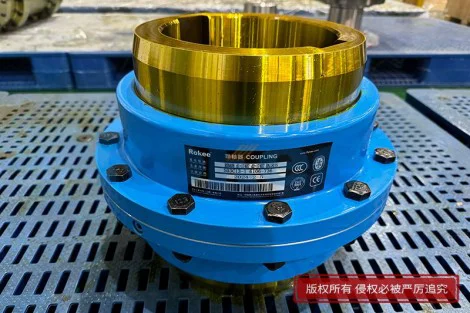
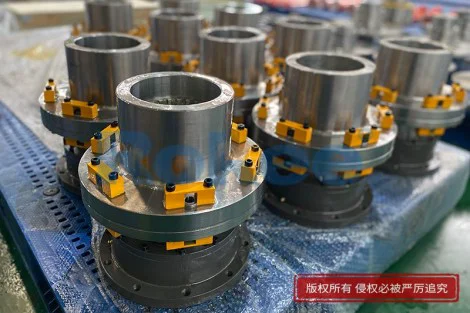
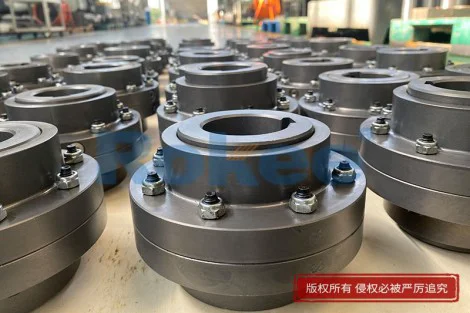
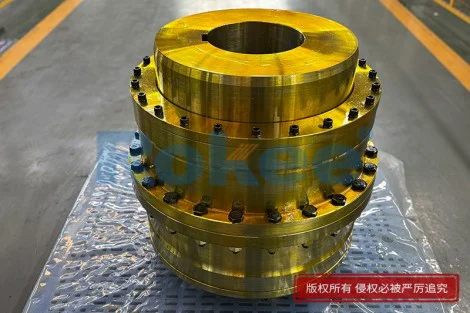
Rokee is a manufacturer of vacuum pump couplings from china, we can provide non-standard custom vacuum pump couplings based on parameters or drawings supplied by customers, with export support available.

Vacuum pump couplings are indispensable mechanical transmission components designed to connect motor drive shafts and vacuum pump input shafts, serving as a core bridge for power transmission in vacuum system operation. Beyond basic torque transmission, these specialized couplings undertake multiple critical functions, including shaft misalignment compensation, vibration and noise attenuation, and equipment operation stability maintenance. In various industrial and laboratory vacuum scenarios, tiny shaft deviations, operational vibrations, and mechanical impact forces are inevitable during long-term equipment operation, and unbuffered force transmission will cause severe wear on pump bodies and motors, shorten service life, and even disrupt vacuum stability. Tailored to the unique working characteristics of vacuum pumps, these couplings differ from ordinary mechanical couplings, focusing more on low vibration, low degassing, high stability, and precise transmission performance to adapt to high-standard vacuum environments. Rational selection and application of vacuum pump couplings can effectively reduce mechanical failure rates, improve the overall operational efficiency of vacuum systems, and ensure the continuity and accuracy of various vacuum process operations, making them a key guarantee for reliable operation of vacuum equipment.
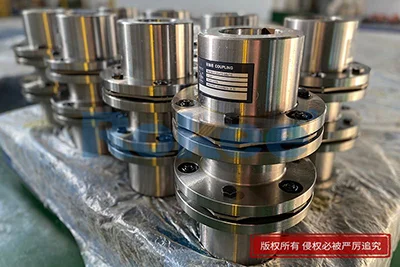


The core working principle of vacuum pump couplings centers on balanced power transmission and mechanical buffering, adapting to the special operating environment and functional requirements of vacuum equipment. As a connecting medium between the driving motor and vacuum pump, the coupling mainly transmits rotational torque stably while solving the common mechanical problems of shaft misalignment in equipment assembly and operation. In actual installation, complete coaxiality between the motor shaft and pump shaft is difficult to achieve, and minor parallel, angular, and axial deviations will occur inevitably. Ordinary rigid connections will cause continuous friction and stress concentration at the shaft connection parts during operation, leading to shaft wear, bearing damage, and operational jitter. Vacuum pump couplings optimize this problem through their structural design and material characteristics, flexibly adapting to various minor misalignments without generating additional mechanical stress. During equipment start-up, shutdown, and load fluctuation, the coupling can absorb instantaneous impact force, avoid rigid torque transmission, and protect the precision components inside the vacuum pump. Meanwhile, it isolates most of the vibration generated by motor operation, preventing vibration from being transmitted to the pump body and vacuum pipeline system, which effectively avoids vacuum pressure fluctuation caused by mechanical vibration and ensures the stable operation of the entire vacuum system.
Material selection is the core factor determining the performance and service life of vacuum pump couplings, and all applied materials need to meet the special requirements of vacuum working environments. Different from conventional mechanical couplings, vacuum pump coupling materials must feature low outgassing, high temperature resistance, corrosion resistance, and structural stability, as volatile substances or poor stability materials will pollute the vacuum environment and destroy vacuum purity. Metal materials are the most widely used in high-performance vacuum couplings, including high-strength stainless steel and lightweight aluminum alloy. Stainless steel materials boast excellent wear resistance, structural rigidity, and low degassing performance, suitable for long-term continuous operation in high and ultra-high vacuum environments, and can resist micro-corrosion caused by gas residues in vacuum cavities. Aluminum alloy materials are favored for their light weight and good thermal conductivity, which can reduce the overall load of the transmission system and accelerate heat dissipation during equipment operation. In addition to metal materials, high-performance elastic polymer materials and special engineering plastics are often used as intermediate buffer components of flexible couplings. These non-metallic materials have excellent vibration damping and deformation recovery capabilities, can effectively compensate for shaft misalignment, and will not produce volatile pollutants in vacuum environments. Reasonable matching of metal and non-metallic materials enables vacuum pump couplings to balance transmission efficiency, buffering performance, and environmental adaptability, meeting the working demands of different vacuum grades.
Vacuum pump couplings can be divided into two main categories: rigid couplings and flexible couplings, with flexible couplings dominating mainstream vacuum equipment applications due to their superior comprehensive performance. Rigid couplings feature a simple and compact structure, relying on integral locking or flange connection to fix the two shafts tightly, achieving zero-deviation torque transmission. This type of coupling has extremely high torsional rigidity and transmission efficiency, with almost no power loss during operation, making it suitable for vacuum pump equipment with extremely precise shaft alignment and stable operating load. However, rigid couplings have obvious limitations: they cannot compensate for shaft misalignment or absorb vibration and impact force, and slight assembly deviation or operational wear will directly increase equipment load, so they are only applicable to low-load, high-precision fixed vacuum equipment. Flexible couplings, by contrast, adopt elastic buffer structures such as metal discs, bellows, and elastic sliders, which can adapt to multiple forms of shaft misalignment. Metal bellows couplings and disc couplings have high precision and stable deformation performance, suitable for medium and high vacuum precision equipment. Elastic slider couplings have excellent vibration damping and shock absorption effects, applicable to medium and low vacuum pumps with frequent load changes. The diverse structural forms of flexible couplings enable them to adapt to complex operating conditions, becoming the preferred configuration for most industrial and laboratory vacuum systems.
Vibration damping and noise reduction are key functional advantages of high-quality vacuum pump couplings, which directly improve the operating quality of vacuum systems. During the continuous operation of vacuum pumps and matching motors, mechanical friction, rotational inertia, and gas compression will generate continuous vibration and noise. Without effective buffering, high-frequency vibration will be transmitted along the shaft to the entire equipment and pipeline system, causing micro-vibration of vacuum components, loosening of connecting parts, and even tiny air leakage gaps, which will reduce vacuum degree and affect the accuracy of vacuum processes. Vacuum pump couplings solve this problem through professional structural and material design. The elastic buffer parts inside flexible couplings can absorb most high-frequency vibration generated by motor operation and torque transmission, cut off the vibration transmission path between the motor and the pump body, and avoid resonance between the two devices. At the same time, the flexible connection structure can reduce rigid friction and collision between mechanical parts, effectively lowering operating noise. In precision vacuum scenarios such as semiconductor processing and laboratory precision testing, low vibration and low noise operating environments are essential, and vacuum pump couplings can stabilize the equipment operating state, eliminate vacuum fluctuation caused by vibration, and create a stable and reliable working environment for precision vacuum operations.
The installation precision and daily maintenance of vacuum pump couplings directly affect the operating efficiency and service life of vacuum equipment, and standardized operation is essential to maintain their optimal performance. In the installation stage, the core focus is to ensure the coaxiality of the motor shaft and pump shaft, strictly controlling the misalignment error within the adaptable range of the coupling. Excessive misalignment will lead to excessive deformation of the coupling buffer parts, accelerated wear, and even abnormal torque transmission, causing equipment jitter. After installation, it is necessary to check the fastening state of all connecting parts to avoid loose components leading to transmission failure during operation. In daily use, regular inspection of the coupling’s operating state is required, including checking for abnormal vibration, noise, and temperature rise during equipment operation. For flexible couplings with elastic buffer components, it is necessary to regularly observe the aging, deformation and wear of elastic parts, and replace damaged parts in a timely manner to avoid reduced buffering performance. Dust and residual dirt on the coupling surface should be cleaned regularly to prevent foreign matters from entering the connecting gap and affecting transmission precision. In addition, long-term continuous operation will cause slight fatigue loss of coupling materials, so regular overall inspection and performance evaluation are needed to eliminate potential mechanical failures in advance and ensure long-term stable operation of vacuum system transmission components.
Vacuum pump couplings play a vital role in optimizing the overall performance and extending the service life of vacuum systems, bringing long-term operational value to vacuum equipment. As the key transmission link of vacuum equipment, high-quality couplings can minimize power loss in the torque transmission process, improve the overall operating efficiency of vacuum pumps, and reduce invalid energy consumption during equipment operation. By compensating for shaft misalignment and buffering mechanical impact, they greatly reduce the wear and fatigue loss of core components such as motor bearings and pump shafts, effectively extending the service cycle of precision vacuum equipment and reducing the frequency of equipment maintenance and component replacement. In industrial production and scientific research scenarios with high requirements for vacuum stability, stable coupling operation can avoid vacuum degree fluctuation and equipment shutdown caused by mechanical transmission faults, ensuring the continuity of production and experimental work. With the continuous upgrading of vacuum technology towards high precision and high stability, the performance requirements for vacuum pump couplings are also constantly improving. Continuous optimization of coupling structure, materials and processes will further enhance the adaptability and reliability of vacuum systems, providing more solid technical support for the development of various vacuum application fields.
Looking ahead, the development trend of vacuum pump couplings will focus on high precision, low loss, long service life and strong environmental adaptability, continuously matching the iterative upgrading of modern vacuum equipment. With the rapid development of precision manufacturing, semiconductor industry and high-end laboratory scientific research, the demand for ultra-high vacuum environments and ultra-stable equipment operation is increasing, which puts forward higher requirements for the comprehensive performance of couplings. Future vacuum pump couplings will adopt new composite materials with lower outgassing, higher wear resistance and stronger fatigue resistance to adapt to more extreme vacuum working environments. In terms of structural design, more compact and integrated structures will be developed to further improve transmission precision and misalignment compensation capability while reducing equipment space occupation. In addition, intelligent optimization will become an important development direction. Coupling structures with real-time monitoring of operating vibration, temperature and wear state will gradually be applied, realizing predictive maintenance of transmission components. The continuous technological innovation of vacuum pump couplings will further break through the performance bottleneck of traditional transmission components, better meet the diversified and high-standard application demands of modern vacuum systems, and promote the continuous progress of vacuum industry technology.
« Vacuum Pump Couplings » Update Date: 2026/8/5
URL: https://www.rokee.com/en/tags/vacuum-pump-couplings.html
Contact
If you require custom machined couplings, please contact Rokee via the contact information below for inquiries.
Email: Rokee@Rokee.com
 WeChat