Types of Cardan Driveshafts
Cardan driveshafts, also known as universal joint shafts, are indispensable mechanical components designed to transmit rotational torque and power between two misaligned rotating parts in various mechanical and automotive systems. They effectively compensate for angular, axial, and radial deviations that occur during equipment operation, ensuring continuous and stable power transmission even when connected components shift or tilt. With flexible structural designs and strong adaptability, these driveshafts are widely applied in automotive transmission systems, industrial machinery, marine equipment, and engineering devices. Based on structural configurations, joint quantities, connection modes, and functional characteristics, cardan driveshafts can be categorized into multiple distinct types, each with unique structural advantages, operational features, and applicable scenarios. Understanding the classification and performance differences of various cardan driveshafts is critical for optimizing mechanical system design, improving transmission efficiency, and extending equipment service life, as it allows precise matching of shaft types to different working conditions and operational requirements.

Single cardan driveshafts represent the most basic and traditional type of universal transmission component, featuring a simple structural layout composed of a single cross universal joint and two connected shaft yokes. The core structure consists of a central cross shaft and four sets of needle bearings, which connect the driving and driven shafts to achieve flexible power transmission within a certain angular range. This type of driveshaft is characterized by minimal component composition, straightforward assembly procedures, and convenient daily maintenance, making it highly cost-effective for conventional low-load transmission scenarios. Despite its practical simplicity, the single cardan driveshaft has inherent functional limitations in operation. When the working angle between the driving and driven shafts exceeds a small range, rotational speed fluctuation will occur during power transmission, leading to minor vibration and unstable torque output. This speed variation becomes more obvious with the increase of angular misalignment and rotational speed, which restricts its application in high-precision and high-speed mechanical systems. In practical applications, single cardan driveshafts are mostly used in short-distance transmission structures with small and fixed angular deviations, such as light-duty mechanical auxiliary transmission parts and conventional low-speed equipment connection structures, where stable basic power transmission can be fully guaranteed without strict dynamic balance requirements.
Multi-joint cardan driveshafts are specially designed for complex working conditions with ultra-long transmission distances and multi-angle comprehensive misalignment, equipped with three or more universal joints connected in series through intermediate shaft sections. Unlike single and double cardan structures that only adapt to simple angular deviation, multi-joint driveshafts can compensate for multi-directional and multi-section deflection generated during the operation of large mechanical equipment. The segmented multi-joint layout disperses the overall angular deviation of the transmission system into multiple small-angle adjustments of each single joint, avoiding excessive single-joint deflection that causes transmission instability and component wear. This structural design greatly expands the adaptability range of cardan transmission systems, enabling stable power transmission for ultra-long-span mechanical connection structures. Each joint of the multi-joint cardan driveshaft can independently complete angle compensation, and the intermediate shaft sections adopt high-rigidity lightweight materials to ensure overall structural stability while reducing inertial resistance. Due to the complex structural design, this type of driveshaft usually requires customized design according to the actual spatial layout and transmission stroke of the equipment, and the installation and debugging process is more elaborate. It is mainly used in large-scale industrial production lines, heavy-duty engineering machinery, and long-distance power transmission structures of special equipment, where conventional single and double cardan driveshafts cannot meet the spatial compensation requirements.
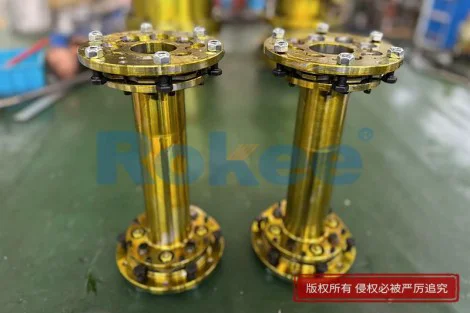
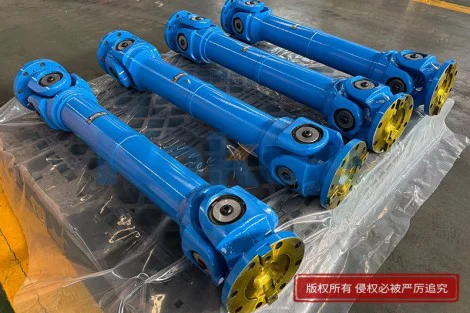
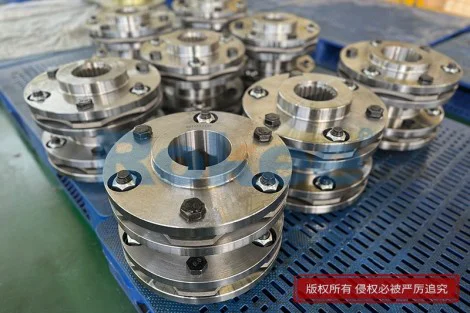
Flange-connected cardan driveshafts are classified according to the end connection mode, featuring integrated flange structures at both ends of the shaft body for fixed connection with driving and driven equipment. The flange plate is designed with evenly distributed bolt holes, which can achieve rigid and reliable fastening connection with the matching equipment shaft end through bolt assembly. This connection mode has outstanding advantages in structural stability and load-bearing capacity, with strong axial and radial positioning accuracy, effectively avoiding connection looseness and displacement during high-load operation. The overall structure of flange-connected cardan driveshafts is compact, with good torsion resistance and structural rigidity, and can maintain stable transmission performance under long-term heavy torque and impact load conditions. In terms of disassembly and maintenance, the bolted flange connection enables convenient assembly and disassembly, facilitating daily inspection, lubrication replacement, and component maintenance. Different from yoke-connected structures that focus on flexible quick connection, flange-connected cardan driveshafts prioritize connection firmness and transmission stability, making them more suitable for fixed equipment transmission scenarios with high load requirements and low frequent disassembly demands. They are widely used in heavy industrial equipment, fixed mechanical transmission platforms, and large power output devices that require long-term stable operation.
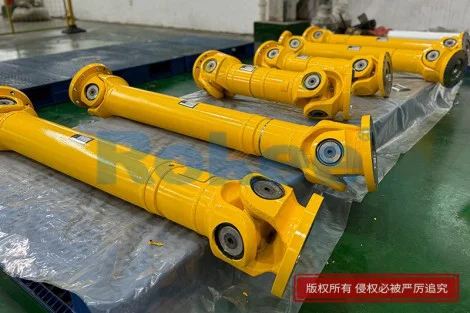
Yoke-connected cardan driveshafts are another mainstream connection-type cardan component, distinguished by the open yoke structure at both shaft ends for clamping and connection with matching equipment joints. This traditional flexible connection structure features simple docking logic and high assembly efficiency, allowing quick plug-in and positioning connection without complex bolt fixing procedures. The yoke clamping structure has certain flexible tolerance during operation, which can buffer minor vibration and impact generated by equipment operation, reducing rigid friction and wear between connecting parts. In terms of structural adaptability, yoke-connected driveshafts have higher flexibility for small-range installation position deviations, with lower requirements for installation precision compared with flange-connected types. Their lightweight structural design and convenient disassembly characteristics make them ideal for mechanical equipment that requires frequent maintenance, debugging, and component replacement. However, the load-bearing capacity and connection stability of yoke connections are slightly lower than flange structures, and they are not suitable for extreme heavy-load and high-impact continuous operation scenarios. This type of driveshaft is mostly applied in light and medium-duty mechanical equipment, mobile auxiliary transmission devices, and vehicle auxiliary power connection structures with frequent start-stop operation and regular maintenance needs.
Telescopic cardan driveshafts are functional optimized cardan components with axial length compensation capability, adding spline telescopic structures on the basis of conventional universal joint transmission structures. The internal matching spline pairs can realize free sliding and stretching within a certain axial stroke, effectively compensating for the axial distance change between driving and driven shafts caused by equipment operation, vibration, or position deviation. The spline matching parts are usually filled with high-viscosity lubricating grease and equipped with integrated dustproof sealing structures, which prevent external abrasive particles from entering the matching gap, avoid spline tooth surface wear and jamming, and ensure the smoothness of telescopic movement and long-term operational reliability. The combination of universal joint angle compensation and spline axial compensation enables telescopic cardan driveshafts to adapt to complex working conditions with simultaneous angular deviation and axial displacement, solving the transmission failure problem caused by shaft body tension and compression in variable-distance transmission systems. This type of driveshaft retains the basic torque transmission performance of conventional cardan structures while adding flexible length adjustment function, greatly expanding the environmental adaptability of the transmission system. It is widely used in movable mechanical equipment, vehicle suspension matching transmission systems, and hydraulic power transmission devices with variable operation strokes.
Heavy-duty cardan driveshafts are specially developed for extreme working conditions of high torque, heavy load, and long-term continuous operation, belonging to enhanced structural cardan transmission components. Different from conventional light and medium-duty driveshafts, heavy-duty models adopt thickened and high-strength alloy materials for shaft bodies, cross shafts, and bearing parts, with optimized structural size and component thickness to improve overall torsional rigidity and compression resistance. The internal bearing structure is upgraded with wear-resistant and high-temperature resistant accessories, which can maintain stable operational performance under long-term high-load friction and high-temperature working environments, effectively reducing component fatigue wear and failure probability. In terms of structural design, heavy-duty cardan driveshafts strengthen the connection rigidity of joints and shaft sections, optimize stress distribution during torque transmission, avoid local stress concentration and structural deformation, and greatly improve service life and operational stability. Although the overall weight and structural volume are larger than conventional types, their extreme load-bearing capacity makes them irreplaceable in heavy industrial fields. They are mainly used in heavy engineering machinery, mining equipment, large metallurgical machinery, and marine heavy power transmission systems that require bearing ultra-high torque and continuous heavy-load operation.
Tags: Cross Cardan Shafts , Industrial Cardan Shafts , Cardan Shafts , Cardan Shaft Couplings , Cardan Joint Drive Shafts , Cardan Driveshafts , Cardan Couplings , sandwich panel machine , pu sandwich panel line
« Types of Cardan Driveshafts » Update Date: 2026/8/13
URL: https://www.rokee.com/en/blog/types-of-cardan-driveshafts.html
Contact
If you require custom machined couplings, please contact Rokee via the contact information below for inquiries.
Email: Rokee@Rokee.com
 WeChat