Stiffness of Cardan Coupling
Cardan coupling stiffness serves as a core mechanical property that dictates the operational stability, transmission accuracy and service performance of universal joint transmission systems in mechanical equipment. Primarily defined as the structural resistance of the cardan coupling against elastic deformation under torque, angular deflection and alternating mechanical loads, this stiffness parameter directly determines the efficiency of power transmission and the vibration suppression capability of the entire transmission mechanism. Unlike fixed rigid couplings, cardan couplings feature flexible angle adaptability, yet their inherent stiffness characteristics balance structural flexibility and transmission rigidity to avoid excessive deformation or rigid impact during operation. Variations in stiffness will trigger a series of mechanical problems, including rotational speed fluctuation, torque transmission loss and structural vibration, which significantly affect the working precision of mechanical systems. This paper comprehensively analyzes the connotation, structural influencing factors, dynamic variation rules and engineering optimization strategies of cardan coupling stiffness, exploring its functional mechanism in different working conditions and providing systematic theoretical support for stable application and performance improvement of cardan coupling structures.

The essential connotation of cardan coupling stiffness covers two core dimensions: torsional stiffness and angular deflection stiffness, both of which jointly define the overall mechanical bearing capacity of the coupling structure. Torsional stiffness refers to the structural ability to resist torsional deformation when the coupling bears circumferential torque load, which is the key to ensuring synchronous rotation between the driving shaft and the driven shaft. Sufficient torsional stiffness can effectively reduce the torsional backlash of the transmission system, avoid angle deviation in torque transmission, and maintain stable power output during continuous operation. Angular deflection stiffness, on the other hand, reflects the structural resistance to bending deformation when the two connected shafts have a certain installation angle or dynamic deflection. As the most distinctive mechanical feature of cardan couplings, moderate angular deflection stiffness enables the structure to adapt to axis deviation and vibration displacement of mechanical equipment, while preventing excessive bending deformation that causes structural fatigue. In actual operation, these two types of stiffness interact dynamically; excessive pursuit of high torsional stiffness may reduce the structural flexibility of the coupling, while overly low angular stiffness will lead to insufficient load-bearing stability, forming a restrictive relationship in structural performance regulation.
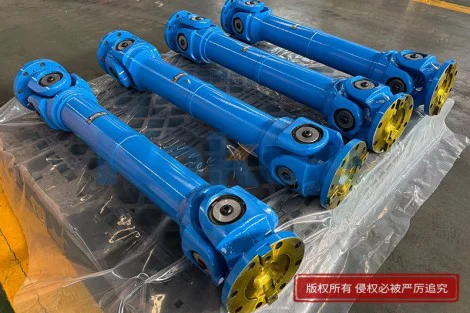
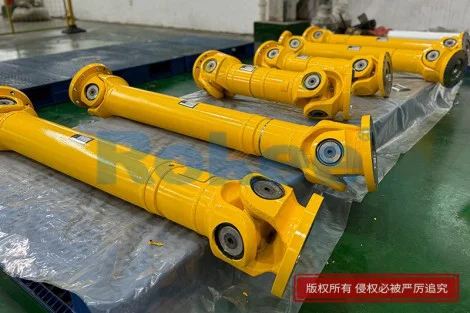
Structural design parameters are the fundamental factors that determine the inherent stiffness of cardan couplings, with core component geometry and structural layout playing a decisive role. The yoke structure of the coupling is the main load-bearing part, and its wall thickness, ear structure size and transition arc design directly affect the overall stiffness distribution. Yoke structures with uniform wall thickness and smooth stress transition can avoid local stress concentration, maintain consistent stiffness under cyclic loads, and reduce localized elastic deformation. The cross shaft, as the central transmission component connecting the two yokes, bears complex alternating shear and torsional forces during operation, and its shaft diameter and structural symmetry directly determine the overall torsional stiffness of the coupling. In addition, the fit clearance between the cross shaft and the yoke hinge is closely related to stiffness performance. Excessive fit clearance will increase the elastic displacement of the moving pair under load, reduce effective transmission stiffness, and cause periodic jitter during rotation, while overly small clearance will increase friction resistance and weaken the flexible adaptive performance of the coupling. Reasonable structural parameter matching can realize the optimal balance between stiffness stability and motion flexibility of cardan couplings.
Material properties of manufacturing components lay the physical foundation for cardan coupling stiffness, and different material characteristics lead to obvious differences in structural stiffness performance. High-strength alloy materials commonly used for cardan coupling production have excellent elastic modulus, fatigue resistance and impact resistance, which can maintain stable structural stiffness under long-term cyclic load and variable torque conditions. The elastic modulus of the material directly determines the basic deformation resistance of the coupling structure; materials with higher elastic modulus can provide more stable stiffness support under the same load, reducing elastic deformation of components. Meanwhile, material toughness and hardness also affect the dynamic stiffness stability of the coupling. Materials with moderate hardness and good toughness can resist instantaneous impact loads in high-speed operation, avoid local plastic deformation caused by load mutation, and prevent permanent attenuation of structural stiffness. In contrast, materials with insufficient toughness are prone to micro-cracks under alternating loads, which will gradually expand with operation time, destroy the integrity of the structural force transmission path, and lead to continuous decline in coupling stiffness and reduced transmission stability.
Working environment and operating conditions cause dynamic changes in cardan coupling stiffness, making its stiffness performance present obvious real-time variability. Temperature is a key environmental factor affecting stiffness: in low-temperature environments, the viscosity of lubricating grease increases and fluidity decreases, which increases the friction coefficient of the hinge moving pair, indirectly improving the equivalent rigid resistance of the coupling and reducing structural flexibility. In high-temperature working conditions, lubricants are prone to thermal decomposition and failure, the surface friction state of moving parts deteriorates, and high temperature will slightly reduce the elastic modulus of metal materials, resulting in a certain degree of stiffness attenuation. In terms of operating conditions, load magnitude and rotation speed have significant regulatory effects on stiffness. Under low-load and low-speed operation, the coupling deformation is small, and the stiffness remains relatively stable. Under high-load and high-speed working states, the coupling bears frequent alternating torque and centrifugal force, the yoke structure will produce micro-radial deflection, and the cumulative elastic deformation leads to dynamic stiffness reduction, accompanied by periodic stiffness fluctuation with shaft rotation.
Stiffness characteristics directly govern the transmission accuracy and operational stability of cardan coupling systems, forming a core correlation with overall mechanical system performance. Couplings with stable and reasonable stiffness can maintain synchronous rotation of the driving and driven ends under variable load conditions, effectively suppress periodic speed fluctuation inherent in single cardan coupling transmission, and avoid transmission errors caused by structural deformation. Sufficient torsional stiffness ensures that the torque output is accurate and consistent, reduces energy loss caused by torsional deformation, and improves the overall transmission efficiency of mechanical equipment. In contrast, insufficient structural stiffness will lead to obvious elastic deformation during operation, resulting in rotation angle deviation and torque attenuation, which not only reduces transmission precision but also induces mechanical vibration and noise. Long-term operation with mismatched stiffness will aggravate the wear of hinge moving pairs, expand structural fit clearance, further deteriorate stiffness performance, and form a vicious cycle of performance attenuation, which seriously affects the stable operation of the entire transmission system.
Fatigue wear and structural aging are important inducements for long-term stiffness degradation of cardan couplings, which gradually weaken structural mechanical performance in continuous service. During long-term cyclic operation, the hinge contact parts of the coupling produce repeated friction and micro-extrusion, resulting in gradual abrasive wear on the component surface. The wear will change the original precise fit state between components, increase the motion gap of the transmission pair, and reduce the effective stiffness of the coupling. At the same time, alternating mechanical loads will cause micro-fatigue deformation inside the metal structure, producing tiny fatigue defects that are difficult to observe visually. With the increase of service time, these defects continue to accumulate and expand, destroying the uniform force transmission of the structure, leading to the continuous decline of structural stiffness. In harsh working environments with dust, humidity and corrosive media, surface corrosion and oxidation of coupling components will further accelerate structural aging, damage the surface mechanical properties of materials, and intensify the attenuation of stiffness performance, shortening the stable service cycle of the coupling.
Reasonable optimization and maintenance strategies can effectively stabilize and improve the stiffness performance of cardan couplings, realizing long-term stable operation of transmission systems. In the design and manufacturing stage, structural optimization can be carried out by improving component transition structures, eliminating local stress concentration, and optimizing the matching precision of moving pairs to obtain balanced stiffness and flexibility. Adopting integral forging and precision machining processes can improve the structural uniformity of components, avoid stiffness difference caused by structural defects, and enhance the overall stiffness stability of the coupling. In the service and maintenance stage, regular lubrication maintenance is essential to maintain stable friction state of moving parts, reduce wear and gap expansion, and prevent abnormal attenuation of dynamic stiffness. Meanwhile, regular inspection of structural deformation and fatigue defects can timely eliminate potential structural damage, avoid irreversible stiffness degradation. Through scientific design optimization and standardized daily maintenance, the cardan coupling can always maintain excellent stiffness performance in complex working conditions, ensuring high-precision and high-stability power transmission of mechanical systems.
Tags: Cross Cardan Shafts , Industrial Cardan Shafts , Cardan Shafts , Cardan Shaft Couplings , Cardan Joint Drive Shafts , Cardan Driveshafts , Cardan Couplings , sandwich panel machine , pu sandwich panel line
« Stiffness of Cardan Coupling » Update Date: 2026/8/13
URL: https://www.rokee.com/en/blog/stiffness-of-cardan-coupling.html
Contact
If you require custom machined couplings, please contact Rokee via the contact information below for inquiries.
Email: Rokee@Rokee.com
 WeChat