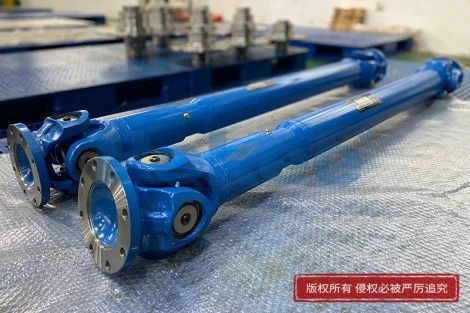
Sliding Disc Couplings
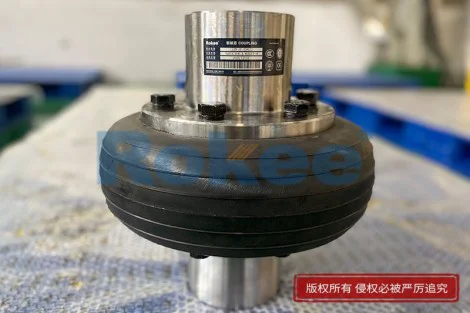
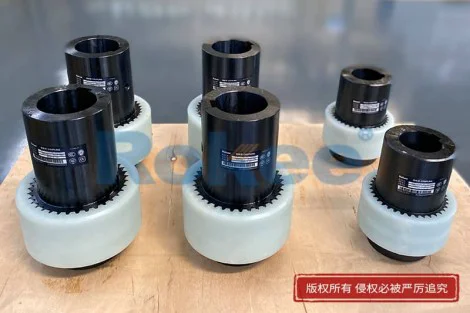
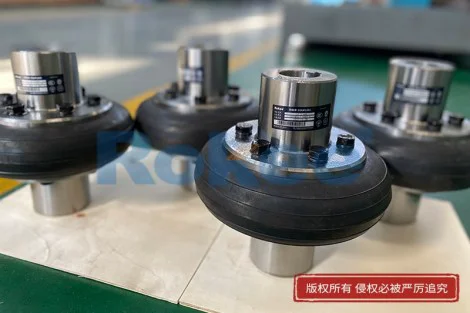
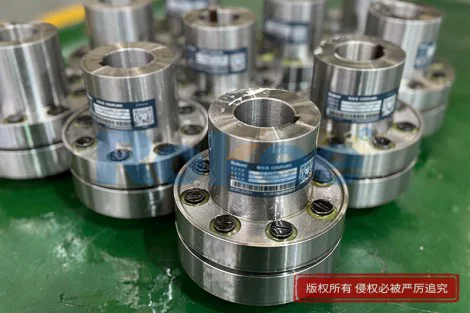
Rokee is a manufacturer of sliding disc couplings from china, we can provide non-standard custom sliding disc couplings based on parameters or drawings supplied by customers, with export support available.

Sliding disc couplings are essential flexible mechanical components designed to transmit torque between rotating shafts while accommodating various forms of shaft misalignment and axial movement in industrial transmission systems. Unlike rigid couplings that require precise shaft alignment and offer no adaptive flexibility, this type of coupling relies on a sliding disc structure to buffer mechanical deviations during equipment operation, making it a core part of precision power transmission setups. Its unique structural design integrates sliding flexibility and torsional rigidity, enabling it to compensate for radial offset, angular deflection, and minor axial displacement between connected shafts efficiently. Widely applied in precision automation, servo transmission, and general industrial machinery, sliding disc couplings stand out for their zero-backlash operation, vibration damping performance, and long service life. They effectively reduce mechanical wear between shafts, lower operational noise, and stabilize transmission accuracy, laying a solid foundation for the stable and efficient operation of various rotating mechanical systems in long-term working conditions.
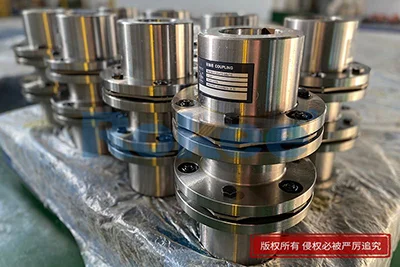


The fundamental structural composition of sliding disc couplings is simple yet highly functional, consisting of two symmetric shaft hubs and a central sliding disc as the core functional unit. The two hubs are respectively installed on the driving shaft and driven shaft of mechanical equipment, with mutually perpendicular groove structures distributed on the opposite inner surfaces of the hubs. The central sliding disc is embedded between the two hubs, with raised tenon structures matching the hub grooves on both sides, forming a cross sliding fit mechanism. This structural layout allows the central disc to slide freely along the groove directions during shaft rotation, which is the key to its misalignment compensation capability. The overall structure adopts an integrated assembly design without complex accessory parts, ensuring compact installation space and convenient assembly and disassembly. The sliding disc is usually made of high-strength elastic materials with excellent wear resistance and fatigue resistance, while the hubs are processed with high-precision machining to ensure smooth sliding fit and stable torque transmission. Such a streamlined structure not only reduces the overall weight of the coupling but also avoids structural loosening during high-speed operation, maintaining consistent transmission performance in diverse working environments.
The working principle of sliding disc couplings centers on the cooperative sliding motion between the central disc and dual hubs to realize torque transmission and misalignment compensation. During equipment operation, the driving hub rotates synchronously with the driving shaft, and its internal groove pushes the tenon of the central disc to generate rotational motion. Subsequently, the central disc drives the driven hub through the tenon-groove matching structure on the other side, thereby completing the torque transmission from the driving shaft to the driven shaft. When the two connected shafts produce radial offset or angular deflection due to installation errors, mechanical vibration, or long-term operation deformation, the central disc can slide adaptively along the vertical groove directions of the two hubs. This sliding behavior completely absorbs the misalignment deviation between the shafts, eliminating additional mechanical stress and friction loss caused by misalignment. In addition, the elastic characteristics of the sliding disc can buffer instantaneous impact loads generated by equipment start-stop and sudden speed changes. The whole working process realizes non-delay and zero-backlash torque transmission, ensuring that the rotation speed and position accuracy of the driven shaft are highly consistent with the driving shaft.
Sliding disc couplings possess prominent performance advantages that make them superior to many traditional coupling types in precision transmission scenarios. First and foremost, they achieve zero-backlash power transmission, as the close tenon-groove fit eliminates idle rotation gaps between structural parts, which is crucial for high-precision positioning and repeated motion systems. Secondly, the independent sliding mechanism can comprehensively compensate for multiple types of shaft misalignment, including radial eccentricity, angular inclination, and slight axial displacement, greatly reducing the installation precision requirements of mechanical equipment. Moreover, the elastic sliding disc structure has excellent vibration and shock damping effects, which can effectively isolate high-frequency vibration generated by shaft rotation and buffer sudden mechanical impacts, protecting bearings, motors, and other core components of the equipment from damage. Additionally, this coupling operates with low noise and low friction loss during long-term use, with stable transmission efficiency that does not decay easily. Its compact structural design also enables adaptation to narrow installation spaces, providing flexible and reliable transmission solutions for miniaturized and integrated mechanical equipment.
Material selection is a critical factor that determines the service performance and service life of sliding disc couplings, with different structural components adopting targeted high-performance materials. The central sliding disc, as the core wear-resistant and force-bearing component, is mostly made of high-toughness engineering plastics or high-strength stainless steel. Engineering plastic discs feature low friction coefficient, good self-lubricating performance, and excellent vibration absorption capacity, suitable for light-load and high-precision low-speed transmission scenarios. Stainless steel discs boast higher structural strength, wear resistance, and temperature resistance, adapting to medium and high-load high-speed operating environments. The two shaft hubs are generally forged from high-quality alloy steel, which undergoes fine machining and surface treatment to improve surface smoothness and structural rigidity, avoiding deformation and wear during long-term high-torque operation. All selected materials have good fatigue resistance and dimensional stability, ensuring that the coupling will not produce structural deformation or performance attenuation after millions of cyclic operations. Reasonable material matching not only optimizes the comprehensive mechanical properties of the coupling but also effectively extends its service cycle and reduces equipment operation costs.
Sliding disc couplings are widely applied in numerous precision mechanical transmission fields due to their excellent comprehensive performance. In servo control systems and automated precision machinery, they are used for connecting servo motors, stepping motors and transmission shafts, ensuring high-precision positioning and synchronous rotation of equipment, which is indispensable for automated production lines and precision processing equipment. In light industrial machinery and packaging equipment, the couplings adapt to frequent start-stop and variable-speed operating conditions, stabilizing transmission accuracy and reducing equipment failure rates. They also perform well in instrument and testing equipment, where their zero-backlash and low-vibration characteristics avoid interference with precision detection data. In addition, general mechanical transmission equipment such as small fans, pumps, and transmission devices also widely adopts sliding disc couplings to solve shaft misalignment problems. The strong adaptability of this coupling allows it to maintain stable operation in different load ranges and working conditions, covering both precision micro-transmission and conventional industrial power transmission scenarios.
The installation and daily maintenance of sliding disc couplings are simple and convenient, which is another important reason for their wide industrial popularity. During installation, operators only need to fix the two hubs on the driving and driven shafts respectively, then embed the central sliding disc into the hub grooves and complete the positioning assembly. The installation process does not require ultra-high-precision shaft alignment, and the coupling’s own compensation function can offset minor installation deviations, greatly reducing installation difficulty and time cost. In terms of daily maintenance, the structural design of sliding disc couplings realizes non-lubrication operation, eliminating the need for regular oil injection and grease maintenance. The smooth sliding fit surface effectively avoids abrasive wear, and the high-strength materials resist aging and deformation. In long-term equipment operation, users only need to conduct regular visual inspections to check for obvious structural wear, loosening or abnormal noise. The low-maintenance characteristic not only reduces manual maintenance workload but also avoids equipment downtime caused by frequent maintenance, improving the continuous operation efficiency of mechanical systems.
With the continuous upgrading of industrial mechanical equipment towards high precision, high speed and high stability, sliding disc couplings are constantly optimized in structural design and performance adaptation to meet evolving industrial demands. Modern optimized sliding disc couplings adopt more streamlined sliding groove structures and improved elastic disc designs, further enhancing misalignment compensation range and vibration damping effect while maintaining high torsional rigidity. The upgraded material processing technology improves the wear resistance and temperature adaptability of the coupling, enabling it to operate stably in complex working environments such as high temperature and dust. In the field of high-precision intelligent equipment, the zero-backlash and high-synchronization performance of sliding disc couplings provides reliable transmission guarantee for intelligent control and precision motion execution. As core basic transmission components, sliding disc couplings will continue to iterate and progress with industrial machinery technology, playing an increasingly important role in improving equipment operation accuracy, reducing failure rates and optimizing industrial production efficiency.
« Sliding Disc Couplings » Update Date: 2026/8/5
URL: https://www.rokee.com/en/tags/sliding-disc-couplings.html
Contact
If you require custom machined couplings, please contact Rokee via the contact information below for inquiries.
Email: Rokee@Rokee.com
 WeChat