Internal Spline Couplings
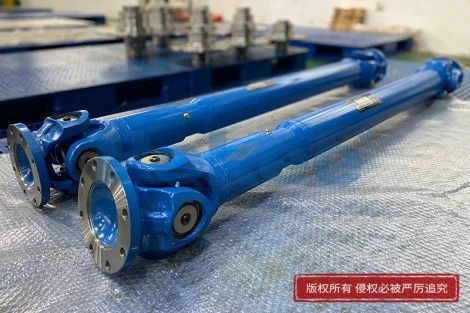
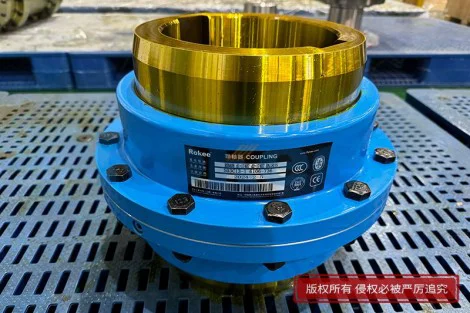
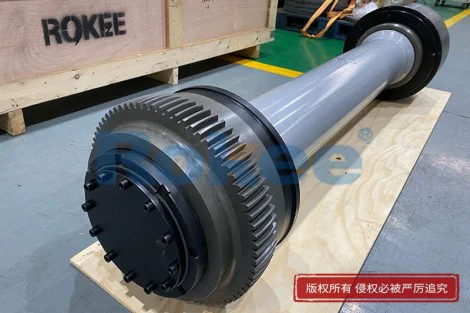
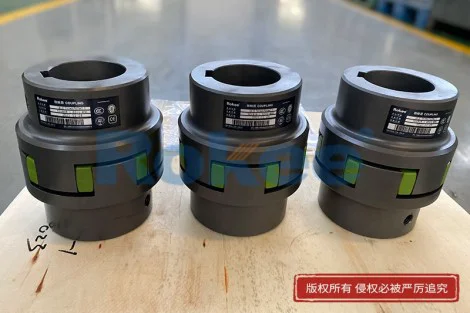
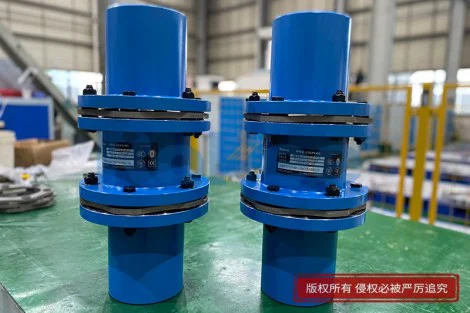
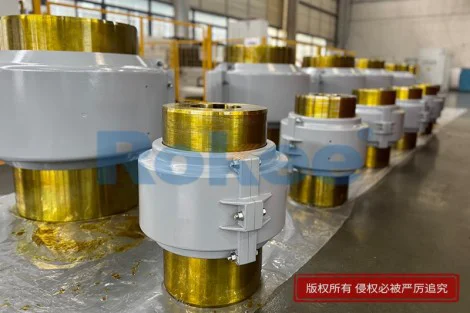
Rokee is a manufacturer of internal spline couplings from china, we can provide non-standard custom internal spline couplings based on parameters or drawings supplied by customers, with export support available.

Internal spline couplings are precision-engineered mechanical components designed to transmit rotational torque between interconnected rotating shafts while accommodating minor mechanical displacements inherent to dynamic machinery operation. Distinguished by their internal tooth structure that meshes with external splined shaft profiles, these couplings stand out from conventional keyway and rigid coupling designs through their multi-tooth contact mechanism and flexible operational characteristics. Unlike basic coupling solutions that rely on limited contact points and suffer from concentrated mechanical stress, internal spline couplings distribute torque evenly across a full array of meshing teeth, delivering superior load-bearing capacity, stable rotational performance, and enhanced mechanical durability. Widely adopted in precision mechanical transmission systems, they balance rigid torque transmission with adaptive flexibility, effectively mitigating vibration, compensating for subtle shaft misalignment, and supporting axial sliding movements during equipment operation. This unique combination of rigidity and adaptability makes them indispensable in high-precision, high-load mechanical scenarios where consistent power transmission and long-term operational stability are critical.


The fundamental working principle of internal spline couplings centers on the precise meshing engagement between internal spline teeth on the coupling sleeve and external spline teeth on mating drive and driven shafts. Each set of spline teeth forms a uniform mechanical connection that eliminates the single-point stress concentration common in traditional key coupling structures. When mechanical power initiates shaft rotation, torque is transferred simultaneously across all meshing tooth surfaces, rather than concentrating on a single key or limited contact area. This comprehensive contact mode ensures even stress distribution throughout the coupling structure, preventing localized overloading, tooth deformation, or premature wear during continuous operation. Beyond static torque transmission, the structural design reserves reasonable assembly clearances that allow subtle axial sliding and minor angular displacement between connected shafts. This adaptive capability enables the coupling to absorb operational deviations caused by mechanical vibration, thermal expansion of metal components, and minor installation misalignments. The involute tooth profile commonly adopted in internal spline couplings further optimizes meshing smoothness, reducing rotational friction and ensuring steady, backlash-free power transmission even under variable speed and load conditions.
Structural composition is a core advantage that defines the performance characteristics of internal spline couplings, featuring a streamlined yet highly robust mechanical layout. The primary structure consists of a hollow cylindrical coupling body machined with precise internal spline teeth on its inner bore, paired with matching external spline shafts for bilateral connection. The integrated one-piece sleeve design eliminates loose intermediate components, reducing structural clearance and improving overall connection rigidity compared to assembled coupling types. Each internal spline tooth is uniformly sized and symmetrically distributed around the central axis, ensuring consistent force bearing and balanced rotational operation during high-speed movement. The precision machining of tooth surfaces creates smooth meshing interfaces that minimize friction loss and mechanical abrasion during repeated rotation and sliding movements. Additionally, the compact structural form of internal spline couplings saves valuable installation space in mechanical equipment, making them suitable for integrated and miniaturized mechanical systems. Despite their compact size, the multi-tooth bearing structure greatly enhances overall mechanical strength, enabling the couplings to withstand sustained high torque output without structural deformation or transmission failure in long-term operational scenarios.
Internal spline couplings deliver distinct performance advantages over traditional coupling solutions, establishing their superiority in high-demand mechanical transmission scenarios. Foremost among these benefits is exceptional torque transmission efficiency and load capacity, as the multi-tooth meshing structure disperses mechanical stress uniformly and supports far higher torque loads than single-key couplings of equivalent size. This uniform stress distribution also drastically reduces fatigue wear on component surfaces, extending the service life of the entire transmission assembly and lowering long-term equipment maintenance frequency. Another key advantage is excellent operational stability; the precise tooth meshing design eliminates rotational backlash, ensuring synchronous rotation of drive and driven shafts even during frequent speed adjustments and load fluctuations. The built-in flexibility to accommodate axial displacement and minor misalignment effectively buffers mechanical vibration and impact loads generated during equipment startup, shutdown, and variable-load operation, protecting connected shafts and core mechanical components from damage. Furthermore, the smooth meshing motion reduces operational noise and friction heat loss, improving the overall energy efficiency and operational smoothness of mechanical systems in continuous working conditions.
The functional adaptability of internal spline couplings enables their extensive application across diverse mechanical and industrial scenarios, covering light-duty precision equipment to heavy-duty engineering machinery. In precision transmission systems such as automated manufacturing equipment and precision gear transmission devices, they ensure ultra-synchronous shaft rotation and high positional accuracy, meeting the strict precision requirements of automated production and precision processing. In material handling and conveying machinery, the axial sliding compensation capability adapts to dimensional changes caused by operational vibration and thermal expansion of conveyor components, maintaining stable power transmission during long-duration continuous operation. Fluid power equipment including pumps and compressors relies on these couplings to buffer periodic operational vibration and variable torque impact, preventing transmission failure caused by unstable load changes. Additionally, they are widely applied in agricultural machinery, engineering equipment, and power transmission devices, where heavy-load and high-frequency operation is standard. Their ability to maintain stable performance under complex working conditions with dust, vibration, and variable loads makes them a reliable core component for industrial mechanical transmission systems.
Material selection and manufacturing precision are pivotal factors that determine the comprehensive performance and service life of internal spline couplings. High-strength alloy materials with excellent toughness, wear resistance, and fatigue resistance are predominantly used for production, as these materials can withstand long-term high-load operation, frequent friction, and alternating mechanical stress without premature aging or damage. The manufacturing process adopts precision cutting, grinding, and finishing technologies to ensure consistent tooth profile size, accurate tooth spacing, and smooth tooth surface finish. Strict dimensional accuracy control guarantees seamless meshing between internal and external splines, eliminating jitter and friction resistance caused by assembly errors. Subsequent heat treatment processes enhance the surface hardness and overall structural rigidity of the spline teeth, improving wear resistance and pressure-bearing capacity while maintaining the core toughness of the coupling body to resist impact loads. Fine surface treatment also reduces oxidation and corrosion risks, enabling stable operation in humid, dusty, and other harsh industrial environments. The combination of high-quality materials and precision manufacturing ensures that internal spline couplings maintain consistent performance stability throughout long-term cyclic operation.
Rational maintenance and correct installation practices are essential to maximize the operational efficiency and service life of internal spline couplings. During installation, precise alignment of paired spline components is required to avoid forced assembly, which can cause tooth surface extrusion deformation and abnormal wear. Proper clearance control between meshing teeth ensures flexible axial sliding while preventing excessive clearance that leads to rotational jitter and power transmission deviation. Regular daily maintenance includes cleaning dust and metal debris from meshing tooth surfaces to avoid abrasive wear caused by particle friction, as well as applying professional lubricants to reduce meshing friction, lower operational heat, and prevent tooth surface rust and oxidation. Regular operational inspections should focus on checking for abnormal vibration, noise, and rotational deviation during equipment operation, which may indicate tooth wear, loose meshing, or component fatigue. Timely lubricant replacement and minor parameter adjustment can effectively avoid minor faults evolving into major transmission failures. Scientific maintenance not only maintains the high-precision transmission performance of the couplings but also reduces equipment downtime and replacement costs, improving the overall operational economy of mechanical systems.
With the continuous advancement of mechanical manufacturing technology, internal spline couplings are evolving toward higher precision, stronger load resistance, and broader adaptive performance to meet the upgrading demands of modern mechanical systems. Modern mechanical equipment increasingly requires transmission components that integrate high precision, high efficiency, and high durability, driving continuous optimization of spline tooth profile design, material formula, and processing technology. Improved structural designs further balance flexibility and rigidity, enhancing the coupling’s ability to adapt to extreme working conditions such as high speed, heavy load, and frequent variable-load operation. Optimized manufacturing processes achieve higher dimensional accuracy and better surface finish, effectively reducing transmission friction loss and improving energy utilization efficiency. As intelligent and high-precision mechanical equipment develops rapidly, internal spline couplings will continue to expand their application scope, becoming a more critical core component in modern mechanical transmission systems and providing reliable technical support for the stable and efficient operation of various industrial machinery.
« Internal Spline Couplings » Update Date: 2026/8/5
URL: https://www.rokee.com/en/tags/internal-spline-couplings.html
Contact
If you require custom machined couplings, please contact Rokee via the contact information below for inquiries.
Email: Rokee@Rokee.com
 WeChat